24/7 electrical, heating, and cooling help across North Jersey

Call 973.809.2339

Union City service area

Union City electrical and HVAC service—solve the fault without losing the building boundary.

Start one Hudson County service request for an electrical problem, AC or heating repair, a boiler or ductless system, panel capacity, or planned work that must account for the unit, common equipment, access, permits, and final testing.

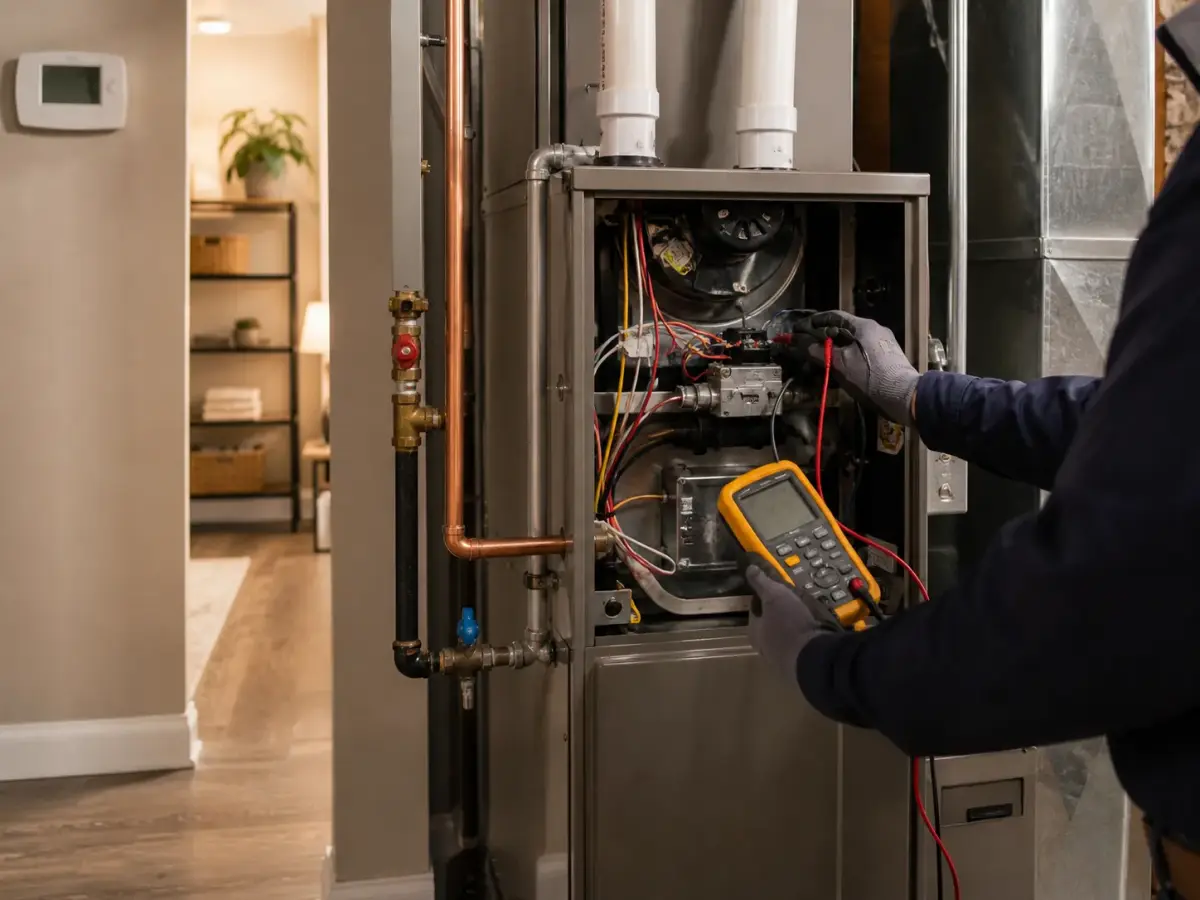
Electrical and HVAC technician preparing equipment for a Union City New Jersey service request

Service detail

Begin with the exact Union City property—not a guessed repair

A useful electrician or HVAC request identifies the address, unit or floor, property type, equipment or circuit, observed condition, and person who can authorize access. That matters when a problem may cross a private unit, landlord-controlled equipment, a common panel or meter area, a roof or mechanical room, a neighboring space, or the utility boundary. MDL can route electrical, air-conditioning, heating, boiler, heat-pump, panel, EV-charging, and listed commercial work without asking the customer to diagnose the failed part first.

Union City, Hudson County is kept separate from Union Township in Union CountyCall or send a request so MDL can confirm the right next step for the property.
Unit equipment, common systems, access, and authorization are defined before dispatchCall or send a request so MDL can confirm the right next step for the property.
Electrical and HVAC findings can be coordinated through MDL's published New Jersey credentialsCall or send a request so MDL can confirm the right next step for the property.

Union City service paths

Choose the symptom or project. The diagnosis should choose the repair.

Search results often compress a complicated property into a phrase such as electrician near me, AC repair, HVAC repair, or heating contractor. A service request is stronger when it states what can actually be observed and which part of the property is affected. Use the nearest path below, then include any building coordination that could control access or shutdowns.

Electrical

Faults, circuits, lighting, panels, and planned electrical work

Use this path for dead outlets, partial outages, repeated trips, hot or noisy devices, flickering lights, damaged wiring, new circuits, lighting, renovations, panel questions, service capacity, EV charging, and listed commercial electrical needs.

Review electrical services, panel upgrades, and EV charger planning.

Air conditioning

AC repair for no cooling, warm air, weak airflow, water, or ice

The thermostat, controls, circuit, indoor unit, outdoor unit, airflow, condensate system, refrigerant circuit, equipment condition, and building arrangement can produce similar symptoms. Testing should distinguish them before parts or replacement are proposed.

Start with AC repair or the full air-conditioning guide.

Heating and boilers

No heat, unstable heat, leakage, noise, and control problems

Identify whether the property uses steam, hot water, forced air, a heat pump, ductless heads, electric heat, packaged equipment, or a building-controlled system. Each arrangement has a different operating sequence, safety boundary, and access need.

Compare heating repair, boiler service, and the HVAC service hub.

Planned equipment

Cooling, heating, and electrification that begin with loads and routes

New comfort equipment or charging can affect panel capacity, disconnects, circuits, controls, roof or exterior locations, condensate, line routes, building approvals, permits, inspections, and restoration. Equipment selection is only one part of the installed result.

Use the cooling installation and heating installation guides.

Direct licensed-contractor identity

Know who is accepting the request before sharing a building problem.

Some search results are directories or referral services that match a customer with an independent contractor. Others are contractor websites. That distinction affects who receives the request, who holds the trade credential, who inspects the property, who supplies the proposal, who performs the work, and who is responsible for the final record. Before scheduling, identify the legal business, the license tied to the proposed trade, the callback number, and the party that will issue the scope and invoice.

MDL publishes NJ Electrical Business Permit #34EB01606200, NJ Electrical Contractor #34EI01606200, and NJ Master HVACR Contractor #19HC00308200. Those identifiers give a Union City customer a specific starting point for electrical and HVAC verification. They do not replace diagnosis, a written proposal, municipal approvals, or the need to confirm that the selected scope is within the responsible license.

A trustworthy proposal should name the existing condition, work included, labor and material boundary, access, protection, permit and inspection responsibility when applicable, price, exclusions, change process, final operating test, and supplied warranty terms. If another company, marketplace, or subcontractor will perform any part, ask that relationship and credential to be stated before approval.

Business identityConfirm the company receiving the request, the company issuing the proposal, and the company responsible for the work.
Trade identityMatch electrical work with the electrical credential and HVACR work with the HVACR credential instead of relying on a directory profile.
Scope identityRequire the tested condition, included work, property boundary, approvals, exclusions, price, and completion evidence in writing.
Record identityKeep the proposal, approved changes, permits, inspections, invoice, equipment or circuit records, and supplied warranty terms together.

Safety before the appointment

An emergency search does not always begin with a contractor visit.

Leave and call 911 for fire, smoke, a carbon-monoxide alarm, or immediate danger. For a suspected gas leak, leave without operating switches or equipment and follow the gas utility's emergency direction from a safe location. Do not enter standing water around energized equipment, touch damaged conductors, remove a panel or equipment cover, bypass a safety, handle refrigerant, bleed or fill unfamiliar boiler equipment, or keep resetting a breaker that trips again.

When there is no immediate life-safety emergency, call promptly for sparking, a burning odor, unusual heat, visible damage, water near electrical components, a repeated breaker trip, an unsafe indoor temperature, or equipment that appears overheated. State what is happening, which people or spaces are affected, and whether the property has a landlord, superintendent, building engineer, or common-system contact who must join the response.

MDL states that 24/7 electrical, heating, and cooling help is available. Call 973.809.2339 and ask the team to confirm current coverage, response availability, and the safest next step. Do not infer an arrival time from a search result or replace emergency services with an online form when people face immediate danger.

Fire, smoke, or alarmMove people to safety as appropriate and call emergency services before collecting equipment details.
Suspected gas leakLeave, avoid switches and ignition sources, and follow the gas utility's emergency instructions from a safe place.
Electrical warningStop using the affected circuit for sparking, burning odor, unusual heat, visible damage, water exposure, or a repeated trip.
Unsafe temperatureProtect occupants first, especially anyone medically vulnerable, then report the equipment, indoor condition, and time sensitivity.

Union City electrical diagnosis

Separate the unit circuit, common equipment, meter, service, and utility boundary.

A dead outlet, partial outage, flicker, nuisance trip, hot device, failed appliance circuit, planned charger, or new HVAC load may involve the same electrical system but not the same solution. In a multifamily or mixed-use property, the customer may control only one part of that system. The service request should identify the affected unit or business, panel location, meter arrangement when known, common electrical rooms, other affected occupants, and the person who can authorize access or interruption.

Symptom record

Preserve what happened before another reset changes the evidence

Record the room or area, circuit or equipment, what was operating, whether the problem is constant or intermittent, and any heat, odor, buzzing, sparking, water, damage, GFCI or AFCI state, recent work, or wider outage. Stop repeated resets and do not remove covers.

Unit boundary

Identify private equipment and the spaces the occupant can authorize

State the unit and floor, tenant or owner status, panel and disconnect locations, affected outlets or loads, and whether the landlord or association controls wiring, meters, risers, service equipment, or access outside the unit.

Common boundary

Arrange access to the full electrical path when the fault may be shared

A meter bank, service switch, main distribution, electrical room, basement, roof equipment, corridor device, commercial tenant panel, or utility equipment may sit beyond the requester's control. Confirm keys, escorts, shutdown notice, and authorizing contacts before the appointment.

Repair proof

Connect the proposed work to a tested finding and final check

The scope should identify the supported fault, devices or conductors included, access, protection, restoration, permit or inspection path when required, testing, exclusions, and expected result. A symptom alone does not prove a panel or service replacement.

Panels, service capacity, EV charging, and HVAC loads

Breaker space, panel condition, and electrical capacity answer different questions.

An open breaker space does not prove the service can support a new charger, condenser, heat pump, air handler, electric heat kit, commercial load, or other equipment. An older panel does not automatically prove a full service upgrade is needed. Review the existing service and panel ratings, equipment condition, conductors, grounding and bonding conditions within scope, calculated load, other major loads, new equipment data, circuit route, disconnects, utility equipment, building distribution, and future plans.

A repeated HVAC breaker trip is a symptom, not permission to install a larger breaker. The circuit, protective device, terminations, conductors, disconnect, motor or compressor, equipment controls, and other connected loads belong in the diagnosis. Installing larger protection without a supported design can remove protection from wiring or equipment that is not rated for it.

For an EV charger, identify the parking space, who controls it, distance and route from the panel, wall or garage conditions, common-area permissions, metering, charger nameplate, desired charging need, load-management option when considered, and how the installation will be protected and inspected. In a managed property, owner or association approval and common electrical capacity may control the project before equipment is purchased.

The right written answer may be an existing compliant circuit, a new dedicated circuit, panel work, a documented load-management design where suitable and allowed, a service upgrade, common-building distribution work, or a different equipment choice. Require the recommendation and calculation basis rather than assuming a universal 200-amp solution.

Existing systemService and panel ratings, condition, breaker space, conductors, meter and distribution arrangement, other major loads, and known symptoms.
Proposed equipmentNameplate data, operating combinations, required circuits and disconnects, route, controls, location, and future loads.
Property authorityOwner, landlord, association, building engineer, utility, parking, common-area, shutdown, and access responsibilities.
Installed resultApproved design, permits, inspection, labeling, equipment settings, operating tests, restoration, owner instruction, and closeout records.

Union City AC and HVAC repair

Identify the equipment arrangement before interpreting warm air, weak airflow, water, or ice.

Union City service requests can involve central split systems, ductless heads, heat pumps, furnaces with AC, packaged or through-wall equipment, rooftop units, water-source systems, and equipment connected to a larger building. The same phrase—no cooling—can involve different ownership, controls, electrical supply, airflow, water flow, refrigerant work, roof access, or common-building responsibility. Tell MDL what type of system is present and which components the unit or building controls.

No start

The thermostat calls but equipment does not begin normally

Controls, power, disconnects, breakers, equipment safeties, condensate protection, motors, compressors, building loops, and system-specific faults can prevent operation. Report the display, code, sounds, which components start, and whether a wider outage exists.

Runs, poor comfort

Equipment operates but rooms remain hot, cold, or humid

Airflow, filters, coils, ducts, zoning, controls, refrigerant-side performance, water flow, equipment capacity, distribution, envelope conditions, and building operation can matter. A thermostat reading and square footage do not identify the cause alone.

Short cycling

Equipment starts and stops too often

Controls, airflow, safeties, equipment condition, pressure or temperature response, sizing, condensate protection, electrical supply, and other faults can shorten cycles. Record cycle length, indoor and outdoor conditions, codes, and abnormal sounds.

Water, ice, odor, sound

A visible or sensory warning changes the safe response

Stop normal operation and call when water approaches electrical parts, ice forms abnormally, a burning odor appears, or a new grinding, screeching, rattling, or arcing sound begins. Do not open equipment, chip ice away, or bypass a control.

Refrigerant, airflow, and condensate

“Recharge,” “clean the coil,” and “clear the drain” are not complete diagnoses by themselves.

Refrigerant readings must be interpreted with system type, refrigerant, operating mode, indoor and outdoor conditions, airflow or water flow, temperatures, pressures, controls, equipment condition, and the suspected leak path. EPA Section 608 rules require appropriate certification for technicians who maintain, service, or repair equipment in ways that could release refrigerants. Ask what was measured, what condition it supports, whether a leak path was evaluated, what work is proposed, and how operation will be checked afterward.

Weak airflow can relate to an accessible filter, blower, coil condition, duct restriction or leakage, zoning, dampers, a closed or blocked path, equipment control, or the distribution design. A filter replacement is useful only when it addresses the supported condition. Diagnosis should compare the affected rooms, return and supply paths, equipment operation, and any building-specific distribution.

Water near indoor equipment can involve a drain, pan, pump, trap, frozen coil that is thawing, piping, humidification, boiler or hydronic equipment, roof or building water, or another source. Keep clear of energized parts and identify the source before the response is reduced to a drain cleaning. Include where the water appears, when it starts, whether cooling or heating was running, and which spaces below or beside the equipment may be affected.

After repair, ask what fault was corrected, what operating sequence and measurements were checked, whether the original symptom stopped, what remains outside scope, and what condition should trigger a callback. That record is more useful than a generic statement that the system is running.

Before diagnosisRecord mode, setpoint, display, equipment sequence, affected zones, airflow, water, ice, odor, sound, cycling, and breaker behavior.
During diagnosisRequire each recommendation to connect with a finding and a test appropriate to the actual equipment arrangement.
Before approvalReview included parts, refrigerant or drainage work, electrical scope, access, total approved charge, exclusions, and expected result.
After repairKeep the final operating check, changed readings or observations, unresolved conditions, equipment identifiers, and supplied warranty terms.

Heating, boiler, and heat-pump service

No heat begins with the energy source, equipment, distribution, controls, and safety sequence.

State whether the property uses a gas or oil boiler or furnace, electric heat, a heat pump, ductless equipment, steam radiators, hot-water radiators or baseboards, forced air, a water-source unit, or a building system. Report which rooms or units are affected, thermostat or control behavior, safely visible pressure or temperature information, leakage, unusual sound or odor, cycling, airflow or circulation, and whether other occupants have the same symptom.

A steam system, hot-water boiler, furnace, and heat pump do not share one troubleshooting sequence. A useful visit evaluates the relevant call for heat, electrical supply, controls, safeties, ignition or heating elements where applicable, pumps or blowers, venting or combustion boundary where applicable, distribution, and final operation. Do not open equipment, defeat a safety, add water or bleed an unfamiliar system, or keep forcing a reset.

For a gas odor, carbon-monoxide alarm, fire, smoke, or immediate danger, leave as appropriate and call 911 or the gas utility before a routine contractor appointment. For an unsafe indoor temperature without an immediate life-safety event, protect vulnerable occupants and report the indoor condition, equipment, affected spaces, and building contact when calling MDL.

When replacement is proposed, compare the calculated heating need, equipment performance at relevant outdoor conditions, distribution, controls, venting or refrigerant path, electrical demand, supplemental or backup heat, equipment location, access, building approvals, permits, startup, and owner instruction. The old nameplate or a simple age cutoff does not define the new system.

Steam or hot waterIdentify distribution, controls, zones, pumps when present, radiators or baseboards, safely visible leakage, noise, pressure or temperature behavior, and venting concern.
Forced airReport thermostat call, ignition or heating behavior, blower and airflow, affected rooms, filter condition when safely accessible, cycling, odor, sound, and alarms.
Heat pump or ductlessReport heating or cooling mode, outdoor conditions, zones, airflow, icing or defrost, auxiliary heat, controls, codes, and indoor and outdoor unit operation.
Building systemConfirm the building contact, common-system responsibility, mechanical-room rules, available documentation, shutdown authority, and whether other units share the condition.

Dense-building access and work planning

The appointment must reach the equipment, protect occupied space, and respect building authority.

A Union City address may require more than entry through the front door. The panel, meter, service switch, condenser, roof unit, boiler, mechanical room, electrical room, condensate route, disconnect, piping, or duct path may be in a locked, shared, exterior, basement, roof, rear-yard, neighboring, or tenant-controlled space. Confirm the complete access path before dispatch or proposal work.

Authority

Name who may approve diagnosis, shutdown, and permanent work

Identify the owner, tenant, landlord, superintendent, property manager, association, facilities contact, building engineer, or business representative. State who controls common equipment and who can sign for changes that extend beyond the unit.

Physical access

Arrange keys, escorts, roof or room entry, stairs, and equipment clearance

Share floor and unit, elevator or stair conditions, locked rooms, roof hatch, rear or side access, parking or loading limits, ladders or lifting constraints, equipment dimensions, working hours, and any neighboring-space permission.

Interruption

Coordinate power, heating, cooling, water, alarms, and occupied areas

Name affected occupants or businesses, vulnerable people, tenant-notice rules, equipment schedules, building alarms, shutdown windows, common-system impacts, and the person authorized to restore service after testing or inspection.

Protection

Define finishes, water risk, dust, noise, removal, and restoration

Document floors, walls, ceilings, roofs, common areas, merchandise, tenant spaces, condensate or drain risk, debris route, equipment removal, weather exposure, cleanup, and restoration included or excluded from the proposal.

Union City permits and inspections

Let the final work scope determine the municipal path.

Diagnosis and ordinary repair are not the same as equipment replacement, a new circuit, service work, relocation, exterior or roof work, a new line or condensate route, structural alteration, or a change to a building system. The proposal should define what is changing before anyone assumes that a permit, technical section, plan, prior approval, or inspection is or is not required.

The official Union City Building Department publishes the department's current contact and inspection information. The City's official Request for Inspection form asks for the work site and permit number, reinforcing that inspection scheduling belongs to the released project record rather than an informal appointment promise.

The final scope and City officials determine the applicable construction-code path. Ask the written proposal to identify the property owner and applicant, plans or load information when needed, responsible trade licensee for each technical section, prior zoning or other approval when applicable, permit and fee responsibility, inspection scheduler, correction owner, access coordinator, and person responsible for retaining final approvals.

Do not rely on a generic web price, old fee sheet, or another town's process. Confirm the current requirement for the exact Union City address and written scope before work begins. Keep released permits, approved documents when applicable, inspection records, equipment and circuit information, startup findings, owner instructions, invoice, and supplied warranty documents with the property.

Define the changeSeparate diagnosis and repair from replacement, new circuits, service work, relocation, roof or exterior work, structural work, and building-system changes.
Confirm prerequisitesIdentify owner, landlord, association, zoning, utility, fire, building, roof, or other approval that may precede a technical permit or installation.
Assign the processName the applicant, plan or load preparer, technical-section licensee, inspection scheduler, correction owner, and building-access contact.
Close the recordRetain permits, approved documents, inspection signoffs, startup results, equipment identifiers, circuit records, owner instructions, invoice, and warranties.

Repair, replacement, and proposal comparison

Compare supported findings and complete installed scopes—not slogans or missing boundaries.

Search results surface price ranges, “best” claims, 24-hour promises, age cutoffs, and the familiar $5,000 rule. None can inspect the failed component, equipment condition, panel capacity, distribution, controls, refrigerant or venting path, unit and common-system boundary, access, permits, restoration, or exclusions. A responsible decision makes both the repair and replacement cases specific enough to compare.

Repair case

What failed, what restores operation, and what remains?

Require the supported finding, included labor and materials, relevant system condition, expected result, final operating test, exclusions, total approved charge, and applicable warranty terms. Ask whether correcting the known fault changes any replacement recommendation.

Replacement case

What is included beyond the equipment box?

Compare capacity basis, matched equipment, distribution, controls, circuits, disconnects, refrigerant or fuel path, venting, condensate, permits, building access, removal, supports, protection, restoration, startup, testing, owner handoff, and supplied warranties.

Electrical case

What load, condition, and building boundary support panel or service work?

Require existing and proposed ratings, calculation basis, condition findings, conductor and equipment scope, meter and utility boundary, common distribution, outage plan, permits, inspections, labeling, testing, exclusions, and alternatives considered.

Change case

No expanded work without a documented reason and approval

A change should identify what was discovered, why the original scope does not cover it, available options, added price, schedule effect, access or inspection impact, and the customer's authorization. Keep every approved change with the final record.

From request to closeout

A six-step Union City workflow keeps the unit, building, and contractor aligned.

01

Identify the property

Send the Union City address and 07087 ZIP code, property type, unit and floor, occupancy, owner or tenant status, and the authorizing building contact.

02

Describe the condition

Report what stopped, changed, tripped, leaked, iced, sounded or smelled different, became uncomfortable, or needs to be added, plus any safety concern.

03

Confirm system and access

Name equipment or circuit, private or common responsibility, panel, meter, roof or mechanical-room locations, keys, parking, stairs, shutdowns, and working rules.

04

Diagnose or survey

Repair calls test the operating fault. Project calls document loads, distribution, locations, routes, electrical needs, building constraints, and approvals.

05

Approve the written scope

Review findings, included work, protection, permits, inspections, price, exclusions, schedule conditions, change process, expected result, and warranty terms.

06

Verify and retain

Complete authorized work, operating tests, required inspections, cleanup and restoration within scope, owner instruction, and the full closeout record.

One licensed coordination path

Bring Union City electrical and HVAC questions into one defined request.

MDL lists NJ Electrical Business Permit #34EB01606200, NJ Electrical Contractor #34EI01606200, and NJ Master HVACR Contractor #19HC00308200. That combination is useful when an AC, boiler, heat pump, furnace, ductless system, EV charger, panel, or other project also raises questions about controls, circuits, disconnects, capacity, common equipment, access, permits, or inspection responsibility. It does not remove the need for findings or make both trades part of every job automatically.

Prepare the callback

Six details prevent a generic Union City service request.

01

Exact address

Send the street address, ZIP 07087, unit and floor, property and occupancy type, and whether this is a home, rental, multifamily, mixed-use, office, retail, or another managed site.

02

Observed symptom

Describe what is dead, hot, tripping, leaking, iced, noisy, odorous, cycling, uncomfortable, damaged, or planned, when it began, and whether it is constant or intermittent.

03

System arrangement

Name the panel, circuit, charger, AC, furnace, boiler, heat pump, ductless unit, thermostat, distribution, energy source, and private or common-system boundary when known.

04

Safety and timing

Report alarms, smoke, gas concern, heat, sparking, water, ice, unsafe temperature, visible damage, or repeated trips, and whether the need is urgent, recurring, or planned.

05

Authority and access

Identify owner, landlord, superintendent, manager, roof or room keys, stairs or elevator, parking or loading, work hours, tenant notice, shutdowns, and insurance rules.

06

Safe records

Share accessible model-label or closed-panel photos, fault codes, prior proposals, repair history, building rules, and permit records without opening equipment or entering a hazard.

Union City FAQ

Answers for electricians, AC and heating repair, boilers, building access, permits, cost, and emergencies.

These answers address the questions and system choices visible in current Union City searches while keeping pricing, availability, diagnosis, approvals, and final recommendations tied to the actual property.

Does MDL provide electrician, AC repair, heating repair, and HVAC service in Union City, NJ?

MDL publishes Union City as a Hudson County service area and lists electrical troubleshooting, panels, EV charging, commercial electrical, air-conditioning repair and installation, heating repair and installation, boilers, heat pumps, and emergency service. Send the exact Union City address and ZIP code, unit or floor, property type, system or circuit involved, observed symptom or planned work, access conditions, and best callback number so the team can confirm routing and current availability.

Is Union City the same service area as Union Township?

No. Union City is in Hudson County and uses ZIP code 07087; Union Township is in Union County and commonly uses 07083. MDL has separate pages for the two places so the address, municipal approvals, building access, and service request are not mixed. Include the complete street address and ZIP code when contacting MDL.

What should I do if a breaker keeps tripping, an outlet is hot, or I smell burning?

Stop using the affected circuit and do not keep resetting a breaker that trips again. Do not remove the panel cover. Leave and call 911 for fire, smoke, or immediate danger. When there is no immediate life-safety emergency, call promptly for sparking, a burning odor, unusual heat, buzzing, visible damage, water near electrical equipment, repeated trips, or a breaker that will not remain set.

Can an electrician work only inside my Union City unit if the problem may be in a common panel or meter area?

The technician can evaluate only the equipment and spaces that are safely accessible and authorized. In a multifamily or mixed-use property, the fault may cross a unit circuit, panel, meter bank, common electrical room, service equipment, landlord-controlled area, or utility boundary. Tell MDL who owns the property, who can authorize work, where the panels and meters are located, and whether the superintendent, landlord, association, or utility must provide access.

What information helps diagnose AC or HVAC repair in Union City?

Report the thermostat mode and display, which indoor and outdoor equipment starts, how the airflow feels, which rooms or zones are affected, and any water, ice, code, odor, sound, short cycling, or breaker behavior. Identify whether the system is central, ductless, heat pump, furnace-and-AC, boiler-connected, through-wall, rooftop, water-source, or shared with the building when known. Do not open equipment, chip ice away, add refrigerant, bypass a safety, or repeatedly reset a breaker.

Can MDL diagnose boiler, furnace, steam, hot-water, and ductless heating problems?

MDL lists heating repair, boiler service, heat-pump work, and HVAC diagnostics. The request must identify the actual equipment and distribution: steam radiators, hot-water radiators or baseboards, forced air, ductless heads, electric heat, a heat pump, or a building-controlled system. Report fuel or energy source, controls, affected rooms, safely visible leakage or alarms, noises, odors, cycling, and whether other units have the same problem.

Should the $5,000 rule or the age of my equipment decide whether I repair or replace it?

No. Those are rough internet shortcuts, not diagnoses. Start with the failed condition and whether the equipment can operate safely. Then compare repair history, parts and refrigerant path, airflow or hydronic distribution, controls, electrical work, comfort, capacity, access, building approvals, permits, expected service outlook, and complete written repair and replacement scopes.

Do electrical or HVAC projects in Union City require a permit and inspection?

The final scope and Union City officials determine the required path. Union City's Building Department publishes construction-code contacts and a Request for Inspection form that identifies the work site and permit number. Ask the written proposal to identify the applicant, required technical sections or plans, prior approvals when applicable, inspection scheduling, correction responsibility, and closeout, then confirm the current requirements for the exact property and scope with the City before work begins.

How much does an electrician, AC repair, or heating repair cost in Union City, NJ?

MDL does not publish a flat price because visit terms, urgency, equipment, property access, failed components, parts, electrical or refrigerant work, building coordination, permits, restoration, and the approved scope can change the total. Before work expands, ask what the initial visit includes, what evidence supports the recommendation, what is excluded, and how any added work will be priced and approved.

Does MDL provide emergency electrical or HVAC help in Union City?

MDL states that 24/7 electrical, heating, and cooling help is available. Call 973.809.2339 for a time-sensitive no-cooling, no-heat, or electrical problem and ask the team to confirm current availability and arrival expectations. If there is fire, smoke, a suspected gas leak, a carbon-monoxide alarm, or immediate danger, leave when appropriate and call 911 or the gas utility first.

Next steps

Continue to the right MDL page

All

All electrical and HVAC services

Review troubleshooting, panels, EV charging, heating, cooling, boilers, ductwork, commercial electrical, and installation paths.

Learn more
Emergency

Emergency HVAC service

Use the urgent path for no heat, no cooling, and time-sensitive comfort problems after immediate life-safety needs are handled.

Learn more

Request service

Send MDL the service, town, and best callback number.

Use the form for planned service or call for urgent electrical, heating, or cooling help.