24/7 electrical, heating, and cooling help across North Jersey

Call 973.337.5530

Heating repair · Maplewood and North Jersey

Heating repair in Maplewood starts with the symptom—not a guessed part.

MDL helps trace no heat, cold air, uneven rooms, short cycling, noise, water, ice, controls, and electrical symptoms across the complete heating system before repair or replacement is assumed.

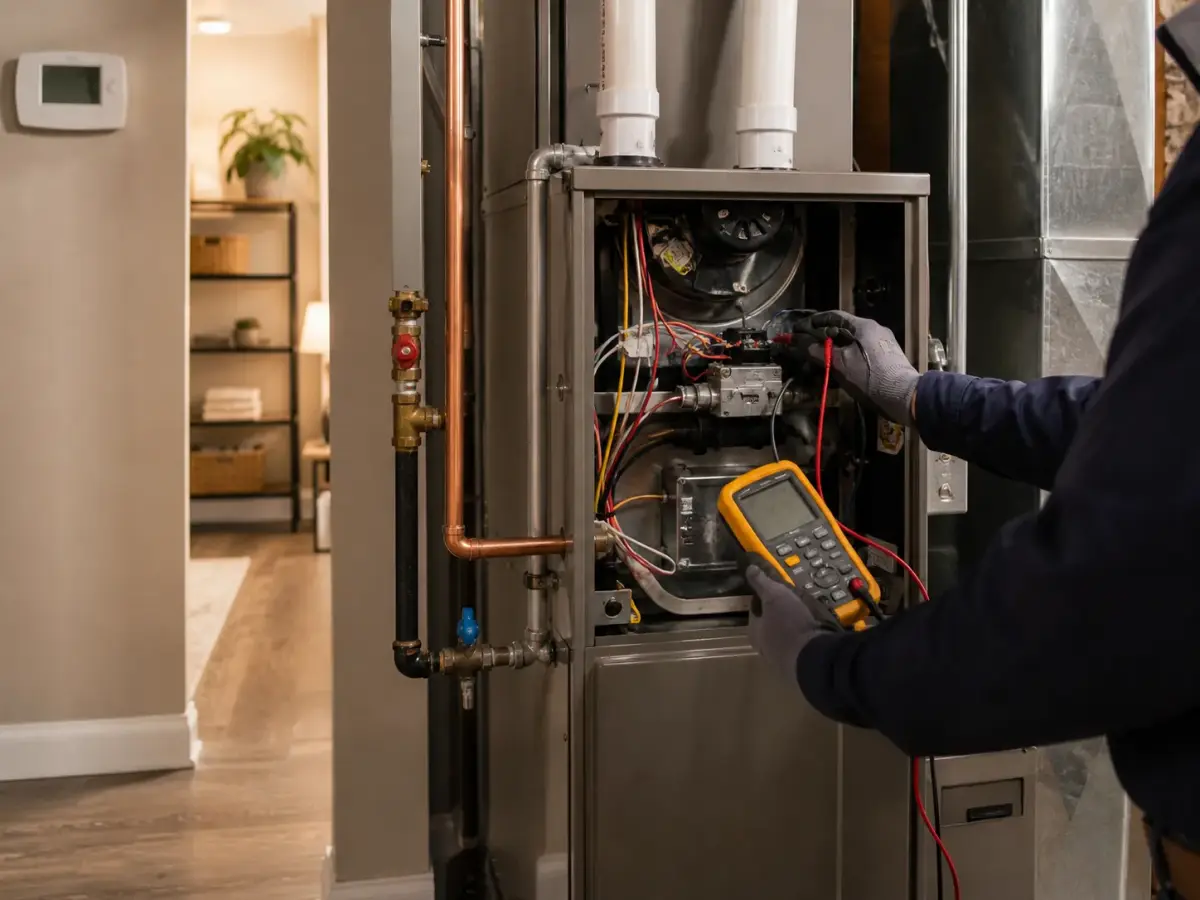
HVAC technician testing residential heating equipment during a repair diagnosis

Safety before diagnosis

Gas, carbon monoxide, fire, and energized water are not ordinary heating-repair calls.

Leave the property when there is a suspected gas leak, a carbon-monoxide alarm, smoke, fire, or symptoms that may be carbon-monoxide exposure. Do not operate a switch, silence an alarm, open heating equipment, search for the leak, or wait inside for a contractor.

PSE&G instructs anyone who smells gas to leave immediately and call 1-800-880-PSEG (7734) or 911 from a safe location. The CDC explains that carbon monoxide is odorless and colorless and recommends annual qualified service for fuel-burning heating equipment. If a CO alarm sounds or anyone may be exposed, move to fresh air and call 911.

Keep away from smoke, sparking, a hot electrical component, a repeatedly tripping breaker, or water touching wiring, a disconnect, or a panel. Once emergency responders or the utility have cleared the immediate danger and the property is safe, MDL can confirm whether an HVAC, boiler, electrical, or combined diagnosis is the next step.

Gas odorLeave without using lights, appliances, switches, or a phone inside. Call the gas utility or 911 from a safe distance.
CO alarm or possible exposureMove everyone to fresh air and call 911. Do not reset the alarm and return to normal operation.
Smoke, fire, sparking, or hot electrical partsKeep away and use emergency services for immediate danger. Do not touch equipment, wiring, a switch, breaker, or panel.
Water at energized equipmentKeep people away. Do not step into water or reach for a nearby switch or disconnect.

Heating-repair symptoms

The symptom narrows the test plan; it does not name the failed component.

A heating system can involve the thermostat or controls, heat source, airflow or hydronic distribution, venting or refrigerant circuit, electrical supply, safety devices, and the building itself. Report what changed and when instead of authorizing a part from a search result.

No heat

The equipment will not start or the building stays cold

Note the thermostat display and setpoint, indoor and outdoor temperatures, equipment type, whether the system attempts to run, error code, affected zones, and any odor, sound, water, ice, or breaker condition.

Cold air

The fan runs but supply air never becomes warm

A normal startup or cooldown interval, control problem, heat-production failure, airflow restriction, heat-pump condition, or safety response may be involved. Record timing rather than cycling power repeatedly.

Uneven heat

Some rooms, floors, radiators, or zones stay cold

Airflow, ducts, registers, dampers, zone controls, pumps, valves, radiators, baseboard, thermostat location, insulation, air leakage, or building load can matter. Identify exactly which areas do and do not heat.

Short cycling

The system starts and stops before comfort is restored

Controls, airflow, limits, equipment sizing, distribution, heat-pump operation, electrical supply, or another protective condition can cause cycling. Record cycle length and do not keep resetting a lockout.

Sound or odor

Banging, grinding, buzzing, whistling, burning, or another new condition appears

Stop normal use and call promptly for burning odor, smoke, sparking, or a hot electrical condition. For other sounds, note the location, timing, and whether they occur at startup, during operation, or at shutdown.

Water or ice

Water, frost, or heavy ice appears at heating equipment

Keep away from water near electrical components. Do not chip ice, open a pressurized system, or bypass a condensate or safety control. Report the location, amount, temperature, and operating state.

Identify the system

Furnace, boiler, heat pump, and electric heat follow different operating paths.

A furnace normally heats air and uses a blower and duct system. A boiler sends hot water or steam through piping to compatible radiators, baseboard, radiant loops, or other terminals. A heat pump moves heat through a refrigerant circuit and may use ducts or ductless indoor units. Electric resistance equipment may be central, baseboard, wall-mounted, or part of a heat-pump backup strategy.

Send a safe photo of the equipment label, thermostat or control display, and visible distribution. Include the fuel or energy source if known, whether domestic hot water also stopped, and whether the same system provides cooling. Do not remove a panel, touch a hot pipe, open a valve, handle refrigerant, or change a combustion control to identify it.

MDL must confirm the exact equipment, fuel, brand, configuration, and service scope before scheduling. This page does not make an all-brand, all-fuel, steam, oil, gas, electric, geothermal, ductless, or commercial-equipment promise.

Furnace and ductsReport airflow, filter condition, thermostat behavior, blower sound, heat production, venting when applicable, and which supply and return areas are affected.
Heat pumpReport indoor and outdoor-unit operation, thermostat mode, auxiliary or emergency-heat indication, ice, defrost behavior, airflow, and breaker condition.
Boiler and hydronic or steam heatReport water or steam distribution, affected radiators or baseboard, pressure or water condition if displayed, pumps or zones, noise, leaks, and domestic-hot-water impact.
Electric heatReport which zones or units fail, thermostat or control behavior, breaker condition, sound, odor, discoloration, and whether another major electrical load changed recently.

Safe checks before the call

Collect useful evidence without opening, bypassing, or repeatedly resetting equipment.

Confirm the thermostat is in the intended heating mode, the requested temperature is above room temperature, and the display is working. Check whether a wider power outage exists. Look at the accessible filter without removing equipment covers and confirm that supply and return openings are not blocked by furniture, rugs, or stored items.

Record the full thermostat or equipment message, how long the system runs, which zones fail, and whether the indoor fan, outdoor heat-pump unit, circulator, or other visible equipment appears to operate. A safe photo, short video, or audio clip can preserve an intermittent symptom.

Do not use an oven, grill, generator, or unvented appliance to heat the home. Do not repeatedly reset a breaker or lockout, bypass a door switch or safety, open a furnace or boiler, relight equipment contrary to its instructions, chip ice, add refrigerant, or tighten a hot or pressurized fitting. The U.S. Consumer Product Safety Commission recommends yearly professional inspection of fuel-burning furnaces, boilers, chimneys, flues, and vents.

Thermostat and timelineMode, setpoint, room temperature, display or fault message, when the problem began, and what changed beforehand.
Equipment and distributionLabel, system type, fuel or energy source, affected zones or rooms, airflow or radiators, and whether the equipment attempts to operate.
Safety observationsGas or combustion odor, CO alarm, smoke, heat, sparking, water, ice, noise, breaker trip, or an unusual electrical condition.
Property impactExact address, indoor temperature, occupants at risk, frozen-pipe concern, access constraints, and whether domestic hot water or cooling also failed.

Heating diagnosis

A useful service visit follows the call for heat through the complete system.

The exact tests depend on the equipment and complaint. The customer-facing outcome should still explain the diagnosed cause, proposed repair, evidence, limitations, charge, and final operating check.

01

Confirm the complaint

Review indoor and outdoor temperatures, affected areas, thermostat behavior, fault history, cycle timing, prior repairs, maintenance, and every safety symptom.

02

Identify the system

Confirm equipment, fuel or energy source, heat production, controls, venting or refrigerant path when applicable, electrical supply, and air, water, steam, or direct-electric distribution.

03

Inspect condition and safety

Check accessible components, connections, airflow or water conditions, venting or combustion factors when applicable, electrical condition, controls, safeties, leaks, ice, and physical damage relevant to the scope.

04

Test the operating sequence

Follow the thermostat or control call through equipment startup, heat production, delivery, temperature response, shutdown, and the rooms or zones that are not performing.

05

Write the repair

Identify the cause, proposed labor and parts, exclusions, price, permit responsibility if any, supplied warranty terms, and the condition that would change the scope.

06

Verify the result

Operate the repaired system, confirm the targeted function, explain remaining distribution or building conditions, and separate maintenance or replacement planning from the immediate repair.

System-specific repair paths

Route the problem to the equipment and trade that actually own it.

MDL lists both New Jersey master-HVACR and electrical-contractor credentials. That combined scope is useful when a heating complaint crosses equipment, controls, circuits, disconnects, motors, pumps, or panel conditions—but the actual owner of each repair still follows the diagnosis.

Furnace

Heat production, airflow, venting, controls, and electrical supply

A furnace complaint can involve the call for heat, ignition or heat source, blower and airflow, filter or duct restriction, limits and safeties, venting when applicable, controls, and the supporting circuit. Do not assume a cold vent means a single failed part.

Heat pump

Indoor and outdoor operation, defrost, backup heat, and airflow

Outdoor temperature, thermostat staging, refrigerant-circuit operation, coils, fans, defrost, condensate, filters, ducts, controls, auxiliary heat, and electrical supply can all affect winter performance. Some frost can be normal; persistent heavy ice needs diagnosis.

Boiler

Hot-water or steam heat, controls, piping, pumps, and radiation

No heat, pressure or water trouble, leaks, banging, gurgling, uneven radiators, repeated lockout, or a venting concern belongs on the boiler path. Use the boiler repair and service page for the complete hot-water, steam, maintenance, and replacement framework.

Electric

Controls, elements, sequencers, fans, circuits, and panel conditions

Electric furnace, air-handler, baseboard, wall-unit, and backup-heat problems may involve HVAC and electrical components. Repeated trips, heat, buzzing, discoloration, or burning odor should not be treated as a do-it-yourself part replacement.

Distribution

Ducts, registers, zones, piping, radiators, and the building

A functioning heat source cannot overcome a closed or failed zone, damaged duct, restricted airflow, pump or valve problem, air or steam condition, poor balance, major air leakage, or an envelope problem. The final explanation should separate equipment repair from distribution and building work.

Controls

Thermostats, sensors, zone controls, relays, communication, and schedules

A display or app message is evidence, not a full diagnosis. Preserve the exact code and operating history. Replacement controls must be compatible with the equipment, staging, heat source, zones, wiring, and any backup strategy.

Repair or replace

Compare the diagnosed repair with a complete replacement scope—not a shortcut formula.

ENERGY STAR identifies older equipment, frequent repairs, rising bills, and uneven comfort as signs that replacement may deserve consideration. Those signals do not reveal the failed component and do not make every older furnace, boiler, or heat pump unrepairable.

First confirm safe operation and the cause of the current failure. Then compare overall equipment and heat-exchanger condition where applicable, venting or refrigerant path, controls, electrical and distribution condition, repair history, parts availability, comfort, operating cost, remaining service life, and the expected result of the repair.

The replacement option should identify the heating-load basis, selected equipment, compatible ducts or hydronic distribution, venting or refrigerant work, controls, electrical scope, permits, removal, restoration, startup, owner instruction, and supplied warranty terms. Review the full North Jersey heating-installation guide before comparing proposals.

Repair caseKnown failure, acceptable overall condition, practical parts path, limited repair history, sound supporting systems, and a clear post-repair expectation.
Replacement comparisonSafety or major condition concern, repeated failures, difficult parts, incompatible or deteriorated distribution, poor comfort, or a repair that leaves a weak outlook.
No age-only verdictAge matters, but it does not substitute for diagnosis, condition, expected result, and complete written costs.
No partial-price comparisonCompare all labor, equipment, controls, electrical, distribution, venting or refrigerant work, permits, restoration, startup, and warranty terms.

Maplewood repair and permit path

The final scope—not the word “repair”—decides the permit and inspection path.

Maplewood's published guidance lists repair of furnace and air-conditioning equipment among work that does not require a construction permit. The same page lists a new or replaced furnace, boiler, central-air system, new ductwork, new wiring, and an electrical-service upgrade among work that does require a permit.

A diagnosis can begin as repair and end with a replacement, new circuit, control change, duct alteration, venting or chimney work, or another scope that follows different rules. New Jersey publishes the construction-permit packet, technical sections, and chimney-verification form; the local enforcing agency decides which forms and inspections apply to the exact property and work.

Require the proposal to name the permit applicant, subcodes, inspections, fees, chimney or venting responsibility, electrical work, restoration, startup, and closeout. MDL serves Maplewood from West Orange; this page does not claim a separate Maplewood office.

Ordinary equipment repairMaplewood's public list places repair of furnace and air-conditioning equipment in the no-construction-permit examples.
Replacement or new workNew or replaced furnace, boiler, central air, new ductwork, new wiring, and service upgrades are listed in the construction-permit examples.
Mixed HVAC and electrical scopeIdentify each trade, technical section, inspection, and responsible contractor rather than hiding new work inside a repair label.
Other North Jersey townsConfirm the project with the enforcing agency for the exact property; Maplewood's published list does not govern another municipality.

Heating repair price and proof

Ask what the diagnostic charge covers and what the repair is expected to restore.

Current Maplewood winners emphasize availability, history, reviews, broad service menus, or free-estimate language. A useful repair decision also needs a system-specific diagnosis, complete boundaries, approval process, final test, and written warranty terms.

Visit charge

Confirm the diagnostic scope before arrival

Ask what the initial charge includes, whether timing or access changes it, which system checks are included, and what authorization is required before parts or extended work.

Cause

Separate the failed component from contributing conditions

The explanation should connect the symptom, test result, and diagnosed cause while identifying airflow, distribution, electrical, venting, refrigerant, building, or maintenance conditions that remain outside the repair.

Scope

List labor, parts, materials, exclusions, and change conditions

Know what is included, what is not, the approved total, permit responsibility if any, and what discovery would require a new written authorization.

Final test

Define how normal operation will be checked

The closeout should confirm the targeted function, relevant controls and safety response, heat delivery, and any unresolved zone, duct, hydronic, electrical, or building condition.

Warranty

Identify the covered part, labor term, duration, and exclusions

Do not rely on a generic satisfaction or lifetime phrase. Record who administers each term, registration or maintenance requirements, transfer limits if any, and the documents supplied.

No invented offer

MDL confirms the actual price and availability

This page does not promise free estimates, flat rates, coupons, financing, every brand, every fuel, same-day arrival, 24/7 dispatch, or a blanket repair guarantee.

Maplewood and North Jersey routing

Use the repair page for diagnosis and the local page to confirm property context.

Historical Google Search Console data for this exact URL is strongest around heating repair, heating contractors, boiler repair, boiler service, and furnace repair in Maplewood. MDL operates from West Orange and publishes coverage across Essex, Morris, and Hudson County; it must confirm the exact town, property, equipment, and scope.

Review the complete Maplewood electrical and HVAC service page, nearby West Orange and Montclair pages, or the North Jersey service-area hub. Include the address and ZIP code so search visibility is never mistaken for confirmed coverage.

Maplewood repairNo heat, cold air, uneven rooms, short cycling, furnace, heat pump, electric heat, controls, distribution, and combined HVAC-electrical symptoms.
Boiler-specific workUse the boiler page for steam, hot-water, radiator, baseboard, piping, water, pressure, boiler maintenance, and replacement decisions.
Urgent no heatCall rather than waiting on the form when temperatures are falling or occupants or plumbing are at risk; use emergency services first for life-safety hazards.
Other townsSend the exact municipality, ZIP code, property type, system, and timing so MDL can confirm the appropriate service route.

Verified business proof

Public reviews and credentials customers can check.

MDL's claimed Google Business Profile identifies the company as family owned, established in 2007, and categorized for heating, air conditioning repair, electrical, and HVAC work.

4.8 out of 5 on GoogleBased on 102 public Google reviews checked July 15, 2026.
Established in 2007Family-owned electrical and HVAC service for North Jersey properties.
Claimed Google profileListed as a heating contractor, air conditioning repair service, electrician, and HVAC contractor.

Request heating repair

Send the property, indoor temperature, system, symptom, and safety details.

Include the Maplewood or North Jersey address and ZIP code, property type, thermostat message, equipment label and fuel or energy source if known, affected rooms or zones, whether the system runs, when the problem began, prior repairs, and any gas, CO, smoke, fire, odor, water, ice, sound, or breaker condition. Call for time-sensitive no heat and use emergency services or the gas utility first for an immediate hazard.

Heating repair FAQ

Direct answers for no heat, furnace, boiler, heat-pump, price, permit, and replacement decisions.

These answers cover the Maplewood and North Jersey questions visible in historical and current search results without inventing brands, prices, offers, arrival times, all-system coverage, or warranty terms.

Who should I call when the heat is not working in Maplewood?

Call a heating contractor when the thermostat is calling for heat but the furnace, boiler, heat pump, or electric system will not operate normally. Give the contractor the exact Maplewood address, indoor temperature, system type, thermostat or error message, affected rooms, and any sound, odor, water, ice, or breaker condition. A gas odor, carbon-monoxide alarm, smoke, fire, or immediate electrical danger belongs with 911 or the gas utility first.

What can I safely check before requesting heating repair?

Without opening equipment, confirm the thermostat mode and setpoint, whether its display is working, whether a wider power outage exists, whether the accessible filter is visibly blocked, and whether supply and return openings are obstructed. Note the equipment label and any fault code. Do not remove covers, relight equipment unless the manufacturer instructions explicitly direct it, bypass a safety, or repeatedly reset a lockout or breaker.

Why is my furnace running but blowing cold air?

Cold air can follow a thermostat or control issue, an ignition or heat-production problem, restricted airflow, a limit or safety response, a distribution problem, or a normal startup or cooldown sequence. The symptom does not identify the failed part. Record how long the air remains cold, whether the system cycles, any code, sound, odor, or breaker condition, and schedule diagnosis rather than changing parts by guess.

Why does my heat turn on and off repeatedly?

Short cycling can involve controls, airflow, equipment sizing, a limit or safety condition, heat-pump operation, electrical supply, distribution, or another system-specific problem. Do not keep changing thermostat settings or resetting the system. Note the length of each cycle, indoor and outdoor temperatures, filter condition, error messages, and whether all rooms and zones are affected.

Is a broken boiler or furnace an emergency?

Loss of heat becomes more urgent as indoor temperature falls, freezing threatens plumbing, or occupants are medically vulnerable. Gas odor, a carbon-monoxide alarm, smoke, fire, sparking, a hot electrical component, or water at energized equipment is an immediate safety matter: leave when appropriate and call 911, the fire department, or the gas utility before arranging ordinary repair.

How much does heating repair cost in Maplewood, New Jersey?

There is no responsible flat price before the system and failure are diagnosed. The visit charge, timing, equipment type, access, failed component, parts, fuel or refrigerant work, electrical work, duct or hydronic distribution, and any permit or replacement scope can change the total. Ask what the diagnostic charge includes and approve a written repair scope before additional work begins.

Should I repair or replace an older furnace, boiler, or heat pump?

Start with the diagnosed failure and safe operating condition. Then compare overall condition, age, repair history, parts availability, venting or refrigerant path, electrical and distribution condition, comfort, operating cost, remaining service life, and the complete written repair and replacement scopes. Age or a rule-of-thumb formula alone does not make the decision.

Does heating repair require a permit in Maplewood?

Maplewood lists repair of furnace and air-conditioning equipment as work that does not require a construction permit, while a new or replaced furnace, boiler, central-air system, new ductwork, new wiring, or electrical-service upgrade does require one. The exact final scope controls. If diagnosis expands into replacement or alteration, require the proposal to identify permits, subcodes, inspections, and the responsible applicant.

Does MDL repair furnaces, boilers, heat pumps, and electric heating systems?

Send the equipment label, fuel or energy source if known, distribution type, symptom, property address, and safe photos. MDL must confirm coverage for the exact system, brand, fuel, and scope before scheduling. Use the dedicated boiler page for steam, hot-water, radiator, baseboard, or boiler-specific decisions; this page does not make an all-brand or all-system promise.

What should a heating-repair proposal and warranty include?

The written scope should identify the diagnosed cause, proposed work, included parts and materials, exclusions, total approved charge, permit responsibility if any, final operating test, and follow-up conditions. Any warranty should state the covered part or equipment, labor term, duration, exclusions, maintenance or registration requirements, administrator, and documents the owner receives.

Next steps

Continue to the right heating or local path

Heating

Heating installation

Compare complete replacement choices after the present system has been diagnosed.

Learn more
Boiler

Boiler services

Use the boiler page for hot-water, steam, radiator, baseboard, maintenance, and boiler-specific repair decisions.

Learn more
Emergency

Emergency HVAC service

Use the urgent path for time-sensitive no-heat, no-cooling, water, or HVAC-electrical conditions after life-safety hazards are routed correctly.

Learn more
Maplewood

Maplewood service area

Confirm the local electrical, heating, cooling, permit, and request-routing context for a Maplewood property.

Learn more

Request service

Send MDL the service, town, and best callback number.

Use the form for planned service or call for urgent electrical, heating, or cooling help.