24/7 electrical, heating, and cooling help across North Jersey

Call 973.337.5530

Electrical panel upgrades · Essex County and North Jersey

Electrical panel upgrades in Essex County start with the load—not an automatic 200-amp answer.

MDL helps define whether a property needs a panel replacement, added circuits, load management, or a complete service upgrade—and puts capacity, permits, utility work, inspection, and restoration in one written scope.

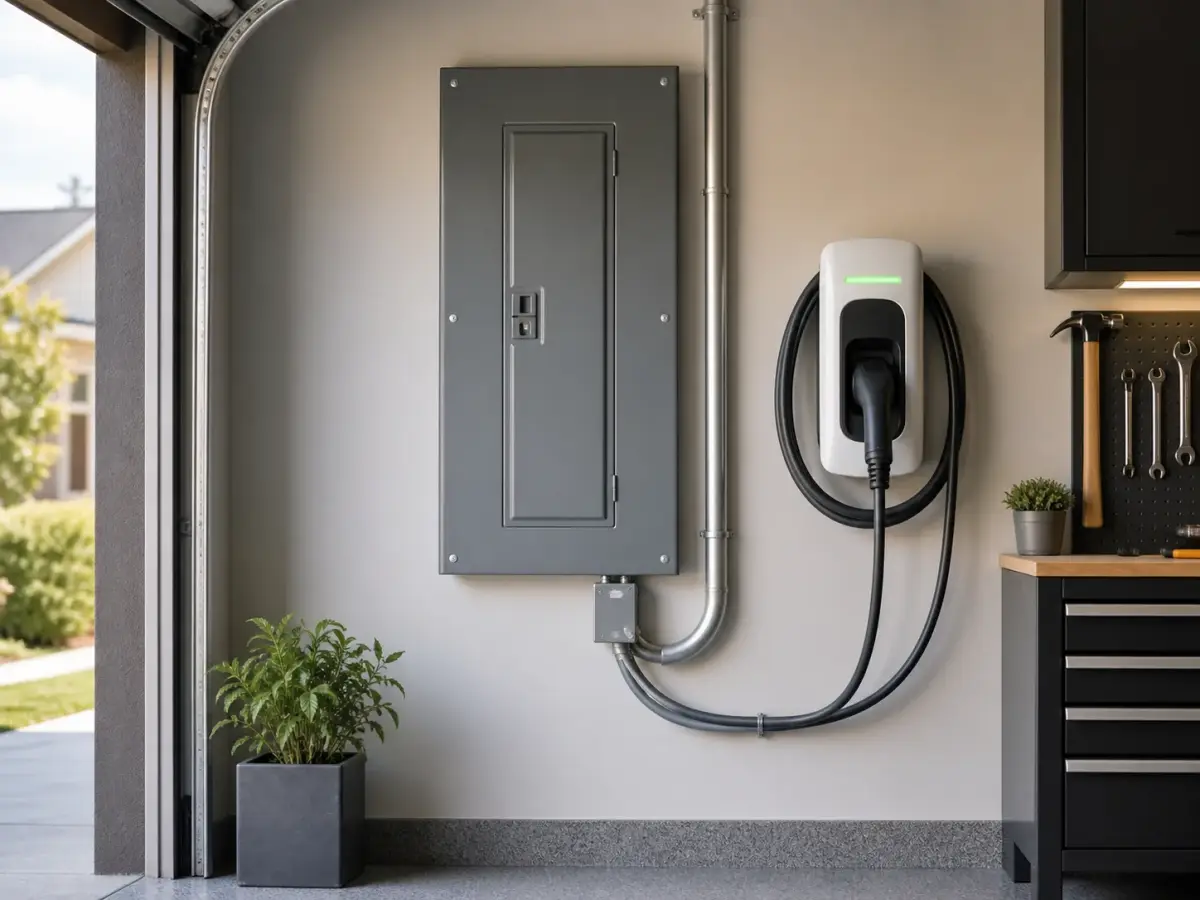
Residential electrical panel beside Level 2 EV charging equipment in a North Jersey garage

Safety before the estimate

Smoke, fire, active sparking, heat, or water at electrical equipment is not a normal quote request.

Keep people away from a panel, meter, disconnect, cable, receptacle, or appliance that is smoking, sparking, visibly damaged, unusually hot, or in contact with water. Do not remove the panel cover, touch the equipment, step into water, reset a breaker repeatedly, or attempt to identify a live fault.

Use 911 for fire or immediate danger. If it is safe to leave, move away from the affected area and call from a safe location. A qualified electrical evaluation can begin after emergency responders or the utility have addressed the immediate hazard and the property can be approached safely.

For a stable concern—such as repeated trips, limited breaker space, an inspection note, planned equipment, or uncertainty about the service rating—send the symptom and a safe photo of the closed equipment. A symptom starts the inspection; it does not prove that a complete panel upgrade is the only answer.

Smoke, flame, or active sparkingKeep away and use emergency services. Do not touch the panel, meter, disconnect, wiring, or nearby switch.
Water at energized equipmentDo not step into water or reach for a breaker or disconnect. Keep the area clear and call for qualified help.
Repeated trip, heat, buzzing, or burning odorStop resetting the breaker. Record the affected circuit and condition from a safe distance.
Planned capacity questionCollect labels and load information without opening electrical equipment; the calculation and inspection decide the path.

Four different projects

Panel repair, panel replacement, added capacity, and a service upgrade are not interchangeable.

The right scope depends on the failed or planned load, existing service, panel condition, branch circuits, meter and service equipment, utility connection, and local permit path. Ask every proposal to name the equipment being changed and the capacity that will exist afterward.

Repair

Correct a diagnosed component or connection problem

A breaker, termination, neutral, enclosure, labeling, or another documented condition may have a repair path. The diagnosis should state what failed, why the proposed correction is appropriate, and what condition remains outside the repair.

Replace

Replace the panelboard without assuming more utility capacity

A panelboard replacement can keep the same service rating while addressing condition, configuration, breaker compatibility, space, or project requirements. It is not automatically a 100-to-200-amp service upgrade.

Add

Add a circuit only after capacity and route are confirmed

An EV charger, heat pump, air conditioner, range, dryer, water heater, hot tub, workshop, addition, or other load can require a dedicated circuit. Breaker space alone does not prove the service can support it.

Upgrade

Increase service capacity through the complete utility-to-panel path

A service upgrade can involve utility coordination, conductors, meter equipment, service entrance, main disconnect, grounding and bonding, panelboard, permits, inspection, outage, reconnection, and restoration.

Start with the load

A 100-amp label—or an empty breaker space—does not answer the capacity question by itself.

Record the existing service and panel ratings, existing circuits and major equipment, proposed loads, heating and cooling, cooking, water heating, laundry, EV charging, generator or transfer equipment, solar or battery equipment, additions, workshops, and other simultaneous demand that can affect the calculation.

The U.S. Department of Energy's Building Science Education resource on home electrification and electric-panel upgrades explains why owners need to understand panel capacity before adding electric appliances. The field decision still belongs to a documented load calculation, equipment requirements, existing condition, and the code and utility rules that apply to the property.

Do not recommend a larger service from the age of the house, the number on one breaker, or a sales checklist. The result may be an added circuit, panel work at the existing rating, load management, equipment selection, a complete service upgrade, or a separate repair that should happen before expansion.

Existing supplyUtility, service rating, meter and service equipment, main disconnect, panel rating, feeder path, overhead or underground configuration, and available physical space.
Existing demandHeating, cooling, cooking, water heating, laundry, pumps, motors, EV charging, other major loads, and known future projects.
Requested loadEquipment nameplate and instructions, voltage, amperage or power, continuous-load treatment when applicable, circuit, disconnect, and operating pattern.
Possible pathsRepair, dedicated circuit, panel replacement, compatible load management, equipment adjustment, feeder work, or complete utility service upgrade.

Inspection before recommendation

The panel is one part of the service and branch-circuit system.

The exact inspection follows the property and complaint. The owner-facing result should still distinguish capacity, condition, code and utility scope, and any work that belongs outside the proposed upgrade.

01

Confirm the goal

Review trips, heat, noise, water, inspection findings, renovation plans, equipment additions, present service, future loads, timing, and every safety concern.

02

Identify the service path

Document utility, overhead or underground supply, meter and service equipment, disconnect location, service and panel ratings, feeders, and accessible grounding and bonding conditions.

03

Inspect the panel

Evaluate enclosure and equipment condition, breaker and panel compatibility, terminations, signs of heat or moisture, labeling, working space, available positions, and issues relevant to the proposed scope.

04

Calculate the load

Use the applicable method and actual existing and proposed equipment rather than inferring capacity from breaker count, square footage, or the age of the home.

05

Define the complete scope

Name the rating, panel and service equipment, conductors, grounding and bonding, circuit changes, utility work, permits, inspections, outage, restoration, exclusions, and change conditions.

06

Test and close out

Complete required inspections and utility steps, energize through the approved sequence, verify the intended circuits and labels, document final ratings, and deliver permit, warranty, and equipment records.

100-to-200-amp service

Price and schedule the entire service path—not just the new box on the wall.

A complete proposal should identify the existing and proposed capacity, service entrance and conductors, meter socket or other meter equipment, main disconnect, panelboard, feeders, grounding and bonding, surge protection when included, breaker and circuit work, utility connection, permit and inspection, outage, patching or restoration, cleanup, labeling, and closeout documents.

Conditions outside the panel can control the project: overhead clearances, underground service, meter location, exterior condition, access, finished walls, working space, multifamily or association approval, utility engineering, road-opening needs, or a branch-circuit issue that is not corrected merely by installing a larger panel.

Ask whether the quote is for a panel replacement at the current rating or a true service-capacity increase. A lower price may omit utility-side work, meter equipment, permits, restoration, circuit corrections, or another item that appears later as a change order.

Rating and equipmentExisting and proposed amps, voltage and phase, manufacturer and listed equipment, main disconnect, panel spaces, breaker types, and final labels.
Service and utilityOverhead or underground path, utility application, service conductors, meter equipment, outage, utility inspection or field work, and reconnection responsibility.
Code and inspectionElectrical permit, plans or load information if required, local inspections, certificate or cut-in card, and the party responsible for closeout.
Property restorationWall, siding, masonry, paint, landscaping, trench, weatherproofing, access, cleanup, and every exclusion that remains the owner's responsibility.

New Jersey, West Orange, and PSE&G sequence

Permit, local inspection, and utility approval are separate gates.

New Jersey's Uniform Construction Code guidance says construction permits apply to electrical work on existing buildings outside ordinary maintenance, and construction begins after released plans and an issued permit. The exact technical sections, drawings, fees, and inspections come from the local enforcing agency and the final scope.

West Orange's published construction-code fee schedule includes service panels—covering service conductors, feeders, switchboards, and panelboards—with fee tiers by amperage. Confirm the current application, fee, inspections, and closeout directly for the property rather than copying a fee from a search result into the project budget.

PSE&G instructs customers to consult the utility during planning, apply for new or upgraded service, provide existing and proposed meter-load details including volts, amps, and phase, arrange mandatory local inspection, and prepare the site. PSE&G says residential requests may take up to six weeks and can vary with service availability, permits, and municipal inspections.

Before applicable meter installation or reconnection, PSE&G requires the local certificate of approval, called a cut-in card for electric service. For upgrades to 200 amps or less, its page also describes obtaining the assigned meter pan with the original municipal permit and project reference number. The utility representative controls the exact project sequence.

PlanConfirm the property, utility, existing and requested service, load details, equipment, access, and whether utility engineering or other approvals are involved.
PermitIdentify the applicant, electrical technical section, supporting information, fees, inspections, and work that cannot begin until authorization.
Install and inspectFollow the approved outage and work sequence, complete local inspection, and obtain the required certificate or cut-in card.
Reconnect and close outComplete utility steps, safe energization, circuit verification and labels, restoration, final records, and supplied warranty documents.

Panel-upgrade cost and proposal proof

Current winners publish price ranges; the safer comparison is a complete, property-specific scope.

Search results frequently quote a panel price without proving whether it includes a same-rating panel replacement, a utility service increase, meter equipment, conductor work, permits, inspection, restoration, or correction of existing conditions. MDL should price only after the intended load and full path are known.

Capacity

State the existing and proposed service and panel ratings

Record the load basis, requested equipment, available breaker positions, panel rating, main rating, service rating, and whether the project changes utility capacity.

Equipment

List every supplied component and compatibility boundary

Identify panelboard, main disconnect, meter equipment, breakers, surge protection if supplied, conductors, grounding and bonding material, labels, and equipment that remains.

Labor

Define service, circuit, access, outage, and restoration work

Include removal, installation, circuit transfer or correction, utility coordination, testing, cleanup, wall or exterior work, and who restores finishes or landscaping.

Approvals

Name permit, inspection, utility, and closeout responsibility

State who applies, who pays each fee, what approval is required before work, who schedules inspections, what utility action follows, and which records the owner receives.

Changes

Explain what discovery can change the price or schedule

Document inaccessible conditions, damaged conductors, incompatible circuits, grounding or bonding issues, meter or utility changes, code-official direction, hazardous material, and restoration exclusions.

Warranty

Separate equipment, manufacturer, and labor terms

Record the covered equipment or workmanship, duration, exclusions, registration or maintenance requirements, administrator, and documents supplied. This page makes no blanket warranty promise.

Essex County and North Jersey routing

Use this page for the panel decision and local pages to confirm property context.

Historical Google Search Console data for this exact URL includes residential electrical panel upgrades in Essex County, Morris County, North and Central New Jersey, 100-to-200-amp service, and West Orange electrical intent. MDL operates from West Orange and publishes coverage across Essex, Morris, and Hudson County; it must confirm the exact property, utility, load, and scope.

Review the West Orange electrical and HVAC page, nearby Maplewood and Montclair pages, or the complete North Jersey service-area hub. Search visibility does not replace service-area confirmation.

Essex CountyPanel and service review tied to the exact municipality, utility, property type, equipment, and permit path.
West OrangeLocal operating base, service-panel permit-fee context, PSE&G planning, and direct routing for the property address.
Morris and Hudson CountyConfirm the municipality and utility before applying Essex County or PSE&G assumptions to another property.
Commercial or multifamily workState the building use, number of units or meters, voltage and phase, tenant or owner approvals, and requested loads so the correct project path can be confirmed.

Verified business proof

Public reviews and credentials customers can check.

MDL's claimed Google Business Profile identifies the company as family owned, established in 2007, and categorized for heating, air conditioning repair, electrical, and HVAC work.

4.8 out of 5 on GoogleBased on 102 public Google reviews checked July 15, 2026.
Established in 2007Family-owned electrical and HVAC service for North Jersey properties.
Claimed Google profileListed as a heating contractor, air conditioning repair service, electrician, and HVAC contractor.

Request a panel and service review

Send the property, utility, service label, symptoms, and every planned major load.

Include the Essex County or North Jersey address and ZIP code, property type, utility, main rating if safely visible, closed-panel and meter photos, overhead or underground service, breaker trips or inspection notes, and proposed EV charger, HVAC, cooking, water heating, generator, solar, battery, renovation, or appliance work. Never remove a panel cover for a quote photo.

Electrical panel FAQ

Direct answers about cost, 100-to-200-amp service, rewiring, permits, utility work, and timing.

These answers cover the Essex County, West Orange, New Jersey, and North Jersey questions visible in historical and current search results without inventing prices, rebates, arrival times, equipment, or universal upgrade requirements.

How much does an electrical panel upgrade cost in New Jersey?

There is no responsible single New Jersey price without the property and scope. Cost can change with the existing and proposed service rating, panel and meter equipment, overhead or underground service, service conductors, grounding and bonding, utility work, breaker and circuit changes, access, permits, inspections, restoration, and conditions discovered after shutdown. Compare written scopes line by line instead of comparing an allowance with a complete service project.

How much does it cost to upgrade from 100 amps to 200 amps in NJ?

A 100-to-200-amp project can be more than a panel swap. The electrician and utility may need to address the service entrance, meter equipment, main disconnect, feeders, grounding and bonding, panelboard, utility connection, permits, inspections, and restoration. PSE&G also requires existing and proposed load details for an electric-service upgrade. MDL must inspect the property and define the complete written scope before pricing it.

Can I upgrade the electrical panel without rewiring the whole house?

A panel project does not automatically require whole-house rewiring, but it also does not certify every existing branch circuit. The scope should document which circuits are transferred, any unsafe or incompatible condition found, grounding and bonding, required protection, circuit labeling, and whether separate repairs are recommended or required. The local code official and actual field conditions control what must be corrected.

Is a panel replacement the same as an electrical service upgrade?

No. A panelboard may be replaced while the service capacity remains the same. A service upgrade changes the available service capacity and can involve utility conductors or connection, meter equipment, service entrance conductors, the main disconnect, grounding and bonding, and the panelboard. The proposal should name exactly which equipment and capacity change are included.

Do I automatically need a 200-amp service for an EV charger, heat pump, or new appliance?

Not automatically. The decision should use the existing service and panel ratings, a documented load calculation, breaker space, other major loads, the requested equipment, operating pattern, manufacturer requirements, and any permitted load-management path. Some properties need added circuits or service work; others may have a compliant path without an automatic 200-amp upgrade.

What signs mean I should have my electrical panel inspected?

Repeated breaker trips, heat, buzzing, burning odor, scorch marks, rust or water, loose or damaged equipment, an unlabelled or crowded installation, no room for planned loads, inspection findings, or uncertainty about the service rating are reasons to request an evaluation. These symptoms do not prove that a panel upgrade is the only repair. Smoke, fire, active sparking, or an energized water condition requires immediate safety action.

Do electrical panel upgrades require a permit and inspection in New Jersey?

Panel and service work generally belongs on the electrical permit and inspection path under New Jersey's Uniform Construction Code. The exact forms, plan requirements, fees, inspections, applicant, and closeout depend on the municipality and scope. West Orange publishes service-panel fee tiers by amperage, and PSE&G requires local approval before it can install or reconnect meter service for applicable utility work.

How long does a panel or service upgrade take?

Separate hands-on electrical work from the complete project calendar. Design, permit review, equipment availability, utility engineering, a scheduled outage, local inspection, utility reconnection, and restoration can control timing. PSE&G says residential service requests may take up to six weeks and that availability, road-opening permits, and municipal inspections can change the schedule. MDL must confirm the actual sequence for the property.

Can I stay home during an electrical panel upgrade?

Expect a planned power interruption and restricted access around the service equipment. Whether occupants can remain depends on the project, utility and inspection sequence, weather, life-safety needs, medical equipment, work area, and how long essential systems will be unavailable. Ask the written plan to identify shutdown, refrigerator and freezer planning, internet and alarm impacts, heating or cooling concerns, and the conditions for safe re-energization.

What should I send with a panel-upgrade quote request?

Send the Essex County or North Jersey address and property type, utility, safe photos of the closed panel door and service label, main-breaker rating if visible without opening equipment, meter and service-entry location, overhead or underground service, symptoms, home-inspection notes, planned EV, HVAC, cooking, water-heating, generator, solar, battery, renovation, or appliance loads, desired timing, and any access or association constraints. Never remove the panel cover to take a photo.

Next steps

Continue to the right electrical or local path

EV

EV charger installation

Plan charging load, circuit route, equipment location, permits, and panel capacity as one project.

Learn more
Generator

Generator installation, repair & maintenance

Start with the requested backup loads, existing equipment, electrical capacity, and scope confirmation.

Learn more
Electrical

Electrical services

Use the services page for troubleshooting, repairs, lighting, wiring, renovation, generator, or commercial electrical routing.

Learn more
West

West Orange service area

Confirm local electrical, HVAC, permit, utility, and request-routing context for a West Orange property.

Learn more
Emergency

Emergency electrical help

Call for time-sensitive electrical conditions after fire, active sparking, energized water, or immediate danger is routed through emergency services.

Call MDL

Request service

Send MDL the service, town, and best callback number.

Use the form for planned service or call for urgent electrical, heating, or cooling help.