
Heat-pump repair and operating diagnosis
Use this path for a heat pump that will not heat or cool, shows a fault, freezes abnormally, cycles repeatedly, makes a new sound, or no longer maintains comfort.
Hoboken HVAC service area
Use this Hudson County service page to route heat-pump repair, air-conditioning repair, heating, electrical, and planned comfort work for a Hoboken home, condo, multifamily property, or business.
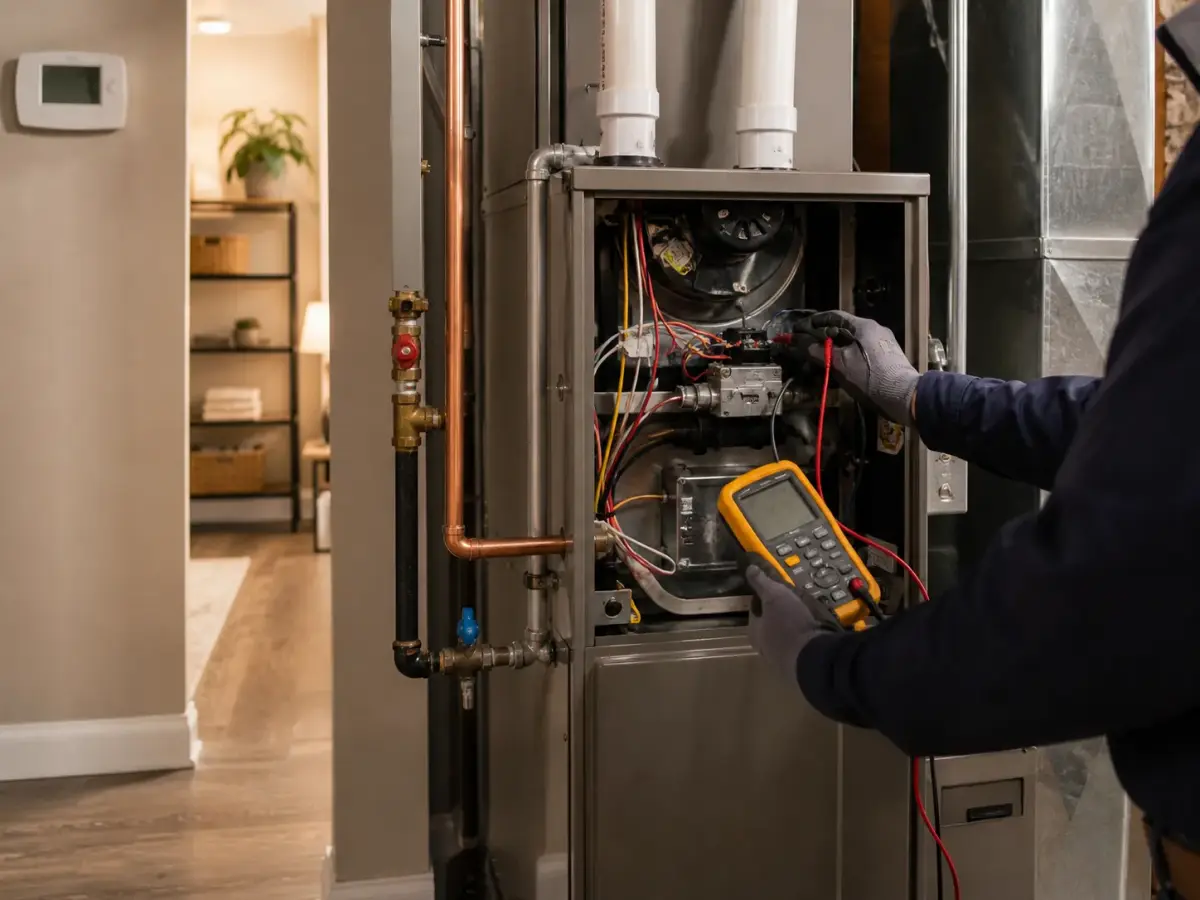
Choose the right first move
A visitor searching for HVAC service in Hoboken may have a system that stopped today, a recurring comfort problem, or a project that affects the building as well as the equipment. The first useful step is to separate safety, diagnosis, and planning so the service request reaches the right path.
MDL lists both electrical-contractor and master-HVACR credentials. That combination can be useful when the symptom crosses a thermostat, motor, disconnect, breaker, circuit, panel, air handler, heat pump, or condenser. It does not mean every HVAC symptom is electrical or that every new system requires a panel upgrade. The cause and scope still have to be tested.
Hoboken HVAC and electrical paths
For a business, managed building, rental, or other commercial property, use the North Jersey commercial HVAC and electrical service hub to share the operating impact, equipment, authorized contact, and access conditions in one request.
This page keeps the local context in one place while the focused MDL pages carry the deeper service intent. Choose repair when equipment should be operating now; choose installation only when the project is a planned replacement, new system, or complete comparison.
Use this path for a heat pump that will not heat or cool, shows a fault, freezes abnormally, cycles repeatedly, makes a new sound, or no longer maintains comfort.
Use this path for warm air, no start, weak airflow, water, ice, a thermostat problem, an outdoor unit that will not run, or an unexplained breaker condition.
Identify whether the property uses a furnace, boiler, heat pump, electric system, packaged unit, or building-supplied heat before a repair path is promised.
Use MDL's electrical path for repeated trips, damaged equipment supply, new circuits, panel questions, lighting, outlets, renovation work, and other listed electrical needs.
Symptom before solution
Several failures can create the same symptom. A useful service visit records what the system is doing, tests the relevant sequence, identifies the cause that the evidence supports, and explains the proposed work before additional repair begins.
The cause may involve the thermostat, control power, an equipment safety, a disconnect, a breaker or circuit, a motor or compressor condition, condensate protection, or another system-specific fault. Repeated resets can hide evidence or create risk.
Airflow, filters, coils, ducts, zoning, controls, refrigerant-side performance, equipment capacity, envelope conditions, distribution, and the way the building is used can all matter. Square footage and a thermostat reading do not reveal the cause alone.
Controls, airflow, safeties, equipment condition, sizing, pressure or temperature response, electrical supply, and other faults can shorten cycles. Record how long it runs, the outdoor and indoor conditions, and any code or sound.
Stop normal operation and call when water approaches electrical parts, a coil or line ices abnormally, a burning odor appears, or a new grinding, screeching, rattling, or arcing sound begins. Do not open equipment or chip ice away.
Heat-pump repair in Hoboken
“Heat pump” can describe different equipment arrangements. A Hoboken property may have a ducted split system, ductless mini-splits, a packaged or through-wall unit, a water-source unit connected with a larger building loop, or another configuration. The owner, tenant, association, or building operator may control different parts of that system.
Tell MDL whether the problem affects heating, cooling, or both; whether every room or only one zone is affected; where the indoor and outdoor components are located; and whether the equipment belongs to the unit or the building. A fault at a private thermostat is a different service path from a building-loop, rooftop, common electrical, or mechanical-room issue.
Useful diagnosis can include the operating mode and control call, airflow or water-flow conditions as applicable, temperatures, equipment sequence, electrical supply, safeties, condensate path, outdoor-unit condition, defrost behavior, and refrigerant-circuit findings when qualified work is required. The test list must fit the actual equipment; it should not be copied from a generic residential checklist.
EPA Section 608 rules require appropriate certification for technicians who maintain, service, or repair equipment in ways that could release refrigerants. “Add refrigerant” is not a complete written diagnosis. Ask what was measured, what condition the measurement supports, whether a leak path was evaluated, what refrigerant work is proposed, and what the expected result is.
Air-conditioning repair in Hoboken
Repair begins with a specific performance failure. Maintenance is planned inspection and care intended to keep operating equipment in better condition. Installation is a replacement or new-system project. A tune-up cannot promise to correct a failed component, and a replacement quote should not substitute for a repair diagnosis when the owner asked why the current system stopped.
For no cooling or warm air, note whether the thermostat calls for cooling, whether the indoor fan and outdoor equipment operate, whether airflow changed, whether the problem affects every zone, and whether water, ice, a fault code, or a breaker condition appears. Do not keep lowering the thermostat, cycling power, or resetting a breaker in an attempt to force operation.
For water near an indoor unit, stop normal operation if it is safe and keep clear of electrical components. The visible water may relate to condensate drainage, a pan or pump, a frozen coil that is thawing, airflow, installation slope, or another cause. The location and source should be confirmed before the response is reduced to “clear the drain.”
If repair restores operation, ask what failed, what was tested afterward, whether any unresolved condition remains, and what maintenance or monitoring is appropriate. If replacement enters the conversation, move to a complete comparison that includes the building and not only the equipment price.
Hoboken property coordination
Hoboken includes privately controlled homes and businesses as well as condos, co-ops, rental units, multifamily properties, and buildings with shared roofs, shafts, mechanical rooms, electrical rooms, loops, or equipment. The request should identify who owns the equipment and who can authorize access or work.
Identify the thermostat, indoor equipment, outdoor or rooftop unit, electrical disconnect, condensate route, ducts or piping, and any shared system. Provide the building's responsibility statement or equipment record when one exists.
Roof, mechanical room, electrical room, courtyard, rear yard, basement, locked utility area, tenant unit, parking space, loading zone, elevator, stair, or neighboring property access can control whether testing is possible.
An owner, landlord, managing agent, superintendent, condo or co-op representative, commercial tenant, or building engineer may need to approve access or scope. Do not assume the person requesting service controls common equipment.
Share floor and unit, occupied rooms, pets, vulnerable occupants, finish protection, working-hour rules, alarm or access procedures, and any water, noise, dust, or shutdown concern before the visit.
Permits, zoning, inspections, and noise
Diagnosis and ordinary repair are not the same as replacing equipment, changing an exterior location, adding a circuit, altering a roof, installing a new line route, or modifying a building system. The proposal should identify what is actually changing before anyone assumes that a permit is or is not required.
The Hoboken Construction Code Office administers and enforces the New Jersey Uniform Construction Code, processes permit applications, reviews them, conducts inspections, and issues approvals. Its published guidance tells applicants to ask the office when permit need is uncertain and notes that prior zoning, historic, health, or other approvals may apply before a construction permit is issued.
The Hoboken Zoning Office says zoning approval can be required for new construction and alterations or modifications to existing buildings, and that zoning may be required even when a building permit is not. Exterior work in a historic district can add another review. Ask before equipment, screens, platforms, penetrations, lines, or other exterior elements are selected or moved.
New Jersey's Uniform Construction Code overview includes building, electrical, fire-protection, plumbing, fuel-gas, and mechanical subcodes and describes inspection and final-approval responsibilities. The exact subcodes and drawings depend on the work.
Hoboken's noise guidance says sustained sound from stationary sources such as mechanical equipment can be subject to enforcement. Equipment sound data, placement, supports, vibration, screening, property lines, neighbors, roof or wall transmission, and any association rules should be reviewed before a new outdoor or rooftop location is promised.
Repair or replace
Online formulas cannot see the failed part, building, equipment location, distribution, refrigerant path, electrical capacity, access, permits, or what a replacement proposal leaves out. A responsible comparison makes both options complete enough to evaluate.
Identify the cause, included part or material, related conditions, equipment condition, expected operating result, excluded work, approved price, applicable part and labor terms, and whether the repair leaves a known reliability concern.
Compare capacity basis, indoor and outdoor equipment, distribution, controls, refrigerant lines, condensate, electrical work, permits, access, lifting or delivery, removal, supports, protection, restoration, startup, testing, owner instruction, and warranty documents.
Ownership, association or landlord approval, common-system responsibility, roof or mechanical-room access, shutdowns, working hours, neighbors, noise, zoning, historic review, permits, inspections, and common-area restoration can change the decision.
Keep the diagnosis, photos or readings where appropriate, equipment identifiers, repair history, written scopes, exclusions, permit path, capacity or load basis, price, schedule conditions, and warranty terms. A headline age or price is not the whole comparison.
New heat pump, AC, or heating system
A planned system should not be selected from square footage or the old nameplate alone. ENERGY STAR recommends proper sizing and a Manual J calculation and explains that oversized equipment can create frequent cycling, humidity, comfort, and efficiency problems.
The planning conversation should identify conditioned rooms and zones, exposures, insulation and air leakage, windows, occupancy, internal loads, existing ducts or other distribution, equipment locations, winter heating strategy, supplemental or backup heat when proposed, condensate, refrigerant-line routing, controls, electrical capacity, outdoor sound and placement, access, permits, and restoration.
Ductless equipment may deserve comparison where useful duct routes are absent, one floor or zone has a separate need, or a planned layout supports independent zones. A central system may make more sense where suitable ducts and equipment locations already exist. Packaged, through-wall, water-source, and building systems require their own property-specific analysis. No single arrangement is automatically the best Hoboken answer.
For a heat pump intended to heat during winter, ask for the selected equipment's capacity at relevant outdoor conditions, the building heating load, controls, defrost and condensate plan, electric demand, any supplemental heat, and what the owner should expect at the design condition. A generic efficiency rating does not answer whether the installed system fits the property.
Electrical and HVAC together
A condenser, heat pump, air handler, electric heat kit, rooftop unit, mini-split, condensate device, thermostat transformer, or control can introduce electrical requirements. The review should identify equipment specifications, disconnect and overcurrent requirements, conductor and circuit conditions, available panel space, service and panel ratings, existing calculated load, other major loads, and any utility or common-building boundary.
A repeated HVAC breaker trip is a symptom, not permission to install a larger breaker. Stop resetting it and have the equipment and electrical circuit evaluated. The protective device, conductors, disconnect, terminations, motor or compressor, and other loads all belong in the diagnosis. Never replace protection to force equipment to run.
For planned electrification, the correct path may be an existing compliant circuit, a new dedicated circuit, panel work, a documented load-management approach where allowed and suitable, a service upgrade, building distribution work, or a different equipment design. The answer should come from the actual load and property—not from panel age or a photograph alone.
Use the electrical panel upgrade guide to compare panel replacement with a complete service-capacity change. MDL's published credentials include NJ Electrical Business Permit #34EB01606200, NJ Electrical Contractor License #34EI01606200, and NJ Master HVACR Contractor License #19HC00308200.
From request to closeout
Send the address, property type, unit and floor, owner or tenant status, equipment type and locations, symptom or project goal, and safe label photos.
Identify the authorizing owner or building contact, common-system boundaries, roof or room keys, parking or loading, elevator or stair access, and working-hour rules.
Repair calls test the operating problem. Installation calls document loads, distribution, equipment locations, electrical needs, building constraints, and approval paths.
Review findings, proposed work, included materials, access, permits, price, exclusions, schedule conditions, change-order path, expected result, and warranty terms.
Complete authorized work, required inspections, operating tests, controls and settings, cleanup, restoration within scope, and any building signoff.
Retain the diagnosis or survey, proposal, changes, permits, approvals, invoice, equipment identifiers, startup records, owner instructions, and supplied warranties.
Price, timing, and warranty
This site does not publish a universal Hoboken repair price or arrival promise. Diagnostic time, equipment type, failed component, parts, refrigerant work, electrical work, unit or roof access, building coordination, parking or delivery, permits, inspection, replacement scope, and timing can change the work.
Clarify travel or dispatch, testing time, after-hours conditions, access waiting, included measurements, written findings, estimate credit if any, and what requires additional approval. Do not infer MDL's charge from another contractor's published range.
The approved scope should identify the cause supported by testing, proposed repair, included parts and materials, total charge, exclusions, expected result, final test, and any condition that could change the work.
Parts and equipment, owner and building approval, plans, zoning, permits, inspections, utility or building shutdowns, roof or exterior access, delivery or lifting, weather, working hours, and restoration can affect a planned project.
Ask for covered equipment or parts, labor term, duration, exclusions, maintenance and registration requirements, administrator, transfer rules if any, and the records needed for a claim. Do not rely on a blanket website promise.
Hoboken HVAC FAQ
These answers are designed to help a Hoboken owner, tenant, board, manager, or business send a better service request without guessing the cause or scope.
MDL publishes Hoboken as part of its Hudson County service area and lists air-conditioning repair, heating repair, heat-pump work, cooling and heating installation, and emergency HVAC service. Send the exact address, building type, equipment, symptom, and access details so the team can confirm coverage and the appropriate appointment path.
MDL can review a heat-pump request, but the team must confirm the exact system and who controls it. Tell MDL whether the equipment is ducted, ductless, packaged, water-source, through-wall, rooftop, or connected to a building system; identify the indoor and outdoor equipment locations; and explain any condo, co-op, landlord, managing-agent, roof, mechanical-room, or common-area approval needed for access.
Without opening equipment, confirm the thermostat mode and setpoint, whether the display has power, whether a wider outage exists, whether accessible vents are open, and whether the accessible filter is visibly blocked. Note any code, sound, odor, water, ice, airflow change, or breaker condition. Do not remove covers, handle refrigerant, chip ice from a coil, bypass a safety, or keep resetting a breaker that trips again.
No. A refrigerant reading must be interpreted with the system type, operating conditions, airflow, temperatures, pressures, equipment condition, and leak path. EPA rules require technicians who maintain, service, or repair equipment in ways that could release refrigerant to hold the appropriate Section 608 certification. Do not accept refrigerant as a complete diagnosis without findings and a written scope.
Start with the diagnosed failure and safe operating condition. Then compare overall condition, repair history, parts and refrigerant path, comfort, operating cost, distribution, electrical requirements, building access, permits, remaining service outlook, and the complete written repair and replacement scopes. Equipment age or a single online formula should not decide the project by itself.
The final scope controls. Hoboken's Construction Code Office administers the New Jersey Uniform Construction Code and advises applicants to confirm whether a permit is required. The City says construction work may also require prior zoning, historic, or other approvals, and its Zoning Office says alterations to existing buildings can require zoning approval. Ask the offices and the contractor to identify the exact subcodes, plans, approvals, inspections, and closeout before work begins.
MDL lists New Jersey electrical-contractor and master-HVACR credentials. That combined scope is relevant when a heat pump, condenser, air handler, rooftop unit, thermostat, disconnect, circuit, breaker, panel, or service capacity crosses the HVAC and electrical systems. The diagnosis and proposal should still identify which trade scope is required rather than assuming a panel upgrade or an electrical failure.
MDL lists cooling and heating installation, but the property must be evaluated before a system or layout is promised. A responsible plan considers the calculated heating and cooling load, rooms and zones served, existing distribution, indoor and outdoor equipment locations, condensate, line routing, electrical capacity, controls, winter performance, building approvals, zoning, permits, noise, access, and restoration.
MDL states that 24/7 electrical, heating, and cooling help is available. Call 973.809.2339 for a time-sensitive no-cooling, no-heat, or electrical problem and ask the team to confirm current availability and arrival expectations. If there is smoke, fire, a gas odor, a carbon-monoxide alarm, or immediate danger, leave the area when appropriate and call 911 or the gas utility first.
There is no responsible flat price before the system and failure are diagnosed. The visit charge, timing, equipment type, access, roof or common-area coordination, failed component, parts, refrigerant work, electrical work, permits, and any replacement scope can change the total. Ask what diagnosis includes and approve the written repair scope before additional work begins.
Provide the exact address and ZIP code, property and occupancy type, unit and floor if applicable, owner or tenant status, managing-agent or board contact when relevant, equipment type and locations, model-label photos when safe, thermostat or fault code, symptom and timing, indoor temperature, affected rooms, recent repairs, roof or mechanical-room access, parking or loading constraints, and the best callback number.
Request Hoboken service
MDL can confirm whether the next step is a repair visit, urgent call, electrical diagnosis, building-coordination call, or planned installation survey. Search visibility does not promise coverage, equipment, price, arrival time, permit approval, or a final scope before the request is reviewed.
Next steps
Use the focused repair guide for no cooling, warm air, weak airflow, water, ice, and AC electrical symptoms.
Learn moreRoute no heat, heat-pump faults, furnaces, boilers, and heating symptoms to the diagnostic path.
Learn moreReview nearby Hudson County HVAC and electrical coverage context.
Learn moreConfirm the published town and county coverage before scheduling.
Learn moreRequest service
Use the form for planned service or call for urgent electrical, heating, or cooling help.