24/7 electrical, heating, and cooling help across North Jersey

Call 973.809.2339

Air conditioning services · Essex County

Essex County air conditioning service starts with the right path.

MDL helps North Jersey property owners move from a cooling symptom or planned project to the right repair, maintenance, replacement, ductwork, or electrical conversation—without guessing the cause or buying the wrong scope.

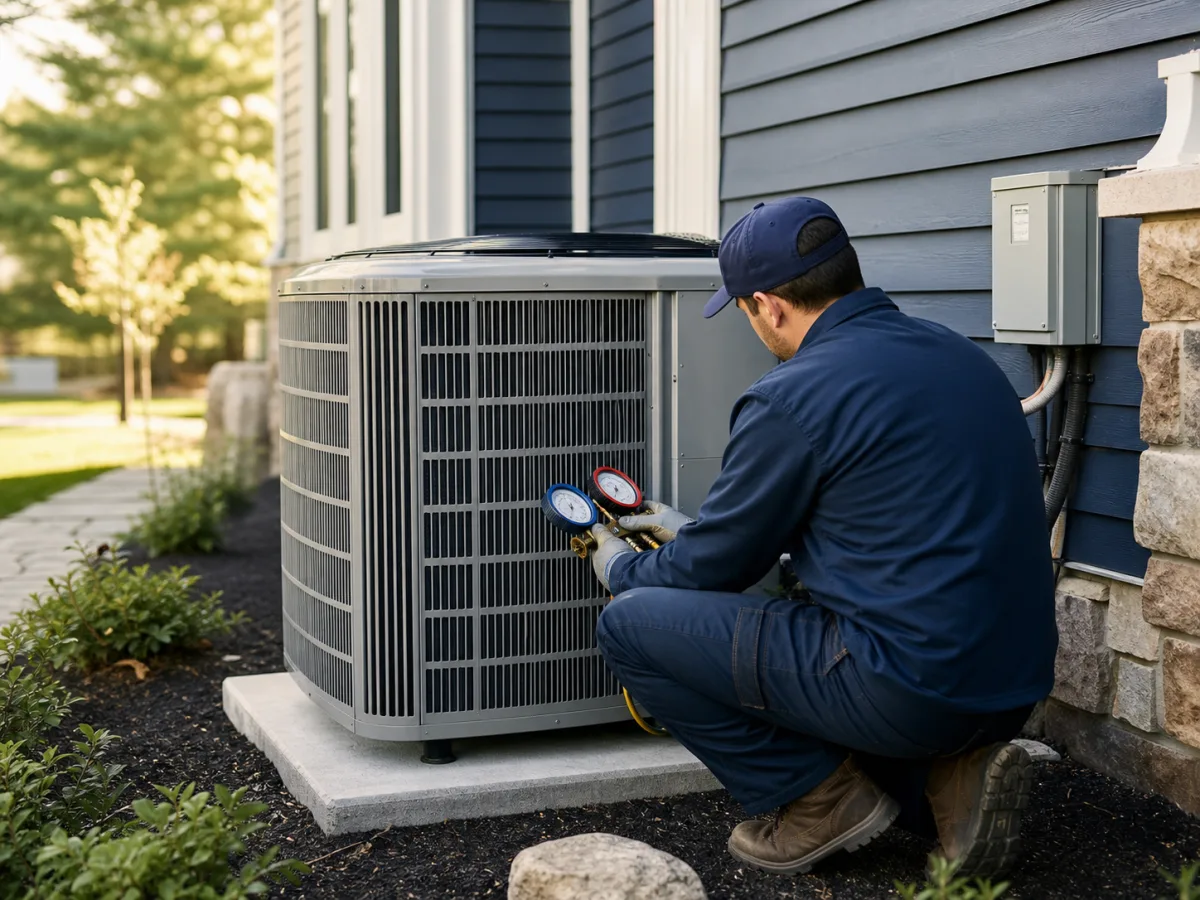
HVAC technician reviewing an air conditioning system for an Essex County New Jersey property

Choose the service before the scope

Repair, maintenance, and replacement solve different problems.

An air-conditioning search can mean a system that stopped cooling this morning, a recurring comfort problem, a seasonal inspection, a planned equipment replacement, a first central-air system, a ductless project, an airflow concern, or electrical work that supports the equipment. Treating those as one generic service can send the wrong person, hide the actual diagnosis, or make two proposals impossible to compare.

This page is the Essex County decision hub. Use MDL's focused AC repair guide when installed equipment should be cooling now but will not start, blows warm air, has weak airflow, leaks water, ices, cycles abnormally, makes a new noise, or trips a breaker. Use the cooling installation and replacement guide for a planned new central system, ductless comparison, or full replacement survey. Use the emergency HVAC path when timing or a safety condition makes the request urgent.

If the symptom may involve blocked airflow, damaged or leaking ducts, moisture, filtration, or material inside the distribution system, review the ductwork and air-duct assessment guide. Cleaning, sealing, repair, balancing, and equipment service are separate scopes; none should be sold as the automatic answer before the condition is identified.

Active failureNo start, warm air, weak airflow, water, ice, short cycling, new noise, odor, control fault, or repeated breaker trip belongs on the diagnostic repair path.
Planned careA seasonal or condition-based visit needs an itemized inspection and maintenance scope, not a vague tune-up label or a promise that equipment cannot fail.
ReplacementA planned project needs load and distribution review, equipment selection, electrical and condensate scope, permits, startup, closeout, and comparable written options.
New coolingA property without useful cooling or distribution needs a design conversation about rooms, loads, zones, ductwork, equipment locations, controls, power, access, and approvals.

Safety before comfort

Some cooling calls need a safety response before an HVAC appointment.

Leave the area when appropriate and call 911 or the responsible utility first for fire, smoke, a suspected gas leak, a carbon-monoxide alarm, or immediate danger. Do not use a service form as the only response to an emergency.

Turn the equipment off when it is safe to do so and request prompt professional help for sparking, a burning odor, visible heat damage, a hot electrical component, damaged wiring, standing water near energized equipment, or a breaker that trips again. Do not remove a panel or equipment cover, reach into moving equipment, bypass a safety, or keep resetting the breaker.

Extreme indoor heat can be dangerous, especially for older adults, infants, people with medical conditions, and anyone without a safe way to cool down. Move to a safe cooled location and use emergency medical services when health is at risk. Call 973.809.2339 for MDL to confirm current service availability and the appropriate cooling or electrical response.

Call emergency services firstFire, smoke, gas odor, carbon-monoxide alarm, immediate electrical danger, or a person in medical distress.
Stop and call promptlySparking, burning odor, heat damage, hot wiring or controls, repeated breaker trip, or water near energized equipment.
Do not open equipmentThermostat and accessible filter checks are reasonable; refrigerant, live electrical, moving parts, ice removal, and internal testing belong to qualified professionals.
Describe the risk clearlyTell the dispatcher what happened, whether equipment is off, who is affected, the exact address, and whether emergency services or a utility has already responded.

Cooling symptom map

The symptom helps route the call, but testing should determine the cause.

A thermostat setting, a blocked filter, an electrical fault, a control problem, airflow, drainage, distribution, equipment condition, or the refrigerant circuit can produce overlapping symptoms. A responsible service visit separates observation from diagnosis and does not turn one symptom into an automatic part, recharge, or replacement recommendation.

No start

The thermostat calls for cooling but equipment does not operate

Without opening equipment, note whether the thermostat display has power, which indoor or outdoor components run, whether a wider outage exists, and whether a breaker is tripped. Do not reset a breaker repeatedly or assume the thermostat is the cause.

Warm air

The system runs but supply air is not cooling the property

Settings, airflow, indoor or outdoor equipment, controls, coil condition, the refrigerant circuit, duct leakage, or capacity can be involved. Refrigerant is not an automatic diagnosis, and a recharge is not a substitute for findings.

Weak or uneven airflow

Some rooms or registers receive too little air

Filter condition, registers, blower operation, coil condition, duct leakage or damage, return paths, balancing, zoning, and system capacity can matter. Cleaning alone does not automatically repair leakage, damage, or design problems.

Water or ice

Moisture appears near equipment or ice forms on a coil or line

Turn the system off when water threatens electrical components or property. Drainage, airflow, coil condition, operating conditions, controls, refrigerant faults, insulation, or installation details can be involved. Do not chip ice from equipment.

Short cycling or long runtime

The system starts and stops unusually or struggles to reach the setpoint

Controls, airflow, equipment condition, sizing, distribution, load, outdoor conditions, zoning, or other faults can affect runtime. A single cycle observed on one day is context, not a complete diagnosis.

Noise, odor, or electrical symptom

A new sound, burning odor, hot component, or breaker condition appears

Turn equipment off for burning odor, sparking, heat damage, or a breaker that trips again. Mechanical movement, airflow, condensate, controls, motors, connections, conductors, protection, or another condition should be tested safely.

Diagnosis before authorization

A useful service visit should connect findings to the proposed work.

Before the visit, ask what the initial charge includes: dispatch or travel, diagnostic time, after-hours conditions, accessible-system testing, written findings, an estimate, and any credit toward approved work. A low or free headline does not establish how much testing is included, which equipment will be evaluated, or what happens after the first observation.

At the property, the technician should confirm the equipment and areas served, reproduce or review the symptom when practical, document relevant operating conditions, and test the systems needed to narrow the cause. The exact measurements depend on the equipment and complaint, but may involve thermostat demand, power and controls, electrical components, indoor and outdoor operation, airflow and temperature behavior, condensate, coil condition, visible duct conditions, and the refrigerant circuit when appropriate.

The finding should distinguish the observed symptom, the supported cause, related conditions, and anything that remains unverified. The proposed repair should name the work, included parts and materials, charge, expected result, exclusions, final test, and what could require additional approval. Do not approve a broad parts list, refrigerant addition, chemical treatment, duct cleaning, or replacement simply because the system is old or the first symptom fits a familiar pattern.

IdentifyEquipment, model information when accessible, rooms or zones served, symptom, start date, recent work, settings, weather context, and any safety or access condition.
TestUse the equipment and symptom to select relevant electrical, control, airflow, temperature, drainage, mechanical, and refrigerant-circuit checks rather than replacing parts by guess.
ExplainSeparate the symptom, supported cause, contributing conditions, remaining uncertainty, safe operating status, and the consequence of delaying the recommended work.
AuthorizeApprove a written repair or next step with price, inclusions, exclusions, change conditions, expected result, final test, and applicable warranty terms.

Air conditioning maintenance

Define what the visit will inspect, clean, measure, and report.

The word tune-up is not a scope. A maintenance proposal should identify the equipment, components, accessible work, measurements, cleaning, testing, records, exclusions, and repairs that need separate approval. It should also distinguish owner tasks—such as following the equipment instructions for filter care and keeping outdoor airflow clear—from work that requires a qualified technician.

Equipment and condition

Confirm what system and components the visit covers

Identify the indoor and outdoor equipment, controls, filters, condensate components, accessible coils, blower or fan components, disconnects, and rooms or zones served. Record visible damage, corrosion, contamination, leakage, or access limits.

Operation

Check how the system responds under the visit conditions

Document thermostat demand, sequence, indoor and outdoor operation, temperature behavior, airflow observations, cycling, noise, vibration, drainage, and any code or abnormal condition that appears. State what could not be evaluated.

Electrical and controls

Inspect and test the applicable cooling-system power path

The equipment and scope determine which connections, conductors, protection, disconnect, motors, capacitors, contactors, controls, communication, and safety components are inspected or tested. Repairs require separate authorization.

Airflow and heat transfer

Review the conditions that let cooling move through the property

Filter condition, blower operation, accessible coil surfaces, registers, return paths, visible duct condition, zoning, and distribution concerns can affect performance. Cleaning, balancing, sealing, and repair should be named separately.

Condensate and moisture

Review accessible drainage and evidence of water problems

Ask what drain pans, lines, pumps, traps, switches, insulation, terminations, and water evidence are included. A cleared drain does not resolve every moisture, installation, coil, airflow, or building-envelope condition.

Findings and next work

Receive a closeout record that separates maintenance from repair

The record should name conditions found, work performed, readings or observations supplied, recommendations, urgency, exclusions, and owner actions. Maintenance reduces avoidable neglect; it cannot guarantee future operation or prevent every failure.

Repair or replace

Start with the diagnosed failure, then compare complete options.

Popular search results often repeat a $5,000 formula, a 20-year rule, or an age cutoff. Those shortcuts can frame a question, but they do not establish the condition, safe operation, parts path, comfort, distribution, electrical work, permit needs, or full price for this property. A responsible decision begins with a supported diagnosis.

A repair comparison should state the failed condition, proposed fix, parts and refrigerant path, electrical or airflow work, expected result, price, warranty, and the possibility of other age- or condition-related failures. A replacement comparison should include the indoor and outdoor equipment, capacity basis, efficiency and performance data supplied for the proposed system, distribution, controls, refrigerant lines, condensate, electrical scope, permits, removal, restoration, startup, commissioning, warranty, and maintenance or registration requirements.

Replacement deserves closer review when the diagnosed repair is unsafe or impractical, a major component has failed, parts or an appropriate refrigerant path are unavailable, failures have become frequent, equipment condition is poor, comfort or operating performance remains unacceptable, a renovation changes the load, or the complete project offers a better long-term fit. Repair may remain reasonable when the cause is clear, the system can operate safely after the work, the rest of the equipment is in serviceable condition, and the written repair remains proportionate to the owner's goals and replacement alternatives.

Failure and safetyWhat failed, what evidence supports it, whether the system can operate safely, what the repair changes, and what remains outside the approved scope.
System conditionAge as context, repair history, major components, corrosion or damage, parts and refrigerant path, controls, distribution, drainage, electrical condition, and observed operation.
Property performanceRooms served, comfort, humidity, noise, runtime, energy use, ductwork or zones, insulation or envelope context, occupancy, and any planned renovation or load change.
Complete alternativesRepair price and warranty versus full replacement design, equipment, distribution, electrical, permits, removal, restoration, startup, warranty, maintenance, and schedule.

Replacement and new-system planning

The installation should be designed around the property—not just the old nameplate.

ENERGY STAR's current heating and cooling guidance advises homeowners to have a contractor calculate the home's heating and cooling loads and notes Manual J as the common method. Square footage, a rule of thumb, or the capacity of old equipment does not by itself establish the right new system.

The survey should consider insulation, windows, orientation, air leakage, occupancy, internal loads, design conditions, additions or renovations, rooms that are difficult to condition, existing ductwork or proposed zones, equipment locations, condensate routing, line routing, controls, outdoor clearances, noise, service access, and the electrical system. Oversized and undersized systems can both create performance problems; ask the proposal to explain how the selected capacity and distribution address the property.

Central air, a heat pump, and ductless equipment are not interchangeable labels. The useful choice depends on the heating and cooling goals, existing distribution, rooms served, winter performance requirements, indoor and outdoor unit locations, number of zones, controls, electrical capacity, building approvals, permit path, aesthetics, maintenance, and total installed scope. Review the deeper AC installation and replacement page before approving a planned project.

Load

Explain the heating and cooling calculation

Ask which rooms and areas are included, the indoor and outdoor design assumptions, insulation and windows, orientation, air leakage, occupancy, internal loads, ventilation, and any planned property change. The selected capacity should follow the documented load and system design.

Distribution

Confirm how conditioned air reaches each room or zone

Existing ducts, returns, leakage, damage, insulation, sizing, balancing, zoning, registers, static-pressure concerns, or ductless head placement can affect the result. New equipment does not automatically correct a weak distribution system.

Equipment

Name every indoor and outdoor component in the proposal

List the exact proposed equipment, matched-system information supplied by the contractor, capacity, efficiency or performance ratings, controls, auxiliary components, filter or air-cleaning scope, base or mounting, clearances, and included accessories.

Refrigerant and condensate

Define the line, drain, insulation, removal, and startup work

State whether existing lines will be evaluated, reused, modified, flushed, or replaced; how condensate drains or pumps; how penetrations and insulation are handled; and which evacuation, charge, leak, operating, and closeout steps are included.

Electrical and controls

Match equipment requirements to the actual property

Review service and panel capacity, breaker space, circuits, conductors, disconnect, protection, grounding and bonding where applicable, controls, thermostat or communication wiring, surge-protection options, and any utility or load-management requirement.

Project and closeout

Include permits, access, protection, removal, inspection, and records

Name the approving party, plans or submissions, permits and inspections, equipment delivery, property protection, old-equipment and refrigerant handling, patching or restoration, startup, owner orientation, warranty documents, registration responsibility, and final closeout.

Refrigerant, electrical, and permits

Three technical boundaries should be explicit in every serious scope.

Refrigerant work is regulated. The U.S. Environmental Protection Agency's Section 608 requirements require appropriate technician certification for maintaining, servicing, repairing, or disposing of covered equipment in ways that could release refrigerant. Low refrigerant is not a self-contained diagnosis; the technician should interpret system-specific conditions and explain the supported fault, leak or repair path, refrigerant work, testing, and final operation.

Electrical work should follow the proposed equipment and actual property. A new panel is not automatic, and an existing breaker is not proof that the full circuit and service are appropriate. The review can involve service capacity, panel condition and space, equipment nameplate requirements, conductor and circuit condition, disconnect, overcurrent protection, grounding and bonding where applicable, controls, required working clearances, and other planned loads. MDL publicly lists both New Jersey electrical-contractor and master-HVACR credentials, making coordination across those scopes especially relevant.

Permit requirements depend on the final work and the local enforcing agency. New Jersey's construction-permit resources include application and applicable technical forms, and the Uniform Construction Code provides the framework for covered construction, inspections, and closeout. Certain routine maintenance may be exempt, but a repair label does not automatically establish an exemption. Ask who will confirm and obtain each permit, technical section, zoning or other approval, inspection, and closeout for the actual equipment, electrical, structural, roof, exterior, fuel, or building work.

RefrigerantAppropriate EPA Section 608 certification, supported diagnosis, equipment and refrigerant identification, leak or repair path, recovery or handling, line work, testing, charge method, and closeout.
ElectricalEquipment ratings, service and panel capacity, breaker space, circuit and conductor condition, disconnect, protection, controls, grounding or bonding scope, code needs, and other planned loads.
MunicipalLocal enforcing agency, owner or association approval, zoning or historic review when applicable, construction permit and technical sections, inspections, fees, scheduling, and final documents.
Proposal ownerIdentify who designs, submits, pays, schedules, meets inspectors, corrects deficiencies, supplies approved records, registers equipment, and closes the project.

Property-specific planning

A single-family home, condo, rental, and business create different access and approval work.

Send the property context before the appointment so the team can route the right visit and prepare for equipment access, authorization, occupied spaces, common systems, roof or exterior work, parking, delivery, working hours, and municipal or building approvals. Search visibility does not promise service availability, equipment, price, arrival time, or a final scope before MDL reviews the request.

Single-family

Map the rooms, systems, access, and property changes

Identify floors, additions, uncomfortable rooms, equipment and duct locations, attic or crawlspace access, electrical panel, condensate path, outdoor location, recent insulation or window work, pets, parking, and the person approving the project.

Condo or multifamily

Separate unit equipment from common property

Identify unit, floor, owner or tenant, association or board, managing agent, common mechanical or roof areas, shared systems, approved work hours, shutoff or access rules, insurance or contractor documents, elevator, loading, and neighbor impact.

Rental

Name who reports, authorizes, pays, receives access, and reviews findings

Provide owner, tenant, and property-manager contacts; entry permission; pets; symptom history; prior repairs; responsibility for equipment; emergency approval limits; and who receives the diagnosis and approves additional work.

Commercial

Document operations, zones, systems, and downtime constraints

Identify spaces and occupants served, equipment schedule, roof or ceiling access, controls, sensitive rooms or processes, business hours, shutdown windows, security, loading, lift or crane needs, tenant coordination, permits, and closeout requirements.

AC service cost and quote comparison

Compare complete written scopes—not headlines that price different work.

This site does not invent a universal MDL service charge, repair range, replacement price, free estimate, rebate, financing offer, response time, or discount. The equipment, condition, visit terms, timing, access, parts, refrigerant, airflow, drainage, electrical work, permits, building coordination, and selected project scope can all change the total.

Ask what the first charge covers and what requires additional authorization. For repairs, compare the same diagnosed condition and expected result. For maintenance, compare the same equipment, checks, measurements, cleaning, and records. For replacement, compare the same rooms and loads, capacity basis, equipment, distribution, electrical, permit, removal, startup, closeout, and warranty scope.

Visit terms

Define dispatch, diagnosis, estimate, timing, and approval

Clarify travel or dispatch, included diagnostic time, after-hours conditions, accessible equipment, findings supplied, estimate terms, any credit toward approved work, and the point when additional charges need authorization.

Repair

Connect the supported cause to exact corrective work

Compare the diagnosed condition, parts and materials, refrigerant or electrical work, airflow or drainage work, total charge, expected result, final test, exclusions, change conditions, and written warranty for the actual repair.

Maintenance

Use an itemized checklist for the same equipment

Compare indoor and outdoor equipment covered, inspection, testing, cleaning, measurements, filter or condensate scope, electrical and control checks, documentation, exclusions, and repairs that require a separate price.

Replacement

Compare a full installed system—not model numbers alone

Review load basis, capacity, matched components, efficiency or performance data supplied, controls, ducts or zones, lines, drains, electrical work, permits, removal, restoration, startup, owner orientation, warranty, and registration.

Schedule

Name what controls arrival and project completion

Availability, parts or equipment, owner and building approval, permits and inspections, utility or building shutdowns, roof or exterior access, delivery, weather, working hours, restoration, and failed inspection corrections can affect timing.

Changes and closeout

Require approval boundaries and final records

Define hidden damage, inaccessible conditions, additional faults, code or permit findings, change-order approval, payment milestones, final operation, inspection records, equipment documents, warranty terms, registration responsibility, and owner instructions.

A six-step service path

Move from symptom or project goal to a verified next step.

  1. 01

    Send the property and equipment context

    Provide the exact Essex County or North Jersey address and ZIP code, property type, owner or tenant status, equipment type and locations, symptom or project goal, rooms affected, timing, recent work, access restrictions, and safe photos of labels or visible conditions when available.

  2. 02

    Confirm coverage, urgency, and the right appointment

    MDL can confirm the service area, current availability, safety or emergency route, whether repair, maintenance, installation, ductwork, or electrical expertise fits, and what access or authorization should be ready.

  3. 03

    Inspect and diagnose or survey the project

    An active failure needs condition-based testing. Planned maintenance needs the approved checklist. A replacement or new installation needs property, load, distribution, equipment-location, electrical, condensate, access, and permit planning.

  4. 04

    Review written findings and options

    Separate the symptom, supported cause, related conditions, remaining uncertainty, repair option, replacement or design alternative when justified, exact inclusions, exclusions, price, timing assumptions, and warranty terms.

  5. 05

    Authorize the defined work and any required permits

    Confirm the approving party, scope, schedule, property protection, building or municipal coordination, change-order boundary, payment terms, and who owns each permit, inspection, correction, and closeout action.

  6. 06

    Verify operation and keep the closeout record

    Receive the final operating checks or startup record appropriate to the work, inspection or permit closeout when applicable, equipment and warranty documents, registration responsibility, owner instructions, maintenance guidance, and any condition still requiring action.

Essex County and North Jersey service requests

Use the exact address and ZIP code to confirm coverage before scheduling.

MDL's public business profiles identify its West Orange base, and this site publishes local service pages for West Orange and Montclair plus a broader North Jersey service-area hub. Historical searches also connect this page with Essex County, West Caldwell, Nutley, and nearby communities. A town or county phrase on a search page does not replace address-level confirmation.

Include the property use, unit and floor when applicable, equipment and panel locations, model-label photos when safe, thermostat or fault code, exact symptom and timing, indoor temperature, rooms affected, recent repairs, owner or association contact, roof or mechanical-room access, parking or loading restrictions, pets, occupied hours, and the best callback number.

For a planned system, add the rooms or zones to be conditioned, current comfort problems, existing ducts or lack of ducts, additions or renovations, desired heating or cooling functions, equipment-location constraints, electrical panel context, and the timing or approval process. Do not enter an unsafe attic, roof, crawlspace, electrical area, or mechanical space to collect quote information.

Address and authorityStreet and ZIP, property use, unit and floor, owner or tenant, approving contact, property manager or board, access person, and billing contact when different.
Equipment and symptomSystem type and location, label photos when safe, thermostat or code, what runs, air and room conditions, water or ice, sound or odor, breaker condition, start date, and recent work.
Project and accessRepair, maintenance, replacement, or new installation; rooms and zones; ducts; panel location; roof, attic, crawlspace, or mechanical room; parking, loading, working hours, pets, and security.
Safety boundariesDo not open equipment, remove electrical covers, handle refrigerant, chip ice, bypass controls, enter unsafe areas, or keep resetting a breaker. Report the condition and wait for qualified direction.

Verified business proof

Public reviews and credentials customers can check.

MDL's claimed Google Business Profile identifies the company as family owned, established in 2007, and categorized for heating, air conditioning repair, electrical, and HVAC work.

4.8 out of 5 on GoogleBased on 102 public Google reviews checked July 15, 2026.
Established in 2007Family-owned electrical and HVAC service for North Jersey properties.
Claimed Google profileListed as a heating contractor, air conditioning repair service, electrician, and HVAC contractor.

Request air conditioning service

Send the address, equipment, symptom or project, access, and result you need.

MDL can confirm whether the next step is an AC repair visit, maintenance conversation, replacement survey, ductwork review, electrical diagnosis, emergency call, or another path. This page does not promise coverage, equipment, certification beyond MDL's published credentials, price, financing, discount, appointment time, repair outcome, permit approval, warranty, or final scope before the request is reviewed.

Essex County AC service FAQ

Direct answers about safety, diagnosis, maintenance, replacement, sizing, refrigerant, electrical work, permits, cost, and coverage.

These answers address the strongest historical and current air-conditioning questions without inventing prices, discounts, financing, certifications, response times, guarantees, equipment, health outcomes, or a one-formula repair decision.

What should I check before calling for air conditioning service?

Without opening equipment, confirm the thermostat is in cooling mode, the setpoint is below the room temperature, the display has power, accessible supply registers are open, and the accessible filter is not visibly blocked. Note any code, sound, odor, water, ice, airflow change, or breaker condition. Do not remove covers, handle refrigerant, chip ice from a coil, bypass a safety, or keep resetting a breaker that trips again.

When is an AC problem an emergency?

Leave the area and call 911 or the appropriate utility first for fire, smoke, a suspected gas leak, a carbon-monoxide alarm, or immediate danger. Turn the system off when it is safe to do so and request prompt professional help for sparking, a burning odor, a hot electrical component, damaged wiring, standing water near energized equipment, or a breaker that trips again. A hot home can also be dangerous for vulnerable occupants; use a safe cooled location and emergency services when health is at risk.

Does warm air mean the air conditioner needs refrigerant?

No. Warm air can involve thermostat settings, loss of power, airflow, a blocked filter, blower or control faults, an outdoor-unit problem, coil condition, refrigerant circuit faults, duct leakage, or another cause. Refrigerant should not be treated as an automatic refill. EPA requires appropriate Section 608 technician certification for work that could release refrigerant, and any refrigerant finding should be supported by system-specific testing and a written scope.

Should I use this page for AC repair or replacement?

Use this page to choose the path. If an installed system should be cooling now but will not start, blows warm air, has weak airflow, leaks water, ices, makes a new noise, or trips a breaker, use MDL's focused AC repair page. Use the cooling-installation page for a planned replacement, a new central system, or a ductless project. Call the emergency HVAC path when timing or safety makes the request urgent.

Does the $5,000 rule or a 20-year rule decide whether to repair or replace an AC system?

No single online formula decides every property. Start with the diagnosed failure and safe operating condition, then compare overall equipment condition, repair history, parts and refrigerant path, comfort, operating cost, distribution, electrical requirements, permits, remaining service outlook, and the complete written repair and replacement scopes. Age is useful evidence, but it should not decide the project by itself.

How should a new air conditioner or heat pump be sized?

Square footage or the old equipment label is not enough. ENERGY STAR advises contractors to calculate the home's heating and cooling loads, commonly with Manual J, and then select equipment and distribution that match the property. Insulation, windows, orientation, air leakage, occupancy, internal loads, rooms served, ductwork or zones, and design conditions all affect the plan. Ask the proposal to explain its sizing basis.

Do I automatically need a new panel for AC replacement?

No. The electrical scope depends on the existing service and panel, available capacity and breaker space, proposed equipment ratings, conductor and circuit condition, disconnect, overcurrent protection, controls, code requirements, and any other planned loads. MDL lists both electrical-contractor and master-HVACR credentials, so the cooling and electrical scopes can be reviewed together without assuming a panel upgrade before the property is evaluated.

Do air conditioning projects require a New Jersey construction permit?

The final scope and local enforcing agency control the answer. New Jersey's Uniform Construction Code uses construction permits, applicable technical sections, inspections, and closeout for covered work, while certain routine maintenance may be exempt. Ask the contractor and the municipality to identify the required building, electrical, mechanical, fire, zoning, or other approvals for the actual repair, replacement, new installation, equipment location, and associated work before it begins.

What should AC maintenance include?

Ask for a written scope instead of relying on the word tune-up. It should state which indoor and outdoor equipment will be inspected, cleaned, measured, or tested; how airflow, temperature operation, electrical components, controls, condensate management, filter condition, coil condition, and visible refrigerant-circuit concerns will be handled; what is excluded; and what findings require separate approval. Maintenance is not a guarantee against future failure.

How much does air conditioning service cost in Essex County?

A responsible price depends on the visit and diagnostic terms, timing, equipment type and location, access, failed condition, parts, refrigerant work, electrical work, duct or drainage work, permits, and whether the request is a repair, maintenance visit, replacement, or new installation. Ask what the initial charge includes and compare the same written scope rather than an advertised number with a complete project.

What should I compare in AC repair or replacement quotes?

Compare the diagnosed condition, measurements or evidence, exact work, equipment and capacity when applicable, included indoor and outdoor components, controls, duct or airflow work, refrigerant and condensate scope, electrical work, permits and inspections, removal and restoration, startup and closeout, schedule assumptions, exclusions, change-order process, payment terms, and the written warranty supplied for the actual project.

Does MDL serve West Orange, Montclair, and the rest of Essex County?

MDL publishes service coverage across North Jersey and local pages for West Orange and Montclair. Send the exact address and ZIP code, property type, owner or tenant status, equipment type and location, symptom or project goal, access constraints, safe label or condition photos, and best callback number so the team can confirm coverage, current availability, and the right repair, maintenance, installation, ductwork, or electrical path.

Next steps

Continue to the exact cooling or local path

AC

AC repair

Use the focused diagnostic guide for no cooling, warm air, weak airflow, water, ice, noise, cycling, control, and electrical symptoms.

Learn more
Cooling

Cooling installation

Plan a central-air replacement, new system, ductless option, load review, electrical coordination, and permit path.

Learn more
Emergency

Emergency HVAC

Use the urgent path when a no-cooling problem, equipment condition, or vulnerable occupant makes timing critical.

Learn more
Ductwork

Ductwork assessment

Separate cleaning, sealing, repair, replacement, airflow, moisture, filtration, and equipment problems before approving work.

Learn more
West

West Orange service area

Review local electrical and HVAC context from MDL's West Orange operating base.

Learn more
North

North Jersey service areas

Confirm published town and county coverage with the exact property address and ZIP code.

Learn more

Request service

Send MDL the service, town, and best callback number.

Use the form for planned service or call for urgent electrical, heating, or cooling help.