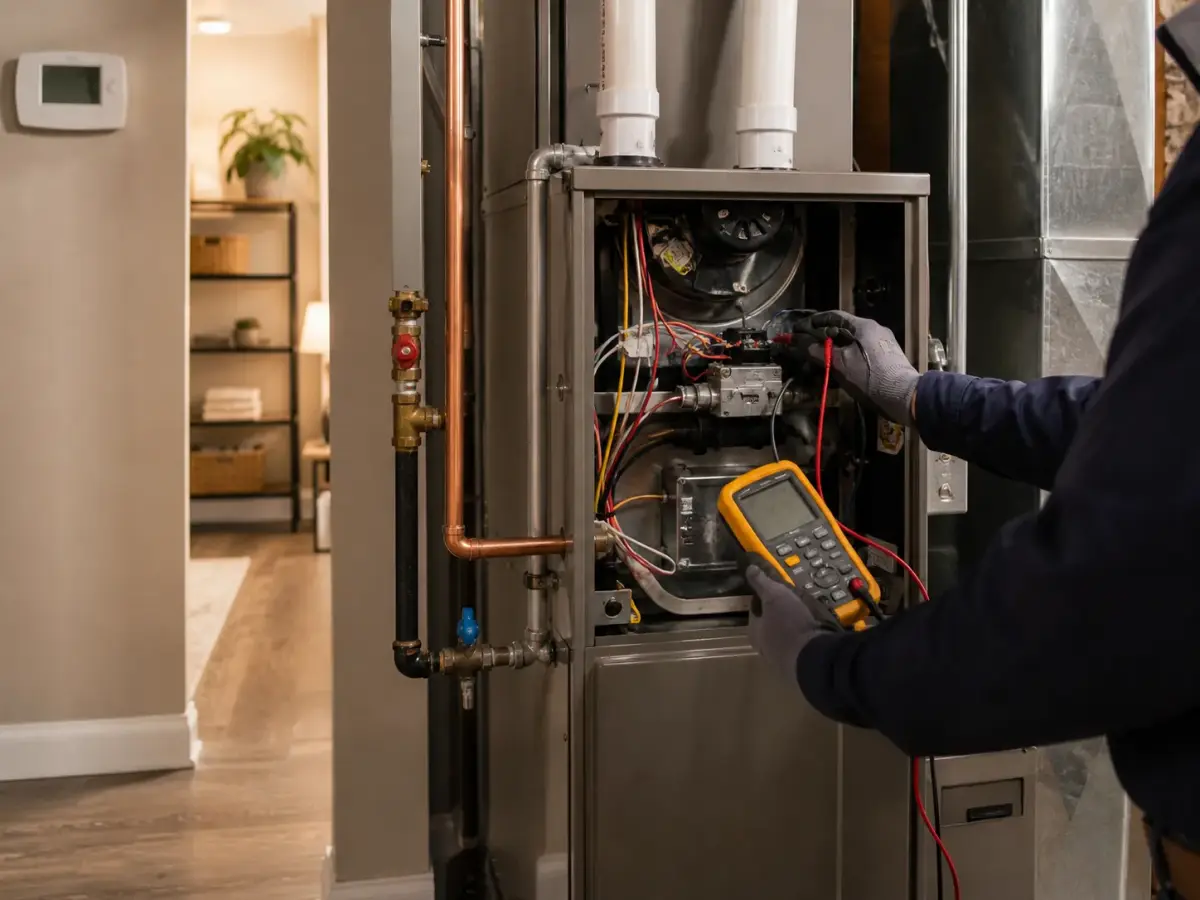
What counts as an HVAC emergency?
A complete loss of heat during freezing weather, loss of cooling during dangerous heat, water threatening electrical equipment, repeated breaker trips, a burning odor, smoke, sparking, a carbon-monoxide alarm, or a suspected gas leak all require prompt action. The right first call depends on the hazard: fire, smoke, gas, or carbon-monoxide danger belongs with 911, the fire department, or the gas utility before an HVAC service request.
Who should I call if I smell gas or a carbon-monoxide alarm sounds?
Leave the building and move to a safe location. Do not use switches, appliances, or a phone inside and do not try to locate or repair the source. Call 911 or the gas utility from outside. PSE&G directs customers who smell gas to leave immediately and call 1-800-880-PSEG (7734) or 911. If a carbon-monoxide alarm sounds or anyone has possible exposure symptoms, get to fresh air and seek emergency or medical help.
What should I do if the heat stops working?
First rule out a wider power outage and check the thermostat display and settings without opening equipment. Note the indoor temperature, outdoor conditions, equipment type, error code, sound, odor, water, and breaker condition. Do not use an oven, grill, generator, or unvented appliance to heat the home. Call promptly when temperatures are falling, pipes or occupants are at risk, or the system has a gas, carbon-monoxide, electrical, or water warning sign.
When is no air conditioning an emergency?
No cooling becomes more urgent during extreme heat, when indoor temperatures are rising quickly, or when infants, older adults, people with health conditions, pets, medicines, or sensitive equipment may be at risk. Use emergency services for a medical emergency. For equipment service, call with the indoor temperature, thermostat condition, airflow, whether the indoor and outdoor units run, and any water, ice, odor, sound, or breaker symptom.
Should I reset an HVAC breaker that tripped?
Do not repeatedly reset a breaker. Leave it off and call promptly if there is heat, a burning odor, buzzing, sparking, visible damage, water nearby, or another immediate electrical warning. If none of those conditions exists, follow the equipment and panel instructions and tell the service team exactly what happened. A breaker that trips again needs diagnosis of both the connected equipment and its electrical supply.
What should I do about water or ice around HVAC equipment?
Keep people away from water that is near wiring, disconnects, a panel, or energized equipment. Do not reach into equipment, chip ice from a coil, or bypass a condensate switch. If it is safe to do so without touching water or electrical parts, stop normal system operation and call. Report where the water or ice appears, whether it is spreading, and whether the system still runs.
How much does emergency HVAC service cost in Essex County?
There is no responsible flat price before the problem and scheduling conditions are known. Diagnostic time, time of service, equipment type, access, the failed component, parts, refrigerant work, electrical work, water or condensate work, and any permit or replacement scope can change the total. Ask how the visit is charged and require approval of a written scope before additional work begins.
Does emergency heating repair come with a warranty?
Warranty terms depend on the diagnosed repair, supplied part, manufacturer coverage, labor scope, exclusions, and the written proposal. Do not rely on a blanket website promise. Ask MDL to identify any applicable part and labor terms in writing before authorizing the work, and keep the final invoice and supplied warranty documents.
Can MDL handle an HVAC problem that also involves the electrical system?
MDL lists both New Jersey electrical-contractor and master-HVACR credentials. That combined scope is relevant when an urgent heating or cooling problem involves a breaker, disconnect, conductor, motor, control, panel, or other electrical condition. The actual cause and work still need to be diagnosed and written before either HVAC or electrical repair is assumed.
What information should I give when requesting urgent HVAC service?
Provide the exact address and ZIP code, property type, system type, fuel or energy source if known, indoor temperature, outdoor conditions, affected occupants or areas, when the problem began, thermostat message, whether the system runs, and any gas, carbon-monoxide, smoke, fire, odor, water, ice, sound, or breaker symptom. Call rather than waiting on the form when the condition is time-sensitive.