24/7 electrical, heating, and cooling help across North Jersey

Call 973.337.5530

AC repair · Essex County and North Jersey

AC repair for warm air, weak airflow, no cooling, and electrical trouble.

Start with the symptom and the property—not a guessed part. MDL provides a direct repair path for central air and related cooling problems from its West Orange base.

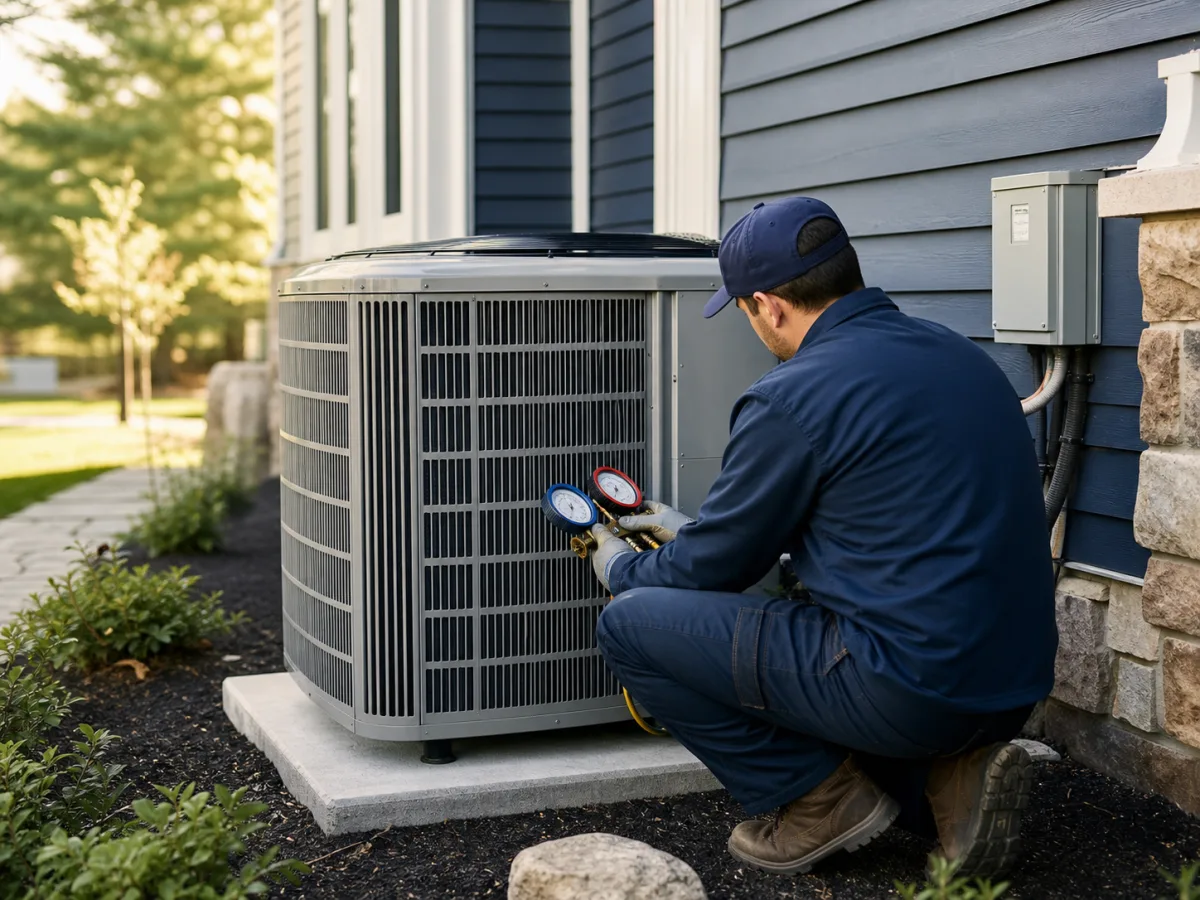
HVAC technician diagnosing a residential outdoor air conditioning unit

Choose the right urgency

Describe what changed before anyone guesses at the repair.

No cooling, warm air, weak airflow, short cycling, water, ice, a new sound, a new odor, or a breaker problem can point to different parts of the system. The symptom is the starting point, not a diagnosis.

Include when the problem began, whether it is constant or intermittent, what the thermostat shows, whether the indoor fan and outdoor equipment run, and any recent outage, maintenance, renovation, or repair. That gives the service team a useful first picture without asking you to open equipment or test live parts.

Call for repairThe system will not start, will not cool, blows warm air, has weak airflow, cycles repeatedly, or cannot control indoor humidity.
Stop and call promptlyThere is a burning odor, sparking, a hot electrical component, water near electrical parts, repeated breaker trips, or ice that returns after thawing.
Use emergency services firstIf there is smoke, fire, or immediate danger, leave the area and call 911. Do not wait on a website form or continue operating the equipment.

AC symptoms

The same comfort complaint can come from airflow, controls, electrical supply, condensate, or the refrigeration circuit.

A focused diagnostic visit should isolate the cause before a part, refrigerant charge, or replacement is proposed. These symptom groups help you explain what is happening; they do not replace testing at the equipment.

No cooling

The system does not start or cannot produce cool air

Record the thermostat display, whether the indoor fan runs, whether the outdoor unit starts, and whether a breaker or disconnect appears out of position. Do not remove covers or keep resetting a breaker.

Warm air

Air moves, but the rooms are not getting cooler

Thermostat settings, airflow restrictions, outdoor-equipment faults, electrical controls, and refrigerant-circuit issues can all produce this symptom. Adding refrigerant without finding the cause is not a diagnosis.

Weak airflow

Some or all registers have less air than expected

An accessible filter, blocked return, blower issue, indoor coil condition, duct restriction, damper, or distribution problem may need review. Note whether the weakness affects one room, one floor, or the whole property.

Short cycling

The equipment starts and stops repeatedly

Controls, airflow, temperature limits, electrical components, equipment condition, or capacity and distribution issues can contribute. Repeated power cycling can make the symptom harder to evaluate.

Water or ice

Moisture appears near the indoor equipment or ice forms

Condensate drainage, airflow, coil condition, or a refrigeration problem may be involved. Keep water away from electrical parts, stop operation when it is unsafe, and do not chip ice from the equipment.

Noise or odor

A new sound or smell appears during operation

Describe whether it is buzzing, grinding, rattling, squealing, musty, or burning and where it seems strongest. Shut the system down if safe when there is a burning odor, smoke, sparking, or a rapidly worsening mechanical sound.

Safe checks before the callback

Collect useful evidence without opening the system.

The U.S. Department of Energy identifies thermostat settings, dirty filters, drainage, and refrigerant problems among common reasons an air conditioner may not cool correctly. A homeowner can safely observe a few accessible conditions, but electrical, mechanical, and refrigerant diagnosis belongs with a qualified technician.

Check the cooling mode and requested temperature, make sure accessible vents are open and not blocked, and look at the accessible filter without reaching into equipment. Photograph the thermostat display, equipment labels, visible water or ice, and the electrical panel only from a safe distance. Then leave covers, wiring, fans, capacitors, and refrigerant lines alone.

Review the Department of Energy home-cooling guide for basic maintenance and common-problem context.

ThermostatCooling mode, requested temperature, room reading, display message, battery indication, and any restart-delay message.
AirflowAccessible filter condition, blocked furniture or objects, open supply registers, return-air path, and which rooms are affected.
Visible conditionsWater, ice, debris around the outdoor unit, unusual sound, odor, or a breaker that has tripped—without touching live or moving parts.

Repair diagnosis

A useful AC repair visit turns a symptom into an evidence-based scope.

The exact tests depend on the equipment and complaint. The customer-facing result should still make the cause, proposed work, and next decision understandable.

01

Confirm the complaint

Review when the problem occurs, thermostat behavior, affected rooms, recent changes, prior repairs, and any safety symptom.

02

Inspect accessible conditions

Review equipment condition, airflow path, filter, coils, condensate, controls, wiring, disconnects, and visible signs of damage as the system allows.

03

Test the system

Qualified testing may include operating temperatures, electrical supply and components, motors, controls, airflow, and refrigeration-circuit measurements relevant to the symptom.

04

Identify cause and consequence

Explain the failed or abnormal condition, whether another issue contributed, and what may happen if the system continues operating.

05

Write the repair scope

List the work, included parts or materials, exclusions, permit responsibility when applicable, and the approval required before additional work.

06

Verify operation

After authorized work, confirm the repaired function, explain any remaining condition, and identify maintenance or replacement planning that is separate from the repair.

Repair or replace

Do not let a shortcut formula make the equipment decision.

The so-called $5,000 rule multiplies equipment age by repair cost, but that number cannot tell you whether a component failed safely, whether parts and refrigerant remain practical, whether the system has repeated problems, or what a complete replacement would include.

A seven-year-old air conditioner is not automatically too old to repair, and an older system is not automatically a good repair candidate. Start with the actual diagnosis. Then compare condition, repair history, safe operation, comfort, efficiency, refrigerant and parts availability, remaining service life, and the complete written cost and scope of both paths.

When replacement deserves comparison, use the dedicated cooling installation and replacement page. Keeping repair and installation intent separate gives the customer a clearer decision path.

Repair caseKnown failure, reasonable parts path, acceptable overall condition, limited repair history, and a clear post-repair operating expectation.
Replacement comparisonMajor or repeated failures, safety or condition concerns, difficult parts or refrigerant path, persistent comfort problems, or an incomplete repair case.
Written optionsSeparate diagnosis from proposal, list what each option includes, and avoid comparing a partial repair with an incomplete replacement number.

HVAC and electrical coordination

Some cooling failures sit at the boundary between the AC equipment and its electrical supply.

MDL lists NJ Electrical Business Permit #34EB01606200, NJ Electrical Contractor #34EI01606200, and NJ Master HVACR Contractor #19HC00308200. That combined scope is relevant when a repair involves repeated breaker trips, a disconnect, circuit condition, controls, motors, or a replacement that changes the electrical requirement.

Equipment

Separate the cooling fault from the supply problem

A non-running outdoor unit may involve controls or equipment, but it may also involve a circuit, breaker, disconnect, conductor, or connection. Testing should locate the fault before either trade scope is assumed.

Protection

Repeated breaker trips are a symptom, not a reset routine

Do not keep resetting a breaker that trips again. The circuit and connected equipment need evaluation, especially when there is heat, odor, noise, visible damage, or water nearby.

Scope

Make responsibility visible in the proposal

If HVAC and electrical work are both needed, the written scope should identify each task, the permit or inspection path when applicable, and what testing closes the job.

For broader panel, circuit, outlet, and electrical needs, use MDL's electrical and HVAC service menu.

Refrigerant and permits

Repair, refrigerant work, and equipment replacement are not the same scope.

The U.S. Environmental Protection Agency requires Section 608 certification when a technician's maintenance, service, or repair work could open the refrigerant circuit and release regulated refrigerant. A homeowner should not add, recover, or vent refrigerant. A low charge also deserves a cause-based diagnosis rather than an automatic refill.

Read the EPA Section 608 certification requirements. New Jersey also requires HVACR contractors providing HVACR services to be licensed; review the State licensing guide.

West Orange publishes a useful local distinction: repairs to furnaces, air conditioners, and ducts are listed as ordinary repairs, while air-conditioning installation and replacement require permits. The actual scope and municipality control the answer, so confirm it before repair work expands into replacement or new electrical work.

Read West Orange's ordinary-repair guidance and Building Department permit FAQ.

RepairCorrect a diagnosed failure within the existing system; the local authority and final scope determine whether any permit applies.
Refrigerant circuitUse an appropriately certified technician for work that can open the circuit; do not treat refrigerant as a homeowner refill item.
Replacement or alterationConfirm equipment, electrical, mechanical, permit, inspection, removal, startup, and documentation responsibilities in writing.

AC repair pricing

A useful estimate explains what changes the price instead of publishing a number that may not fit the problem.

Diagnostic time, equipment type and access, the failed component, parts availability, electrical work, condensate or duct work, refrigerant handling, permit requirements, and whether the request is inside the normal scheduling path can all change the scope. A flat online number cannot responsibly cover every condition.

Before diagnosis

Ask how the service visit is charged

Confirm what the diagnostic charge covers, whether travel or scheduling conditions affect it, and what approval is needed before repair work or parts are added.

After diagnosis

Require the proposed cause and repair in writing

The scope should identify the work, included parts or materials, exclusions, permit responsibility if applicable, and any separate recommendation that is not required for the immediate repair.

If replacement appears

Compare complete options rather than headline numbers

Equipment, capacity basis, duct or line work, controls, electrical work, permits, removal, startup, restoration, and supplied warranty documents all belong in the comparison.

Essex County service routing

Use this page for the AC repair decision and the local page for town-level context.

MDL is based in West Orange and publishes service coverage across Essex, Morris, and Hudson County. Historical searches reached this page for Essex County and for nearby towns including West Orange and Montclair. The dedicated service page stays focused on AC diagnosis and repair while local pages help confirm area coverage and related electrical or heating needs.

Use the Essex County electrical and HVAC service-area hub for county routing, or continue to Bloomfield, Nutley, Newark, West Orange, Montclair, and other published municipality pages. Include the exact property town and ZIP code so MDL can confirm coverage.

Central AC repairNo cooling, warm air, weak airflow, short cycling, condensate trouble, ice, noise, odor, control trouble, or related electrical symptoms.
Installation planningUse the separate installation page when diagnosis makes replacement or a new system worth comparing.
Coverage confirmationSend the exact town, ZIP code, property type, equipment, symptom, and timing so the request reaches the right path.

Verified business proof

Public reviews and credentials customers can check.

MDL's claimed Google Business Profile identifies the company as family owned, established in 2007, and categorized for heating, air conditioning repair, electrical, and HVAC work.

4.8 out of 5 on GoogleBased on 103 public Google reviews checked July 31, 2026.
Established in 2007Family-owned electrical and HVAC service for North Jersey properties.
Claimed Google profileListed as a heating contractor, air conditioning repair service, electrician, and HVAC contractor.

Request AC repair

Send the symptom, equipment, property, and safety details.

Include the North Jersey address and ZIP code, property type, system type and approximate age, thermostat message, affected rooms, when the problem began, whether the indoor fan and outdoor equipment run, and any water, ice, sound, odor, or breaker issue. Add safe photos of the thermostat, equipment label, and visible condition when available.

AC repair FAQ

Direct answers to the repair questions North Jersey customers are asking.

These answers address the current search questions around warm air, the 20-degree and three-minute rules, repair cost, equipment age, permits, and refrigerant without turning a rough rule into a diagnosis or guarantee.

What should I check before calling for AC repair?

Confirm that the thermostat is in cooling mode, the requested temperature is below the room temperature, supply and return vents are not blocked, and the accessible filter is not visibly packed with debris. Note any display message, new sound, odor, water, ice, or breaker issue. Do not remove equipment or panel covers, touch a moving fan, handle refrigerant, or keep resetting a breaker that trips again.

Why is my air conditioner running but blowing warm air?

Warm air can have more than one cause, including a thermostat or control issue, restricted airflow, an outdoor-unit problem, an electrical fault, or a refrigerant-circuit problem. A symptom alone does not identify the failed part. Record whether the indoor fan and outdoor equipment run, then schedule diagnosis instead of adding refrigerant or replacing components by guess.

What is the 20-degree rule for air conditioning?

The phrase is often used as a rough expectation that an air conditioner may maintain an indoor temperature about 20 degrees below the outdoor temperature under certain conditions. It is not a universal performance guarantee or a repair diagnosis. Humidity, sun exposure, insulation, air leakage, ductwork, system condition, capacity, and the way temperatures are measured can all change the result.

What is the three-minute rule for an air conditioner?

Some thermostats and systems intentionally delay compressor restart for a few minutes after shutdown or a power interruption to protect the equipment. The exact delay is equipment-specific, so follow the thermostat and manufacturer instructions. A system that repeatedly starts and stops, never completes the delay, or still will not cool needs diagnosis rather than repeated power cycling.

Does the $5,000 rule decide whether I should repair or replace my AC?

No. Multiplying equipment age by repair cost is only a rough shortcut. A responsible comparison starts with the diagnosed failure and also considers safe operation, overall condition, prior repairs, refrigerant and parts availability, comfort, operating cost, remaining service life, and the complete written scope of replacement.

Is a seven-year-old air conditioner too old to repair?

Age alone does not decide the answer. A seven-year-old system may have a repairable component, while a younger system can still have a major problem. Use the diagnosis, condition, repair history, warranty information supplied with the equipment, refrigerant and parts availability, comfort performance, and full repair and replacement scopes to compare the options.

How much does AC repair cost in Essex County or North Jersey?

The site does not publish a flat price because the diagnosis, failed component, equipment access, parts, refrigerant work, electrical work, permit requirements, and after-hours or scheduling conditions can change the scope. Ask how diagnosis is charged, what testing is included, and require approval of the written repair scope before additional work begins.

Does AC repair require a permit in West Orange, New Jersey?

West Orange guidance lists repairs to furnaces, air conditioners, and ducts as ordinary repairs, while its Building Department states that air-conditioning installation and replacement require permits. A repair that expands into equipment replacement, new electrical work, or another alteration may follow a different path. Confirm the exact scope with the local enforcing agency and require the proposal to identify permit responsibility.

Who may handle refrigerant during an AC repair?

The U.S. Environmental Protection Agency requires Section 608 certification for technicians whose service, repair, or maintenance work could open the refrigerant circuit and release regulated refrigerant. Homeowners should not add, vent, or recover refrigerant themselves. Ask whether the technician performing refrigerant work holds the appropriate certification.

Next steps

Continue to the right cooling or local path

Air

Air conditioning services

Use the Essex County decision hub when the request may be repair, maintenance, replacement, ductwork, or electrical work.

Learn more
Emergency

Emergency HVAC service

Use the urgent path when the no-cooling or electrical symptom cannot wait for normal routing.

Learn more
Cooling

Cooling installation

Compare replacement, central cooling, ductless, capacity, electrical, and permit planning after diagnosis.

Learn more
Essex

Essex County service areas

Route mixed electrical and HVAC needs by municipality while this page retains AC-repair intent.

Learn more
North

North Jersey service areas

Confirm coverage across Essex, Morris, and Hudson County before scheduling.

Learn more

Request service

Send MDL the service, town, and best callback number.

Use the form for planned service or call for urgent electrical, heating, or cooling help.