24/7 electrical, heating, and cooling help across North Jersey

Call 973.337.5530

HVAC services · North Jersey

North Jersey HVAC service starts with the system, symptom, and right next step.

MDL Electric Cooling & Heating helps property owners route heating, cooling, boiler, ductless, ductwork, control, and equipment-electrical needs without turning every comfort problem into the same repair or replacement pitch.

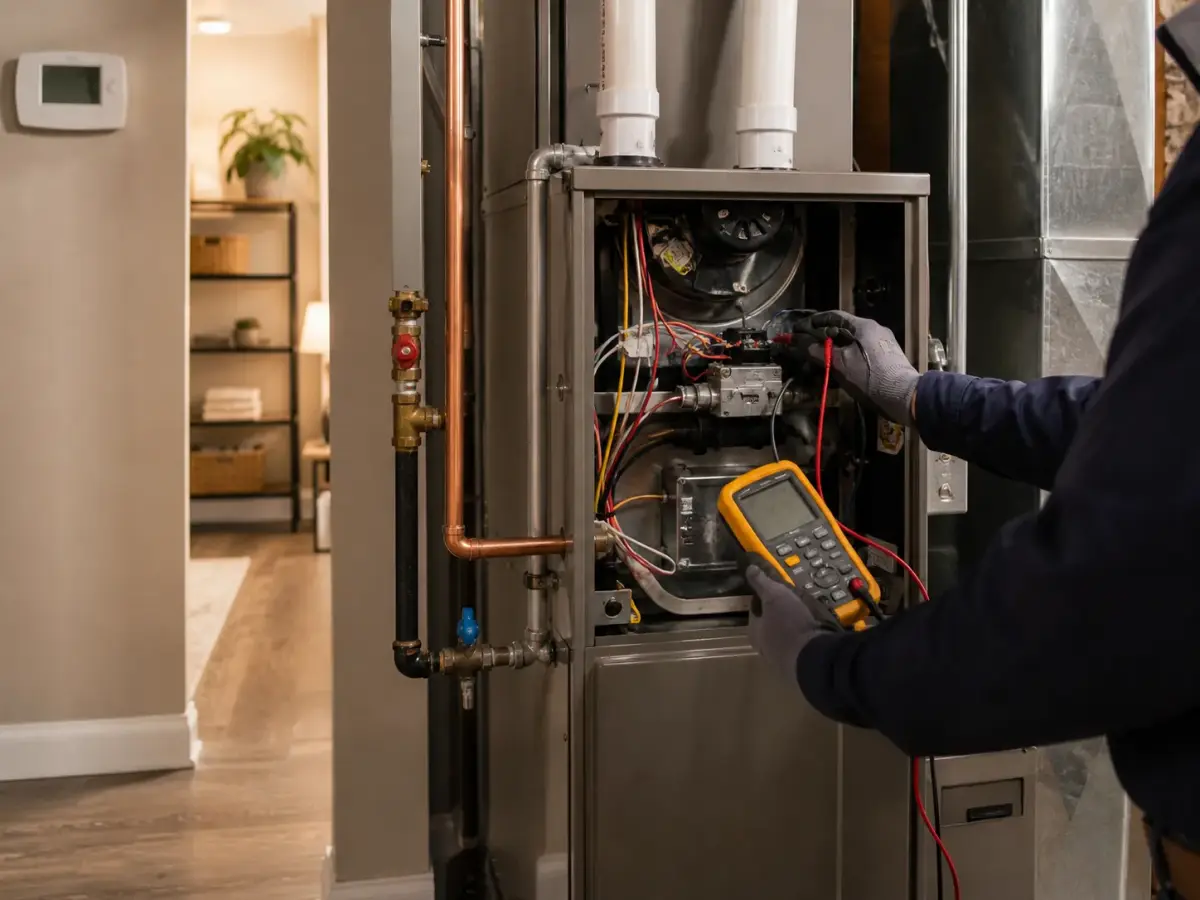
HVAC technician evaluating heating and cooling equipment for a North Jersey property

Choose the path before the appointment

HVAC service can mean a live failure, planned care, replacement, or a system-design question.

A request for an HVAC company may begin with no heat, warm supply air, weak airflow, a boiler leak, a thermostat code, a noisy outdoor unit, a breaker problem, a room that never becomes comfortable, an aging system, a planned ductless project, or uncertainty about whether equipment and electrical work belong in the same scope. Those conditions do not all need the same appointment or proposal.

Use MDL's focused air-conditioning repair guide for an installed cooling system that should be operating now but will not start, blows warm air, leaks water, ices, cycles abnormally, or develops a new sound or electrical symptom. Use heating repair for no heat, uneven heating, a shutdown, short cycling, odor, noise, or another active heating fault. A boiler-specific request belongs on the boiler service guide.

For a planned project, use cooling installation and replacement or heating installation. Use the ductwork assessment guide when the concern involves distribution, visible material, odor, moisture, leakage, damage, or the difference between cleaning and repair. Use the emergency HVAC path when timing, weather, safety, or occupant vulnerability changes the response.

RepairInstalled equipment should operate now, but a symptom or fault needs condition-based testing and a supported repair scope.
MaintenanceOperating equipment needs a defined inspection, cleaning, measurement, and reporting scope—not a vague tune-up label.
ReplacementAn aging or failed system needs a repair comparison, load and distribution review, complete design, permits, startup, and closeout.
New systemA new central, ductless, hydronic, or mixed project begins with rooms, loads, distribution, equipment locations, controls, utilities, power, and approvals.

Safety before comfort

Some HVAC conditions need emergency services, a utility, or a safe shutdown first.

Leave the area when appropriate and call 911, the responsible utility, or emergency medical services first for fire, smoke, a suspected gas leak, a carbon-monoxide alarm, immediate electrical danger, or a person in distress. An HVAC form is not an emergency-response system.

Turn equipment off only when it is safe to do so and request prompt qualified direction for sparking, a burning odor, visible heat damage, damaged wiring, water near energized equipment, a breaker that trips again, a fuel or venting concern, or unusual combustion evidence. Do not remove covers, reach into moving equipment, bypass a safety, test live wiring, handle refrigerant, or repeatedly reset equipment.

Loss of heating during dangerous cold or loss of cooling during dangerous heat can become a health and property risk before a technician arrives. Protect vulnerable occupants, use a safe conditioned location, protect plumbing only through safe measures, and use emergency services when health is at risk. Call 973.337.5530 so MDL can confirm current coverage and availability; this page does not promise a particular response time.

Call emergency services firstFire, smoke, gas odor, carbon-monoxide alarm, immediate electrical danger, or a person in medical distress.
Stop and report promptlySparking, burning odor, heat damage, water near electrical equipment, repeated breaker trip, fuel or venting concern, or unsafe operation.
Do not open equipmentThermostat and accessible filter observations are useful; internal electrical, combustion, refrigerant, and moving-part testing belongs to qualified professionals.
Describe the risk clearlyProvide the exact address, system and fuel, what happened, whether equipment is off, who is affected, and which emergency agency or utility has responded.

The complete comfort system

Equipment is only one part of heating and cooling performance.

A useful HVAC evaluation follows the path from the building load and controls through equipment, distribution, electrical or fuel supply, drainage, venting, and the rooms people actually occupy. Replacing the most visible component cannot correct every design, access, or building condition.

Loads

The property determines the heating and cooling demand

Insulation, air leakage, windows, orientation, occupancy, internal gains, additions, renovations, rooms served, and North Jersey design conditions affect the load. Square footage alone does not define a system.

Controls

Thermostats, sensors, safeties, zoning, and communication direct operation

A display, code, schedule, sensor, low-voltage circuit, zone control, safety, or equipment communication issue can resemble a larger equipment problem. Controls should be tested in the context of the system.

Equipment

Heating and cooling components must work as an installed system

Furnaces, boilers, air handlers, heat pumps, condensers, indoor coils, pumps, burners, and accessories each have system-specific operating and safety requirements.

Distribution

Ducts, returns, registers, pipes, radiators, baseboard, and zones deliver comfort

Leakage, restriction, damage, air in a hydronic system, poor balancing, missing return paths, insulation, or design limits can leave rooms uncomfortable even when equipment runs.

Utilities

Electrical, fuel, combustion air, venting, refrigerant, and condensate matter

Capacity, circuits, disconnects, controls, fuel supply, combustion and venting, refrigerant condition, drainage, and freeze protection need the appropriate trade and test—not assumptions.

Building

Access, penetrations, structure, roof, finishes, and approvals shape the scope

Attics, crawlspaces, roofs, mechanical rooms, occupied units, historic conditions, shared property, restoration, permits, and inspection access can change the project boundary and schedule.

Symptom-to-service routing

Describe what the system does; let testing establish why.

No start, no heat, warm air, weak airflow, uneven rooms, water, ice, noise, odor, short cycling, long runtime, pressure loss, a thermostat code, or a breaker trip can each have more than one cause. The symptom helps select the appointment and safety response, but it should not become an automatic diagnosis, refrigerant refill, cleaning, part, or replacement.

Without opening equipment, record the thermostat mode and setpoint, whether its display has power, which indoor and outdoor components appear to run, whether the issue affects one room or the entire property, whether accessible registers are open, and whether an accessible filter is visibly blocked. Note any code, sound, odor, water, ice, breaker condition, weather change, recent work, or earlier repair.

Do not keep operating equipment with a burning odor, sparking, visible heat damage, water near energized components, or a breaker that trips again. Do not chip ice, add water to a hot boiler, bleed a system without qualified direction, block or alter a vent, handle refrigerant, or remove electrical or combustion covers to collect information for a quote.

No heating or coolingReport thermostat demand, indoor and outdoor operation, fuel or wider outage context, codes, breaker condition, rooms affected, indoor conditions, and safety concerns.
Uneven or weak deliveryReport affected rooms, airflow or emitter behavior, open registers and doors, filter condition, zone or radiator context, renovations, and when the pattern changes.
Water, ice, pressure, or drainageProtect people and energized equipment, turn the system off when appropriate, document the safe visible location, and avoid internal or refrigerant work.
Noise, odor, code, or repeated cyclingDescribe when it occurs, which component appears involved, whether operation stops, and any burning, fuel, combustion, electrical, or occupant-safety condition.

Diagnosis before authorization

A service visit should connect observations and measurements to the proposed work.

Before scheduling, ask what the initial charge includes: dispatch or travel, diagnostic time, after-hours terms, number of systems, accessible testing, written findings, estimate preparation, and any credit toward approved work. A low headline price does not explain the test depth, access assumptions, or what happens after the first observation.

  1. 01

    Identify the system and complaint

    Confirm the equipment, fuel or energy source, controls, distribution, rooms or zones served, model information when safely accessible, symptom, timing, recent work, operating context, and any safety or access condition.

  2. 02

    Reproduce or review the condition

    When practical and safe, observe the operating sequence or documented failure. A fault that is intermittent, weather-dependent, zone-specific, or recently reset needs its context preserved rather than erased.

  3. 03

    Test the systems that can support or rule out a cause

    The exact checks depend on the equipment and complaint but may include power, controls, safeties, electrical components, temperatures, airflow, pressure, combustion, venting, pumps, drainage, visible distribution, and refrigerant-circuit conditions.

  4. 04

    Separate the finding from related conditions

    The explanation should distinguish the observed symptom, supported cause, contributing conditions, items not yet verified, safe operating status, and the consequence of delaying the recommended action.

  5. 05

    Define the repair and expected result

    The written option should name the work, included parts and materials, charge, expected result, exclusions, final operating check, warranty terms, and the conditions that would require separate approval.

  6. 06

    Keep the service record

    Retain the diagnosis, approved scope, final test, model and part information when applicable, settings or owner instructions, warranty document, and any condition still requiring repair, monitoring, permit work, or replacement planning.

Maintenance with a defined boundary

Ask what will be inspected, cleaned, measured, tested, and reported.

The word tune-up does not define a North Jersey HVAC maintenance visit. The proposal should identify the equipment and systems included, accessible work, filter responsibility, cleaning, operating measurements, controls and safeties, electrical checks, condensate or hydronic condition, combustion and venting checks when applicable, visible distribution, findings report, exclusions, and approval boundary for repairs.

Cooling and heat-pump maintenance can involve indoor and outdoor components, airflow and temperature operation, coil and condensate condition, controls, electrical components, and visible refrigerant-circuit concerns. Fuel-fired heating may add burner, combustion, safety, venting, chimney, fuel, and heat-exchanger context within the provider's licensed scope. Boilers add water condition, pressure and temperature behavior, pumps, valves, expansion, controls, venting, and distribution observations appropriate to the system.

Maintenance can identify wear, unsafe conditions, deferred work, or performance concerns, but it cannot guarantee that equipment will not fail afterward. Ask how urgent findings are classified, whether equipment may continue operating, how repair authorization works, and whether a return visit or different specialist is needed.

Included equipmentList each indoor and outdoor unit, furnace, boiler, air handler, heat pump, pump, zone, thermostat, accessory, or other system included in the price.
Tasks and measurementsName what is inspected, cleaned, adjusted, measured, tested, documented, or replaced and which work depends on accessibility or equipment condition.
Repair boundarySeparate approved maintenance from parts, refrigerant, chemical treatment, deep cleaning, ductwork, venting, electrical, permit, and other corrective work.
Report and next actionReceive current condition, material readings or observations, safety status, urgency, recommended work, exclusions, and a written option before added work begins.

Repair or replace

Start with the diagnosed condition—not a shortcut formula.

A $5,000 rule, a 20-year rule, the age of one component, or an online calculator cannot account for every furnace, boiler, central-air system, heat pump, ductless system, property, fuel path, distribution network, electrical condition, or owner goal. First determine what failed, whether the equipment can operate safely, and what a defined repair is expected to accomplish.

Then compare the repair cost and warranty with overall equipment condition, prior failures, parts availability, refrigerant path, combustion or venting condition when applicable, controls, distribution, comfort, operating cost, electrical requirements, remaining service outlook, and the risk of another known condition. Replacement should be a complete alternative, not only an equipment price.

ENERGY STAR identifies older equipment, frequent repairs, rising bills, and uneven comfort as reasons to consider system improvement or replacement. Those are decision signals—not proof that an individual system is unrepairable or that a larger new unit is appropriate.

Repair evidenceSupported failure, safe operating condition, exact repair, included materials, final test, expected result, exclusions, and written warranty.
System conditionAge, maintenance and repair history, additional known faults, parts and refrigerant path, corrosion or wear, combustion or venting, controls, and distribution.
Replacement designLoad, equipment selection, distribution, fuel or refrigerant, condensate, electrical, controls, locations, access, permits, startup, closeout, and warranty.
Ownership decisionCompare total scopes, disruption, schedule, operating goals, future plans, financing terms if offered, and risks without treating one generic formula as the answer.

Replacement and new-system planning

The equipment label is one line in a complete installed-system scope.

ENERGY STAR recommends proper sizing and a Manual J load calculation. Square footage or the capacity of old equipment does not account for insulation, air leakage, windows, orientation, occupancy, internal gains, room exposure, additions, distribution, or the design conditions the new system must serve.

Survey

Document the property after planned building changes

Identify conditioned rooms, use, occupancy, windows, insulation, air leakage, additions, renovations, comfort complaints, existing equipment, distribution, utilities, and equipment-location constraints.

Loads

Calculate room and building heating and cooling requirements

Ask for the sizing basis and whether the proposal reflects post-project conditions. Capacity should not be copied automatically from the old nameplate or selected by square footage alone.

Distribution

Match ducts, returns, hydronic emitters, zones, and airflow to the plan

State what will remain, be tested, sealed, repaired, resized, balanced, insulated, replaced, or excluded and how rooms or zones will receive the intended output.

Equipment

Name the complete matched system and performance basis

List model numbers, capacities, efficiencies, indoor and outdoor components, controls, accessories, fuel or refrigerant requirements, operating limits, and owner-selected options.

Infrastructure

Define electrical, fuel, venting, drainage, pad, penetration, and access work

Do not assume the existing circuit, panel, disconnect, fuel line, chimney, flue, condensate route, equipment platform, roof opening, or service clearance is automatically reusable.

Closeout

Require startup, testing, inspections, records, and owner handoff

Identify permit closeout, startup checks, control setup, balancing or commissioning included, model and serial records, warranty registration responsibility, maintenance requirements, and owner instructions.

Central, ductless, and mixed-system choices

A ductless project begins with rooms, loads, locations, drainage, power, and ownership approval.

Historical searches connected MDL's HVAC page with ductless air-conditioning installation in West Orange. A mini-split can be considered for a property without useful ducts, an addition, a difficult room, zoning, or a replacement strategy, but the word ductless does not define the number or size of zones, indoor-unit locations, outdoor-unit placement, line routes, condensate management, controls, cold-weather heating role, electrical scope, appearance, access, or permit path.

Send the West Orange or North Jersey address, rooms and uses, existing heating and cooling, comfort problem, owner or tenant status, renovation plans, preferred indoor and outdoor locations, safe panel information, building or association constraints, and project timing. Use the focused cooling installation guide for the detailed survey and quote path.

A central system may fit when useful distribution exists or a complete duct plan is appropriate. A ductless system may fit a room or zone strategy. A mixed approach may preserve one system while addressing another area. The responsible choice follows loads, distribution, building conditions, controls, electrical capacity, installation details, operating goals, and the complete written options—not a blanket claim that one technology fits every property.

Rooms and loadsIdentify each area to be served, its use, exposure, insulation and window context, existing comfort issue, and planned building changes.
Indoor and outdoor locationsPlan service clearances, structure, appearance, sound context, snow and drainage exposure, line routes, condensate, penetrations, and safe access.
Power and controlsReview equipment ratings, circuits, disconnects, panel and service capacity, control strategy, zones, and other planned electrical loads.
Approvals and handoffDefine municipal, owner, landlord, condominium, historic, zoning, or other approvals plus inspection, startup, documentation, and warranty responsibility.

Distribution and indoor comfort

Cleaning, sealing, repair, balancing, filtration, and equipment service are different scopes.

Weak airflow, dusty surfaces, odor, visible material, moisture, noise, hot and cold rooms, or high operating time does not automatically establish dirty ducts as the cause. Filter condition, coil or blower condition, duct leakage or damage, restriction, poor return paths, insulation, zoning, balancing, equipment capacity, building pressure, humidity, moisture sources, and occupant activities can overlap.

Use the ductwork and air-duct guide to separate source removal from sealing, repair, replacement, insulation, balancing, filter work, equipment cleaning, dryer exhaust, and other systems. Ask for the inspected evidence, exact systems and components included, access method, containment and protection, equipment and materials, exclusions, post-work condition, and any repair or moisture source that remains.

ENERGY STAR's duct-sealing guidance identifies leakage and insulation measures separately. A cleaning proposal should not promise sealing, design correction, filtration performance, health outcomes, or energy savings unless the corresponding condition is supported and the actual corrective scope is included.

Air systemFilter, blower, coil, supply and return paths, registers, dampers, zones, duct material, leakage, damage, insulation, and accessible cleanliness.
Hydronic systemBoiler operation, pumps, pressure and temperature behavior, expansion, valves, zones, pipes, radiators or baseboard, air, leakage, and controls.
Building conditionsAir leakage, insulation, windows, additions, room use, doors, moisture sources, exhaust, pressure, renovations, and occupant activities.
Defined corrective scopeSeparate equipment repair, cleaning, sealing, repair, replacement, balancing, insulation, filtration, drainage, moisture correction, and building work.

HVAC and electrical coordination

Review the proposed load and existing electrical path before assuming a panel upgrade.

MDL's published New Jersey credentials include electrical-contractor and master-HVACR licenses. That makes it practical to identify equipment and electrical questions in one request, but it does not make a new panel, larger service, dedicated circuit, disconnect, conductor, control, surge device, or load-management system automatic.

The actual electrical scope depends on service and panel ratings, load calculations, breaker space, existing conductor and circuit condition, equipment nameplate ratings and instructions, disconnect and overcurrent protection, controls, outdoor or wet-location requirements, grounding and bonding context, other loads, permit requirements, and the complete project design.

Ask the proposal to separate equipment work from electrical work and identify what was evaluated, what remains, the circuit or service changes, equipment and materials, route, access, shutdown, utility involvement, permits, inspections, restoration, startup, and exclusions. Use MDL's panel-upgrade guide when capacity or condition may require a larger electrical project.

Existing capacityService and panel ratings, load basis, breaker space, conductor and circuit condition, disconnects, protection, and other current or planned loads.
Proposed equipmentNameplate requirements, indoor and outdoor components, auxiliary or backup heat, controls, pumps, accessories, startup demand, and manufacturer instructions.
Project boundaryNew or reused circuits and disconnects, panel or service changes, utility work, route, penetrations, protection, restoration, permits, inspections, and exclusions.
No automatic upgradeA panel or service upgrade should follow the supported capacity, condition, code, and project findings—not the fact that HVAC equipment is being replaced.

Regulated and permit-dependent work

Refrigerant, combustion, electrical, construction, and local approvals need exact boundaries.

The final equipment and work determine the responsible license, technical subcodes, permits, inspections, and closeout. A generic HVAC label does not erase electrical, fuel-gas, plumbing, mechanical, fire, building, roof, structural, zoning, historic, association, or utility requirements.

Combustion

Fuel, burners, heat exchangers, combustion air, and venting form a safety path

Fuel-fired equipment needs system-appropriate testing and a clear boundary for fuel supply, combustion, safeties, flue, vent or chimney condition, condensate when applicable, and any separate licensed or permit work.

Electrical

Power, controls, circuits, disconnects, and service changes need the electrical scope

State what is existing, reused, repaired, replaced, or added, who performs it, what shutdown or utility coordination applies, and which permit and inspection closes the work.

Permits

The municipality and final scope determine the application

New Jersey's construction-permit resources include applications and technical sections. Ask who confirms each approval, applies, supplies plans, schedules inspections, corrects deficiencies, and obtains final closeout.

Property

Exterior, roof, structure, historic, shared, or rented conditions can add approvals

Equipment locations, penetrations, platforms, sound context, drainage, property lines, condominium or landlord control, historic review, zoning, and restoration should be identified before the schedule is promised.

Records

Keep permits, inspection approvals, startup data, and warranty responsibility together

Closeout should identify approved work, unresolved conditions, final tests, model and serial information, owner instructions, maintenance needs, warranty terms, and who registers covered equipment.

Homes, multifamily buildings, and businesses

Property access and authority can change the first appointment and the final scope.

A detached home may involve an attic, basement, crawlspace, side yard, roof, finished route, chimney, panel, and occupied rooms. A condominium, cooperative, rental, multifamily building, retail space, office, or other commercial property can add unit and floor identification, shared equipment, common distribution, owner or board approval, property management, building engineering, certificates of insurance, loading, parking, roof access, escorts, occupied hours, shutdown notices, tenant coordination, and restoration rules.

Before scheduling, identify who owns the equipment, who can authorize diagnosis, who can approve added work, who provides access, and who receives the proposal and invoice. If the system serves multiple areas or its ownership is uncertain, do not authorize alteration based only on the occupant's description.

Provide safe label and condition photos when useful, but do not enter an unsafe roof, attic, crawlspace, electrical room, boiler room, shaft, or locked shared area to collect them. Access planning should protect occupants, workers, property, and the validity of the diagnosis.

AuthorityOwner, tenant, landlord, board, property manager, facilities contact, approving party, billing contact, and limits on diagnostic or repair authorization.
AccessUnit and floor, equipment rooms, roof, attic, crawlspace, exterior areas, panels, thermostats, parking, loading, keys, escorts, security, pets, and occupied hours.
Shared systemsAreas served, neighboring impact, common distribution, meters and utilities, shutdown notices, building controls, engineering requirements, and restoration responsibility.
DocumentationInsurance requests, proposals, permits, board or landlord approvals, inspection access, closeout records, warranties, and owner or tenant instructions.

Compare complete HVAC proposals

Make every bidder answer the same property, equipment, distribution, and closeout questions.

Years in business, review totals, a financing headline, a discount, a brand badge, or a promise of fast service can help a customer identify companies to call, but those signals do not make two HVAC scopes equivalent. Put each proposal into the same categories before comparing the total.

Finding

Diagnosis or design basis

What condition is supported? What was observed or measured? What load, distribution, equipment, or building assumptions support a replacement design? What remains unverified?

Scope

Exact work and complete equipment

List repairs, model numbers, capacities, matched components, controls, accessories, distribution, fuel, refrigerant, drainage, venting, electrical, protection, and restoration.

Access

Property work and exclusions

Identify attic, roof, crawlspace, finished-area, exterior, structural, crane or lifting, parking, loading, occupied-space, shutdown, removal, disposal, patching, and finish assumptions.

Approvals

Permits, utility, owner, and inspection responsibility

Name the applicant, forms and plans, fees, municipality, utility, association or landlord, inspection scheduling, correction responsibility, and final closeout.

Handoff

Startup, testing, controls, records, and training

State the operating checks, balancing or commissioning included, control setup, permits and inspection proof, model and serial record, registration, maintenance, and owner instructions.

Terms

Price, schedule, changes, payment, and warranty

Compare the complete price, deposit and payment timing, financing terms if offered, schedule assumptions, delays, change-order process, exclusions, labor and equipment warranty, and who supplies each written warranty.

A six-step North Jersey HVAC path

Move from a symptom or project goal to a documented next step.

  1. 01

    Send the property, system, and condition

    Provide the exact address and ZIP code, property type, approving contact, equipment and fuel or energy source, rooms or zones served, symptom or project goal, timing, recent work, access limits, and safe photos or codes.

  2. 02

    Confirm coverage, urgency, and appointment type

    MDL can confirm current service coverage and availability, identify emergency or safety boundaries, and route the request to repair, maintenance, installation, boiler, ductwork, electrical, or another appropriate conversation.

  3. 03

    Diagnose the fault or survey the planned project

    An operating problem needs system-specific evidence. A planned system needs building, load, distribution, equipment, electrical or fuel, condensate, venting, access, approval, and permit context.

  4. 04

    Review written findings and comparable options

    Separate symptom, supported cause, related conditions, remaining uncertainty, repair, replacement or design alternatives, complete inclusions, exclusions, price, schedule assumptions, and warranty terms.

  5. 05

    Authorize the defined work and approvals

    Confirm the approving party, scope, protection, access, permit and inspection responsibility, utility or property coordination, change-order boundary, payment terms, and conditions that could alter the schedule.

  6. 06

    Verify operation and keep the closeout record

    Receive the final operating checks or startup record appropriate to the work, inspection closeout when applicable, model and serial information, settings, owner instructions, warranty and registration responsibility, maintenance guidance, and unresolved actions.

North Jersey service requests

Use the exact address and ZIP code to confirm coverage before scheduling.

MDL's public business profiles identify its West Orange base, and this site publishes detailed local pages for West Orange, Montclair, Maplewood, Chatham, and Hoboken, plus a broader North Jersey service-area hub. County or town language helps explain local context but does not replace address-level confirmation.

Historical searches connected this page with emergency HVAC needs in South Orange, Livingston, and West Caldwell and with ductless installation in West Orange. Submit the exact address, system, risk, occupants affected, and timing so MDL can confirm whether the location, current availability, and requested work fit. An impression in Google is not a guarantee of coverage or arrival time.

For a live problem, include what operates, thermostat or code, fuel or energy source, indoor conditions, rooms affected, water or ice, sound or odor, breaker state, start time, recent work, and any safety action already taken. For a planned project, add rooms or zones, building changes, current distribution, equipment locations, panel context, ownership approvals, access, and desired outcome.

Address and authorityStreet and ZIP, property use, unit and floor, owner or tenant, approving contact, property manager or board, access person, and billing contact.
System and conditionEquipment and fuel or energy type, locations, rooms served, thermostat or code, what runs, indoor conditions, water, ice, sound, odor, breaker state, timing, and recent work.
Project and accessRepair, maintenance, replacement, or new system; rooms and zones; ducts or hydronics; panel; roof, attic, crawlspace, mechanical room, parking, loading, pets, security, and working hours.
Safety boundaryDo not open equipment, test live wiring, handle refrigerant, alter fuel or venting, bypass controls, enter unsafe areas, or repeatedly reset a breaker. Report the condition and wait for qualified direction.

Verified business proof

Public reviews and credentials customers can check.

MDL's claimed Google Business Profile identifies the company as family owned, established in 2007, and categorized for heating, air conditioning repair, electrical, and HVAC work.

4.8 out of 5 on GoogleBased on 102 public Google reviews checked July 15, 2026.
Established in 2007Family-owned electrical and HVAC service for North Jersey properties.
Claimed Google profileListed as a heating contractor, air conditioning repair service, electrician, and HVAC contractor.

Request North Jersey HVAC service

Send the address, system, symptom or project, access, and result you need.

MDL can confirm whether the next step is heating or AC repair, boiler service, maintenance, a replacement survey, ductless planning, ductwork review, electrical diagnosis, an emergency request, or another path. This page does not promise coverage, equipment, price, discount, financing, appointment time, repair outcome, permit approval, warranty, or final scope before the request is reviewed.

North Jersey HVAC FAQ

Direct answers about service choice, safety, diagnosis, repair, replacement, ductless systems, electrical work, permits, cost, quotes, and coverage.

These answers address the strongest historical and current HVAC questions without inventing flat prices, discounts, financing, equipment, certifications beyond MDL's published credentials, response times, guarantees, or a one-formula replacement decision.

Which MDL HVAC page should I use for my problem?

Use the AC repair page when installed cooling equipment should be operating but is not. Use cooling installation for a planned central-air or ductless replacement or new system. Use heating repair for no heat or an operating fault, heating installation for a planned replacement, boiler services for boiler-specific concerns, ductwork for distribution or material questions, and emergency HVAC when urgency or safety changes the response. This North Jersey HVAC hub is the starting point when you are unsure which system or trade is involved.

What should I check before requesting HVAC service?

Without opening equipment, note the thermostat mode and setpoint, whether its display has power, which indoor and outdoor components appear to run, whether accessible registers are open, whether an accessible filter is visibly blocked, and any code, sound, odor, water, ice, airflow change, or breaker condition. Record when the issue began and which rooms are affected. Do not remove covers, touch refrigerant piping, bypass a safety, relight equipment unless the manufacturer and qualified provider have directed you, or keep resetting a breaker that trips again.

What is considered an HVAC emergency?

Fire, smoke, a suspected gas leak, a carbon-monoxide alarm, immediate electrical danger, or a person in distress requires 911, the responsible utility, or emergency medical help first. Turn equipment off only when it is safe. Sparking, a burning odor, visible heat damage, water near energized equipment, a repeated breaker trip, loss of heat in dangerous cold, or dangerous indoor heat for a vulnerable occupant needs prompt professional direction and a safe backup location when appropriate.

Does MDL provide 24-hour or guaranteed same-day HVAC service?

MDL publishes an emergency HVAC request path, but this page does not promise 24-hour staffing, a particular arrival time, same-day service, or coverage at every address. Call 973.337.5530 and provide the exact address, system, condition, safety context, occupants affected, and callback number so MDL can confirm current coverage and availability. Use emergency services or the utility first when the condition requires them.

Should I repair or replace an HVAC system?

Start with the supported diagnosis and safe operating condition. Then compare the repair scope and expected result with equipment condition, age, repair history, parts and refrigerant path, venting or combustion concerns when applicable, comfort, operating cost, distribution, controls, electrical requirements, permits, warranty, and the complete replacement scope. A $5,000 rule, age cutoff, or online calculator does not decide every North Jersey property.

How should replacement HVAC equipment be sized?

Square footage, the old nameplate, or choosing a larger unit for safety is not a complete method. ENERGY STAR advises contractors to calculate the home's heating and cooling loads, commonly with Manual J, and select equipment and distribution for the property. Insulation, windows, orientation, air leakage, occupancy, internal loads, rooms or zones served, ducts or emitters, and design conditions should inform the plan. Ask the proposal to state its sizing basis.

Can MDL coordinate HVAC and electrical work?

MDL publishes New Jersey electrical-contractor and master-HVACR credentials, so a request can identify both equipment and electrical scope for review. That does not mean every HVAC project needs a new panel. The actual need depends on service and panel capacity, breaker space, equipment ratings, conductors, disconnects, overcurrent protection, controls, existing condition, code requirements, and other loads. Require the final electrical work to be itemized.

Does MDL install ductless mini-split systems in West Orange?

Use MDL's cooling-installation page and provide the West Orange address, rooms or zones, current heating and cooling, wall and outdoor-location constraints, condensate route, electrical-panel context, ownership approvals, and project goal. MDL can then confirm coverage, whether a ductless conversation fits, and the next survey step. This page does not promise a particular brand, capacity, rebate, price, permit outcome, or installation date before the property is evaluated.

Do HVAC repairs or replacements require a New Jersey construction permit?

The final scope and local enforcing agency control the answer. New Jersey's Uniform Construction Code uses construction permits, applicable technical sections, inspections, and closeout for covered work, while certain routine maintenance may be exempt. A request that begins as repair can expand into replacement, new wiring, duct alteration, venting, fuel-gas, structural, roof, or other permitted work. Ask who confirms, obtains, schedules, and closes each required approval.

How much does HVAC service cost in North Jersey?

A responsible price depends on the visit and diagnostic terms, timing, equipment and fuel type, number of systems, access, supported failure, parts, refrigerant or combustion work, duct or hydronic work, controls, electrical scope, permits, and whether the request is repair, maintenance, replacement, or a new installation. Ask what the initial charge includes and compare complete written scopes rather than an advertised starting price with a complete project.

What should I compare in HVAC quotes?

Compare the diagnosis or design basis, exact equipment and capacity when applicable, included indoor and outdoor components, distribution, controls, refrigerant or fuel path, venting or chimney work, condensate, electrical work, permits and inspections, protection and restoration, startup and final testing, documentation, schedule assumptions, exclusions, change-order process, payment terms, and the written warranty supplied for the actual project.

What information should I send for North Jersey HVAC service?

Send the exact address and ZIP code, property type, owner or tenant status, approving contact, system or fuel type, equipment and thermostat locations, symptom or project goal, rooms affected, timing, codes or breaker condition, recent work, safe label or condition photos, access constraints, vulnerable occupants when relevant, and the best callback number. MDL can use that information to confirm coverage, current availability, and the right repair, installation, boiler, ductwork, emergency, or electrical path.

Next steps

Continue to the exact HVAC or local path

AC

AC repair

Use the focused diagnostic guide for no cooling, warm air, weak airflow, water, ice, noise, cycling, control, and electrical symptoms.

Learn more
Cooling

Cooling installation

Plan a central or ductless system, replacement, load and distribution review, electrical coordination, permits, startup, and closeout.

Learn more
Heating

Heating repair

Use the symptom and diagnosis guide for no heat, shutdowns, cycling, uneven heating, noise, odor, controls, and equipment faults.

Learn more
Heating

Heating installation

Plan a furnace, heat pump, or other heating replacement with load, distribution, fuel or electrical, venting, permit, and handoff scope.

Learn more
Boiler

Boiler services

Continue to boiler-specific safety, diagnosis, hydronic or steam distribution, repair, replacement, venting, permit, and quote guidance.

Learn more
Emergency

Emergency HVAC

Use the urgent path when a system condition, dangerous weather, or vulnerable occupant makes timing or safety critical.

Learn more
Ductwork

Ductwork assessment

Separate cleaning, sealing, repair, replacement, balancing, filtration, moisture, and equipment conditions before approving work.

Learn more
North

North Jersey service areas

Confirm published town and county context with the exact property address and ZIP code.

Learn more

Request service

Send MDL the service, town, and best callback number.

Use the form for planned service or call for urgent electrical, heating, or cooling help.