
01 / The short answer
The breaker is not the problem. It is the messenger, and the message is in the timing.
A circuit breaker opens when more current passes through it than the wire behind it can carry safely, or, for the newer kinds, when it senses current leaking to ground or arcing in a connection. It does not open at random. Every trip has a cause on that circuit, and the fastest way to find the cause is to notice when the trip happens and what was running.
- Turn off and unplug everything on the circuit. Lamps, chargers, the heater, the television. Switch off hard-wired items like a bathroom fan if the switch is on that circuit.
- Reset once. Push the handle firmly to OFF, then to ON. It should click and stay.
- If it trips again immediately with nothing connected, stop. That is a fault in the fixed wiring or the breaker. Leave it off. Go to section 09.
- If it holds, plug things back in one at a time. The item that trips it instantly is faulty. The combination that trips it after a few minutes is an overload.
- If the item is a space heater, do the arithmetic in section 05 before you blame anything else.
Too much running at once. Heat builds in the breaker and it opens. Fix: move load. Repeat offenders need a new circuit.
A hot wire touches a neutral in a cord, a device or a box. Current surges. Fix: find and remove the damaged item; wiring faults are an electrician's job.
Current leaks to ground, often through moisture. The GFCI outlet or breaker opens. Fix: dry it out, isolate the leaking appliance, replace a worn device.
Sparking in a loose connection or a damaged cord. The AFCI breaker opens. Fix: find the damaged cord or connection; some older vacuums and tools trip them too.
One proper reset after removing the cause is troubleshooting. A second reset without a found cause is a guess. A third is a fire risk. If the breaker will not hold with the circuit empty, the fault is in the walls or the panel, and that is what MDL's electrical repair visit is for. Heat, a burning smell, buzzing or scorch marks move it to the emergency electrician line.
02 / The four reasons
Overload, short circuit, ground fault, arc fault. Each one trips a different way.
A standard breaker protects against the first two. The two newer devices, the GFCI and the AFCI, protect against the second two, and they are often blamed for "nuisance" trips when they are doing exactly what they were installed to do.
- Overload. The circuit is asked to carry more current than its rating for long enough that the breaker's thermal element heats and opens. A 15-amp breaker is on 14-gauge wire; a 20-amp breaker on 12-gauge. The breaker takes seconds to minutes to trip on an overload, which is why an overload trip arrives after the heater has been running, not when it is switched on. Standard breakers are listed to carry 80 percent of their rating continuously, and the code sizes a breaker at 125 percent of any load that runs three hours or more (NEC 210.20(A), as explained by Electrical Toolbox). Kohler's white paper adds the caution that this does not mean a breaker trips at 80 percent; it means it is not meant to sit above that for hours.
- Short circuit. A hot conductor touches a neutral, directly, with almost no resistance. Current rises far above the rating in a fraction of a second and the breaker's magnetic element opens it at once. Shorts live in damaged cords, in appliances, in a box where a wire has come loose, and in cables nicked by a nail or a screw. A short trips instantly and trips again instantly on reset.
- Ground fault. A hot conductor touches something grounded, such as a metal box or a water pipe, or current finds a path to ground through moisture or through a person. A GFCI, a ground-fault circuit interrupter, senses the difference between the current going out on the hot and coming back on the neutral and opens when they do not match; Leviton describes its GFCI devices as protection from ground faults and its dual-function devices as protection from both ground faults and arc faults. The standard breaker may not trip at all on a small ground fault, which is the point of the GFCI.
- Arc fault. Electricity jumping a gap: a loose terminal, a cord crushed under a leg of the couch, a cable a rodent has chewed. Arcs are hot enough to start a fire at currents too low to trip a standard breaker. An AFCI, an arc-fault circuit interrupter, listens for the electrical signature of an arc and opens; Leviton describes its AFCI devices as protection against fires resulting from electrical arc faults. New Jersey's current electrical subcode keeps the arc-fault rule for new and extended circuits, and MDL's panel cost guide explains the state's exception for circuits that are only moved to a new panel.
A fifth possibility, a failed breaker, is real and is covered in the questions section. It is the last cause to assume. A breaker that trips only under load is almost always working.
03 / Which one is yours
Match the pattern. The table is the diagnosis most service calls start with.
Swipe across the table to see every column.
| What you see | Most likely cause | What to do | Who fixes it |
|---|---|---|---|
| Trips a few minutes after a heater, AC, microwave or hair dryer starts | Overload | Move the heavy load to another circuit or run it alone. Add up the labels in section 05. | You, unless it repeats every season; then a new circuit |
| Trips the instant one device is plugged in or switched on | Short or ground fault in that device or cord | Try the device on another circuit. If it trips there too, retire or repair the device. | You, or an appliance repair shop |
| Trips the instant you reset it, with everything unplugged | Short, ground fault or loose connection in the fixed wiring; failed breaker | Leave it off. Do not reset again. | Electrician: electrical repair |
| Trips with a burning smell, buzzing, warmth at an outlet or the panel, or scorch marks | Overheating connection or arcing | Turn the breaker off if the directory identifies it, without opening the panel. Keep people away. | Electrician, urgent: emergency electrician. Smoke or fire: leave and call 911. |
| GFCI outlet's RESET button is out; other outlets dead too | Ground fault, usually moisture or a leaking appliance; downstream outlets share it | Unplug what is on it, press RESET, reconnect one at a time. See section 06. | You, then an electrician if it will not hold |
| AFCI breaker trips when a vacuum, a treadmill or an older tool runs | Arc fault, or brush-motor noise an older AFCI reads as an arc | Try the appliance on a non-AFCI circuit. Inspect its cord. | You; an electrician if it trips with the appliance off |
| Breaker trips repeatedly and is warm, or the panel is a brand an inspector flagged | Failed breaker or a panel-level problem | Stop resetting. Photograph the closed panel label. | Electrician; see panel upgrades |
| Main breaker trips | Whole-house overload, a fault on the service side, or a failed main | Turn off large loads, reset once. If it trips again, leave it off. | Electrician, urgent if it will not hold |
04 / How to reset safely
Reset once, the right way. Everything after that is diagnosis.
- Turn off the loads first. Switch off and unplug what was running on the circuit. A breaker reset onto a full load can trip again on the inrush, which tells you nothing.
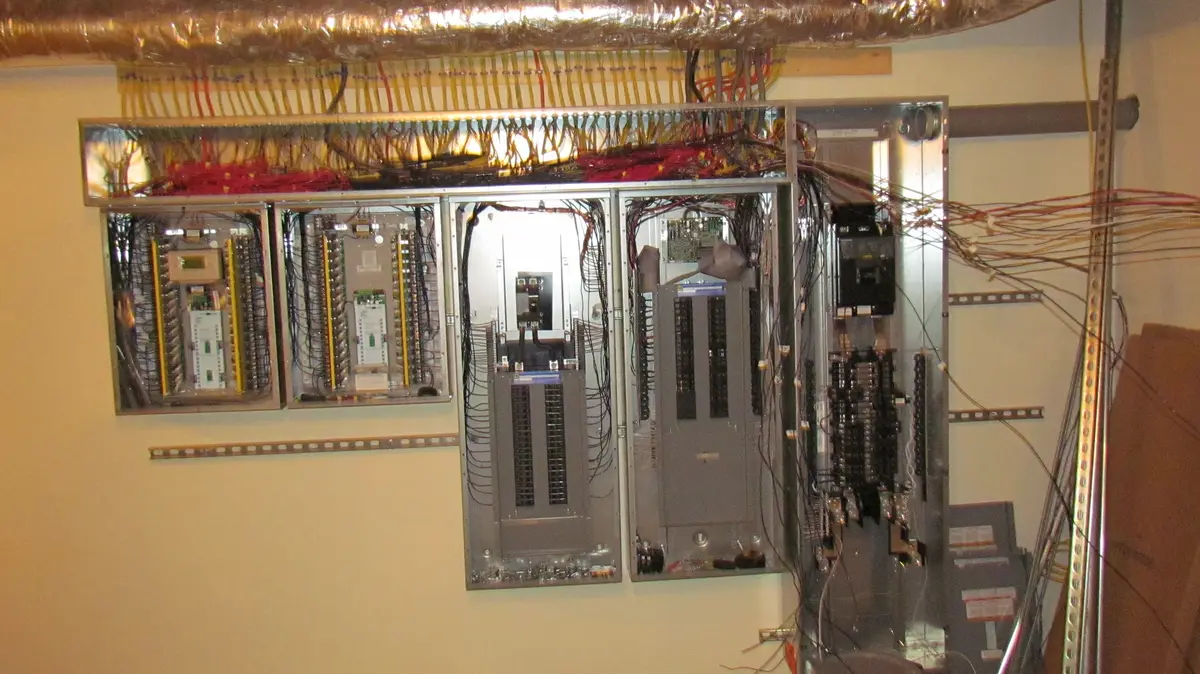
- Find the tripped handle. It sits between ON and OFF or feels loose, and on some brands a red or orange flag shows in a small window. From across the room it can look on. Run a finger along the row; the odd one out is it.
- Push it fully to OFF. Most breakers will not reset from the middle position. You should feel it latch.
- Push it to ON. One firm motion. If it holds, wait a minute, then reconnect loads one at a time.
- If it trips again at once, stop. Leave it off. Write down what, if anything, was connected. Do not try a second reset to "see if it was a fluke." A breaker that will not hold on an empty circuit is reporting a fault.
- Never work inside the panel. Resetting a handle on the front is a homeowner's job. Removing the dead-front cover, swapping a breaker or tightening a terminal is an electrician's job and, in New Jersey, licensed and permitted work (section 11).
Three things people do that make it worse
- Holding or taping the handle closed. The breaker is the only thing between a fault and the wire inside the wall. Defeating it removes that protection.
- Replacing a 15-amp breaker with a 20. The breaker protects the wire, not the appliance. A 20-amp breaker on 14-gauge wire lets the wire run hotter than it is rated for, inside walls, out of sight.
- Resetting a GFCI or AFCI over and over. Each trip is a sensed fault. If it will not hold with the circuit empty, the fault is in the wiring or the device, and more presses do not change that.
05 / Space heater math
Why the breaker trips every January: a 1,500-watt heater is most of a 15-amp circuit by itself.
The single most common winter breaker call in a North Jersey house is a bedroom or home-office circuit that trips when a plug-in heater has been running for a while. The arithmetic explains it. Read the label on the heater; it states the wattage on its high setting.
Watts divided by volts gives amps. A heater labeled 1,500 watts draws 12.5 amps on high. A 750-watt setting draws 6.25 amps. Our arithmetic on the label figure.
A load that runs three hours or more is continuous, and the code sizes the breaker at 125 percent of it, so a 15-amp breaker is meant for no more than 12 amps of continuous load (NEC 210.20(A), via Electrical Toolbox). One heater on high is already over.
The same rule gives 16 amps on a 20-amp breaker. One 1,500-watt heater fits with 3.5 amps to spare; a second heater, a microwave or a hair dryer on the same circuit does not.
NFPA: space heaters accounted for about one-third of home heating fires in 2016 to 2020 but nearly nine out of ten heating-fire deaths, and nearly half of home heating fires happen in December, January and February.
Two heaters on one circuit is 25 amps on a breaker rated for 15, and it will trip within minutes every time; that is the breaker working. A heater on a circuit that also carries a window air conditioner in summer, a desktop computer, a printer and a lamp will trip less predictably, because the total crosses the line only when several things run at once. Map the circuit first: turn the breaker off and note every outlet and light that goes dark. In older Essex County houses one 15-amp circuit often serves two or three bedrooms, so one heater per room is two or three heaters on one breaker.
- Run the heater alone on its circuit, or on the low setting. Move the other heavy loads to an outlet on a different breaker.
- Plug it straight into the wall. Keep anything that can burn at least three feet from it, and turn it off when you leave the room or go to bed (NFPA heating safety).
- If you need heat in that room every winter, stop using the breaker as a thermostat. A dedicated 20-amp circuit for the heater, or a fixed electric heater on its own circuit, is permitted electrical work in New Jersey (section 11). MDL's electric baseboard heater repair page covers fixed heaters, and the heat pump repair page covers the room that is cold because the main system is not keeping up.
NFPA's home electrical fire report (May 2026) counts 46,652 home electrical fires a year in 2020 to 2024 and notes that 28 percent of them, and about 39 percent of the deaths, fall in December, January and February. The winter trip and the winter fire have the same cause: circuits carrying more heat than they were built for.
06 / GFCI keeps tripping
A GFCI that keeps tripping is sensing a leak, and the leak is usually water.
A GFCI outlet or breaker compares the current leaving on the hot wire with the current returning on the neutral. When some of it goes missing, meaning it has found another path to ground, the device opens. That is why GFCIs live where water is: bathrooms, kitchens, garages, basements, laundry areas and outdoors. New Jersey's maintenance rule names those locations specifically: when a receptacle is replaced where GFCI protection is required, the replacement must provide it (N.J.A.C. 5:23-2.7(c)3i, referring to NEC 406.4(D)).
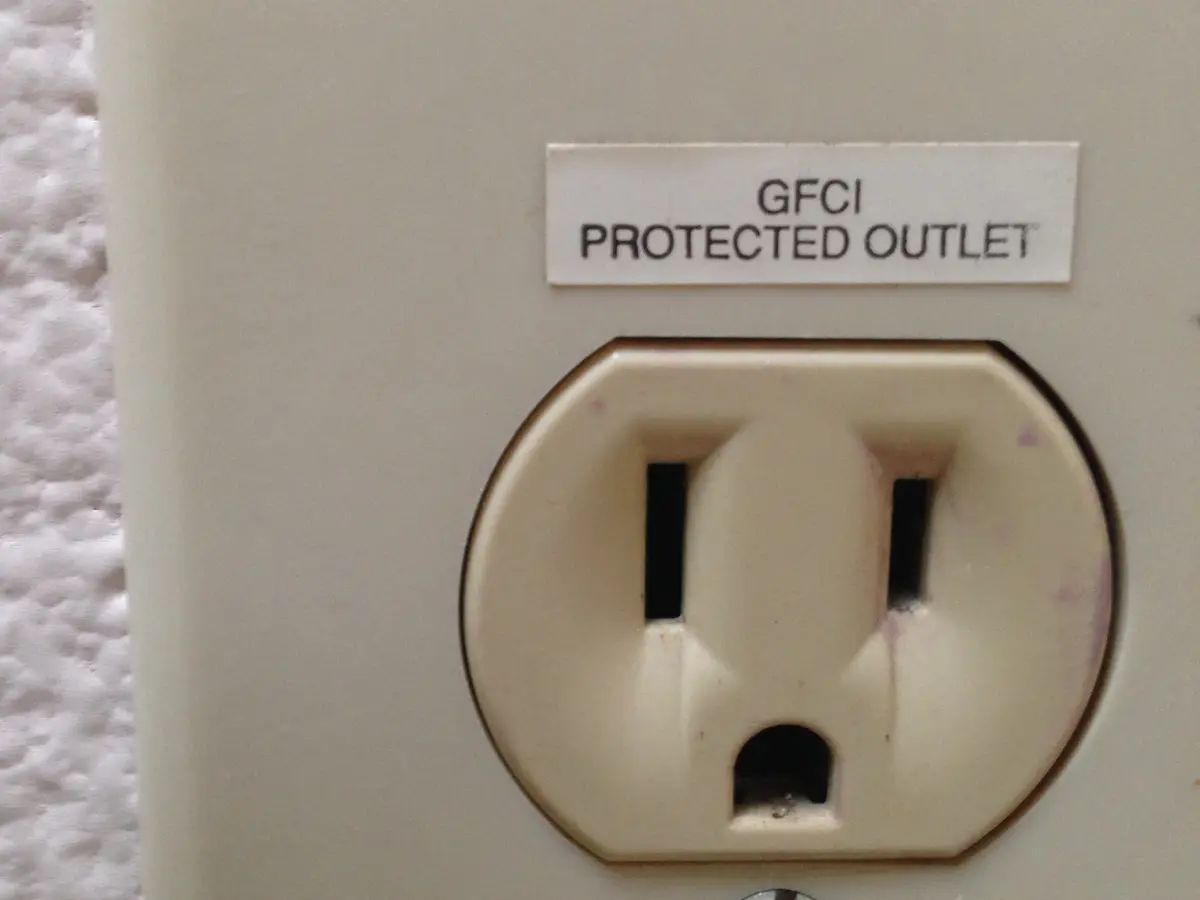
- Moisture. An outdoor box after rain or snowmelt, a basement outlet near a damp wall, a bathroom outlet in a room without a working fan. Dry conditions often clear it; a box that trips after every storm needs a new in-use cover or a new box.
- A leaking appliance. Refrigerators and freezers in garages, sump pumps, dehumidifiers, pool and hot-tub equipment, and old power tools can leak a little current to ground as their insulation ages. Unplug everything, reset, and reconnect one at a time; the one that trips it is the one.
- Too many downstream outlets. One GFCI often protects a whole run of ordinary outlets after it. Small leaks at several devices add up. Splitting the run or adding a second GFCI is an electrician's fix.
- A worn device. GFCIs wear out. One that trips in dry weather with nothing plugged in, or that will not reset at all, is replaced like for like, which is ordinary maintenance under New Jersey's rule, with the GFCI type kept.
- A real ground fault in the wiring. A nicked cable, a wet junction box, a bare wire touching a metal box. If the GFCI will not hold with every cord out and every switch off, that is the wiring, and it needs an electrician.
A dead outlet with no buttons in a bathroom, kitchen, garage or outside is very often a tripped GFCI somewhere else on the circuit, sometimes in another room or on another floor. Find every GFCI in the house and press each RESET before assuming the outlet has failed. MDL's GFCI outlet installation page covers replacements, where the code now requires protection, and the dead-outlet-with-no-buttons case in detail.
07 / Lights flickering
Flickering lights are sorted by how much of the house flickers.
The bulb, the socket or the dimmer
A loose bulb, a bulb near the end of its life, an LED on a dimmer not rated for it, or a worn socket. Tighten or swap the bulb first. A fixture that flickers with a new bulb and a compatible dimmer has a loose connection in it or in its box, which is a like-for-like fixture repair.
Dips when a motor starts
Lights that dim for a second when the refrigerator, the furnace blower or a window air conditioner kicks on are sharing a circuit that is near its limit, or sitting on a connection that has loosened. The same circuit is usually the one that trips in January. Mapping it and moving the motor load, or adding a circuit, is the fix.
Flicker, dimming or lights too bright
Lights across several circuits that flicker together, dim together, or, worst, get unusually bright while others dim, point to the service: a loose or corroded connection at the meter, the mast or the panel's main lugs, or a lost neutral. MDL's emergency page treats abnormally bright lights as urgent: turn off sensitive electronics and call. If the neighbors see it too, report it to the utility; an electrician cannot repair the utility's lines.
Not a lighting problem
Flickering with a hot-plastic or fishy odor, buzzing or sizzling at a switch or outlet, or a warm switch plate is an overheating connection. Turn the circuit off at the panel if the directory identifies it, keep people away, and use the emergency electrician page. Smoke or flame: leave and call 911.
Old houses add two more causes. Knob-and-tube and early cloth-covered cable lose insulation flexibility with age and crack when disturbed (InterNACHI), so a renovation, a new attic insulation job or a contractor in the crawl space can start a flicker that was not there before. And a 60-amp or small 100-amp service on a house that now has central air, an electric dryer and an induction range can sag under load in a way a 200-amp service does not; MDL's panel replacement cost guide covers when that becomes the real fix.
08 / Outlet not working
An outlet that is dead while the breaker is on has four usual explanations, and only one is a repair.
- A tripped GFCI upstream. The GFCI protecting it may be in another room. Press every RESET button in the house, including the garage and outside.
- A breaker that is tripped but looks on. The middle position is easy to miss. Run a finger along the handles.
- A switched outlet. Many living rooms and bedrooms have one receptacle, or half of one, controlled by a wall switch meant for a lamp. Try the switches.
- A failed outlet or connection. Receptacles wear out, back-stabbed connections loosen, and a connection that has been arcing can burn open. This is the repair. Do not open the outlet to look; note which nearby outlets and lights still work and whether the dead one is warm or discolored, and send that pattern with the request.
If the dead outlet is on a circuit that also trips, treat the two symptoms as one fault. Replacing a receptacle with a like or similar one is ordinary maintenance in New Jersey and needs no permit, but if the box behind it shows scorched insulation, aluminum wire or knob-and-tube, the replacement is the start of a larger conversation (section 10).
09 / When it is the wiring
With nothing plugged in, a breaker that still trips is talking about the walls.
This is the line in the guide that matters most. Everything in sections 01 to 08 is something you can check from the front of the panel and the face of an outlet. Once every cord on the circuit is out and every switch on it is off, a breaker that trips again on reset has nothing left to respond to except the fixed wiring, a hard-wired device or itself. The usual findings on an MDL repair visit are:
- A loose or overheated connection in an outlet, switch or junction box, often a back-stabbed receptacle or a wire nut that has worked loose over decades of heating and cooling.
- A damaged cable: a nail or screw from a picture, a shelf or a renovation; rodent damage in an attic or basement; a cable crushed by a door or a piece of furniture at a baseboard outlet.
- Moisture in a box: an outdoor receptacle with a failed cover, a basement box on a damp wall, a bathroom box without a vapor barrier.
- A failed hard-wired device: a bathroom fan, a garbage disposal, a dishwasher, a furnace or air-handler control circuit. MDL does both the electrical and the HVAC side of that call, which is why a tripping breaker that turns out to be a furnace blower does not become a second appointment.
- A failed breaker, or a bad connection at the panel bus. The least common finding, and the one that cannot be checked without opening the panel.
What MDL does on that visit: confirms the pattern you describe, identifies every outlet, switch and device on the circuit, tests for the fault with the circuit de-energized, opens only the boxes the evidence points to, and explains the finding before any work beyond making it safe. The repair is priced in writing after the fault is found, not before. Use the electrical repair page for a stable fault; use the emergency electrician page when there is heat, odor, buzzing, scorching, water at electrical equipment or a breaker that trips the instant it is touched.
10 / Old panels and knob-and-tube
Essex County's houses are nearly three times as likely as the nation's to predate 1940. The wiring did not plan for a space heater.
The Census Bureau's 2024 American Community Survey counts 339,451 housing units in Essex County. Of those, 102,954, or 30.3 percent, were built in 1939 or earlier; 72.7 percent were built before 1980; and the median unit dates from 1959. New Jersey as a whole is 17.2 percent pre-1940 with a median of 1971; the United States is 11.5 percent with a median of 1981. A house from 1925 in Montclair, Maplewood, South Orange or the older streets of West Orange was wired for a few lights and a radio, and what trips its breakers today is the load, not a defect in the breakers.
Swipe across the table to see every column.
| Place | Housing units | Built 1939 or earlier | Built before 1980 | Median year built |
|---|---|---|---|---|
| Essex County | 339,451 | 30.3 percent (102,954) | 72.7 percent | 1959 |
| New Jersey | 3,816,432 | 17.2 percent | 61.0 percent | 1971 |
| United States | 146,740,960 | 11.5 percent | 48.1 percent | 1981 |
Three findings turn a tripping breaker in an old house into a different job:
- Knob-and-tube wiring. Two separate conductors run on porcelain knobs and through porcelain tubes, with no ground wire, so it cannot serve a three-prong appliance. InterNACHI's inspector guidance lists the dangers as age, improper modifications, and insulation that has been packed around wires designed to shed heat into open air; the hot and neutral are kept four to six inches apart for that reason, the old insulation cracks and peels when bent, and amateur splices to modern cable are common. A knob-and-tube circuit that trips on a modern load is asking to be replaced, not reset. See knob-and-tube wiring replacement.
- Aluminum branch wiring. Houses built or expanded between 1965 and 1973 are the ones most likely to have it (InterNACHI). The Consumer Product Safety Commission's survey found homes wired with pre-1972 aluminum are 55 times more likely to have a connection reach fire-hazard conditions than copper-wired homes (CPSC Publication 516). Warm outlets, flickering and trips with nothing plugged in are its symptoms, and the repair is at the connections, not the breaker.
- A small or flagged panel. A 60-amp fuse box, a 100-amp service under modern loads, a panel with no spare spaces, or a brand a home inspector or insurer has flagged. A breaker in such a panel that trips repeatedly, feels warm or has a scorched body is a panel question. MDL's panel upgrades page covers the decision and the cost guide publishes what North Jersey contractors charge for it.
11 / New Jersey permit rules
What a homeowner may fix without a permit, what needs notice, and what needs a permit first.
New Jersey's Uniform Construction Code regulations, N.J.A.C. 5:23-2, were read on October 31, 2026 from the Department of Community Affairs' published text. They draw three lines through the repairs in this guide. Fees are set by each town and are not covered here.
Ordinary maintenance (N.J.A.C. 5:23-2.7)
"The replacement of any receptacle, switch, or lighting fixture, or part thereof, not containing emergency battery packs with a like or similar item," outside hazardous locations. The rule adds that receptacles in locations where GFCI, damp or wet location, or tamper-resistant protection is required must comply with NEC 406.4(D), so a worn GFCI is replaced with a GFCI. Repairs to installed electrically operated equipment such as doorbells and motor-operated devices are also ordinary maintenance. "No permit for, inspections of, or notice to the enforcing agency of ordinary maintenance shall be required."
Minor work (N.J.A.C. 5:23-2.17A)
In one- and two-family dwellings: "the installation of five or fewer outlets where existing circuits and/or available space for circuits and service are adequate to support the load," "the replacement of existing wiring with new wiring of the same capacity," and new electrical work incidental to installing air conditioning, clothes dryers, ranges or ovens. The work may begin before the permit is issued, but "the owner, or an architect or contractor acting on behalf of the owner, shall provide notice of the work to the enforcing agency before work begins," and a permit application must be filed within five business days of the notice.
Everything else, including a new branch circuit for a heater, a new or replaced breaker panel, service work, and rewiring that changes capacity, falls under the general rule in N.J.A.C. 5:23-2.14: it is unlawful to "install or alter any equipment" regulated by the code "without first filing an application with the construction official ... and obtaining the required permit therefor." And whatever the category, N.J.A.C. 5:23-2.15 says electrical work "shall not be undertaken except by persons licensed to perform such work pursuant to law, except in the case of a single-family homeowner on his or her own dwelling." A rental, a two-family house or a condominium does not get the homeowner exception.
MDL's published credentials are a New Jersey electrical contractor license (#34EI01606200), an electrical business permit (#34EB01606200) and a master HVACR license (#19HC00308200). The license number belongs on any permit application and on the proposal.
12 / Repair or emergency
Which MDL page to use, by what the breaker is doing right now.
Electrical repair and troubleshooting
The breaker trips under load and holds when reset; it trips with nothing plugged in but there is no heat, smell or sound; a GFCI will not hold; one circuit dims when a motor starts; an outlet is dead and the GFCI and switch checks found nothing. Send the address, what the breaker controls, when it trips, what was running, and a photo of the closed panel directory if it is legible. Request the visit with the form below; Electrical Repair / Troubleshooting is already selected.
Emergency electrician
A burning or fishy smell at an outlet, switch or the panel; buzzing or sizzling; a warm or discolored outlet, switch plate or breaker; scorch marks; water at electrical equipment; lights that get unusually bright; a breaker that trips the instant it is reset and the circuit feels or smells wrong; a main breaker that will not hold. Turn the circuit off at the panel if the directory identifies it, without removing the cover, keep people away, and call 973.809.2339. Smoke, flame or a downed line: leave and call 911 first.
MDL Electric Cooling & Heating works from 4 Harrison Avenue in West Orange and serves Essex, Morris, Hudson and Union counties. Because MDL does both the electrical and the heating and cooling side of a house, the tripping breaker that turns out to be an air handler, a heat pump's crankcase heater or a boiler's circulator is handled on the same visit; see heat pump repair and heating repair for those paths.
13 / About this guide
Why a West Orange electrical contractor wrote a troubleshooting guide that tells you not to call for most trips.
Most of what turns up for this search is a national list of five causes with no way to tell them apart and no mention of the houses, the heaters or the rules in this county. A breaker that trips because two space heaters share a 1925 bedroom circuit does not need an electrician; it needs the arithmetic in section 05. A breaker that trips with the circuit empty does, and the guide says so plainly. Every number here is a Census, NFPA, code, manufacturer or published cost-guide figure with its source and date, and none of it is an MDL price. Contact MDL or use the request form below.
14 / Direct answers
The questions people type after "breaker keeps tripping."
Why does my breaker keep tripping?
A breaker opens for one of four reasons: an overload (more current than the circuit is rated for, usually from too many things running at once), a short circuit (a hot wire touching a neutral), a ground fault (a hot wire touching a grounded surface or current leaking to ground, which also trips a GFCI) or an arc fault (sparking inside a cord, device or connection, which trips an AFCI). A worn breaker is the least likely of the five possibilities and should be the last one assumed. The pattern of the trip tells them apart: a trip minutes after a heavy appliance starts is an overload; a trip the instant you reset it, with everything unplugged, is a short or a wiring fault that needs an electrician.
Is it safe to flip a tripped breaker back on?
Once, after you have turned off and unplugged what was running on that circuit, yes. Push the handle fully to OFF first, then to ON. If it holds, plug things back in one at a time to find the overload or the faulty device. If it trips again right away with nothing plugged in, or you smell burning, hear buzzing or feel heat at an outlet, switch or the panel, stop. Leave it off and call an electrician. Forcing a breaker to carry a fault repeatedly heats the wiring inside the walls. Never hold a breaker closed, tape it, or replace it with a larger one.
What does a tripped breaker look like?
On most residential panels the handle sits in the middle, between ON and OFF, or feels loose, and on some brands a red or orange flag shows in a window on the breaker. It can look like it is still on from across the room. Run a finger along the row of handles; the tripped one is out of line with the rest. A GFCI or AFCI breaker trips the same way and also has its own TEST button; a GFCI outlet shows a popped RESET button instead. Reset by pushing the handle fully OFF and then ON.
How much does it cost to replace a breaker?
HomeGuide's cost guide, updated June 26, 2024, puts replacing a circuit breaker at $100 to $260 on average (about $100 to $180 for a standard 1-pole breaker and $180 to $260 for a 2-pole), installing or adding a new circuit breaker at $150 to $300, replacing a main breaker at $200 to $600, and installing a dedicated circuit at $250 to $900, with the breaker itself at $5 to $250 depending on amperage, poles and whether it is a standard, AFCI or GFCI type. Those are published national figures, not an MDL price. The more useful point is that the breaker is rarely the failed part; most repeat trips are an overload, a faulty appliance or a wiring fault, and replacing the breaker leaves the cause in place. MDL diagnoses first and prices the actual repair in writing.
How can I fix an overloaded circuit breaker?
Move load off the circuit. Find out which outlets and lights share it (turn the breaker off and see what goes dark), then run the heavy items, such as a space heater, a microwave, a hair dryer or a window air conditioner, on different circuits or at different times. A 1,500-watt heater on a 120-volt circuit draws 12.5 amps by itself, and the code treats anything that runs three hours or more as a continuous load that should use no more than 80 percent of the breaker's rating, which is 12 amps on a 15-amp circuit. If the same circuit overloads every winter, the permanent fix is a new dedicated circuit, which in New Jersey is permitted electrical work.
How do I fix an MCB that keeps tripping?
MCB is the term used outside the United States for a miniature circuit breaker, the same device as a branch-circuit breaker in a US panel, and the method is the same. Unplug everything on the circuit, reset once, and reconnect loads one at a time. A trip that returns under load is an overload or a faulty appliance; a trip that returns instantly with nothing connected is a short circuit or a ground fault in the fixed wiring and needs an electrician. An RCD or RCBO abroad corresponds to a GFCI here and trips on leakage to ground rather than overcurrent.
Why does my breaker keep tripping with nothing plugged in?
With every cord unplugged and every switch on the circuit off, a breaker that still trips is opening on the building wiring itself or on something hard-wired to it: a damaged cable, a loose or overheated connection in a box, moisture in an outdoor or basement box, a failed hard-wired fixture or fan, rodent damage, or, far less often, a failed breaker. That is a wiring fault, not a user problem, and it is the clearest signal in this guide to stop resetting and call. Use MDL's electrical repair page for a stable fault; if there is heat, odor, buzzing or scorching, use the emergency electrician page.
Why does my breaker trip when I plug something in?
If the breaker trips the instant one specific device is plugged in or switched on, that device or its cord has a short or a ground fault. Try it on a different circuit; if it trips that breaker too, the device is the cause and should be repaired or replaced. If it trips only on one circuit, the outlet or the wiring behind it may be damaged. If the trip comes a few minutes after a heater, air conditioner or vacuum starts, it is an overload, and the fix is to move load off that circuit.
Why does my breaker keep tripping in one room?
Rooms rarely have their own circuit; a circuit usually crosses rooms, so the first step is to map what the breaker controls. In older Essex County houses a single circuit can serve several bedrooms, and one space heater per room is enough to trip it. Bathrooms, kitchens, garages, basements and outdoor outlets are usually GFCI-protected, and a GFCI outlet upstream can cut power to a whole run of outlets while the breaker stays on. If one room's circuit trips with everything unplugged, the wiring in that room is the suspect.
Why does my breaker keep tripping all of a sudden?
Something changed. The common ones are seasonal: the first cold week brings out space heaters and heated blankets, the first hot week brings out window air conditioners and dehumidifiers. Others are a new appliance, a storm that put water into an outdoor box, a renovation that nicked a cable, a failing appliance that now leaks current, or a connection that has loosened with years of heating and cooling. Write down what was running when it tripped and when it started; that history is the most useful thing you can give an electrician.
Is it dangerous if a circuit breaker keeps tripping?
The trip itself is the breaker doing its job. The danger is in the cause it is responding to and in overriding it. NFPA counts an annual average of 46,652 home electrical fires in 2020 to 2024, with 527 deaths and 1,580 injuries a year, and 28 percent of them in December, January and February. A breaker that is reset again and again over a short or a loose connection lets that connection heat each time. Treat a breaker that trips immediately on reset, or any trip with a burning smell, buzzing, heat or scorch marks, as urgent.
Why does my breaker trip again right after a reset?
An immediate re-trip means the fault is still there: a short circuit or ground fault in a cord, a device or the wiring, or a breaker that has failed internally. An overload almost never trips instantly; it takes seconds to minutes of heat. If everything on the circuit is unplugged and it still re-trips, the fault is in the fixed wiring. Leave the breaker off and request diagnosis. Do not reset it a third time, and do not try a different breaker in its place.
Why does my GFCI outlet keep tripping?
A GFCI opens when it senses current leaking out of the circuit to ground, which is what happens when a hot wire touches a grounded surface or moisture bridges a connection. The usual causes are a damp outdoor or basement box after rain, a wet appliance such as a refrigerator in a garage or a sump pump, a failing appliance with a leak inside it, a long run of downstream outlets with a small leak at each one, and a worn GFCI itself. Unplug everything on it, press RESET; if it holds, plug items back one at a time. If it will not reset with nothing plugged in, or it trips in dry weather with nothing connected, the wiring or the device needs an electrician. See MDL's GFCI outlet installation page for replacements and where New Jersey requires them.
Why does my space heater trip the breaker?
Read the heater's label. A heater rated 1,500 watts on a 120-volt circuit draws 12.5 amps on its own, which is five-sixths of a 15-amp breaker before a single lamp, television or phone charger is added. Because a heater runs for hours, the code treats it as a continuous load and sizes a breaker at 125 percent of that load, so a standard 15-amp breaker is meant for no more than 12 amps of continuous draw and a 20-amp breaker for 16. One 1,500-watt heater already exceeds the 15-amp allowance, and anything else on the circuit tips it. Run the heater on a lower setting or alone on its circuit, never on a cord or power strip, and if you need heat in that room every winter, ask about a dedicated circuit or a fixed heater; MDL's electric baseboard heater repair page covers that option.
Why are the lights flickering in my house?
Sort it by how much of the house is affected. One bulb or one fixture is a loose bulb, a failing bulb or an incompatible dimmer. Lights on one circuit that dip when a motor starts, such as a refrigerator or a furnace blower, show a circuit near its limit or a loose connection on it. Lights across the whole house that flicker, dim or get unusually bright, especially with 240-volt appliances misbehaving, point to the service connection or a lost neutral and are urgent: turn off sensitive electronics and call. If the neighbors' lights flicker too, report it to the utility. Flickering with a burning smell, buzzing or warm switch plates goes to the emergency electrician page.
Why is my outlet not working when the breaker is on?
Check for a tripped GFCI first; a GFCI in the bathroom, kitchen, garage, basement or outside often protects outlets in other rooms, and its popped RESET button cuts power to all of them while the breaker stays on. Then check for a half-switched outlet controlled by a wall switch. Then look at the panel for a breaker that sits in the middle position; it can look on from a distance. If none of those explains it, the outlet or a connection behind it has failed, which is a repair, not a reset. Do not open the outlet. Note which nearby outlets and lights still work and send that pattern with the request.
Do I need a permit in New Jersey to fix a tripping breaker?
Not for the first steps. Under N.J.A.C. 5:23-2.7, replacing a receptacle, switch or light fixture with a like or similar item is ordinary maintenance that needs no permit, notice or inspection, as long as a replacement in a location that requires GFCI, tamper-resistant or weather-resistant protection gets that type. Under 5:23-2.17A, adding up to five outlets on circuits that can carry the load, or replacing existing wiring with new wiring of the same capacity in a one- or two-family home, is minor work: the enforcing agency must be notified before the work starts and a permit application filed within five business days. A new circuit, a breaker panel or service work needs a permit before the work begins (5:23-2.14), and under 5:23-2.15 electrical work is done by a licensed electrical contractor, except a single-family homeowner working on his or her own dwelling.
Can a circuit breaker go bad?
Yes, but it is the last cause to assume, not the first. A breaker that trips below its rating with a light load, will not stay reset with nothing on the circuit, feels hot, or has a scorched or discolored body may have failed internally, and the same signs can come from a loose connection at the breaker or on the panel bus, which a new breaker will not fix. A breaker that trips only when a heater, air conditioner or several devices run is almost certainly working correctly. Testing a breaker and the connection behind it means opening the panel, which is an electrician's job, and if the panel is a brand an inspector or insurer has flagged, the question becomes the panel rather than one breaker; see the panel upgrades page.
15 / Source record
Sources, all read on October 31, 2026
Every figure, rule and safety statement on this page was read from the source below on October 31, 2026. The amp figures for heaters are our arithmetic on the wattage printed on a heater's label and the 120-volt circuit, and the 12-amp and 16-amp continuous figures are 80 percent of 15 and 20 amps as the cited rule explains. Nothing here is an MDL price.
- New Jersey Department of Community Affairs — N.J.A.C. 5:23-2, Uniform Construction Code administrative regulationsSection 2.7 ordinary maintenance (electrical items under (c)3), section 2.17A minor work (notice, five-business-day application, the electrical items under (c)4), section 2.14 when a permit is required, section 2.15 licensed persons and the single-family homeowner exception.
- U.S. Census Bureau via Census Reporter — American Community Survey 2024 one-year estimates, tables B25034 and B25035Year structure built and median year built for Essex County, New Jersey and the United States; the percentages are our arithmetic on the published counts.
- National Fire Protection Association — Home Electrical Fires (report page, May 2026)46,652 home electrical structure fires a year in 2020 to 2024; 527 deaths and 1,580 injuries a year; 28 percent of fires and 39 percent of deaths in December, January and February.
- National Fire Protection Association — Home Heating SafetySpace heaters as one-third of home heating fires and nearly nine in ten heating-fire deaths (2016 to 2020); nearly half of heating fires in December through February; the three-foot clearance and turn-off advice.
- Electrical Toolbox — how to size a breaker for a continuous loadNEC 210.20(A): 100 percent of the noncontinuous load plus 125 percent of the continuous load; continuous means three hours or more; a standard breaker is listed to carry 80 percent of its rating continuously.
- Kohler Power Systems — Understanding the application of 80 percent and 100 percent rated circuit breakersA standard-rated breaker does not trip at 80 percent of its rating; continuous versus noncontinuous loads under the NEC.
- InterNACHI — knob-and-tube wiringNo ground conductor; dangers from age, improper modifications and insulation enveloping the wires; four-to-six-inch conductor spacing; brittle insulation; amateur splices.
- InterNACHI — aluminum wiringHomes built or expanded between 1965 and 1973 are the most likely to have it; loose connections and oxidation as the fire mechanism.
- U.S. Consumer Product Safety Commission — Publication 516, Repairing Aluminum WiringHomes built before 1972 and wired with aluminum are 55 times more likely to have one or more connections reach fire-hazard conditions than copper-wired homes.
- HomeGuide — circuit breaker replacement cost (updated June 26, 2024)Replace a breaker $100 to $260 on average (1-pole $100 to $180, 2-pole $180 to $260); new breaker $150 to $300 installed; main breaker $200 to $600; dedicated circuit $250 to $900; breaker parts $5 to $250 by amperage, poles and AFCI or GFCI type.
- Leviton — GFCI and AFCI residential devicesGFCI devices as ground-fault protection; dual-function devices as protection from both ground faults and arc faults; AFCIs as protection against fires from electrical arc faults.
- MDL Electric — emergency electricianMDL's published guidance on repeated resets, abnormally bright lights, burning odors and what to do while waiting; its own page, read October 31, 2026.
- MDL Electric — electrical repair and troubleshootingWhat a repair visit covers and what to send with the request.