
Heating repair
Furnace, boiler, heat-pump and electric heat problems traced from the symptom before a part is replaced.
Learn moreElectric baseboard heat · West Orange and Essex County
A cold electric baseboard heater usually has a tripped breaker, a failed thermostat, a tripped limit switch, a loose connection or a burnt element: work for an electrician. HomeAdvisor puts most repairs at $139 to $441. Call MDL Electric, a licensed electrical contractor in West Orange, to ask about yours.
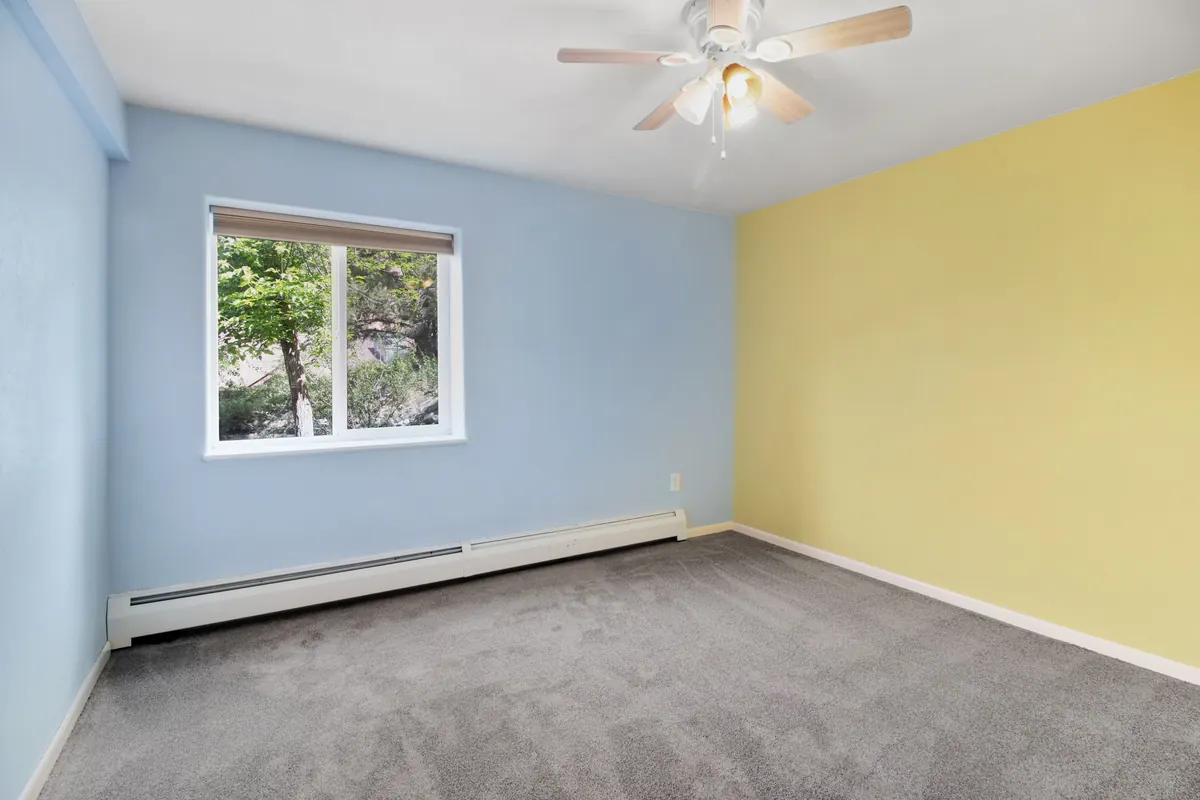
Electric or hot-water
An electric baseboard heater is wired to a 120- or 240-volt household circuit and runs from a knob on the heater or a thermostat on the wall (Cadet owner's guide). When it fails, the problem is a breaker, a thermostat, a limit switch, a connection or the element. That is electrical work, and in New Jersey electrical work may only be done by a licensed electrician or by a single-family homeowner on his or her own home (N.J.A.C. 5:23-2.15).
A hot-water baseboard is fed by pipes from a boiler, which sends hot water through them to the baseboards in each room. Cold hot-water baseboards are a boiler problem: see MDL's boiler service page. Some electric baseboards are filled with fluid, like Cadet's SoftHEAT, but they are still electric: no pipes, just a wire connection.
MDL Electric holds a New Jersey electrical contractor license (34EI01606200) and a master HVACR license (19HC00308200) and works from 4 Harrison Avenue in West Orange. Call 973.809.2339 to ask about your heater.
Symptoms
From Cadet's F-Series troubleshooting chart and support pages, and HomeAdvisor's repair guide. The symptom narrows it down; testing at the heater confirms it. Turn the power off at the breaker before anyone opens a heater.
Scroll sideways to see the whole table.
| Symptom | Likely cause | What you can check | What the electrician does |
|---|---|---|---|
| No heat at all | Wrong voltage at the heater, loose wire connections, the wrong breaker, or a failed limit switch | The thermostat is set above room temperature; the breaker is on | Measures the voltage at the heater against its label, tightens connections, corrects the breaker, replaces the limit |
| Runs, then stops | The high-limit switch shut it off because it ran too hot, usually from dirt or something blocking it | Clear 12 inches in front and above; with power off, vacuum the fins | Finds why it overheated; if it will not reset on a good circuit, repairs or replaces the heater |
| Will not shut off | A failed thermostat, a thermostat wired wrong, a single-pole thermostat with no off position, a room colder than the lowest setting, or a room losing heat faster than the heater makes it | Turn the thermostat to its lowest setting and wait two minutes | Rewires or replaces the thermostat, often with a double-pole model that has a true off |
| Room never gets warm | The room loses heat faster than the heater makes it, or a faulty element or thermostat | Close doors and windows; give it time, since baseboards take 30 to 60 minutes to heat a room | Checks the element and thermostat; Cadet suggests more insulation, a higher-wattage heater or a second heater when the room needs more heat |
| Breaker trips when it runs | An electrical fault in the heater, its wiring or the breaker. HomeAdvisor says frequent tripping while the heater runs can point to electrical issues | Reset once. If it trips again, leave it off | Traces the fault; HomeAdvisor puts breaker repairs at $100 to $250 |
| Burning smell | New heater: protective lubricant from the factory, gone within hours. Older heater: dust and lint on the element | Power off, let it cool, vacuum it. Smoke or scorch marks: leave the breaker off | Inspects the element, connections and wiring for heat damage |
| Snapping or ticking | A loose end plate, or the heater mounted too tight to the wall | Note whether it snaps as the heater warms up or cools down | Once the heater is warm, loosens the end-plate screws a quarter turn, moves the plate and retightens, or loosens the mounting screws a quarter turn, per Cadet |
| Black streaks on the wall | Soot from candles, aerosols, cleaning chemicals or smoke in the room, scorched on the element. The heater makes none itself | Cut back what makes the soot; let in fresh air; clean the streaks | Nothing on the heater, unless the element is damaged |
Thermostats
The thermostat on an electric baseboard switches the heater's full power, so it is not the same part as the thermostat for a furnace or central air.
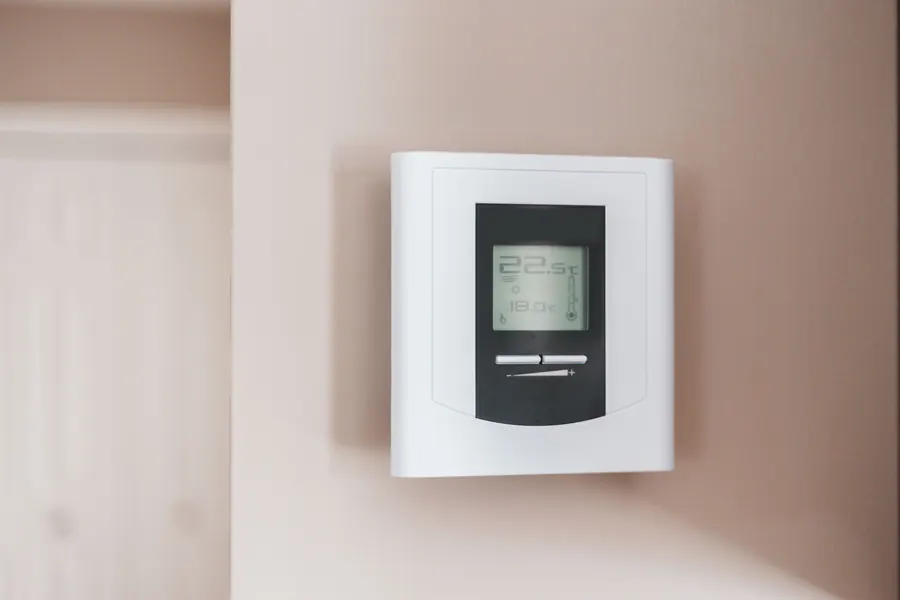
A thermostat repair or replacement runs $100 to $250 by HomeAdvisor's range, a market range, not an MDL price.
Cost
HomeAdvisor's published national ranges, updated June 20, 2026. HVAC technicians and electricians charge $75 to $150 an hour, and most repairs take a few hours. Market ranges, not MDL prices.
Scroll sideways to see the whole table.
| Job | Market range |
|---|---|
| Most repairs | $139 to $441, about $286 on average |
| Heating element | $100 to $300 (the part itself $20 to $40) |
| Thermostat | $100 to $250 |
| Circuit breaker repair | $100 to $250 |
| Shorted limit switch, usually meaning a new heater | $380 to $1,000 |
| New electric baseboard heater, installed | $380 to $1,000 |
| Professional cleaning | $75 to $150 an hour |
New Jersey rules
From the state Uniform Construction Code, N.J.A.C. 5:23-2, NJ Department of Community Affairs (published through August 17, 2026), read October 20, 2026. Your town's construction office enforces it and decides edge cases.
Scroll sideways to see the whole table.
| Job | What the code says | Section |
|---|---|---|
| Repair the existing heater | Repairs to any installed electrically operated equipment are ordinary electrical maintenance: no permit, inspection or notice to the town. | 5:23-2.7(c)3ii, 2.14(b)1 |
| Replace a heater, or add one | Not on the ordinary-maintenance list. Installing or altering regulated equipment needs a permit before the work. | 5:23-2.14(a) |
| Minor work | Some electrical work in one- and two-family homes is minor work, such as replacing wiring with new wiring of the same capacity, or adding five or fewer outlets where the circuits and service can carry the load. The town is told before work starts, the permit application follows within five business days, and the town inspects within three business days of the request. | 5:23-2.17A(b), (c)4, (d) |
| Emergency work | May start first; notice as soon as practicable, and the permit applied for within 72 hours. | 5:23-2.14(b)3 |
| Who may do it | Electrical work only by persons licensed to do it, except a single-family homeowner on his or her own home. | 5:23-2.15 |
Before you call
From the manufacturers' own manuals. Anything past these checks is a job for a licensed electrician.
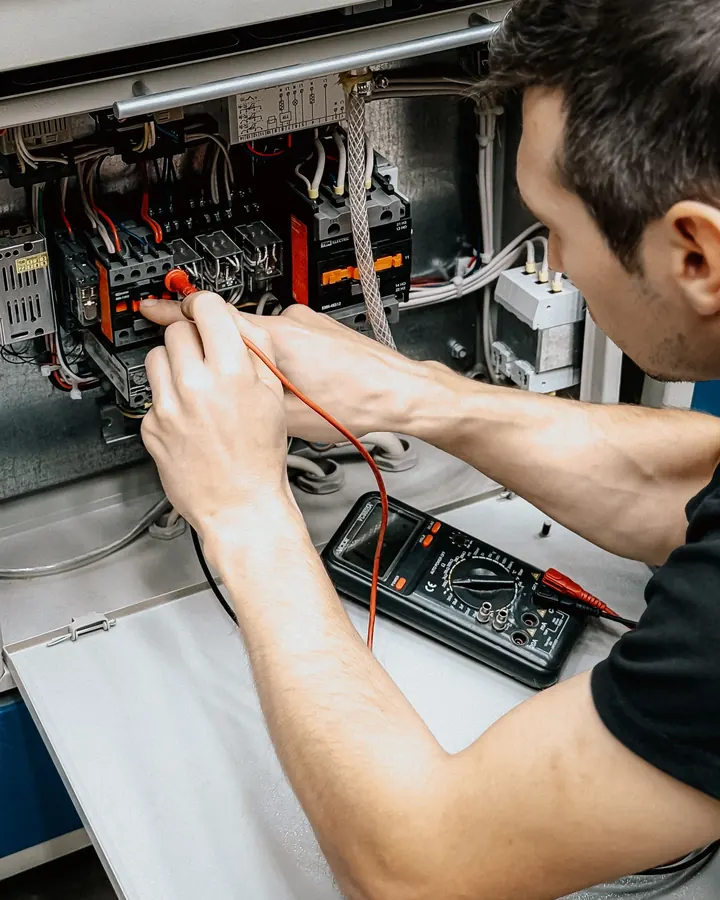
For smoke, sparks or a hot, discolored outlet near the heater, turn the breaker off if you can do it safely and call 911 for fire. For a whole-house electrical problem, see MDL's emergency electrician page.
Replacing a heater
From the Cadet and Marley installation instructions. A new heater on an old circuit only works if these match.
Supply voltage must be the same as the heater's voltage: check the nameplate before power goes on. A dual-rated heater puts out less on the lower voltage: Cadet's example is a 1,500-watt heater giving 1,125 watts on 208 volts.
Under a window, on an outside wall or near an outside door, set flush to the wall, never recessed, and not below an electrical outlet.
Supply wiring suitable for 90°C, and a line-voltage thermostat rated for the heaters on it, on the wall or built into the heater.
Sources: Marley baseboard installation and maintenance instructions, Cadet F-Series owner's guide, Cadet support. Adding electric heat to a room can add load to the panel; see panel upgrades.
Where MDL works
MDL works from 4 Harrison Avenue in West Orange and serves West Orange, Montclair, South Orange, Maplewood, East Orange, Livingston, Bloomfield, and the rest of Essex County, including Verona and Orange. If the heater is in an addition, a finished basement, a bathroom or a garage, say which room when you call.
Electric baseboard heat
Call or send the form with your town, which heaters are cold, where the thermostat is, whether the breaker tripped, and the voltage and wattage from the label if you can read it safely.
Baseboard heater questions
Causes and fixes come from the manufacturers' manuals, rules from the New Jersey code, prices from published market ranges, not an MDL quote.
HomeAdvisor's published range is $139 to $441, with most homeowners spending about $286, and some fixes as low as $50 or as high as $800 (updated June 20, 2026). By part: a heating element $100 to $300, a thermostat $100 to $250, a circuit breaker repair $100 to $250. These are national market ranges, not MDL prices.
HomeAdvisor puts a new electric baseboard heater at $380 to $1,000 installed, and the same range when a shorted limit switch means the heater has to be replaced. In New Jersey a replacement is not on the state's no-permit list, so the town's permit fee can be added to that. These are market ranges, not MDL prices.
Cadet, a baseboard heater maker, says baseboard heaters often have a life of more than 20 years, against 8 to 12 years for fan-forced wall heaters. HomeAdvisor suggests repairing a unit under 10 years old with a minor problem, and considering replacement when it is over 15 years old, shows corrosion, or needs repairs that add up to more than $400.
Check the thermostat first: it has to be set above the room temperature. Cadet's troubleshooting chart lists four reasons a heater does not work at all: the wrong voltage at the heater, loose wire connections, the wrong breaker, or a failed limit switch. If the heater runs but the room stays cold, the room may be losing heat faster than the heater can make it, and Cadet notes baseboard heaters take 30 to 60 minutes to heat a room.
A tripped or wrong circuit breaker, a loose connection, a failed thermostat, a burnt element, or the high-limit switch shutting the heater off because it ran too hot. Cadet says a heater that runs and then stops has usually tripped its limit because it is dirty or blocked, and if it will not reset with a good circuit, it needs repair or replacement.
Yes, an electric one. An electric baseboard heater is wired to a 120- or 240-volt household circuit, and in New Jersey electrical work may only be done by a licensed electrician, or by a single-family homeowner on his or her own home (N.J.A.C. 5:23-2.15). A hot-water baseboard is part of a boiler system, so it is a heating contractor's job. MDL Electric holds both a New Jersey electrical contractor license (34EI01606200) and a master HVACR license (19HC00308200).
Yes. Cadet says a line-voltage thermostat is the kind used with single-room heaters such as electric baseboard heaters, while low-voltage thermostats run central heating and cooling. Cadet allows a low-voltage thermostat only with a relay, when the load is more than the line-voltage thermostat is rated for. A double-pole thermostat has a true off position; a single-pole one does not.
Cadet's chart gives four reasons: a failed thermostat, a thermostat wired wrong, a single-pole thermostat with no off position, or a room colder than the thermostat's lowest setting. Turn the thermostat to its lowest setting and wait two minutes; if the heater still runs, Cadet says to replace the thermostat. For a heater that must switch fully off, Cadet recommends a double-pole thermostat.
On a brand-new heater, yes for a few hours: Cadet says the smell comes from a protective lubricant used in manufacturing and is not dangerous. On an older heater, dust and lint on the element can scorch, so turn the power off at the breaker, let it cool and vacuum it. Smoke, scorch marks or melted parts mean leave the breaker off and call an electrician; call 911 for fire.
A repair, no; a replacement or a new heater, yes. N.J.A.C. 5:23-2.7 treats repairs to installed electrically operated equipment as ordinary maintenance with no permit, but replacing a heater, adding one or running a new circuit is not on that list, so it needs a permit under N.J.A.C. 5:23-2.14. Some electrical work qualifies as minor work under N.J.A.C. 5:23-2.17A: the town is told before work starts and the permit application follows within five business days. Your town's construction office decides which applies.
Cadet's F-Series guide says to keep at least 12 inches clear in front of and above the heater, 6 inches on both sides, and at least 12 inches below hanging drapes, and not to let carpet block the lower air intake. Marley's baseboard manual says not to install a baseboard heater below an electrical outlet.
Call 973.809.2339 or send the form on this page with your town, how many heaters are not working, whether each has a knob on the heater or a thermostat on the wall, whether the breaker has tripped, and the voltage and wattage from the heater's label if you can see it safely. MDL Electric is a licensed New Jersey electrical contractor at 4 Harrison Avenue in West Orange and also services furnaces and boilers.
Sources
All read October 20, 2026.
Next steps
Furnace, boiler, heat-pump and electric heat problems traced from the symptom before a part is replaced.
Learn moreBreakers that trip, dead circuits and wiring problems, diagnosed before anything is replaced.
Learn moreHot-water and steam baseboards and radiators fed by a boiler.
Learn moreWhen added electric heat or other new loads need more panel or service capacity.
Learn moreRequest service
Use the form for planned service or call for urgent electrical, heating, or cooling help.