
Heat pump repair · West Orange and Essex County
Heat pump repair in West Orange, NJ
Most heat pump repairs run $161 to $661 (Angi, 2026). MDL Electric Cooling & Heating in West Orange repairs heat pumps that blow cool air, ice up or trip a breaker, with both an HVACR and an electrical license.
The short answer
Some cold air and frost is normal in winter. Thick ice, a tripping breaker or no heat at all is not.
A heat pump makes gentler heat than a furnace. Carrier puts heat pump air at about 85 to 100°F, against roughly 120 to 140°F from a gas furnace. So a register that feels lukewarm can be normal. A few minutes of cool air while the outdoor unit defrosts is normal too (Carrier).
What needs a repair. Ice thicker than 1/4 inch, ice that stays after defrost, heat that never comes back, a heat pump that cools but will not heat, or a breaker that keeps tripping (symptom table).
What it costs. Angi puts most repairs at $161 to $661, about $410 on average. A compressor can pass $2,400 (price table). These are published market ranges, not MDL prices.
MDL Electric Cooling & Heating holds a New Jersey master HVACR contractor license (19HC00308200) and an electrical contractor license (34EI01606200). It works from 4 Harrison Avenue in West Orange across Essex, Morris and Union County. Call 973.809.2339 about a heat pump that is not heating.
The thermostatThe mode, the setting, the room temperature and any message, such as AUX or EM HEAT.
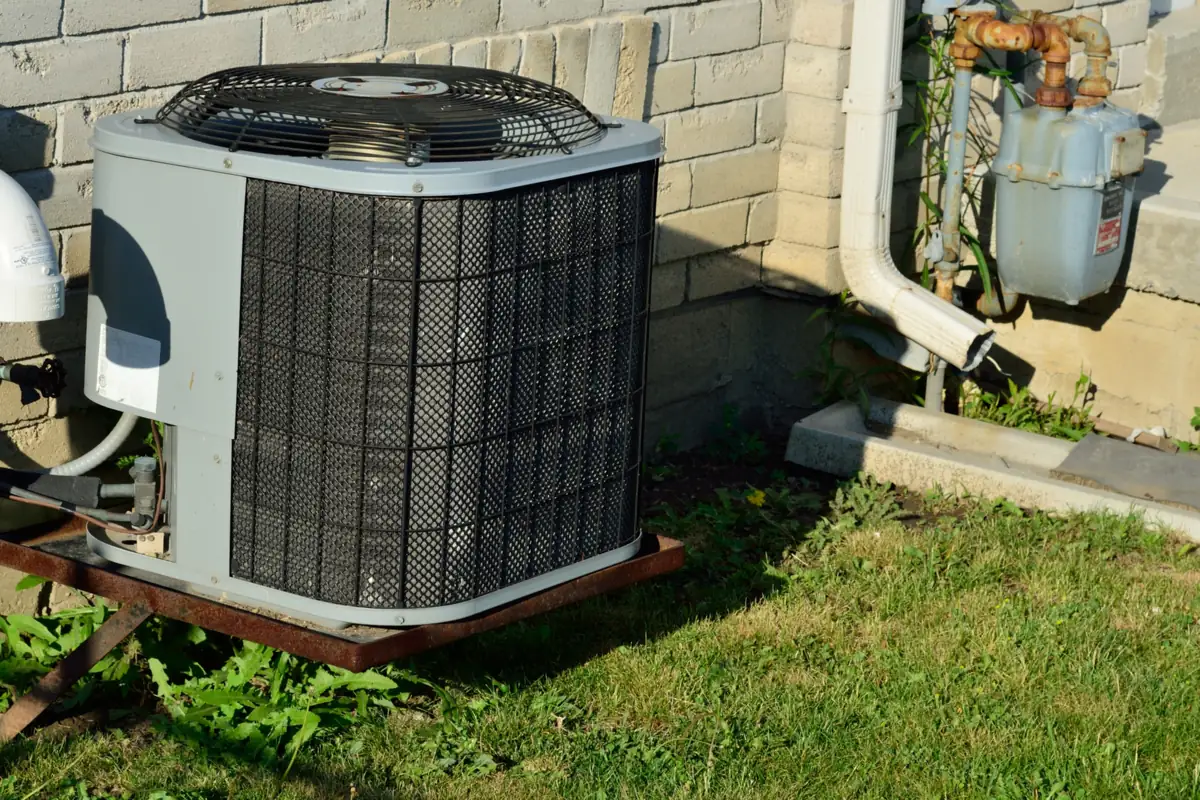
The outdoor unitWhether the fan runs, and whether the coil is frosted, iced or buried in snow.
The breakersWhether the indoor or outdoor breaker tripped, and whether it tripped again.
The labelBrand, model and age from the outdoor unit's nameplate, if you can read it safely.
Symptoms
What your heat pump is telling you, and what a technician checks.
From Carrier's homeowner guides to a heat pump that is not heating and to auxiliary heat. The symptom narrows it down; testing confirms it.
Scroll sideways to see the whole table.
| Symptom | Normal or not | What you can check | What the technician checks |
|---|---|---|---|
| Air feels lukewarm, not hot | Often normal. Heat pump air runs about 85 to 100°F; a gas furnace's runs about 120 to 140°F. | The thermostat is on Heat, not Cool or constant fan, and set above the room temperature | Whether the room ever reaches the setting, and the refrigerant charge if it does not |
| Cold air for a few minutes | Usually the defrost cycle melting frost off the outdoor coil. A typical cycle lasts about 5 to 10 minutes. | Wait it out, and note how often it happens | The defrost system, if defrost runs unusually often or leaves heavy ice |
| Thick ice on the outdoor unit | Not normal if it is thicker than 1/4 inch or stays after defrost | Clear snow and leaves; keep at least 24 inches clear around the unit | Airflow, refrigerant charge and the defrost controls |
| AUX on the thermostat | Normal below freezing, or when the heat pump cannot reach the setting alone | Note the outdoor temperature when AUX comes on | Why the heat pump is not carrying the load, if AUX runs in mild weather |
| Cools fine, will not heat | Not normal. The reversing valve, which switches the direction of the refrigerant, may be stuck | Nothing; this needs a technician | The reversing valve and its controls |
| Nothing runs at all | Often a tripped breaker or a switch left off | Both breakers (outdoor and indoor), the disconnect by the outdoor unit and the switch on the indoor air handler | Why a breaker tripped; Carrier says call a professional if breakers keep tripping |
| Room never matches the setting | The thermostat may be out of calibration | Your thermostat manual's calibration steps | The thermostat and the system, if the room stays more than 2 to 3°F off the setting |
| Weak airflow from the vents | A clogged filter or leaky ducts. In a typical home 20 to 30% of duct air can leak out | The filter, every 60 to 90 days | The ducts, most of which are hidden |
New Jersey winters
Why a heat pump can fall behind on West Orange's coldest nights.
A heat pump pulls heat out of the outdoor air. The colder that air gets, the harder it works.
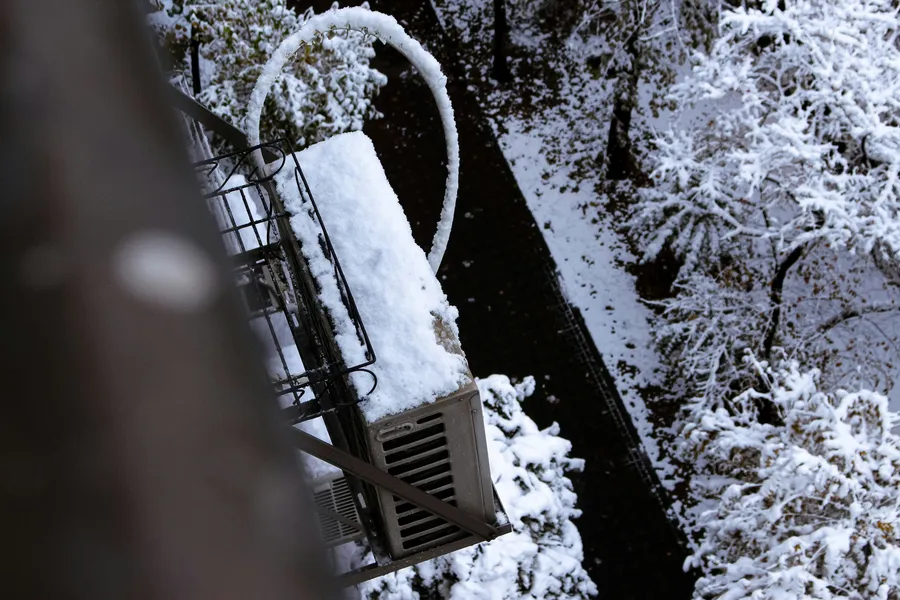
- Freezing nights are routine here. At Newark Liberty Airport, January's average low is 25.5°F, and about 80 nights a year drop below 32°F (NOAA 1991 to 2020 normals). Below 10°F is rarer: about 3 nights a year.NOAA NCEI annual normals; monthly normals
- Older heat pumps feel it first. Carrier says older heat pumps may struggle below 25 to 30°F and need supplemental heat, while modern cold-climate heat pumps can work well below zero.Carrier
- Cold-climate models are tested at 5°F. ENERGY STAR tests its cold-climate air-source heat pumps down to 5°F. They keep working below that, but pairing one with a backup source heats the home most efficiently in deeper cold.ENERGY STAR
- AUX on a cold night is normal. Auxiliary heat turns on by itself when it is below freezing or when the heat pump cannot reach the setting alone. It is usually electric heating strips inside the indoor air handler.Carrier, auxiliary heat
- Emergency heat is for a breakdown. EM HEAT is a setting you choose by hand. It shuts the heat pump off and runs only the backup heat. Carrier says to use it only if the heat pump has broken down, and to call a professional.Carrier, auxiliary heat
- Backup heat costs more to run. An air-source heat pump can deliver up to three times more heat energy than the electricity it uses, ENERGY STAR says. Electric strips deliver one for one, so a heat pump that leans on them all winter shows up on the electric bill.ENERGY STAR; Carrier
- Set it and leave it. Unlike a furnace or boiler, a heat pump does not save energy when you turn it down at night or while you are away, ENERGY STAR says. Pick a comfortable setting and keep it there.ENERGY STAR
The electrical side
Breakers, disconnects and heat strips: where heat pump repair meets electrical work.
A heat pump runs on electricity, so many no-heat calls end at a breaker, a switch or a small electrical part. MDL holds both licenses, so one visit can cover both sides.
- Two breakers, not one. The outdoor unit is usually on a 220- or 240-volt breaker, and the indoor unit has its own. Carrier says to check both, reset a tripped one, and call a professional if they keep tripping.Carrier
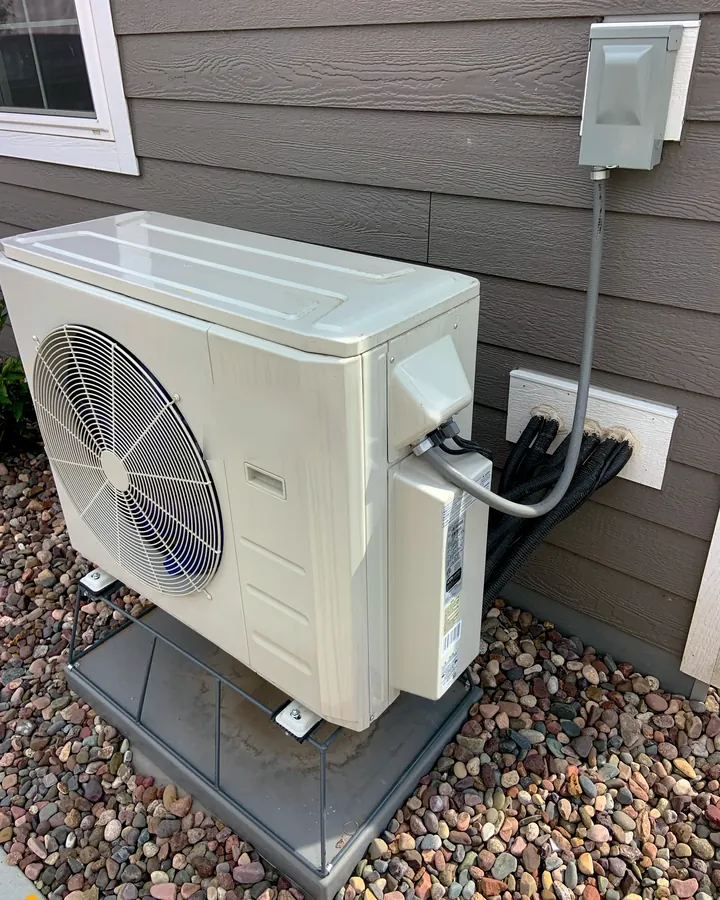
- Two switches, too. There is a power disconnect near the outdoor unit and a switch on the indoor air handler that looks like a light switch. Both have to be on.Carrier
- Small electrical parts are common repairs. Angi lists capacitors and electrical or control boards among the usual heat pump repairs. HomeGuide puts a capacitor at $100 to $250 and a contactor at $150 to $400; fuses, circuit breakers or relays run $75 to $300.HomeGuide; Angi
- Heat strips are electric heaters. Auxiliary heat is usually electric resistance strips in the air handler, like the coils in a toaster. If they fail, the house has no backup when the heat pump needs help on a cold night.Carrier, auxiliary heat
- GFCI rules around the outdoor unit. The 2023 electrical code does not require GFCI protection for listed HVAC equipment such as heat pumps. The service outlet within 25 feet of the equipment does need GFCI protection.Mike Holt (EC&M), 210.8(E) and (F)
- Licensed work. New Jersey allows heating, air conditioning and refrigeration work, and electrical work, only by persons licensed for it, except a single-family homeowner on his or her own home.N.J.A.C. 5:23-2.15
A breaker that trips with nothing else running, or a burning smell at the panel: see electrical repair. Adding a heat pump or bigger heat strips to a full panel: see panel upgrades.
Cost
What heat pump repair costs.
Published national ranges, read October 31, 2026. The diagnosis comes first; the part decides the bill. Market ranges, not MDL prices.
Scroll sideways to see the whole table.
| What | Market range | Source |
|---|---|---|
| Most repairs | $161 to $661; about $410 on average, from 4,007 projects | Angi |
| Service call to diagnose | $75 to $200 | HomeGuide |
| Thermostat | $80 to $350 | Angi |
| Capacitor | $100 to $250 (HomeGuide); capacitor or contactor $120 to $400 (Angi) | HomeGuide; Angi |
| Contactor | $150 to $400 | HomeGuide |
| Fuses, circuit breakers or relays | $75 to $300 | HomeGuide |
| Electrical or control board | $150 to $700 | Angi; HomeGuide |
| Fan motor | $200 to $700 | Angi |
| Reversing valve | $200 to $650 | Angi |
| Refrigerant leak repair | $300 to $1,200 (Angi); $200 to $1,500 (HomeGuide) | Angi; HomeGuide |
| Compressor | $650 to $2,400 (Angi); $1,300 to $2,500 (HomeGuide) | Angi; HomeGuide |
| Labor | $75 to $150 an hour; emergency, after-hours or holiday calls can add $100 or more | Angi |
| Tune-up visit | $70 to $200 | HomeGuide |
Repair or replace
- Younger and rarely broken: repair. Angi says fixing it is the best choice when the system is under 10 years old and repairs are infrequent.Angi
- Older, repeat repairs or a dead compressor: compare a replacement. Angi points to systems over 12 years old, more frequent repairs or a failed compressor. HomeGuide says replacement may pay off past 10 to 15 years.Angi; HomeGuide
- The 50% rule. If the repair costs more than half the price of a new system, Angi and HomeGuide both say replacement is often the better choice. Angi puts a new system at $4,000 to $10,000 or more.Angi; HomeGuide
- Check the warranty first. HomeGuide says repairs to a heat pump still under warranty may be covered.HomeGuide
- An old R-22 unit can still be serviced. EPA says there is no requirement to replace or convert an R-22 heat pump. Since 2020 only recycled, reclaimed or previously produced R-22 can be used to service it.EPA
Leaning toward a new system? See heating installation for what a complete heat pump or furnace replacement scope should list.
Before you call
Safe checks a homeowner can make first.
Carrier's own troubleshooting order. Anything past these steps, especially refrigerant or electrical parts, is a job for a licensed technician.
- Check the thermostat. Set to Heat, not Cool or constant fan, and above the room temperature.Carrier
- Check both breakers. Outdoor and indoor. Reset a tripped one once; if it trips again, leave it off.Carrier
- Check both switches. The disconnect near the outdoor unit and the switch on the indoor air handler.Carrier
- Check the filter. Carrier says to check it every 60 to 90 days, and clean or replace it as the maker says.Carrier
- Clear the outdoor unit. Snow, leaves and debris off and away; at least 24 inches of clear space all around, or what your model's manual asks for.Carrier
- Reset it once. Thermostat off, both breakers off, wait one minute, breakers on, wait a few minutes, then back to Heat.Carrier
- Switch to emergency heat only if it has broken down, and call a professional. It keeps the house warm but costs more to run.Carrier, auxiliary heat
Smoke, sparks or a burning smell: turn the breaker off if you can do it safely and call 911 for fire. For a whole-house no-heat emergency, see emergency HVAC service.
The repair visit
What a heat pump repair visit should cover.
The parts from Carrier's and Angi's lists, in the order the heat flows.
01
Thermostat and controls
The mode, setting, calibration and any AUX or EM HEAT message, and whether the thermostat matches the heat pump.
02
Power
Both breakers, the outdoor disconnect, the air handler switch, and the capacitor and contactor that start the outdoor unit.
03
Outdoor unit
The coil, fan, defrost controls, reversing valve and refrigerant charge, including any leak.
04
Indoor side
The filter, airflow, the backup heat strips and the ducts you can reach, then a written repair before parts go in.
New Jersey rules
When heat pump work needs a permit in New Jersey.
From the state Uniform Construction Code, N.J.A.C. 5:23-2, NJ Department of Community Affairs (published through August 17, 2026), read October 31, 2026. Your town's construction office enforces it and decides edge cases.
Scroll sideways to see the whole table.
| Job | What the code says | Section |
|---|---|---|
| Repair the system | "Repair of air conditioning equipment and systems" is ordinary heating, ventilation and air conditioning maintenance: no permit, inspection or notice to the town. | 5:23-2.7(c)5.iv |
| Swap a motor or fan | "Replacement of motors, pumps and fans of the same capacity" is ordinary maintenance. | 5:23-2.7(c)5.i |
| Thermostat or controls | "Repair or replacement of control devices for heating and air conditioning equipment" is ordinary maintenance. | 5:23-2.7(c)5.v |
| Replace the heat pump, or add one | Installing or altering regulated equipment needs an application and a permit before the work. | 5:23-2.14(a) |
| Emergency work | May start first; notice as soon as practicable, and the permit applied for within 72 hours. | 5:23-2.14(b)3 |
| Who may do it | Heating, ventilating, air conditioning and refrigeration work, and electrical work, only by persons licensed to do it, except a single-family homeowner on his or her own home. | 5:23-2.15 |
- Refrigerant needs a certified technician. EPA tells homeowners to work with service technicians certified to handle refrigerants, known as Section 608 certification.EPA
- No propane or unapproved refrigerants. EPA warns that propane and other unapproved refrigerants in a home system are a fire or explosion hazard.EPA
Where MDL works
Heat pump repair in Essex, Morris and Union County, from a West Orange base.
MDL works from 4 Harrison Avenue in West Orange. These are the towns in the three counties that have their own MDL service-area page. Whatever the town, start with a call: tell MDL what the heat pump is doing and what the thermostat says.
Morris County
Union County
Heat pump repair
Heat pump blowing cold, iced up or tripping a breaker? Call MDL.
Call or send the form with your town, what the heat pump is doing, the thermostat message, whether the outdoor unit is iced, and whether a breaker tripped.
Heat pump questions
Straight answers on cold air, ice, aux heat, cost and permits.
Troubleshooting comes from Carrier, cold-weather facts from NOAA and ENERGY STAR, rules from the New Jersey code and EPA, prices from published market ranges, not an MDL quote.
How much does heat pump repair cost?
Angi puts most heat pump repairs at $161 to $661 in 2026, about $410 on average, from 4,007 projects. A thermostat fix starts around $80; a compressor can pass $2,400. HomeGuide says HVAC companies typically charge $75 to $200 just to diagnose the problem. These are national market ranges, not MDL prices.
Why is my heat pump blowing cold air in heat mode?
Often it is in defrost mode, melting ice off the outdoor unit. Carrier says a typical defrost cycle lasts about 5 to 10 minutes. Other common causes are a thermostat set to cool or constant fan, a tripped breaker, or a clogged filter. Heat pump air also feels cooler than furnace air: Carrier puts it at about 85 to 100°F, against roughly 120 to 140°F from a gas furnace.
Why is my heat pump running but not heating the house?
Carrier lists low refrigerant, a frozen outdoor unit and an uncalibrated thermostat. If the room stays more than 2 to 3°F away from the setting, Carrier says to have the thermostat and system checked. On the coldest nights the heat pump may also be leaning on its auxiliary heat. Low refrigerant and a stuck reversing valve are jobs for a technician.
How do I reset my heat pump?
Carrier's steps: turn the thermostat off, switch off the breakers for both the indoor and the outdoor unit, wait one minute, switch them back on, then wait a few minutes before setting the thermostat back to heat. If a breaker trips again, leave it off and call.
Is it normal for a heat pump to ice up in winter?
A light frost, generally less than 1/4 inch, is normal and should clear during the defrost cycle, Carrier says. Ice thicker than 1/4 inch, or ice that stays after defrost, is not normal and may mean restricted airflow, low refrigerant or a defrost problem.
What is the difference between aux heat and emergency heat?
Auxiliary heat is automatic: it runs alongside the heat pump when it is below freezing or when the heat pump cannot reach the setting alone, and it can help during a defrost cycle. Emergency heat is a setting you choose by hand: it shuts the heat pump off and runs only the backup heat. Carrier says to use emergency heat only if the heat pump has broken down, and to call a professional.
At what temperature does a heat pump stop working well?
Carrier says older heat pumps may struggle below 25 to 30°F and need supplemental heat. Cold-climate models can work well below zero; ENERGY STAR tests its cold-climate heat pumps down to 5°F. For comparison, January's average low at Newark Liberty Airport is 25.5°F (NOAA, 1991 to 2020 normals).
What are the most common problems with heat pumps?
Carrier names a wrong thermostat setting, a tripped breaker and a dirty filter as the most common reasons a heat pump is not heating. Past those, it lists refrigerant leaks, a stuck reversing valve and defrost problems. Angi's repair list adds the compressor, capacitor, fan motor and the electrical or control board.
How much does it cost to get my heat pump serviced?
HomeGuide puts a heat pump tune-up at $70 to $200. Angi says HVAC maintenance plans run $150 to $350 a year. These are national market ranges, not MDL prices.
How often should a heat pump be professionally serviced?
Twice a year, HomeGuide says: once before the cooling season and once before the heating season, which usually means spring and fall.
Should I repair or replace my heat pump?
Angi says repair usually makes sense for a system under 10 years old with infrequent repairs. Replacement may make more sense when repairs are becoming common, the system is over 12 years old, or the compressor fails. Angi and HomeGuide both use a 50% rule: if the repair costs more than half the price of a new system, replacement is often the better choice.
Can an old R-22 heat pump still be repaired?
Yes. EPA says owners can keep having older R-22 units serviced, and there is no EPA requirement to replace or convert them. Since 2020, only recycled, reclaimed or previously produced R-22 can be used, so a leak repair often means recharging with that supply. EPA says to use technicians certified to handle refrigerants (Section 608).
Do I need a permit to repair a heat pump in New Jersey?
Usually not for a repair. New Jersey's code lists repair of air conditioning equipment and systems, replacement of motors and fans of the same capacity, and repair or replacement of heating and air conditioning controls as ordinary maintenance: no permit, inspection or notice (N.J.A.C. 5:23-2.7). Installing or replacing the heat pump itself needs a permit first (N.J.A.C. 5:23-2.14). Your town's construction office decides edge cases.
Who can repair a heat pump in New Jersey?
New Jersey says heating, ventilating, air conditioning and refrigeration work, and electrical work, may only be done by persons licensed for it, except a single-family homeowner on his or her own home (N.J.A.C. 5:23-2.15). MDL holds a New Jersey master HVACR contractor license (19HC00308200) and an electrical contractor license (34EI01606200).
Does MDL repair heat pumps in West Orange?
Yes. MDL Electric Cooling & Heating works from 4 Harrison Avenue in West Orange and repairs heat pumps across Essex, Morris and Union County. Call 973.809.2339 or send the form with your town, what the heat pump is doing, the thermostat message and whether a breaker tripped.
Sources
Where the advice, rules and numbers on this page come from.
All read October 31, 2026.
- Carrier, Heat Pump Not Heating? Here's How to Troubleshoot (Ryan Mayes, reviewed by Zach Dickey, September 15, 2026): supply air temperatures, defrost length, frost and ice, breakers and switches, filters, 24-inch clearance, duct leakage, reversing valve, reset steps, cold-weather limits.
- Carrier, What Is Auxiliary Heat? (Travis Baugh, October 28, 2026): auxiliary heat, heat strips, defrost, emergency heat, operating cost.
- Angi, How Much Does Heat Pump Repair Cost? [2026 Data] (Gemma Johnstone, reviewed by Diana Bird, updated October 8, 2026): repair ranges by part, labor, maintenance plans, repair or replace, the 50% rule.
- HomeGuide, How Much Does Heat Pump Maintenance or Repair Cost? (Kristen Cramer, January 29, 2025): service call, parts, tune-ups, twice-a-year service, warranty, repair or replace.
- ENERGY STAR, Air-Source Heat Pumps: efficiency, cold-climate testing at 5°F, backup heat, steady thermostat settings, filters.
- NOAA National Centers for Environmental Information, U.S. Climate Normals 1991 to 2020, Newark Liberty International Airport (station USW00014734): monthly normals and annual normals.
- U.S. EPA, Purchasing and Repairing Home Air-Conditioners or Heat Pumps (updated August 5, 2026): R-22 servicing, Section 608 technicians, unapproved refrigerants.
- Mike Holt, GFCI and AFCI, based on the 2023 NEC (EC&M): 210.8(E) service receptacle and 210.8(F) exception for listed HVAC equipment.
- N.J.A.C. 5:23-2, Uniform Construction Code, administration and enforcement, NJ Department of Community Affairs (published through August 17, 2026): ordinary maintenance, permits, emergency work, licensed work.
- Photos: Wikimedia Commons, outdoor unit by a block wall (Raysonho, CC0) and heat pump unit with disconnect (Wikideas1, CC0, brand name removed); Unsplash, outdoor unit under snow (yebin kim, Unsplash License). Not MDL jobs.


Next steps
Related services
Heating repair
Furnace, boiler, heat-pump and electric heat problems traced from the symptom before a part is replaced.
Learn moreHeating installation
What a complete heat pump or furnace replacement scope should list, once the present system is diagnosed.
Learn moreEmergency HVAC service
The urgent path for no heat in freezing weather.
Learn moreElectric baseboard heater repair
Other electric room heat: baseboard heaters, line-voltage thermostats and their circuits.
Learn moreRequest service
Send MDL the service, town, and best callback number.
Use the form for planned service or call for urgent electrical, heating, or cooling help.