How much does it cost to replace knob and tube wiring?
Published 2026 market ranges for a whole house run from about $8,000 to $36,600. Angi puts the average at $12,000 to $36,600 ($10 to $20 per square foot), HomeGuide at $12,000 to $35,000 ($8 to $17 per square foot) and Block Renovation at $8,000 to $25,000 for most projects. The spread comes from house size, how many walls and ceilings must be opened, whether the panel or service is upgraded, permits, and plaster repair. These are market ranges, not MDL prices; MDL gives a written estimate after seeing the house.
How much does it cost to rewire a 2,000 sq ft house?
For 2,000 square feet the published ranges are $20,000 to $40,000 (Angi), $16,000 to $34,000 (HomeGuide) and $12,000 to $18,000 for a 1,500 to 2,000 square foot home (Block Renovation). Block Renovation notes that a plaster rowhouse and an open-basement ranch with the same footprint can land two times apart, which is why a price per square foot is only a starting point.
Is knob and tube wiring illegal in New Jersey?
No. We found no New Jersey rule that requires existing knob and tube to be removed. The state's rehabilitation subcode lets buildings legally in existence continue in use (N.J.A.C. 5:23-6.2(f)), and home inspector groups such as ASHI and InspectAPedia say no code requires replacement. New knob and tube installs are a different matter: the National Electrical Code has allowed concealed knob and tube only for extensions of existing installations or by special permission.
Do I have to replace knob and tube to sell a house in New Jersey?
Not by state law that we could find. New Jersey's seller's property condition disclosure asks what type of wiring is in the house (copper, aluminum, other or unknown), the amp service, and whether it has breakers or fuses, so a buyer's inspector will usually look for it. What often forces the decision is the buyer's insurer or lender. Some towns have their own resale inspections; check with your town's construction office before listing.
Will homeowners insurance cover a house with knob and tube wiring?
Sometimes, at a cost. Progressive says some insurers may not offer a policy on a home with knob-and-tube or aluminum wiring, those that do may charge a higher premium, and they may ask for an inspection report. American Family says insurers may deny coverage. Ask your insurer what they need in writing; an electrician's report that maps which circuits are still knob and tube is the usual starting point.
Can I put insulation over knob and tube wiring?
Not over live knob and tube. National Electrical Code section 394.12 lists hollow spaces of walls, ceilings and attics insulated by loose, rolled or foamed-in-place insulation that envelops the conductors as a use that is not permitted. The US Department of Energy's attic insulation checklist says insulation should not be installed over active knob and tube until the wiring is replaced or properly boxed. New Jersey's Whole Home Energy Solutions program lists upgrading knob and tube in order to install insulation in that area as an eligible health-and-safety measure.
Can a house be rewired without removing plaster or drywall?
Mostly, yes. Electricians fish new cable through existing wall and ceiling cavities from the attic and basement and cut small openings only where a run cannot be fished. Walls do not come down, but each opening has to be patched. New Jersey's construction code even treats fishing as minor work. Houses with no attic or basement access need more openings, which is one reason prices vary.
How messy is a whole-house rewire?
Less than a renovation, more than a service call. Expect openings at outlets, switches, ceiling boxes and some wall and ceiling spots, plaster dust in the rooms being worked on, and work in the attic and basement. Ask for a written scope that says how many rooms are opened at a time, whether power stays on in the rest of the house, and who patches and paints.
What is the cheapest way to deal with knob and tube?
Doing it in stages. The most common first stage replaces the knob and tube in the attic before insulation goes in, which New Jersey's Whole Home Energy Solutions program treats as a health-and-safety measure (the first $2,000 of combined health-and-safety work can go into the project). Kitchens, baths and the circuits that carry the most load usually come next. Leaving live knob and tube under new insulation is not a cheap option; the electrical code does not allow it.
Can I upgrade my electrical panel without rewiring my house?
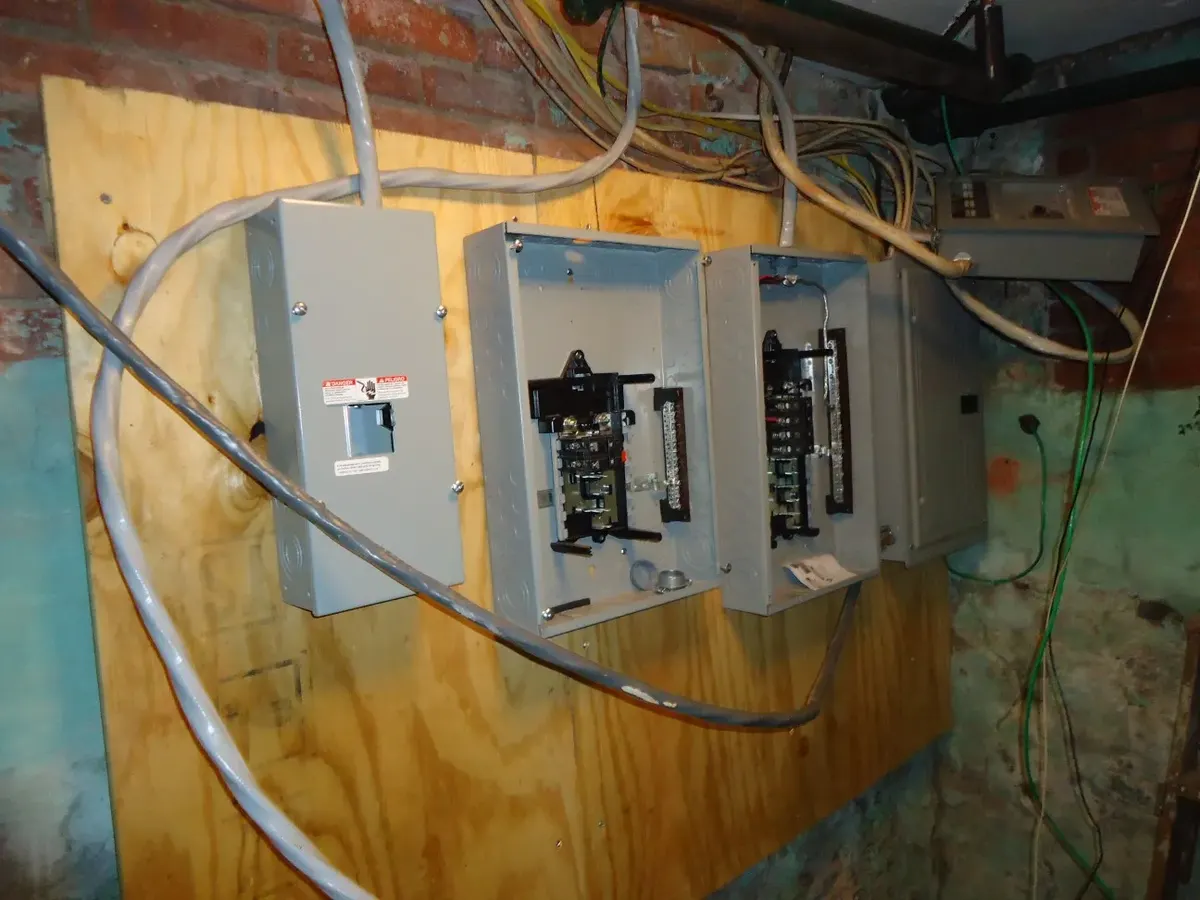
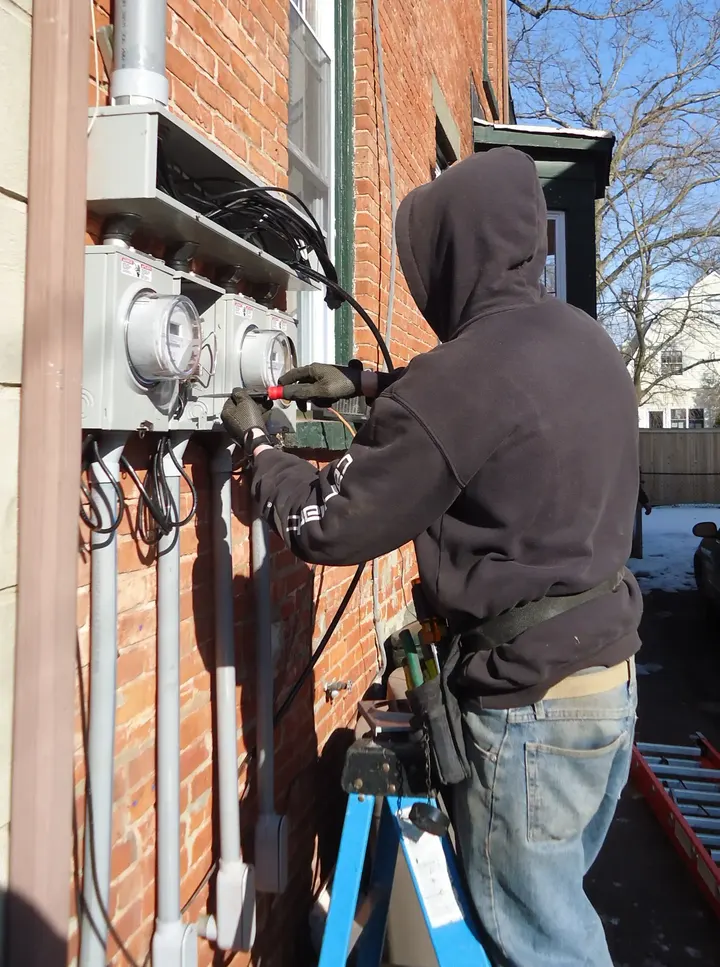
Yes. A panel or service upgrade does not automatically require a whole-house rewire, but it does not make old branch circuits new either. Many houses still on knob and tube also have a small fused service, so the panel and the wiring are often planned together. See MDL's panel upgrade page for the panel side.
Is 70-year-old wiring safe?
Age alone does not answer it; condition does. InterNACHI notes that knob and tube has no separate ground, that its insulation often becomes brittle, that it is often buried in attic insulation, and that splices outside boxes are common. A licensed electrician's inspection shows which circuits are still knob and tube, what condition they are in, and what is carrying more load than it was built for.
How do I know if my house has knob and tube?
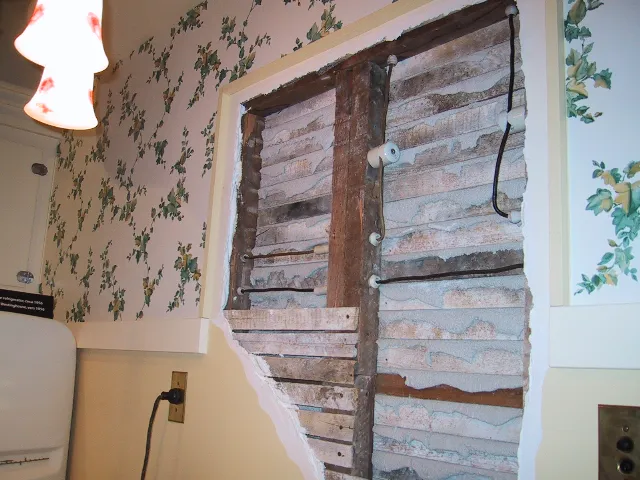
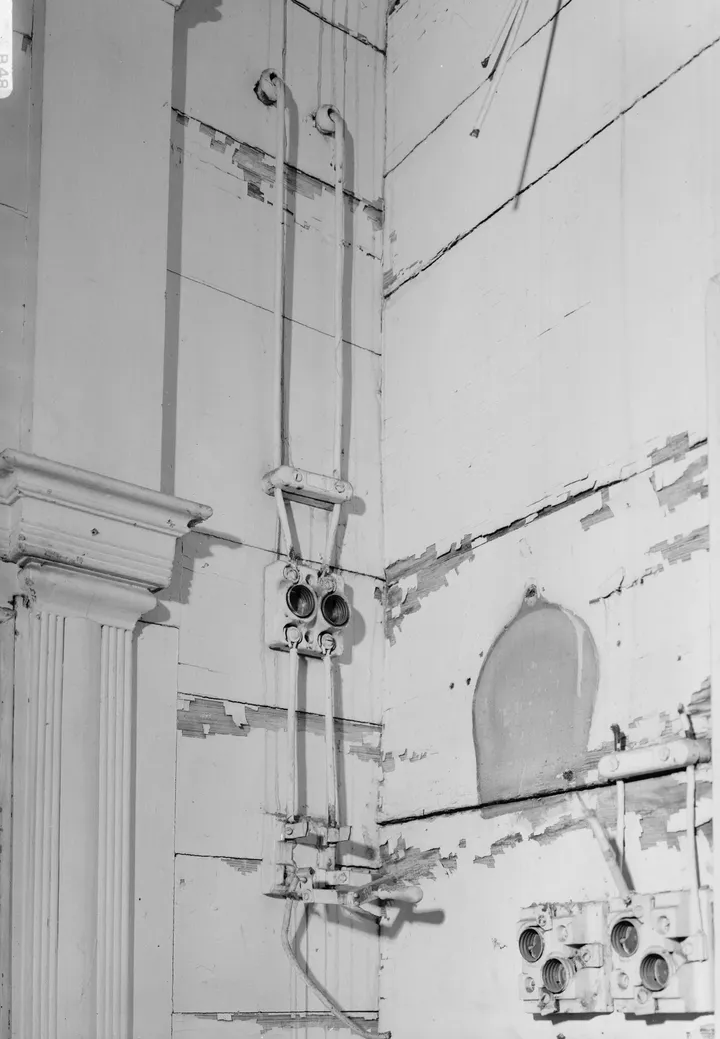
Look in the basement and attic for two separate wires running a few inches apart through white porcelain tubes in the joists and around porcelain knobs at turns, with cloth-covered insulation and no ground wire. Two-prong outlets and a fuse box are signs, not proof: a two-prong outlet means the circuit has no ground, which can also be early cable. Knob and tube is not always visible once it is hidden behind walls or under insulation.
Does replacing knob and tube need a permit in New Jersey?
Yes. Ordinary maintenance, which needs no permit, does not include replacing or relocating electrical wiring (N.J.A.C. 5:23-2.7). In a one- or two-family house, replacing existing wiring with new wiring of the same capacity is minor work (N.J.A.C. 5:23-2.17A): the work may start after notice to the town, the permit is filed, and it is inspected. Adding circuits or service capacity needs a regular permit. The town's electrical subcode official does the inspections.
How do I ask MDL about knob and tube in my house?
Call 973.809.2339 or send the request form on this page with your town, the age of the house if you know it, where you have seen old wiring (attic, basement, a wall opened by a contractor), whether you have a fuse box, and what started the question: insurance, a sale, insulation, or a renovation.