
Ceiling fans · Essex, Morris, Union
Ceiling fan installation in Essex, Morris and Union County, NJ
Labor to install a ceiling fan typically runs $100 to $300 (Home Depot); new wiring can push it to $2,000 (HomeAdvisor). Call MDL in West Orange to ask about yours.
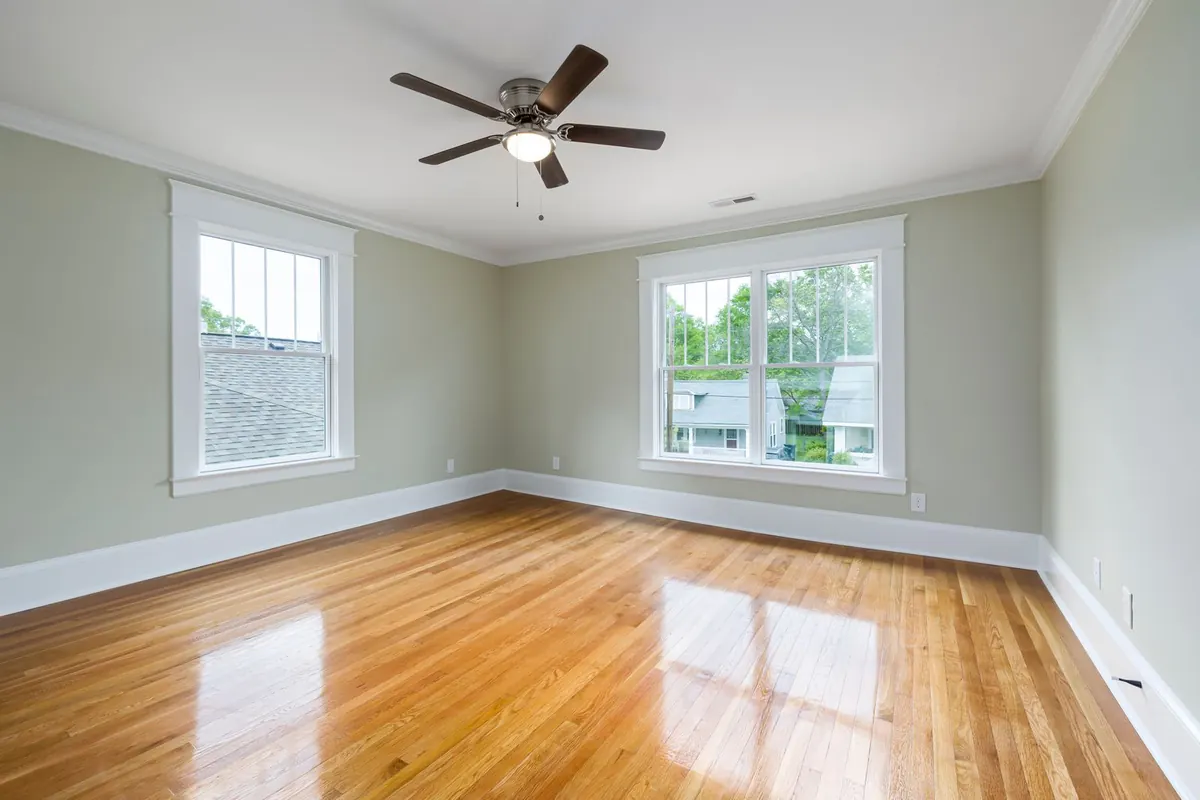
The short answer
A ceiling fan job is one of three jobs, and the box decides which.
Fan for fan. The wiring, switch and fan-rated box are already there. Hunter Fan estimates 60 to 90 minutes, and Home Depot says a replacement with adequate wiring, switches and support can take less than an hour (Hunter; Home Depot).
Light to fan. The wires are there, but the box was made for a light. A fan is heavier and moves, so the box has to be listed and marked for fan support or replaced (box rules below). ENERGY STAR says that when you replace a ceiling fixture, you will most likely need to replace the box (ENERGY STAR).
A fan where there is nothing. A new box on the framing, a new cable and usually a new wall switch. Hunter estimates 2 to 4 hours or more and recommends a licensed electrician; this is the job that needs a permit in New Jersey (rules below).
Most published installs land around $250 (This Old House and HomeAdvisor national averages). MDL Electric holds a New Jersey electrical contractor license (34EI01606200) and works from 4 Harrison Avenue in West Orange across Essex, Morris and Union County. Call 973.809.2339 to ask whether MDL handles your ceiling fan job.
What is there nowAn old fan, a light fixture, or nothing at all.
The ceilingIts height, and whether it is flat, sloped or vaulted.
What is above itAn attic you can get into, another floor, or a flat roof.
How you want to switch itOne wall switch, separate switches for fan and light, a remote, or a smart control.
Cost
What ceiling fan installation costs.
Published national ranges, read October 27, 2026. A swap on good wiring sits at the low end; a new box, new cable and a new switch sit at the high end. Market ranges, not MDL prices, and the fan itself is extra.
Scroll sideways to see the whole table.
| What | Market range | Source |
|---|---|---|
| National average | About $250 (This Old House); $253 (HomeAdvisor) | This Old House; HomeAdvisor |
| Most installs | $100 to $600 or more (This Old House); $146 to $360 (HomeAdvisor) | This Old House; HomeAdvisor |
| Labor to install a fan | Typically $100 to $300 | Home Depot |
| Light swapped for a fan, brace added, existing wiring and switch | $100 to $500 | HomeAdvisor |
| New wiring, box and switch where there was none | Up to $2,000 (HomeAdvisor); wiring $350 to $2,000 (This Old House) | HomeAdvisor; This Old House |
| A separate wall switch | $100 to $200 | This Old House; HomeAdvisor |
| Angled ceiling mount, if the fan does not include one | $20 to $40 | This Old House |
| The fan itself | $50 to $1,400 for a residential fan | This Old House; HomeAdvisor |
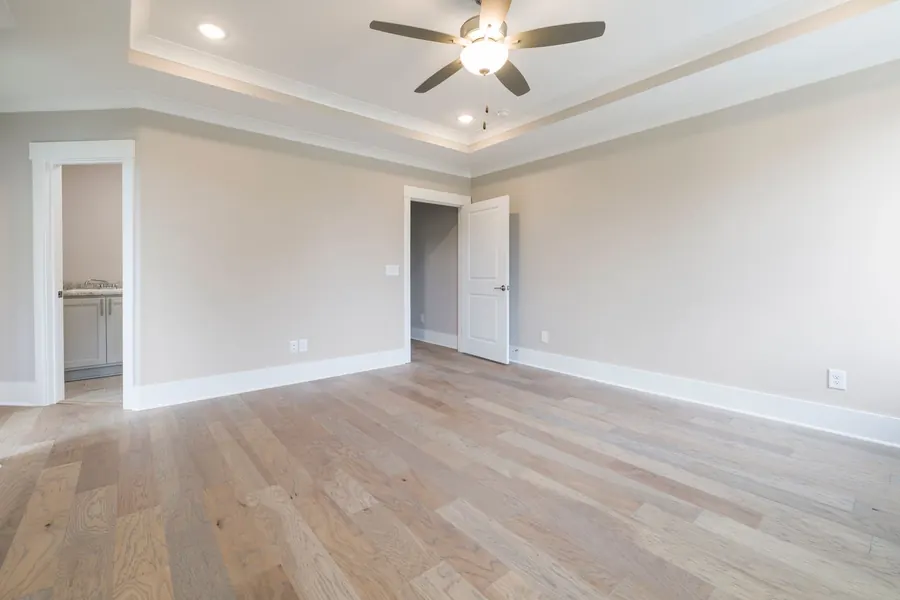
- The box and the wiring are the big variable. This Old House calls new wiring the potentially expensive part: a ceiling not wired for a fan needs a licensed electrician to run wires, and may need a fan-rated junction box and the right breaker.This Old House
- Access changes the labor. This Old House says each time the wire path changes direction, the electrician has to cut an access point in the wall or ceiling, and each one adds labor time and drywall repair.This Old House
- Separate switching costs more than a remote. HomeAdvisor says a fan put on an existing light box shares one switch; separate switches need another line, a larger box and a switch, while a fan with a remote can run the fan and light separately without new wiring. Smart kits that add remote or app control run $30 to $100.HomeAdvisor
- Several fans in one visit. HomeAdvisor says installing more than one fan at once can save on labor and materials, and two fans in the same room can share one set of holes and one switch box.HomeAdvisor
- The permit is a separate cost. New wiring, a new box or a new switch is not on New Jersey's no-permit list, so the town's permit fee is added to the installer's price.N.J.A.C. 5:23-2.7, 2.14
The ceiling box
A ceiling fan cannot hang from a box made for a light.
This is the step most do-it-yourself guides gloss over, and the one that decides the price.
- The code: listed, marked, 70 pounds at most. A box that is the only support for a ceiling fan must be listed and marked by its manufacturer as suitable for that purpose, and may not support a fan that weighs more than 70 lb (32 kg). A box designed for a fan over 35 lb (16 kg) must be marked with the maximum weight it supports. New Jersey enforces the 2023 National Electrical Code as its electrical subcode.NEC 314.27(C), Leviton reprint; N.J.A.C. 5:23-3.16
- Fixed to the framing. ENERGY STAR says to use a UL-listed metal box marked "For Use With Ceiling Fans", anchor the fan to a ceiling joist where possible, and, where the joist is not where the fan should go, install a special fan mounting bracket between the joists. It notes that ceiling fans can weigh as much as 50 pounds.ENERGY STAR
- In the words of a master electrician. This Old House quotes master electrician Scott Caron: "It's heavier than a light fixture—it needs to get secured right to the building itself." Its guide lists installing a fan on a non-rated box among the common mistakes, because a light-duty box can loosen over time.This Old House
- Why older houses need a look first. The rule that a ceiling box in a habitable room of a home, where a fan could go, be fan-ready (listed for fan support, or open to framing that can carry one) was new in the 2020 edition of the code. About half of Essex County's 339,451 homes were built before 1960, and about 30% in 1939 or earlier.Leviton; US Census ACS 2024, B25034
If the ceiling turns up cloth-covered or ungrounded wiring, see knob and tube wiring replacement. A new fan circuit on a full panel: see panel upgrades.
High, sloped and low ceilings
Where the fan hangs, and how far down.
Ceiling height and slope decide between a flush mount, a downrod and an angled mount. Guides differ a little on clearances, so the fan's own manual wins.
- Blades at least 7 feet up. Hunter says to keep 7 feet or more between the floor and the blades, and 30 inches from the blade tips to the nearest wall. This Old House suggests 7 to 10 feet to the blades, at least 18 inches from the walls and at least 8 inches below the ceiling.Hunter; This Old House
- Low ceilings: flush mount. This Old House says low-profile (hugger) fans work well at a ceiling height of 8 feet or less; Home Depot recommends flush mounts for low ceilings.This Old House; Home Depot
- High ceilings: a downrod. This Old House says downrod fans work best on ceilings 9 feet or higher, usually with the blades about 7 feet from the floor.This Old House
- Sloped ceilings: measure the angle. Hunter says an angled ceiling needs an extra downrod, and a slope over 34 degrees also needs an angled ceiling mount kit. Home Depot notes many fans can be mounted on an angle.Hunter; Home Depot
- Fan size. Home Depot's guideline: a 36-inch fan when the longest wall is under 12 feet, 42 to 48 inches for 12 to 15 feet, and at least 52 inches for larger rooms. This Old House divides the room's square footage by four for the blade span in inches, so a 200-square-foot room suits a 50-inch fan.Home Depot; This Old House
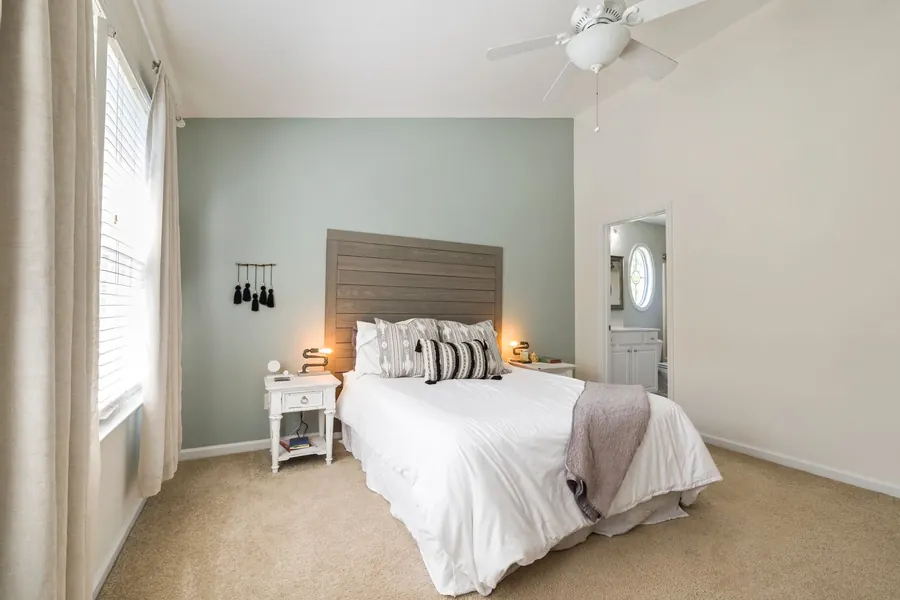
The electrical side
What an electrician checks before the fan goes up.
Home Depot's Pro Referral page lists what its licensed electricians do on a ceiling fan job. The order matters: the framing and the box come before the fan.
01
Check the joists
Look for wiring or plumbing in the way before cutting or mounting (Home Depot).
02
Check the box
Is the existing box fan-rated? If not, it is replaced, or a brace goes in between the joists (Home Depot; ENERGY STAR).
03
Mount box and bracket
The box and the fan's bracket are fixed, and the downrod set if the fan has one (Home Depot).
04
Wire and test
Wire, assemble and hang the fan, then test it. Hunter says all wiring must follow the national and local electrical codes (ANSI/NFPA 70).
What swapping a light for a fan looks like
Sources: Home Depot Pro Referral, ENERGY STAR, Hunter Fan. Lights in the same ceiling: see recessed lighting installation. A fan that hums, stopped, or trips a breaker: see electrical repair.
Fall and winter
A ceiling fan is not only for summer.
Most people think of a fan in July. ENERGY STAR gives it a winter job too.
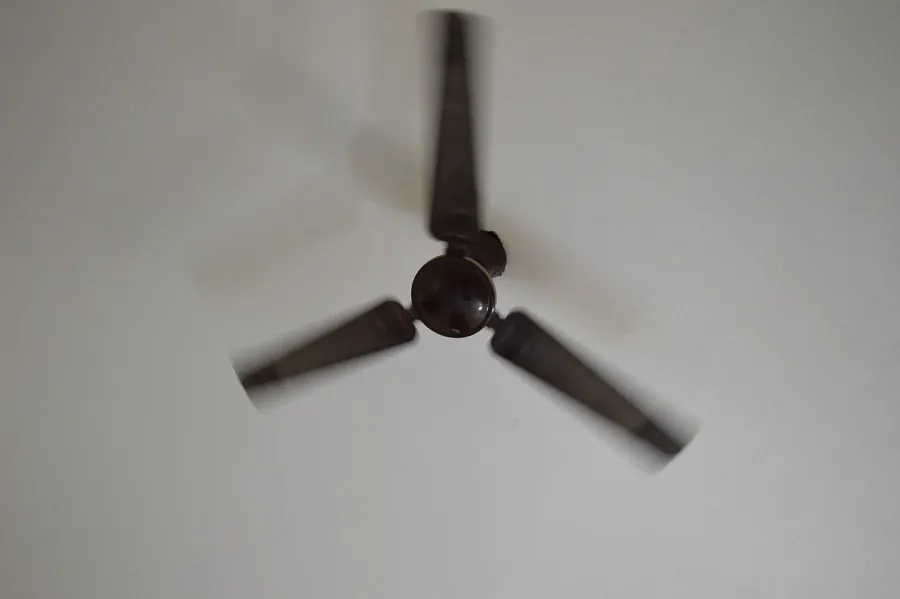
- Winter: clockwise, on low. ENERGY STAR says to reverse the motor in winter and run the fan at low speed clockwise; the gentle updraft moves warm air near the ceiling down into the room.ENERGY STAR
- Summer: counterclockwise. Standing under the fan you should feel a cool breeze; the wind-chill effect makes you feel cooler.ENERGY STAR
- Fans cool people, not rooms. ENERGY STAR says to turn the fan off when the room is empty, and to adjust the thermostat when you use it.ENERGY STAR
- A small load. This Old House puts a ceiling fan at about 40 watts at medium speed, against 2,000 to 5,000 watts for a central air conditioner.This Old House
- A wobble after install. ENERGY STAR says to check that every connection is tight and the blades line up, then use the balancing kit that comes with the fan or that the maker sends.ENERGY STAR
New Jersey rules
When a ceiling fan job needs a permit in New Jersey.
From the state Uniform Construction Code, N.J.A.C. 5:23-2, NJ Department of Community Affairs (published through August 17, 2026), and the electrical subcode at N.J.A.C. 5:23-3.16, read October 27, 2026. The state code does not name ceiling fans; your town's construction office enforces it and decides edge cases.
Scroll sideways to see the whole table.
| Job | What the code says | Section |
|---|---|---|
| Swap a fixture on the existing box and wiring | Ordinary electrical maintenance includes "the replacement of any receptacle, switch, or lighting fixture, or part thereof ... with a like or similar item": no permit, inspection or notice to the town. The rule does not name ceiling fans, so ask the town whether your swap counts. | 5:23-2.7(c)3.i, 2.14(b)1 |
| New box, new cable or new switch | Not on the ordinary-maintenance list. Installing or altering regulated equipment needs a permit before the work. | 5:23-2.14(a) |
| Minor work | In one- and two-family homes, minor work includes installing five or fewer outlets where the existing circuits can carry the load. The town is told before work starts and the permit application follows within five business days. The town decides what counts. | 5:23-2.17A |
| Who may do the wiring | Electrical work only by persons licensed to do it, except a single-family homeowner on his or her own home. | 5:23-2.15 |
| The standard for the work | New Jersey adopts the National Electrical Code 2023 as its electrical subcode, including the fan-box rule in 314.27(C). | 5:23-3.16 |
Where MDL works
Essex, Morris and Union County, from a West Orange base.
MDL works from 4 Harrison Avenue in West Orange. These are the towns in the three counties that have their own MDL service-area page. Whatever the town, a ceiling fan job starts with a call: tell MDL the town, the room and what is in the ceiling now, and MDL will tell you whether it handles that job.
Morris County
Union County
Ceiling fans
Call to ask whether MDL handles your ceiling fan job.
Call or send the form with your town, what is in the ceiling now, the ceiling height and slope, what is above it, and how you want to switch the fan and its light.
Ceiling fan questions
Straight answers on cost, boxes, height and permits.
Rules come from the New Jersey code and the National Electrical Code, mounting advice from ENERGY STAR and the manufacturers, prices from published market ranges, not an MDL quote.
What is the average cost for a ceiling fan installation?
About $250. This Old House puts the national average at about $250, with most jobs between $100 and $600 or more (updated May 26, 2026). HomeAdvisor puts the average at $253, usually $146 to $360 (updated June 17, 2026). Both figures are national market ranges, not MDL prices; the fan itself is extra.
How much does it cost to replace and install a ceiling fan?
Home Depot's Pro Referral page says labor to install a ceiling fan typically costs $100 to $300. HomeAdvisor puts a basic install, a light swapped for a fan with a brace on existing wiring and switches, at $100 to $500, and a complex install with new wiring, boxes and switches at up to $2,000. These are national market ranges, not MDL prices.
Do I need an electrician to install a ceiling fan?
For anything beyond a simple swap, usually yes. Hunter Fan says you may need a licensed electrician if there is no ceiling wiring, the electrical box is not fan-rated, or additional switches are needed. In New Jersey, electrical work may only be done by persons licensed to do it, except a single-family homeowner on his or her own home (N.J.A.C. 5:23-2.15). MDL Electric holds a New Jersey electrical contractor license (34EI01606200).
Can I install a ceiling fan myself?
Only on your own single-family home in New Jersey (N.J.A.C. 5:23-2.15), and the guides draw the same line: Hunter calls a swap DIY friendly but says to contact a licensed electrician if no wiring exists, and This Old House says you may be able to replace one fan with a similar unit on a low ceiling yourself, but to hire a licensed electrician for a new location or any additional wiring.
Can a ceiling fan hang from a regular light fixture box?
No. The National Electrical Code (314.27(C)) says a box that is the only support for a ceiling fan must be listed and marked by its maker as suitable for that purpose, may not hold a fan over 70 pounds, and must be marked with its maximum weight if it is meant for a fan over 35 pounds. ENERGY STAR says that if you are replacing a ceiling fixture, you will most likely need to replace the electrical box.
How do you install a ceiling fan where no fixture exists?
It means a new fan-rated box fixed to a joist or a brace between joists, a new cable from a power source and usually a new wall switch. Hunter estimates 2 to 4 hours or more and recommends a licensed electrician; Home Depot says running completely new wiring for a switch and fixture can take an entire day or more. In New Jersey new wiring is not on the no-permit list (N.J.A.C. 5:23-2.7), so the town's permit rules apply.
How high should a ceiling fan be hung?
At least 7 feet from the floor to the blades. Hunter says to keep 7 feet or more between the floor and the blades and 30 inches between the blade tips and the nearest wall. This Old House suggests 7 to 10 feet to the blades, at least 18 inches from the walls and at least 8 inches below the ceiling. Follow the clearances in your fan's manual where they differ.
How do I install a flush mount ceiling fan?
A flush mount (also called a hugger or low-profile fan) mounts close to the ceiling with no downrod. This Old House says these work well at a ceiling height of 8 feet or less, and Home Depot recommends flush mounts for low ceilings and downrods for high ones. The box rules are the same: the fan still needs a box listed and marked for fan support, or support from the building structure.
How long does it take to install a ceiling fan?
Hunter's estimates: 60 to 90 minutes to replace an existing ceiling fan, 1 to 2 hours to replace a light fixture with a fan, and 2 to 4 hours or more where no wiring exists. Home Depot says a typical replacement with good wiring, switches and support can take less than an hour, and new wiring and a switch in a new location can take an entire day or more.
Do I need a permit to install a ceiling fan in New Jersey?
It depends on the job. N.J.A.C. 5:23-2.7 lists the replacement of a receptacle, switch or lighting fixture with a like or similar item as ordinary maintenance, which needs no permit; the rule does not name ceiling fans, so ask your town's construction office whether your swap counts. New wiring, a new box or a new switch is not on that list and needs a permit under N.J.A.C. 5:23-2.14(a); the town decides whether it counts as minor work under N.J.A.C. 5:23-2.17A.
What are the instructions for installing a ceiling fan?
Use the manual for your exact fan. Hunter says its online guide only supplements the model-specific manual and that all wiring must follow the national and local electrical codes (ANSI/NFPA 70). The steps it lists are: remove the old fixture, install the ceiling bracket on a fan-rated box, wire the fan, finish the canopy or motor housing, then add the blades and light.
Which way should a ceiling fan turn in winter?
Clockwise, on low. ENERGY STAR says to reverse the motor in winter and run the fan at low speed clockwise, which makes a gentle updraft that moves warm air near the ceiling down into the room, and to run it counterclockwise in summer for a cooling breeze. ENERGY STAR also says fans cool people, not rooms, so turn the fan off when the room is empty.
Do ceiling fans increase home value?
This Old House says a ceiling fan is a small upgrade that can increase a home's desirability, and that a fan costs far less to install and run than an air conditioner: about 40 watts at medium speed against 2,000 to 5,000 watts for central air. It gives no dollar figure for resale value.
How often should ceiling fans be replaced?
As a guideline, every 5 to 10 years: InterNACHI's Standard Estimated Life Expectancy Chart lists a ceiling fan at 5 to 10 years. InterNACHI says its figures assume normal wear and should be used as guidelines only.
How do I ask MDL about a ceiling fan?
Call 973.809.2339 or send the form on this page with your town, whether there is a fan or a light there now (or nothing), how high and how sloped the ceiling is, whether there is an attic above, and how you want to switch the fan and its light. MDL will tell you whether it handles that job. MDL Electric is a licensed New Jersey electrical contractor at 4 Harrison Avenue in West Orange.
Sources
Where the rules, numbers and advice on this page come from.
All read October 27, 2026.
- N.J.A.C. 5:23-2, Uniform Construction Code, administration and enforcement, NJ Department of Community Affairs (published through August 17, 2026): ordinary maintenance, permits, licensed work, minor work.
- N.J.A.C. 5:23-3.16, electrical subcode: New Jersey adopts the National Electrical Code 2023.
- NEC 314.27(C), boxes at ceiling-suspended (paddle) fan outlets, NFPA text as reprinted by Leviton's Captain Code (2020 edition), with Leviton's note on what was new in 2020.
- ENERGY STAR, Ceiling Fan Installation and Usage Tips: the fan-rated box, mounting to a joist or bracket, balancing, winter and summer direction.
- This Old House, How Much Does It Cost To Install a Ceiling Fan? (2026 Guide) (updated May 26, 2026) and This Old House, How To Install a Ceiling Fan (updated March 30, 2026): costs, fan types, clearances, the box, DIY versus pro.
- HomeAdvisor, How Much Does it Cost to Install a Ceiling Fan in 2026? (updated June 17, 2026): cost ranges, switches, remotes, several fans at once.
- Home Depot, Ceiling Fan Installation by Pro Referral: labor range, time, mount options, fan size, what its electricians do.
- Hunter Fan, How to Install a Ceiling Fan: time by job, when to call an electrician, clearances, angled ceilings, NFPA 70.
- InterNACHI, Standard Estimated Life Expectancy Chart for Homes: ceiling fan, 5 to 10 years (guidelines only).
- Housing age: US Census Bureau ACS 2024 1-year, table B25034, Essex County, via Census Reporter.
- Video: This Old House, How to Install a Ceiling Fan (YouTube, uploaded November 14, 2014): the publisher's own video, not MDL work.
- Photos: Pexels, empty living room with ceiling fan, ceiling fan inside a room and a bedroom with a ceiling fan (Pexels License); Wikimedia Commons, rotating ceiling fan (CC0).

Next steps
Related services
Electrical repair
A fan or light that stopped, hums, flickers or trips a breaker, diagnosed before anything is replaced.
Learn moreRecessed lighting installation
Ceiling lights, often planned in the same room and ceiling as the fan.
Learn moreAttic fan installation
Attic fans that cool and dry the attic itself, a different job from a ceiling fan.
Learn moreBathroom exhaust fan installation
Bath fans that move moist air outside, a different job with its own venting rules.
Learn moreRequest service
Send MDL the service, town, and best callback number.
Use the form for planned service or call for urgent electrical, heating, or cooling help.