
01 / What is dead, what it means
Before you touch anything, count what is dead. The pattern points to the cause.
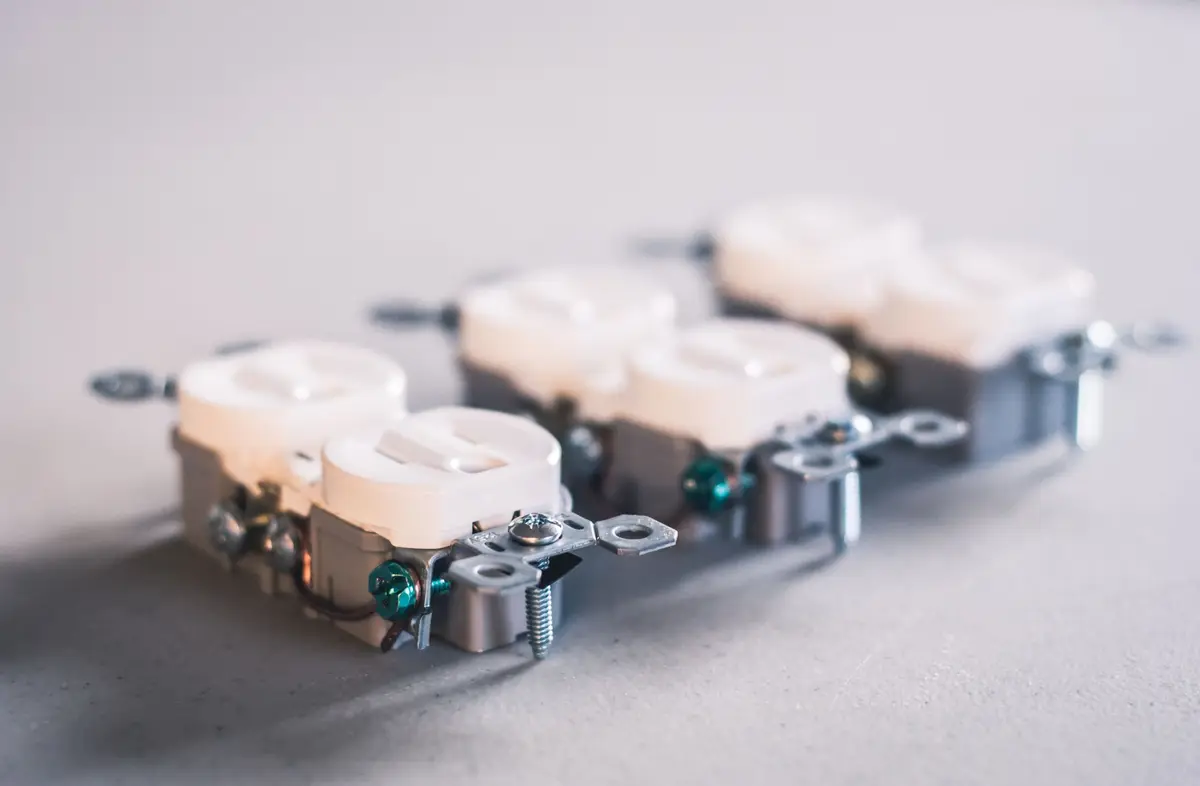
Outlets on a household circuit are wired one after another from the breaker. A home inspectors' trade article says one circuit may involve 10 to 15 or more devices and up to 100 points of connection, and calls those connections the weak links. So the first job is not to open the dead outlet. It is to walk the house and note what still works. Every check in this table can be done without removing a cover plate.
Swipe across the table to see every column.
| What you see | Likely cause | Safe first step | Source |
|---|---|---|---|
| Top or bottom half of one outlet is dead | Switched receptacle for a lamp | Flip every wall switch in the room | 2023 NEC via Mike Holt |
| One outlet dead, others in the room work | The device plugged in, a worn outlet, or a failed connection at that outlet | Plug in something you know works; feel the cover for heat | Leviton; ASHI |
| Dead outlets in a bathroom, kitchen, garage, basement, laundry or outside | A tripped GFCI upstream, possibly in another room | Press RESET on every GFCI in the house | 2023 NEC 210.8(A) via Mike Holt |
| A whole room or a run of outlets and lights | A tripped breaker, or a connection that opened partway along the circuit | Find a breaker in the middle position; reset it once | ASHI; InspectAPedia |
| About half the house out, other lights dim or flickering | One of the two 120-volt service wires loose or disconnected | Report "partial power" to the utility; call an electrician too | Jefferson County PUD; PSE&G |
| GFCI will not reset | No power reaching it, a fault still downstream, line and load reversed, or a damaged device | Check the breaker, unplug everything downstream, try again | Leviton |
| Outlet warm, buzzing, discolored, or smells of burning | An overheating connection | Breaker off, stop using it, call an electrician | CPSC; Leviton |
Write the pattern down before you call anyone: which outlets and lights are dead, which still work, whether a GFCI or breaker reset, and when it started. That list is most of a diagnosis, and it is exactly what MDL's repair request asks for.
02 / The three checks
Switch, GFCI, breaker. In that order, because each one is free and none needs a screwdriver.
- The device and the wall switch. Plug in a lamp or charger you know works. Then flip every switch in the room, including the one that seems to do nothing. The 2023 code still allows a switch to control a receptacle for lighting in a home, so one half of an outlet, or a whole outlet, may simply be switched off.
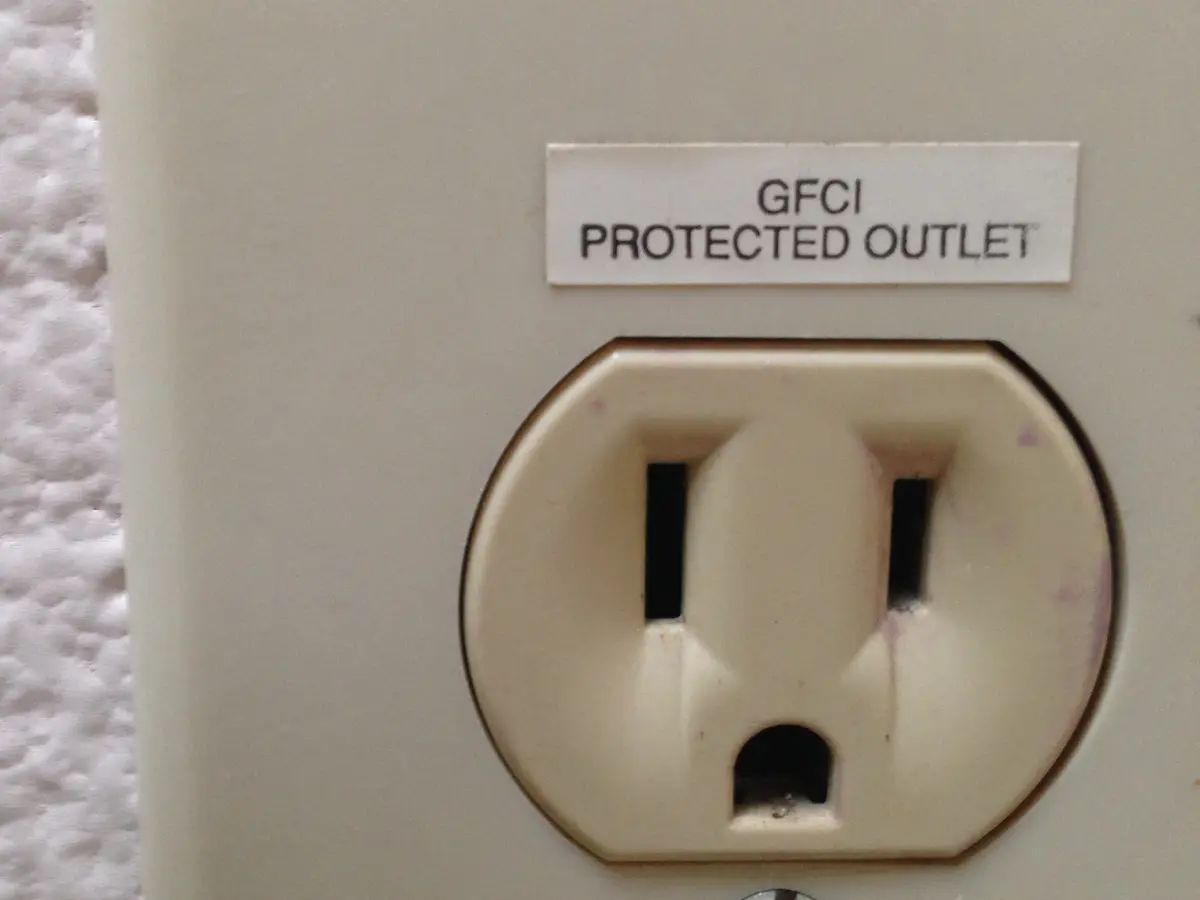
- Every GFCI outlet in the house. The 2023 National Electrical Code, which New Jersey enforces, requires GFCI protection for receptacles in bathrooms, garages and accessory buildings, outdoors, crawl spaces, basements, kitchens, food and drink preparation areas, within 6 feet of a sink or a tub or shower, boathouses, laundry areas and indoor damp or wet locations. A GFCI receptacle protects every outlet wired after it on the same circuit, so the GFCI that cut your outlet off can be in another room or on another floor. Press RESET on each one you find. An outlet with no buttons that is protected this way may carry a small "GFCI Protected" label.
- The breaker. Bob Vila's guide puts it plainly: "If a breaker tripped, the switch will be in the middle, between OFF and ON." Run a finger along the handles. Push a tripped one fully to OFF, then back to ON, once. If the circuit is fed by a GFCI breaker, the 2023 code notes it protects the whole circuit, so the same reset applies. If it trips again with nothing plugged in, leave it off and call an electrician, as Bob Vila's guide also advises; the breaker keeps tripping guide explains what the timing of the trip means.
If the GFCI will not reset. Leviton, a GFCI maker, gives four reasons a GFCI locks out: it has no power (a tripped breaker or a loose connection upstream), a ground fault is still present on something plugged in downstream, a newly installed GFCI has its line and load wires reversed, or the device is damaged. Its order of checks is the breaker first, then unplug everything on the circuit and press RESET again. A GFCI that still refuses is a call. HomeAdvisor puts the life of a GFCI outlet at seven to 15 years, so an old one can simply be worn out.
03 / Why the breaker did not trip
A breaker reacts to too much current. A loose connection gives it none, so it stays on.
Bob Vila's guide gives the two main reasons a breaker trips: an overloaded circuit and a short circuit. A connection that has worked loose, corroded or burned open is neither; it stops current instead of raising it. The breaker has nothing to react to, so it stays on while the outlet, and everything wired after it, goes dark.
- Push-in ("back-stabbed") terminals. Many receptacles accept a wire pushed into a hole in the back, held by a spring. The ASHI Reporter article notes these are allowed only on 15-amp circuits and only with No. 14 solid copper, and its author reports seeing many of them fail because springs weaken over time. The same article says they are compliant by the manufacturers' specifications and not considered a defect.
- Series wiring. When a connection fails partway along a circuit, every device after it loses power. InspectAPedia publishes a field report from a beach house that lost a utility room, a refrigerator and its outdoor GFCI outlets with no breaker tripped; it traces the loss to a back-wired receptacle and salt-air corrosion.
- A worn or damaged device. For GFCI outlets, Leviton lists the replacement signs as discoloration, cracking or warping, plugs that are loose or fall out easily, and exposure to water.
This is where the homeowner's part ends. MDL's own repair page asks people not to open an outlet or panel to investigate, and CPSC's advice on failing connections is blunt: "DO NOT TRY TO DO IT YOURSELF. You could be electrocuted, or you could make the problem worse."
04 / Plug will not go in, or falls out
Two different problems: a shutter doing its job, or contacts that have worn out.
The National Electrical Code has required tamper-resistant receptacles since 2008. Internal shutters open only when both blades of a two-bladed or grounded plug press in together. Push straight and evenly. ESFI says that if a plug needs excessive force, the plug may be the damaged part: straighten bent or splayed blades, and replace a plug with cracked blades or sharp edges.
The metal contacts inside an outlet grip the plug's blades. Leviton lists plugs that are loose or fall out easily as a reason to replace a GFCI outlet. Do not prop or tape a plug in place; list the outlet in a repair request instead.
A replacement has to meet today's rules for that spot, not the old outlet's. Under the 2023 NEC, a replacement receptacle must be tamper-resistant and weather-resistant where those are required, GFCI-protected where GFCI is now required, and AFCI-protected where the code requires AFCI. Where the box has no ground wire, the choices are a two-slot replacement or a GFCI-protected three-slot one, marked "No Equipment Ground."
05 / Half the house is out
When a scattered half of the house is dead and the lights that work are dim, look outside the house first.
A typical home is fed by three wires: two "hot" wires of 120 volts each and a neutral. Combined by a double-pole breaker, the two hot wires make 240 volts for appliances such as dryers or electric ovens. Jefferson County PUD, a utility, explains that if one hot wire works loose you get flickering, and if it disconnects, part of the house loses power while no breaker trips. The loose point can be at the utility's transformer, in the meter base, or at the connection to the main breaker.
- Check the panel once. A single tripped breaker can take out a room, not a scattered half of the house.
- Ask a neighbor. If their lights are also out or dim, tell the utility that too.
- Report partial power. PSE&G's outage form has an "I have partial power" option, and its customer service line is 1-800-436-7734. If your bill comes from another utility, use its outage line.
- Call an electrician as well. The utility inspects its own equipment. Jefferson County PUD suggests alerting a licensed electrician at the same time, especially if power has to be shut off for a repair inside.
Flickering with heat, buzzing or a burning smell anywhere is an emergency, not a utility ticket; the emergency electrician page covers what to do. MDL's electrical repair page lists partial power among the faults it troubleshoots.
06 / Outdoor outlets and storms
An outdoor outlet that dies after rain or snowmelt is usually a GFCI doing its job.
The 2023 code requires GFCI protection for outdoor receptacles at a home, and a GFCI reacts to current leaking to ground, which is what water in a box does. Let it dry, then reset the outdoor GFCI, or the indoor GFCI that feeds it, often in a garage, basement or bathroom. If it will not reset, or trips after every storm, the device, the box or its cover needs an electrician's look.
- Replacement outdoor outlets must be weather-resistant. NEC 406.4(D) applies the weather-resistant rule to replacements, not only to new work.
- Winter loads. NFPA reports that December, January and February accounted for 28 percent of home electrical fires and 39 percent of the deaths from them in 2020 to 2024. Holiday lights on a wet outdoor outlet are the seasonal version of this problem; the LED vs incandescent Christmas lights guide does the circuit math.
- Planned fix. A new weather-resistant GFCI outlet with an in-use cover is the subject of MDL's GFCI outlet installation page.
07 / When it is an emergency
Dead and cool is a repair. Warm, buzzing or burning is a hazard.
CPSC lists the signs of an electrical system problem as hot-to-the-touch faceplates on receptacles or switches, flickering lights, circuits that do not work, and the smell of burning plastic at outlets or switches. A dead outlet with any of the others is not a reset job.
- Turn off the breaker for that outlet and stop using everything on it.
- Do not open the outlet to look, and do not keep resetting a breaker or GFCI that trips again.
- Smoke, or a burning smell you cannot trace: get everyone out and call 911.
- Otherwise call an electrician now, or see emergency electrician help.
The stakes are measured. NFPA's May 2026 report counts an average of 46,652 home electrical structure fires a year in the US in 2020 to 2024, with 527 civilian deaths, 1,580 injuries and $2.4 billion in direct damage each year. Arcing from operating equipment was the heat source in 64 percent of them.
08 / Older Essex County homes
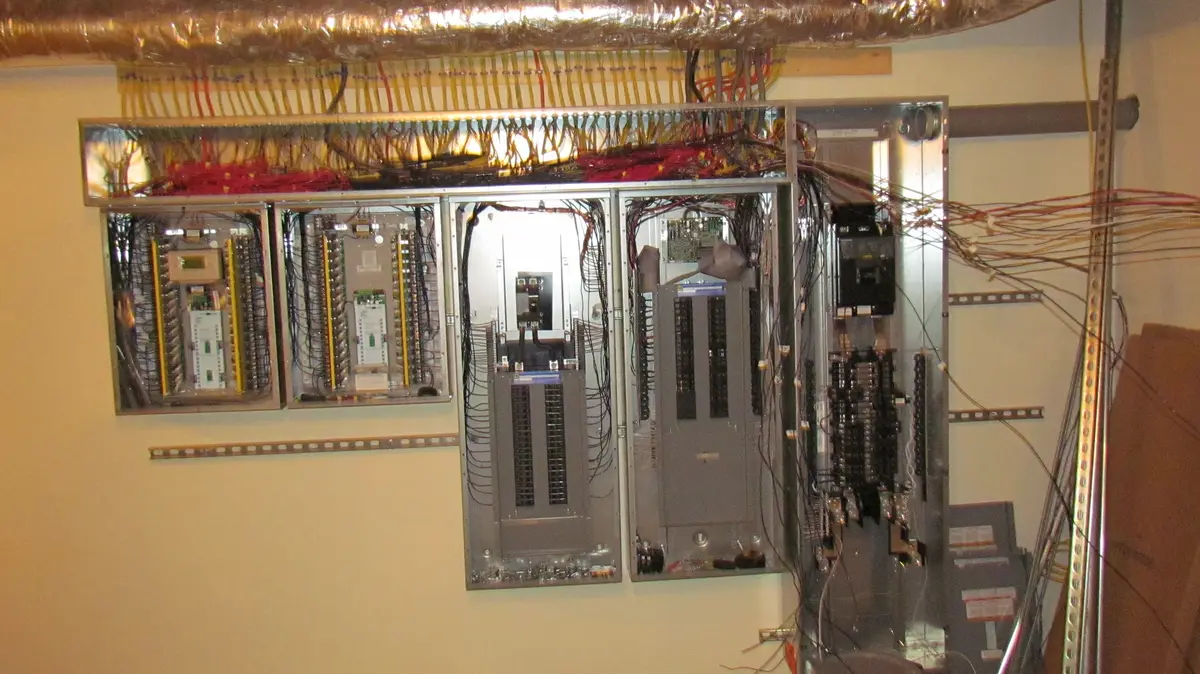
Essex County's houses are older than the country's, and old wiring changes what a dead outlet means.
The Census Bureau's 2024 American Community Survey counts 339,451 housing units in Essex County, and 102,954 of them were built in 1939 or earlier: about 30.3 percent, against about 11.5 percent nationally (our arithmetic on the survey's counts). Another 70,754 Essex units, about 20.8 percent, were built from 1960 to 1979.
- Aluminum branch wiring. CPSC says homes built before 1965 are unlikely to have it, and that cable installed between 1965 and the mid-1970s, in new homes, additions and rewired circuits, may. In a CPSC survey, pre-1972 homes wired with aluminum were 55 times more likely than copper-wired homes to have one or more connections at outlets reach "Fire Hazard Conditions." CPSC also warns that failing aluminum connections seldom give easily detected warning signs, and lists "circuits that don't work" among the signs to act on.
- What CPSC accepts as a permanent repair. Only three methods: replacing the aluminum with copper, the COPALUM crimp method, or the AlumiConn connector. Under the 2023 NEC, a receptacle rated 20 amps or less that is connected to aluminum wire must be marked CO/ALR.
- Older copper wiring. Two-prong outlets with no ground, cloth-insulated wiring and knob-and-tube circuits are covered on MDL's knob-and-tube replacement and whole-house rewiring pages.
09 / New Jersey rules
A like-for-like outlet swap needs no permit in New Jersey. It still has to meet today's code.
- No permit, no notice for a like replacement. N.J.A.C. 5:23-2.7 lets ordinary maintenance be done without a permit application or notice to the construction official, and, outside hazardous (classified) locations, it lists the replacement of any receptacle, switch or lighting fixture with a like or similar item.
- The replacement must meet 406.4(D). The same section says receptacles in locations needing GFCI, damp or wet, or tamper-resistant protection must comply with NEC 406.4(D). New Jersey's electrical subcode is the 2023 NEC (N.J.A.C. 5:23-3).
- Who may do it. N.J.A.C. 5:23-2.15 says electrical work is done by licensed persons, except a single-family homeowner on his or her own dwelling.
- Adding outlets is minor work, not maintenance. N.J.A.C. 5:23-2.17A counts installing five or fewer outlets in a one- or two-family home, where the existing circuits can carry the load, as minor work: no permit is needed before it starts, but notice must be given to the enforcing agency before work begins, and a permit application must be filed within five business days of that notice.
10 / What a repair costs
National cost sites put outlet work at roughly $100 to $300. A dead outlet is a diagnosis first.
Swipe across the table to see every column.
| Item | Published figure | Source and date |
|---|---|---|
| Outlet installation, with materials | $120 to $200, average $141 | Fixr, updated Aug 29, 2025 |
| Outlet replacement by an electrician | "Can be as low as $100" | Fixr, updated Aug 29, 2025 |
| GFCI outlet installation or replacement | $130 to $300, average $210 | HomeAdvisor, updated Jun 19, 2026 |
| Electrician's hourly rate | $50 to $100 | HomeAdvisor, updated Jun 19, 2026 |
| Minimum visit charge | $100 to $200 | HomeAdvisor, updated Jun 19, 2026 |
Those are national figures from those sites, not New Jersey quotes and not MDL prices; MDL's site quotes no MDL outlet price. The figure that matters is what the circuit shows: a worn outlet is a part and a short visit, while a failed connection two rooms away, a lost service leg or aluminum wiring is a different job. HomeAdvisor points out that a minimum visit charge makes it cheaper per outlet to fix several in one call, so list every dead or loose outlet in the request.
11 / When to call
Three checks done and it is still dead? That is the point to call, and which page fits depends on what you found.
Electrical repair and troubleshooting
A dead outlet or run of outlets after the switch, GFCI and breaker checks, a GFCI that will not reset, plugs that fall out, or partial power the utility says is on your side. Send the pattern of what works and what does not.
Emergency electrician
An outlet or plate that is hot, discolored, crackling or smells of burning. Breaker off first, then call.
MDL Electric Cooling & Heating works from 4 Harrison Avenue in West Orange and serves Essex, Morris, Hudson and Union counties. Its electrical repair page lists dead outlets, GFCI and AFCI trouble, partial power and circuits that stopped working among the faults it troubleshoots. The request form below is already set to Electrical Repair / Troubleshooting.
12 / About this guide
Why a West Orange electrical contractor wrote a dead-outlet guide that starts with checks you can do for free.
The pages ranking for this search are forum threads, videos and contractor blogs written for San Antonio, Chicago and Georgia homes. They list the usual causes. None of the five we read sorts the problem by how much of the house is dead, gives the 2023 code's full list of places a GFCI can be hiding, explains the half-the-house case and who to call for it, or says what New Jersey allows a homeowner to replace without a permit. This guide does, and every figure on it links to the source it came from.
13 / Direct answers
The questions people type after "outlet not working."
How do you fix an outlet that is not working?
Work from the outside in, and stop at the cover plate. First plug in something you know works and try any wall switch in the room, because one half of an outlet may be switched for a lamp. Then press RESET on every GFCI outlet in the house, including the garage, basement, bathrooms, kitchen and outside, because one GFCI protects the outlets wired after it, sometimes in another room. Then look for a breaker sitting in the middle position, between OFF and ON, and push it fully off and back on once. If the outlet is still dead, the outlet or a connection on the circuit has failed, and that is an electrician's repair. Under New Jersey's code, swapping a receptacle for a like one is ordinary maintenance with no permit, but the replacement has to meet today's GFCI, tamper-resistant and weather-resistant rules for that spot.
Why is my circuit not working even though the circuit breaker isn't tripped?
A breaker opens on too much current: an overload or a short. A connection that has worked loose or burned open does the opposite. It stops current, so the breaker has nothing to react to and stays on. Outlets on a branch circuit are wired one after another, so one failed connection, for example at a push-in (back-stabbed) terminal, can kill every outlet after it. A tripped GFCI upstream does the same thing and is the free fix to rule out first.
How do I know if my outlet is blown?
Look and feel without opening it. Leviton says to replace a device that shows discoloration, cracking or warping, that has been wet, or whose plugs are loose or fall out easily. CPSC lists hot-to-the-touch faceplates and a smell of burning plastic as signs of an electrical problem. Any of those means switch that breaker off and call an electrician; do not keep using it. An outlet that simply has no power, looks normal and is cool should go through the switch, GFCI and breaker checks before anyone calls it blown.
Why can't I plug into my outlet?
If the plug will not go in, the outlet is probably tamper-resistant. The National Electrical Code has required tamper-resistant receptacles since 2008. Their shutters open only when both blades of a plug press in at the same time, so push straight and evenly. ESFI says that if a plug needs excessive force, the plug may be the damaged part: straighten bent or splayed blades, and replace a plug with cracked blades or sharp edges. If plugs go in but fall out, the contacts are worn; Leviton lists loose plugs as a reason to replace a GFCI outlet, and a loose ordinary outlet belongs on the same repair list.
How much should it cost to have an electrician replace an outlet?
National cost sites put outlet work at roughly $100 to $300. Fixr (updated August 29, 2025) gives $120 to $200 for an outlet installation, $141 on average, and says a replacement can be as low as $100. HomeAdvisor (updated June 19, 2026) gives $130 to $300 for a GFCI outlet, $210 on average, and notes most electricians charge a minimum visit of $100 to $200. Those are national figures from those sites, not MDL prices. A dead outlet is a diagnosis first and a part second, so the price depends on what the circuit shows.
Why are some outlets and lights on the same circuit not working?
Because the dead ones are downstream of the same break. Power runs from the breaker to the first device and on to the next. A circuit may involve 10 to 15 or more devices and up to 100 connection points, and the American Society of Home Inspectors calls the connections the weak links. When one opens, everything after it goes dark while everything before it keeps working. Note which outlets and lights still work: that pattern tells an electrician where on the run to start.
Can a GFCI in another room control my outlet?
Yes. A GFCI receptacle has load terminals that protect every outlet wired after it on the same circuit, and those outlets can be in another room or on another floor. The 2023 code requires GFCI protection in bathrooms, garages, outdoors, crawl spaces, basements, kitchens, laundry areas and near sinks, so check each of those places for a tripped one. A protected outlet with no buttons may carry a small "GFCI Protected" label.
Is a dead outlet dangerous?
A dead, cool, unmarked outlet is an inconvenience. A warm, buzzing, scorched or burning-smelling one is a fire risk. NFPA counts an average of 46,652 home electrical fires a year in the US for 2020 to 2024, and arcing was the heat source in 64 percent of them. If the dead outlet shows any of those signs, turn off its breaker and call; if you smell burning and cannot find the source, leave the house and call 911.
Why did my outdoor outlet stop working after rain or snow?
Outdoor outlets must be GFCI-protected under the 2023 code, and water is what a GFCI is built to react to. Let the box dry and press RESET on the outdoor GFCI, or on the indoor GFCI that feeds it. If it will not reset, or trips again after every storm, the box, its cover or the device needs an electrician's look. Replacement outdoor receptacles must be the weather-resistant type.
Do I need a permit to replace an outlet in New Jersey?
No, if it is a like-for-like swap. N.J.A.C. 5:23-2.7 counts the replacement of any receptacle, switch or lighting fixture with a like or similar item as ordinary maintenance, done without a permit or notice to the construction official. The same rule says a replacement in a spot that needs GFCI, damp or wet, or tamper-resistant protection must meet NEC 406.4(D). Adding outlets is not on that list: N.J.A.C. 5:23-2.17A treats up to five new outlets in a one- or two-family home, where the existing circuits can carry the load, as minor work, which needs notice to the enforcing agency before work begins, followed by a permit application within five business days.
Why won't my GFCI reset?
Leviton gives four reasons: the GFCI has no power (a tripped breaker or a loose connection upstream), a ground fault is still present on something plugged in downstream, a newly installed GFCI has its line and load wires reversed, or the device itself is damaged. Check the breaker, unplug everything on the circuit and try RESET again. If it still will not reset, it needs an electrician.
Why does only the top or bottom half of my outlet work?
That outlet is probably split so a wall switch controls one half for a lamp. The code still allows switched receptacles for lighting in a home. Flip the switches in the room, including the one that seems to do nothing. If no switch brings the dead half back, the outlet has failed and needs replacing.
14 / Source record
Sources, all read on November 4, 2026
Every figure, rule and safety statement on this page was read from the source below on November 4, 2026. Percentages from the Census counts are our arithmetic. Cost figures are the named sites' national figures, not MDL prices.
- Mike Holt Enterprises (for EC&M) — GFCI and AFCI, based on the 2023 NEC (December 18, 2023)The 210.8(A) list of dwelling locations that need GFCI protection; GFCI devices must be readily accessible; a GFCI receptacle's load terminals protect the outlets downstream; a GFCI breaker protects the whole circuit.
- Mike Holt Enterprises (for EC&M) — Receptacles, based on the 2023 NECReplacement receptacles must meet 406.4(D)(1) to (8): grounding type where a ground exists; GFCI where GFCI is now required; AFCI, tamper-resistant and weather-resistant where required; CO/ALR marking for receptacles on aluminum wire; switched receptacles for lighting remain permitted.
- Leviton — How to reset a GFCI outlet after lockout (April 22, 2026)Four reasons a GFCI will not reset; the check order; replace a device with discoloration, cracking or warping, loose plugs, or water exposure.
- American Society of Home Inspectors, ASHI Reporter — Inspecting electrical connections (Mike Twitty, October 1, 2019)A circuit may have 10 to 15 or more devices and up to 100 connection points; connections are the weak links; push-in terminals only on 15-amp circuits with No. 14 solid copper, and the author has seen many fail.
- InspectAPedia — Backwired electrical outlet failure report (Daniel J. Friedman)A field report of lost power with no breaker tripped, traced to a failed back-wired receptacle; when a connector in a series-wired circuit fails, the devices downstream lose power.
- Electrical Safety Foundation International — What is a tamper-resistant receptacle?Required by the NEC since 2008; shutters open only for a two-bladed or grounded plug; excessive force may mean a damaged plug; straighten bent blades.
- Jefferson County PUD (Washington state utility) — Why is half of the power out to my house? (November 24, 2021)Two hot wires of 120 volts each plus a neutral feed a typical home; a loose hot wire causes flickering and a disconnected one cuts power to part of the house; the fault can be at the transformer, the meter base or the main breaker connection; call the utility and alert an electrician.
- PSE&G — Report a power outageThe outage form offers "I have partial power"; PSE&G customer service 1-800-436-7734.
- U.S. Consumer Product Safety Commission — Publication 516, Repairing Aluminum Wiring (June 2011)Signs of electrical trouble (hot faceplates, flickering lights, circuits that do not work, burning-plastic smell) and "do not try to do it yourself"; aluminum branch wiring 1965 to the mid-1970s; pre-1972 aluminum-wired homes 55 times more likely to reach fire hazard conditions at outlets; failing connections often give no warning; three permanent repairs.
- National Fire Protection Association — Home Electrical Fires (Tucker McGree, May 1, 2026)46,652 home electrical structure fires a year on average in 2020 to 2024; 527 civilian deaths, 1,580 injuries, $2.4 billion damage a year; 28 percent in December, January and February with 39 percent of the deaths; arcing the heat source in 64 percent.
- U.S. Census Bureau via Census Reporter — American Community Survey 2024 one-year, table B25034 (Year Structure Built)Essex County: 339,451 housing units, 102,954 built 1939 or earlier, 37,832 built 1960 to 1969, 32,922 built 1970 to 1979. United States: 146,740,960 units, 16,821,220 built 1939 or earlier. Percentages are our arithmetic on those counts.
- New Jersey Department of Community Affairs — N.J.A.C. 5:23-2 (file current through the New Jersey Register of August 17, 2026)5:23-2.7: ordinary maintenance needs no permit or notice; outside hazardous (classified) locations it includes replacing any receptacle, switch or lighting fixture with a like or similar item, with 406.4(D) applying where GFCI, damp/wet or tamper-resistant protection is required. 5:23-2.15: electrical work by licensed persons, except a single-family homeowner on his or her own dwelling. 5:23-2.17A: five or fewer new outlets in a one- or two-family dwelling, where existing circuits can carry the load, is minor work; no permit before it starts; notice before work begins and a permit application within five business days of the notice.
- New Jersey Department of Community Affairs — N.J.A.C. 5:23-3 (same date)The electrical subcode is the National Electrical Code 2023.
- Fixr — Cost to install an electrical outlet (Adam Graham, updated August 29, 2025)National average range $120 to $200, average $141; replacement can be as low as $100.
- HomeAdvisor — GFCI outlet cost (updated June 19, 2026)GFCI outlet installation or replacement $130 to $300, $210 on average; electricians $50 to $100 an hour; minimum visit charge $100 to $200; GFCI outlets last seven to 15 years.
- Bob Vila — Electrical outlet not working? 8 reasons why (Glenda Taylor, Bob Vila, Evelyn Auer; updated December 23, 2024)A tripped breaker's switch sits in the middle, between OFF and ON; the two main reasons a breaker trips are an overloaded circuit and a short circuit; a breaker that keeps tripping with nothing plugged in should be left off and an electrician called.
- MDL Electric — Electrical repair and troubleshootingMDL troubleshoots dead outlets, partial power, breaker trips and flickering lights; its instruction not to open an outlet or panel for a service request. Its own page, read November 4, 2026.
- Pexels — Three white wall sockets (Steve A Johnson)Top photo, Pexels License, no attribution required; credited anyway. The other three photos are Wikimedia Commons CC0 and US public domain files credited in their captions.