24/7 electrical, heating, and cooling help across North Jersey

Call 973.809.2339

Whole house rewiring · Essex and Morris County

Whole house rewiring in New Jersey

Rewiring a house replaces the old circuits behind your walls, often with you still living there. MDL Electric, a licensed electrician in West Orange, NJ, plans electrical rewiring around plaster, occupied rooms, the town permit and its inspections.

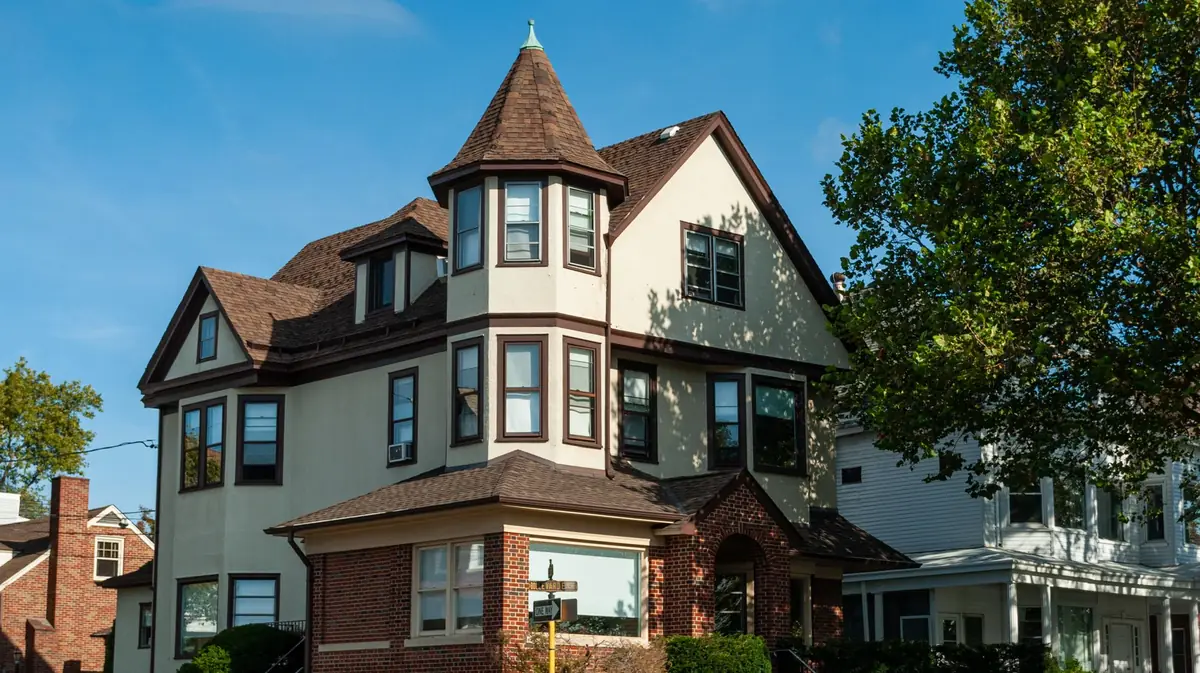
Large older house with a corner turret, cream siding and a brick lower story on a tree-lined street

The short answer

Rewiring a house means new circuits from the panel to every outlet, switch and light. Most of the bill is the labor of reaching them.

What it costs. Published whole-house ranges mostly fall between $8,000 and $30,000. HomeGuide says $10,000 to $30,000, and Harrelson Electric, a Central New Jersey contractor, says about $8,000 to $30,000. HomeGuide's own breakdown puts labor at $6,000 to $12,000 of a $10,000 to $20,000 job when the walls stay closed. The cost section compares sources. These are market ranges, not MDL prices.

When it is the right job. A new panel does not touch the wiring behind the walls. If the house has cloth-covered cable, aluminum branch circuits or ungrounded outlets, or a renovation is already opening walls, a rewire is the question to ask. If it has porcelain knobs in the attic, start with MDL's knob and tube replacement page, which covers that wiring in full.

What makes North Jersey different. Most homes in the towns in the table below were built before 1980, and people are living in them. Where the walls are plaster, plaster and occupied rooms shape the schedule and the repair bill as much as the wire does.

MDL Electric works from 4 Harrison Avenue in West Orange and holds a New Jersey electrical contractor license (34EI01606200) and an electrical business permit (34EB01606200). Call 973.809.2339 to book a walkthrough.

ReplacedThe branch circuits, with their boxes, outlets and switches, as the written scope lists them.
Not automaticThe panel and the service. Say in the scope whether they are in or out.
WallsSmall openings where the basement or attic gives access. Who repairs them is a line to settle first.
PermitRequired in New Jersey, with the town inspecting rough wiring and the finished work.

How old is your wiring?

What was going into North Jersey walls when your town was built.

Each column below is a building period with its own wiring. Glen Ridge's question is mostly the first column. Parsippany's is the third.

  • Before 1940: knob and tube. ASHI places it from the early 1900s to the 1930s (ASHI). MDL has a separate page for it.
  • 1940 to 1959: cloth-covered cable. Approved by the National Electrical Code in 1928 and the most common house wiring from the late 1940s to the early 1960s (InterNACHI).
  • 1960 to 1979: the aluminum window. CPSC says homes built before 1965 are unlikely to have aluminum branch circuits, and that cable installed between 1965 and the mid 1970s may contain it (CPSC Publication 516).

Scroll sideways to see the whole table.

Share of housing units by year built, US Census Bureau American Community Survey 2020-2024, table B25034, pulled November 2, 2026 through Census Reporter. Sorted by the last column.
Town or areaHomesBefore 19401940 to 19591960 to 1979All before 1980
Glen Ridge2,56981.1%4.9%5.7%91.7%
Verona6,01233.5%30.2%24.3%88.0%
Millburn (with Short Hills)7,43633.4%29.5%24.6%87.5%
Montclair16,52159.4%14.5%11.8%85.7%
Maplewood9,05155.5%15.9%11.9%83.3%
Bloomfield21,78937.7%26.3%16.3%80.4%
South Orange6,20843.5%24.6%10.2%78.4%
West Orange17,87024.8%34.5%18.1%77.4%
Chatham Borough3,01031.9%33.0%11.7%76.6%
Essex County, all towns336,96229.1%23.5%21.6%74.2%
Parsippany-Troy Hills23,6225.4%18.9%47.6%72.0%
Livingston10,6999.2%36.1%25.8%71.1%
New Jersey3,791,35417.4%20.3%25.2%62.8%
Morris County, all towns199,50612.4%20.5%29.5%62.4%
Morristown9,36023.5%15.6%20.1%59.2%

The Census reports when a home was built, not what is in its walls today. Any of these houses may have been rewired since, in whole or in part, so the table tells you what to look for, not what you have. New Jersey's seller disclosure form asks the same thing directly: "What type of wiring is in this structure?" with copper, aluminum, other and unknown as the answers (NJ form, question 61).

Old wiring, by type

Cloth, aluminum and two-prong circuits each call for a different answer.

They get lumped together as old wiring. The risk, the test and the fix are not the same.

Cloth-covered cable

  • What it looks like. Cloth or rubber-covered cable you can see in the basement (Harrelson). Inspectors call it rag wire (ASHI).
  • What goes wrong. With age the wire insulation and the cloth turn brittle, vermin chew the cloth, and it has no equipment grounding conductor (Inspector Exam Lab).
  • What to do. Have an electrician open a sample of boxes and look at the insulation with the power off, rather than judging the house from one length in the basement.

Aluminum branch circuits

  • What it looks like. Plastic-sheathed cable marked "Al" or "Aluminum" every few feet on the jacket, visible in unfinished basements, attics or garages (CPSC).
  • What goes wrong. The connections overheat. CPSC's survey found homes built before 1972 and wired with aluminum were 55 times more likely to have a connection at an outlet reach fire hazard conditions than homes wired with copper.
  • What to do. CPSC approves only three permanent repairs: complete replacement with copper, the COPALUM method and AlumiConn connectors. So a full rewire is one of three answers here, not the only one.

Two-prong outlets

  • What it means. Usually no equipment ground on that circuit. InterNACHI says US homes built before 1962 were not built with three-slot receptacles (InterNACHI).
  • The smaller fix. The National Electrical Code allows a GFCI in place of a two-prong receptacle if it is marked No Equipment Ground (EC&M). HomeGuide calls GFCI outlets a possible cheaper alternative to a whole-house rewire.
  • What not to do. ASHI says not to swap in an ungrounded three-slot receptacle and not to jump the ground terminal to neutral, the trick called a bootleg ground.

Signs worth a call, whatever the wiring

  • Face plates on outlets or switches that are hot to the touch, flickering lights, circuits that stop working, or a smell of burning plastic (CPSC).
  • Fuses that blow or breakers that trip often (HomeGuide).
  • A fuse box, or a report from an inspector or insurer that names the wiring.

CPSC adds that failing aluminum connections have been reported to overheat with no prior warning, so a quiet house is not proof. Nationally, fire departments responded to an estimated 46,652 home electrical structure fires a year from 2020 to 2024, with an estimated 527 civilian deaths a year (NFPA, May 2026). That covers all electrical causes, not only old wiring.

Cost to rewire a house

How much does it cost to rewire a house? What the published numbers say, and why they disagree.

These are market ranges, not MDL prices. MDL prices a house after seeing it.

Scroll sideways to see the whole table.

Market ranges, read November 2, 2026: HomeGuide (updated August 29, 2025), Harrelson Electric, Palmetto, SoFi (January 30, 2026), Angi (2026).
What is being pricedPublished rangeSource
Whole house, national average$10,000 to $30,000, or $5 to $17 per square footHomeGuide
Whole house, New Jersey contractorAbout $8,000 to $30,000; small two-bedroom at the low end, large multi-floor at the high endHarrelson Electric
Whole house, national$8,000 to $20,000Palmetto
Worked through attic, basement or joists$10,000 to $20,000HomeGuide
Walls opened and drywall replaced$20,000 to $30,000 or moreHomeGuide
1,500 square feet$7,500 to $25,500HomeGuide
2,000 square feet$10,000 to $34,000HomeGuide
3,000 square feet$15,000 to $51,000HomeGuide
Per square foot, other guides$6 to $10 (SoFi); $2 to $4 (Angi)SoFi, Angi
Permit$250 to $900HomeGuide
Plastering walls$2 to $10 per square footHomeGuide
New panel, if needed$850 to $2,500; see MDL's panel upgrades page for the New Jersey stepsHomeGuide
Close view of an old plaster wall with long cracks and patches of flaking paint
Old plaster with cracks and flaking paint: stock photo, not an MDL job.
  • Why the per-foot numbers disagree. On a 2,000 square foot house, Angi's rate works out to $4,000 to $8,000 and HomeGuide's to $10,000 to $34,000 (our arithmetic). Angi's is well under what the New Jersey contractor above publishes for a whole house, so do not budget a plastered house on the low end.
  • Access. HomeGuide says a house with no attic, crawl space or basement access often means opening walls and ceilings, which adds labor, repair and debris removal.
  • Opening the walls. HomeGuide says it adds 25% to 30% to the job, and may be the only option in an older house without access.
  • Plaster. Harrelson says plaster houses cost more than drywall because the wire is harder to run. HomeGuide adds that plaster repair costs more.
  • Living there. HomeGuide says rewiring while you live in the house takes longer and costs more, through daily cleanup and restoring circuits each day.
  • Circuits and finishes. Every room adds circuits, outlets and switches, and higher-end devices raise the total, HomeGuide says.

Plaster walls, people at home

How a rewire works in a plastered house you still live in.

Published advice splits here, and it is worth seeing both sides. HomeGuide says electricians recommend staying out of the house. Harrelson Electric and Bright Ideas Electric, both New Jersey contractors, say owners usually stay, with power kept on in the rest of the house.

  • Run from above and below. HomeGuide describes small holes in walls and ceilings to fish cable, working from the attic, crawl space or basement.
  • Plaster fights back. One Connecticut owner writing to Fine Homebuilding found only a 1-inch cavity between the lath, with plaster keys that snag a snake. Expect some runs to need a different route.
  • Baseboards can save plaster. The Old House Authority mounts outlets in baseboards first, which reduces how many boxes are cut into plaster.
  • Dust is a choice. The same author cuts plaster with a utility knife when he needs to work dust-free, because a power tool kicks up a tremendous cloud.
  • One area at a time. Harrelson says you may lose power to one area for a day. Bright Ideas works room by room and cleans up at the end of each day.
  • Plan for the furniture. A storage unit runs $40 to $150 or more a month, HomeGuide says, if rooms need emptying.
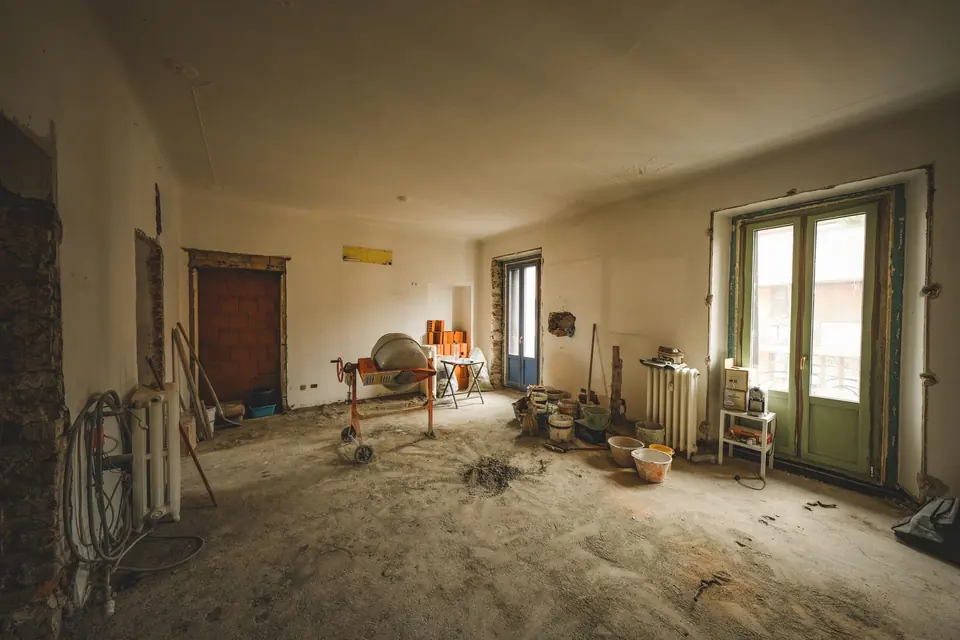
Large empty room in an old house under renovation, with bare plaster walls, a radiator, tools and materials on the floor
A room in an old house emptied for work: stock photo, not an MDL job.

The usual order of the work

01

Map the circuits

Trace what feeds what, floor by floor, and look at the panel, the attic and the basement.

02

Write the scope

Rooms, circuits, panel in or out, expected openings, who repairs them, and which rooms lose power when.

03

Pull the permit

The application goes to the town before work starts, because New Jersey treats wiring as permit work.

04

Rough in

New cable goes in room by room, and the town inspects rough wiring, panel and service.

05

Finish and inspect

Devices and fixtures go on, the old circuits come off, and the town does its final inspection.

All at once, or in stages

Do you have to rewire the whole house?

We found no New Jersey rule that makes you do it all at once. The trade-off is money against disruption.

Scroll sideways to see the whole table.

From HomeGuide and Bright Ideas Electric, read November 2, 2026.
QuestionAll at onceIn stages
Total costHomeGuide says most contractors recommend this when possible.Takes longer and typically costs more in total, HomeGuide says, and more per square foot.
BudgetOne large bill.Splits the job into smaller, more affordable projects.
Living thereBright Ideas says full gut renovations are faster because the walls are already open.You can stay. HomeGuide warns it can be dusty and disruptive.
Typical orderThe whole house under one scope.Bright Ideas describes kitchen and baths first, then bedrooms, then remaining circuits.
Best momentA renovation, or a vacant house before move-in.A lived-in house, or a budget that needs spreading over time.
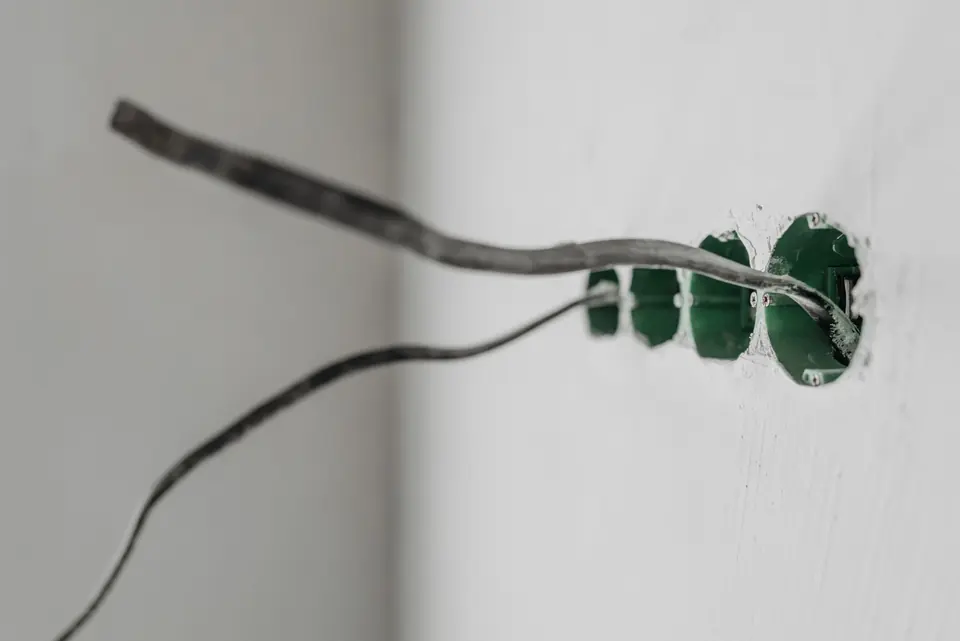
Cable coming out of a round opening in a white wall, ready to be connected
Cable left at a box opening: stock photo, not an MDL job.

When only part of the house needs it

  • Adding one load. A new circuit for a heat pump, EV charger or range does not need a whole rewire. See panel upgrades and EV charger installation.
  • A dead or tripping circuit. Start with electrical repair, so the failed part is found before anything is replaced.
  • A kitchen or bath remodel. The walls are open anyway, which makes it the easiest moment to replace what sits behind them.

Permit, insurance, sale

The New Jersey rules and paperwork that touch a rewire.

From the Uniform Construction Code as published by the NJ Department of Community Affairs, read November 2, 2026, and the sources named on each line.

Scroll sideways to see the whole table.

Sources: N.J.A.C. 5:23-2 (sections 2.7, 2.15, 2.18), N.J.A.C. 5:23-6.5, EPA, Progressive, Policygenius, NJ seller disclosure.
QuestionWhat appliesWhere it comes from
Is a permit needed?Yes. Addition, alteration, replacement or relocation of electrical wiring is outside ordinary maintenance, apart from narrow exceptions that do not cover a house rewire.5:23-2.7(b)6.iii
Who may do the work?Licensed people, except a single-family homeowner on his or her own dwelling.5:23-2.15
What gets inspected?Rough wiring, panel and service installation, then a final inspection of wiring, devices and fixtures.5:23-2.18(b), (d)
If the service equipment changesThe grounding electrode system must be updated to Article 250 Part III of the electrical subcode.5:23-6.5
Lead paint, built before 1978EPA's rule names electrical work. Firms paid to disturb paint must be certified. Minor work of six square feet or less of paint per room is not covered. Ask to see the firm's certificate.EPA RRP
InsuranceSome insurers may not want to offer a policy on knob-and-tube or aluminum wiring (Progressive). Those homes are treated as high-risk, with higher rates likely and coverage that may be canceled or denied (Policygenius). Get your carrier's requirement in writing before you scope the job.Progressive, Policygenius
Selling the houseThe state's seller form asks the wiring type, the amp service, breakers or fuses, and whether additions to the service had permits. Keep the closed permit with the house file.NJ form, questions 61 to 65

Before you call

What makes the walkthrough worth the time.

  1. The year the house was built, and any rewiring or additions you know of.
  2. Square footage and floors, and whether the attic and basement are open or finished.
  3. Plaster or drywall, room by room if it is mixed.
  4. A photo of the panel or fuse box, with the door closed, and the label inside it.
  5. Photos of any cable you can see in the basement or attic, without touching it.
  6. What started this: an inspector's report, an insurer's letter, a renovation or a problem circuit.
  7. What you plan to add: a heat pump, EV charger, induction range or finished basement.
Ask forThe scope in writing: rooms, circuits, panel in or out, expected openings.
Ask forWho repairs the walls, and whether it is priced.
Ask forThe closed permit when the job ends.

Why MDL

A licensed West Orange electrician for older North Jersey houses.

MDL Electric Cooling & Heating does electrical work across Essex and Morris County from its shop at 4 Harrison Avenue, West Orange. A rewire touches the rest of what MDL does: panel upgrades for the service behind it, electrical repair for the circuits that fail first, and knob and tube replacement where the oldest wiring is still live.

LicensedNJ electrical contractor 34EI01606200 and electrical business permit 34EB01606200.
Local4 Harrison Avenue, West Orange, NJ 07052.
One call973.809.2339 for the walkthrough and the scope.

Whole house rewiring

Book a rewiring walkthrough.

Tell MDL your town, the year the house was built, and what started the question.

Rewiring questions

Straight answers on cost, plaster, permits and insurance.

Costs are published market ranges, not MDL prices. Code lines are from the New Jersey construction code and the National Electrical Code.

How much does it cost to rewire a house?

Published whole-house ranges mostly fall between $8,000 and $30,000. HomeGuide (updated August 29, 2025) says $10,000 to $30,000, or $5 to $17 per square foot, and Harrelson Electric, a Central New Jersey contractor, says about $8,000 to $30,000. Size, access and wall type move the number most. These are market ranges, not MDL prices; MDL prices a house after seeing it.

How much does it cost to rewire a 1,500 or 2,000 square foot house?

HomeGuide's table gives $7,500 to $25,500 for 1,500 square feet and $10,000 to $34,000 for 2,000 square feet. Those are national market ranges, not MDL prices, and they do not show the plaster repair on an older house as its own line.

How long does it take to rewire a house?

HomeGuide says 3 to 10 or more days, depending on size, age, crew and how much wall is opened. New Jersey contractors publish similar figures: Trapani Electric says 3 to 7 days and Luminous Electric says 5 to 10. Bright Ideas Electric says a room-by-room job in a lived-in house takes longer on the calendar. Ask for the schedule in writing after a walkthrough.

Can I live in my house while it is being rewired?

Published advice differs. HomeGuide says electricians recommend staying out, because living there takes longer and costs more through daily cleanup and restoring circuits each day. Harrelson Electric and Bright Ideas Electric, both New Jersey contractors, say owners usually stay, with the work done room by room and power kept on elsewhere. Which fits depends on the house and who lives in it.

Do they have to tear out plaster walls to rewire a house?

Not usually when the house has basement, attic or crawl space access. HomeGuide describes several small holes to fish the new cable, and says fully opening the walls adds 25% to 30% to the job and may be the only option in a house without access. Plaster costs more because the holes cost more to repair.

Who patches the walls after a rewire?

Ask before you sign. Harrelson Electric says it does not patch and paint, because that is a separate trade. HomeGuide puts wall plastering at $2 to $10 per square foot. Get the expected openings, and who repairs them, written into the scope.

Do I need to rewire the whole house, or just part of it?

Often just part, if an electrician can show which circuits are sound. HomeGuide says most contractors recommend doing it all at once when possible, because room-by-room work takes longer and typically costs more in total, but stages are possible. Bright Ideas Electric describes kitchen and baths first, then bedrooms, then the remaining circuits.

Does rewiring a house need a permit in New Jersey?

Yes. New Jersey's ordinary maintenance rule, N.J.A.C. 5:23-2.7, excludes the addition, alteration, replacement or relocation of electrical wiring, with narrow exceptions that do not cover a house rewire. The town's electrical inspector checks rough wiring, panel and service, then does a final inspection of wiring, devices and fixtures.

Can I rewire my own house in New Jersey?

N.J.A.C. 5:23-2.15 limits electrical work to licensed people, with an exception for a single-family homeowner on his or her own dwelling. The permit and inspections still apply. A two-family house, or a house you rent out and do not live in, does not read as fitting that exception, so ask your town's construction office.

Is aluminum wiring dangerous, and does it have to come out?

The Consumer Product Safety Commission says homes built before 1972 and wired with aluminum are 55 times more likely to have a connection at an outlet reach fire hazard conditions than homes wired with copper. It approves only three permanent repairs: complete replacement with copper, the COPALUM method and AlumiConn connectors. We found no New Jersey rule ordering it out.

My outlets are two-prong. Do I need a rewire?

Not automatically. Two-prong outlets usually mean no equipment ground on that circuit. The National Electrical Code lets a two-prong receptacle be replaced with a GFCI marked No Equipment Ground, which protects people from shock but does not add a ground. A rewire is the fix when you need grounded circuits throughout or the wire itself is failing.

Will my homeowners insurance make me rewire the house?

It can. Progressive says some insurers may not want to offer a policy on a home with knob-and-tube or aluminum wiring. Policygenius says those homes are considered high-risk, that rates will likely be higher and that coverage may be canceled or denied. Ask your carrier in writing what it will accept before scoping the job.

Does a rewire include a new panel?

Not automatically, so it should be stated in the scope. Harrelson Electric and Bright Ideas Electric both describe a new panel as part of, or often alongside, a rewire. Under New Jersey's rehabilitation subcode, any replacement of electrical service equipment means updating the grounding electrode system. See MDL's panel upgrades page if the panel has no room for new circuits.

Does the lead paint rule apply to rewiring an older house?

It can. EPA's Renovation, Repair and Painting rule names electrical work in housing built before 1978, and it does not cover minor work that disturbs six square feet or less of paint per room. Firms doing covered work must be certified. Tell any contractor the year the house was built and ask to see the firm's certificate.

Next steps

Related services

Knob

Knob and tube wiring replacement

The separate answer for porcelain knobs in the attic: insurance, insulation, costs and permits for that wiring.

Learn more
Panel

Panel upgrades

Fuse boxes, small services and panel replacements, planned with the wiring.

Learn more
EV

EV charger installation

A home Level 2 charger planned around the panel, the circuit route and the permit.

Learn more
Electrical

Electrical repair

Dead circuits, tripping breakers and warm outlets, diagnosed before anything is replaced.

Learn more

Request service

Send MDL the service, town, and best callback number.

Use the form for planned service or call for urgent electrical, heating, or cooling help.