
Essex County
- West Orange
- Fairfield
- West Caldwell
- Caldwell
- Roseland
- Cedar Grove
- Livingston
- Bloomfield
- Belleville
- Nutley
- Montclair
- All Essex County towns
Unit heater repair · Warehouses, garages and shops
Gas and electric unit heaters in warehouses, garages, auto repair shops, loading docks, factories, self-storage buildings and workshops. MDL Electric Cooling & Heating holds both a New Jersey master HVACR license and an electrical contractor license. The burner side and the circuit side are one request, from West Orange across Essex and nearby Morris County.
The short answer
What MDL does. MDL Electric Cooling & Heating repairs and installs gas and electric unit heaters for businesses. MDL confirms the make, the fuel or voltage and the repair after reviewing the heater and the building.
Who this page is for. Owners and managers of warehouses, garages, auto repair shops, loading docks, factories, self-storage buildings and workshops. Space heating is the largest single energy use in U.S. commercial buildings, about 32% in 2018, and warehouse and storage buildings are the most numerous type (U.S. EIA).
Both trades in one request. A gas unit heater needs heating work on the burner, ignition, gas valve, venting and heat exchanger. It also needs electrical work on the circuit, the disconnect and the controls. An electric unit heater is an electrical load from end to end. MDL holds both a New Jersey master HVACR license and an electrical contractor license (the electrical side).
Gas heaters carry a carbon monoxide risk. A gas unit heater short of combustion air, or with a failed vent, can put carbon monoxide into a closed work area (carbon monoxide safety). MDL works from 4 Harrison Avenue in West Orange. Call 973.809.2339 or use the request form.
Gas, electric or hot water
Federal energy rules define a unit heater as a self-contained fan-type heater designed to be installed within the heated space (10 CFR 431.242). Modine names three main types: natural gas or propane, hot water, and electric (Modine, types of unit heaters).
Scroll sideways to see the whole table.
| Type | What you see | What it needs | Parts the manuals cover in diagnosis |
|---|---|---|---|
| Gas-fired (natural gas or propane) | A gas pipe with a shut-off valve, a vent pipe to the outdoors, and power wiring or conduit | Gas at the right pressure, a sound vent, combustion air, a dedicated line-voltage circuit with a disconnect, and a 24-volt thermostat | Venter motor, pressure switch, spark igniter, flame sensor, gas valve, limit and rollout switches, control board, heat exchanger |
| Electric | No vent pipe and no gas or water piping; power wiring to a disconnect; a rating plate in kilowatts and volts | A circuit sized for the heater at 208, 240, 480 or 600 volts, single- or three-phase depending on the model | Fuses, thermostat or switch, control transformer, overheat (limit) control, fan motor, element fuses on the largest models |
| Hot water or steam (hydronic) | Supply and return pipes from a boiler, shut-off valves, and fan motor wiring; no vent pipe | Hot water or steam from a working boiler, air vented from the piping, and power for the fan | The boiler, valves, steam traps, air in the coil, the fan motor and its controls |
Before you call
Each check comes from the troubleshooting tables in the Reznor UBXC/UDXC manual and the Modine HER electric manual. None needs a ladder, a tool or an open panel.
Scroll sideways to see the whole table.
| Symptom | Causes the manual lists |
|---|---|
| Gas: nothing runs | No power, a blown 3-amp fuse on the control board, no 24-volt power from the control transformer, a loose connection, or a failed venter motor |
| Gas: venter runs, burner never lights | Manual gas valve closed, gas pressure too low or too high, no spark, a pressure switch that will not close because of a blocked vent or failed tubing, or a gas valve that will not open. Display code 3: the pressure switch did not close within 30 seconds |
| Gas: lights, then shuts off | Gas pressure, a grounded or cracked flame sensor, poor grounding or reversed polarity (display code 7), or the pressure switch. Display code L: lockout after failed ignition or flame loss |
| Gas: fan blows cool air | An open high temperature limit or flame rollout switch (display code 5). The limit trips on motor failure or lack of airflow, and the control keeps the fan running with the gas valve off |
| Gas: runs, little heat | Wrong manifold pressure or orifice, cycling on the limit control because of poor air throughput, or a thermostat in the wrong place |
| Fan motor cuts out | Low or high supply voltage, a failing motor, or a dirty motor, fan and fan guard |
| Electric: nothing runs | A switch, disconnect or thermostat off, blown control fuses, wiring faults, a failed thermostat or switch, or a burned-out control transformer |
| Electric: fan runs, no heat | The overheat control has cut the elements (louvers under 45 degrees, a slow motor or a failed limit), the summer-winter switch is on summer, a wiring fault, or blown element fuses on the largest three-phase models |
| Electric: elements heat, fan stops | A failed fan motor, loose connections, or voltage too high or too low. Turn the heater off at the panel and call |
The electrical side
MDL Electric Cooling & Heating holds both a New Jersey master HVACR license and an electrical contractor license, so it can follow a fault from the burner back to the panel. New Jersey's construction code allows heating, ventilating, air conditioning and refrigeration work, and electrical work, only by persons licensed to perform it, except a single-family homeowner on his or her own dwelling (N.J.A.C. 5:23-2.15(b)2.i).
Repair or replace
Weigh these points after the diagnosis. None of them decides the answer alone.
Installation planning
The figures below come from specific manufacturer manuals and apply to those models. The manual for the heater being installed, the National Fuel Gas Code (ANSI Z223.1/NFPA 54), the National Electrical Code (NFPA 70) and the town's construction office set the final numbers.
Scroll sideways to see the whole table.
| Item | What the source says | Source |
|---|---|---|
| Sizing | A heat loss calculation by a qualified, licensed heating professional, matched to the heater's output, not its input. At 80% efficiency, 150,000 BTU per hour of input delivers about 120,000. | Modine sizing guide |
| Mounting height, gas | Generally 8 to 12 feet above the floor, with the bottom never less than 5 feet up. At shipping doors, aim at the cold air from 15 to 20 feet away. | Reznor UBXC/UDXC |
| Mounting height, electric | Bottom at least 6 feet up (HER 30 to 50) or 8 feet (HER 75 to 250); maximum 8 to 12 feet by size, above which heat does not reach the floor. | Modine HER |
| Clearances, gas | Sizes 30 to 125 MBTUh: 1 inch at the top, the non-access side and the bottom; 6 inches to the flue connector; 18 inches on the access side and behind the fan motor. | Reznor, Table 1 |
| Clearances, electric | 12 inches to combustible materials in any direction, and more than 18 inches of service access for the motor and fan. | Modine HER |
| Air pattern | Blow along or toward exposed walls, not straight at people; with several heaters, each one supports the next one's air stream. | Reznor; Modine HER |
| Thermostat | In the natural circulating path of room air, about five feet above the floor, away from heat from the unit and from drafts. | Modine steam/hot water manual |
| Combustion air | Standard units take air from the room. A space under 50 cubic feet per 1,000 BTU per hour of input is confined and needs openings near the floor and the ceiling. | Reznor |
| Garages and hangars | Repair garages follow NFPA 30A, public garages NFPA 88A and aircraft hangars NFPA 409, as the Reznor manual lists. | Reznor |
Carbon monoxide safety
OSHA names boiler rooms, warehouses and docks among the places workers can be exposed to harmful levels of carbon monoxide. A gas unit heater is safe only while its combustion air and its vent work.
Alarm sounding, or people dizzy, sick or confused: get everyone to fresh air and call 911, as OSHA advises. Smell gas: leave the building and call the gas utility from outside. Once everyone is safe, MDL can trace the cause.
New Jersey rules
Read November 15, 2026 from the Uniform Construction Code, N.J.A.C. 5:23-2, NJ Department of Community Affairs (published through August 17, 2026), and 10 CFR 431.246. Your town's construction office enforces the code and decides edge cases.
Scroll sideways to see the whole table.
| Job | What the rule says | Section |
|---|---|---|
| Replace a motor or fan | Replacement of motors, pumps and fans of the same capacity is ordinary maintenance: no permit, inspection or notice. | 5:23-2.7(c)5.i |
| Repair or replace controls | Repair or replacement of control devices for heating and air conditioning equipment is ordinary maintenance. | 5:23-2.7(c)5.v |
| Repair electrical equipment | Repairs to installed electrically operated equipment, including any motor operated device, are ordinary electrical maintenance. | 5:23-2.7(c)3.ii |
| New gas piping or wiring | Adding, altering, replacing or relocating gas piping or electrical wiring is not ordinary maintenance. | 5:23-2.7(b)6.ii and iii |
| Install or replace a unit heater | Installing or altering regulated equipment needs an application and a permit before the work. The minor work list names like-capacity replacement of low-pressure boilers, warm air furnaces and air conditioning units, not unit heaters; ask the construction office how it classifies a swap. | 5:23-2.14(a); 2.17A(c)3 |
| Emergency work | May start first; notice as soon as practicable, and a permit applied for within 72 hours. | 5:23-2.14(b)3 |
| Who may do the work | Heating, ventilating, air conditioning and refrigeration work, and electrical work, only by persons licensed for it, except a single-family homeowner on his or her own dwelling. The permit lists each contractor's name and license number. | 5:23-2.15(b)2 and 2.i |
| Federal equipment standard | Unit heaters made on or after August 8, 2008 must have an intermittent ignition device and power venting or an automatic flue damper. | 10 CFR 431.246 |
What to send
Photos from the floor and a plain description are enough to start. Do not open panels, climb to the heater or change a gas control to collect them.
Address and ZIP code, the kind of business, and the size and ceiling height of the space.
Make, model and serial number, with the gas type and input, or the kilowatts and volts.
A photo from the floor of the vent pipe, gas piping or power wiring at the heater.
Nothing, fan only, lights then quits, or weak heat, plus any light or code you can see.
Whether the disconnect and breaker are on, and whether anyone closed the gas valve.
What sits under the heater, what it takes to reach it, the hours the space can be worked, and who approves the work.
Where MDL works
MDL works from 4 Harrison Avenue in West Orange. Fairfield, West Caldwell, Caldwell, Roseland, Parsippany and Montville have no separate MDL town page; the county pages cover them. Whatever the town, include the exact address and ZIP code so coverage can be confirmed for the building.
Unit heater repair
Call or send the form with the address, the rating plate, what the heater does and what you can see. The form opens with Commercial Heating / HVAC chosen; pick Business / Commercial or Rental / Managed Property as the property type.
Unit heater questions
Answers come from the manufacturer manuals, federal rules and New Jersey code named on this page. MDL publishes no commercial prices, and this page lists none.
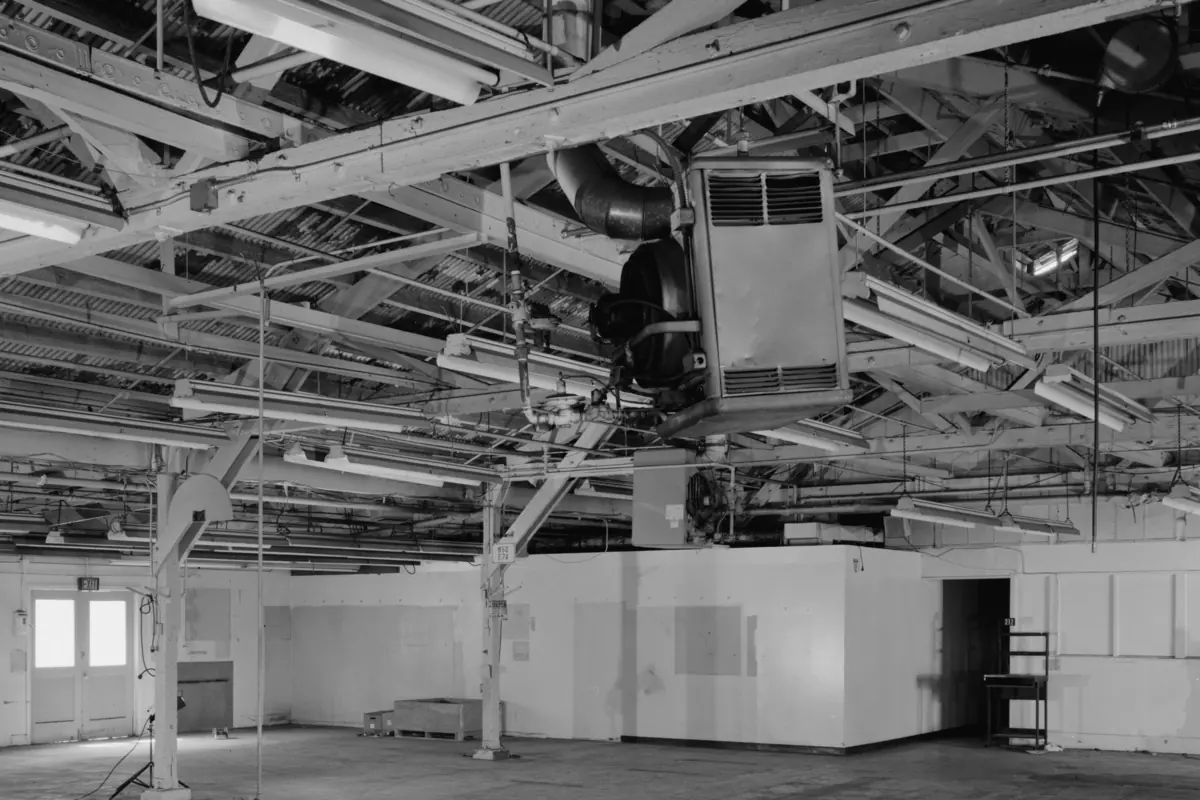
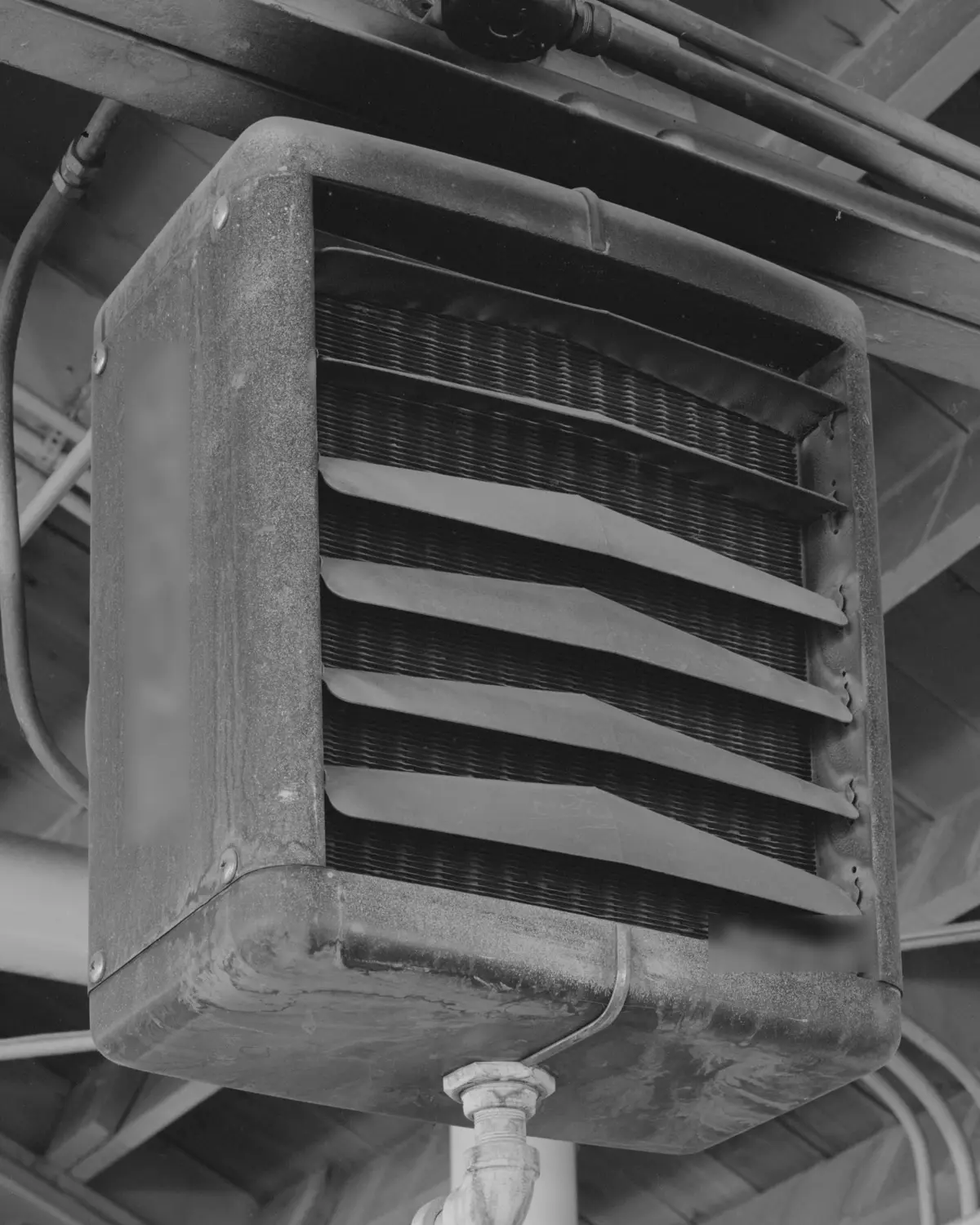
Federal energy rules define a unit heater as a self-contained fan-type heater designed to be installed within the heated space, and not a warm air furnace (10 CFR 431.242). In practice it is the box hung from the ceiling or a wall of a warehouse, garage, shop or loading dock. A fan blows air across a gas-fired heat exchanger, an electric element or a hot-water coil and out through adjustable louvers.
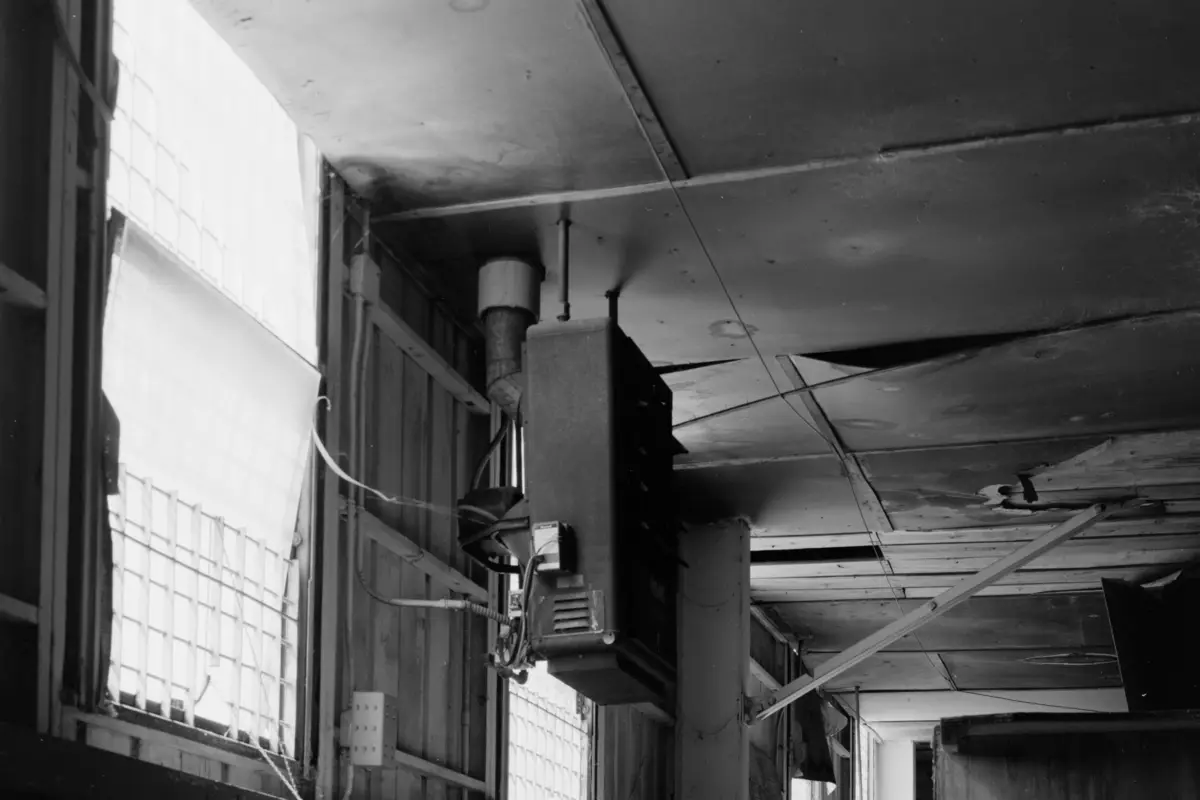
Look at what connects to it. A gas unit heater has a gas pipe with a shut-off valve and a vent pipe to the outdoors, because gas units must be vented to remove flue gases. An electric unit heater needs no venting and has no gas or water piping, only power wiring. A hot-water or steam unit heater has supply and return pipes from a boiler. The rating plate names the gas type, the input and the electrical supply, or the kilowatts and the voltage.
Safety controls can shut off the gas while the fans keep running. In Reznor's UBXC and UDXC manual, an open high temperature limit switch makes the control run the fan with the gas valve off. The flame rollout switch also cuts power to the gas valve, and a failed ignition ends in a lockout. The manual's causes include poor airflow, a dirty fan, gas pressure outside 5 to 14 inches of water column on natural gas, a blocked vent and a cracked flame sensor. A tripped rollout switch must have its cause found before it is reset.
Modine's manual for its HER electric unit heaters lists four causes. The overheat control may have cut the elements because too little air crosses them. The louvers must be open at least 45 degrees, and a slow fan motor or a failed limit control has the same effect. The summer-winter switch may be in the summer position, which runs the fan alone. The wiring may be faulty. On the two largest models with 208- or 240-volt three-phase power, element fuses may have blown.
Plan on one. The state Uniform Construction Code makes it unlawful to install or alter regulated equipment without first applying for and obtaining a permit (N.J.A.C. 5:23-2.14(a)). Its minor work list names like-capacity replacement of low-pressure boilers, warm air furnaces and air conditioning units, but not unit heaters (5:23-2.17A(c)3). Ask the town's construction office how it treats a like-for-like swap. Replacing a motor or fan of the same capacity, or repairing or replacing a control, is ordinary maintenance with no permit (5:23-2.7(c)5). Emergency work may start first, with a permit applied for within 72 hours (5:23-2.14(b)3).
Follow the manual for the exact model. Reznor's UBXC and UDXC manual says a unit should generally sit 8 to 12 feet above the floor, never with its bottom less than 5 feet up. Near a shipping door, it says to aim the heater at the cold air from 15 to 20 feet away. Modine's HER electric manual sets a minimum bottom height of 6 or 8 feet, depending on size. Its maximum heights run from 8 to 12 feet; above that, the heat does not reach the floor.
The size comes from a heat loss calculation, not floor area alone. Modine's sizing guide says insulation and air leakage change the load more than any other factor. It says to match the heater's output, not its input: at 80% efficiency, a 150,000 BTU per hour input heater delivers about 120,000. Modine's gas-fired unit heaters run up to 400,000 BTU per hour each, so large spaces may need several. An oversized heater short cycles, which brings uneven temperatures and more wear.
Yes, if it burns without enough combustion air or its vent fails. Reznor's manual warns that incomplete combustion produces carbon monoxide, and that the vent must carry all flue products outdoors. CDC lists headache, dizziness, weakness, upset stomach, vomiting, chest pain and confusion as the most common symptoms. If an alarm sounds or people feel sick, move everyone to fresh air and call 911, as OSHA advises. CDC recommends having gas-burning appliances serviced by a qualified technician every year.
Send a photo of the heater's rating plate. MDL confirms the make, the model, the fuel or voltage and the repair before scheduling. Reznor and Modine publish the installation and service manuals this page cites. This page makes no dealer, factory-authorized or brand certification claim.
MDL does not publish commercial prices, and this page lists none. The cost depends on what failed and whether the heater is gas or electric. How high it hangs, parts availability and any permit for a replacement also matter. MDL looks at the heater and the building first.
MDL works from 4 Harrison Avenue in West Orange, across Essex County and nearby Morris County. Essex towns include Fairfield, West Caldwell, Caldwell, Roseland, Cedar Grove, Livingston, Bloomfield, Belleville, Nutley and Montclair. Morris towns include Parsippany, Montville and Morristown. Send the exact address and ZIP code so coverage can be confirmed for the building.
Sources
All read November 15, 2026.
Next steps
Heating, cooling and boiler service for a business or managed property, with New Jersey permit and license rules.
Learn moreSteam and hot water boilers in apartment buildings and businesses, including the boiler behind hot-water unit heaters.
Learn moreTroubleshooting, new circuits and panel capacity for the rest of the building.
Learn moreElectrical and HVAC requests for the same building in one place.
Learn moreRequest service
Use the form for planned service or call for urgent electrical, heating, or cooling help.