
Commercial electrician · West Orange and Essex County
Commercial electrician in West Orange and Essex County, NJ
MDL Electric Cooling & Heating, a licensed New Jersey electrical contractor based in West Orange, troubleshoots, repairs and wires commercial buildings across Essex, Morris and Union County: lighting, circuits, renovation wiring, panel and capacity reviews, and the heating and cooling equipment on the same property.
The short answer
One licensed contractor for the building's electrical faults, lighting, circuits, panels and HVAC.
Who this page is for. Property managers, facility managers, building owners and business owners in West Orange and the rest of Essex County who need an electrician for a commercial property, not a house.
What MDL does for commercial properties. Electrical troubleshooting and repair; lighting, dedicated circuits and renovation or build-out wiring; panel and capacity review; and, under its HVACR license, air-conditioning, heating and boiler service at the same address (scope table).
What is different about a commercial job in New Jersey. The state code's minor-work shortcut applies to one- and two-family homes only. In a commercial building, new circuits, outlets, lighting wiring or panel work need a permit before the work starts; like-for-like replacements do not (the rules).
MDL Electric Cooling & Heating holds New Jersey electrical contractor license 34EI01606200, electrical business permit 34EB01606200 and master HVACR contractor license 19HC00308200. It works from 4 Harrison Avenue in West Orange across Essex, Morris and Union County. Call 973.809.2339, or send the building through the commercial request form.
The buildingAddress, what it is used for, and the affected floor, suite, area or equipment.
The authorityThe person who can approve work and provide access: owner, manager, tenant or general contractor.
The resultWhat has to work when MDL leaves, described as the outcome rather than a guessed part.
The windowOccupied hours, shutdown limits, escorts, keys, loading and security conditions.
Scope
What a commercial electrical request to MDL can cover.
The services MDL publishes for commercial properties, what to send for each, and where the state code usually puts the job. Your town's construction office makes the final call.
Scroll sideways to see the whole table.
| Request | What to send | Usual permit path |
|---|---|---|
| Troubleshooting and repair | The circuit, fixture, area or equipment affected, the symptom, when it started, and the operating impact | Like-for-like replacement of a receptacle, switch or fixture, or a repair to installed electrical equipment, is ordinary maintenance: no permit (5:23-2.7(c)3). New wiring to fix the fault needs a permit (5:23-2.14(a)) |
| Lighting | Rooms or areas, fixture count and type, controls, ceiling type and height, and the hours the space can be worked | Swapping a fixture for a like item is ordinary maintenance. New fixtures on new wiring, or new circuits, need a permit |
| Dedicated circuits and equipment power | The equipment nameplate or spec sheet, its location, and the panel that would feed it, from a safe photo of closed equipment | Permit before work; the five-outlet minor-work shortcut is for one- and two-family dwellings only (5:23-2.17A(c)4) |
| Renovation and build-out wiring | Plans or a written scope, the intended use of the space, existing conditions, the general contractor, and the schedule | Permit before work, inspections during the work, and a certificate of approval before the altered space is used (5:23-2.14, 2.18, 2.23(b)) |
| Panel and capacity review | The proposed loads, the existing service and panel information when safely visible, and why capacity is being questioned | Installing or altering a panel or service needs a permit; a service or meter change also needs PSE&G's cut-in card before the meter is set |
| Heating, cooling and boiler service | The equipment, what it is doing, the areas affected, and any visible codes | Repair of air-conditioning equipment and replacement of same-capacity motors, pumps and fans are ordinary HVAC maintenance; new or replacement equipment needs a permit |
MDL confirms the service boundary after it reviews the building and the written scope. It does not publish building types, project sizes, client lists or response times, so none appear here.
New Jersey rules
Permits, inspections and sign-offs for a commercial electrical job in New Jersey.
From the Uniform Construction Code, N.J.A.C. 5:23-2 and 5:23-3, NJ Department of Community Affairs (both published through August 17, 2026), and PSE&G's inspection page, all read October 31, 2026.
Scroll sideways to see the whole table.
| Question | What the rule says | Section |
|---|---|---|
| Which code applies? | New Jersey adopts the National Electrical Code 2023, with Tentative Interim Amendments 70-23-1 through 70-23-13, as its electrical subcode. | 5:23-3.16(a)1 |
| Who may do the work? | Electrical work only by persons licensed to perform it under New Jersey law. The single-family homeowner exception does not reach a commercial building. | 5:23-2.15 |
| No permit at all | Ordinary maintenance: replacing a receptacle, switch or lighting fixture, or part of one, with a like or similar item (no emergency battery pack, not in a hazardous location), and repairs to installed electrically operated equipment. No permit, inspection or notice. | 5:23-2.7(a), (c)3 |
| The five-outlet shortcut | Minor work that may start on notice before the permit, such as five or fewer new outlets on adequate existing circuits, is defined for one- and two-family dwellings. A commercial building does not get it. | 5:23-2.17A(c)4 |
| Everything else | Unlawful to alter a structure, change its use, or install or alter regulated equipment without a permit. | 5:23-2.14(a) |
| Emergency work | May proceed first. Notice to the enforcing agency as soon as practicable; permit applied for within 72 hours. | 5:23-2.14(b)3 |
| Inspections | Electrical subcode inspections cover rough wiring, and panel and service installation, with a final inspection on completion. | 5:23-2.18(b), (d) |
| Using the renovated space | A building or portion renovated or altered shall not be occupied or used until the construction official issues a certificate of approval. | 5:23-2.23(b) |
| New or upgraded service | The local inspection authority must inspect all electrical wiring before PSE&G installs meters. The certificate of approval for electric service is called a cut-in card. | PSE&G |
| Fire protection interrupted | If a repair interrupts a fire protection system, the fire official must be notified under the building subcode. | 5:23-2.7(c)3.ii |
A permit application names the owner, the lot and block, the use group and a description of the work (5:23-2.15(a)). For a tenant space, settle early who signs as owner or agent.
Why it matters
Commercial buildings run on electricity, and fail expensively when it fails.
The national numbers, from federal sources read October 31, 2026.
- Electricity is the main fuel. Electricity accounted for 60% of total energy use in U.S. commercial buildings in 2018, and buildings use it for every end use. Natural gas was 34%.EIA
- Lighting is a large share. Space heating was about 32% of commercial building energy use in 2018; ventilation and lighting were next at about 10% each.EIA
- The building stock is large and varied. The United States had about 5.9 million commercial buildings in 2018, totaling about 96.4 billion square feet.EIA
- Nonresidential fires are costly. The 2023 national estimates count 110,000 nonresidential building fires, 130 deaths, 1,200 injuries and $3.16 billion in dollar loss. Fires rose 19% from 2014 to 2023.U.S. Fire Administration
- LED lighting cuts the lighting share. LED products produce light up to 90% more efficiently than incandescent bulbs, ENERGY STAR says; good-quality white LED products are expected to last 30,000 to 50,000 hours or longer, per the U.S. Department of Energy.ENERGY STAR; DOE
- Electricity is a recognized workplace hazard. OSHA's electrical standards exist to protect employees from electric shock, electrocution, fires and explosions. In an occupied building, who is near the work and when is part of the scope.OSHA
How to scope it
Five details that turn a commercial electrical call into a proposal.
The same five things MDL asks for on its commercial services hub, in the order a property manager usually has them.
01
Building and use
Address, ZIP, what the building is used for, the floor or suite, and whether other tenants share the panel, meter or equipment.
02
Authority and access
Who approves scope and cost, who opens the door, escorts, keys, loading, security and the hours the space can be worked.
03
Condition and result
The symptom or the goal, when it started, the operating impact, and safe photos of closed equipment or nameplates.
04
Documents
Plans, a written scope, equipment schedules or spec sheets when they exist. A build-out without plans starts with a site review.
05
Timing and approvals
Decision stage (budgeting, designing, bidding or scheduling), target work window, required approvals, and the best callback.
Do not enter a restricted area, open electrical or mechanical equipment, or interrupt operating equipment to collect information. Exterior photos, visible labels and a plain description are enough to start.
Occupied buildings
Working around tenants, shutdowns and shared equipment.
What MDL needs to know before the first visit to an occupied commercial property, and what the paperwork should show when the job closes.
- Name the authorizing party. Landlord, tenant, property manager or general contractor: one person approves scope, cost and access. The permit application names the owner or the owner's agent (5:23-2.15(a)).N.J.A.C. 5:23-2
- Map what is shared. Say whether other occupants share the circuit, panel, meter or equipment, so a shutdown does not surprise the business next door.
- Set the work window. MDL does not publish after-hours commercial hours or response times. Give the hours the space can be worked and any shutdown limit; MDL confirms scheduling after review.
- Plan the shutdown, not just the repair. Lighting, refrigeration, point-of-sale, access control and HVAC can all sit on the same panel. List what must stay on and what can go dark, and for how long.
- Keep fire systems in the loop. If a repair interrupts a fire protection system, the fire official must be notified (5:23-2.7(c)3.ii).N.J.A.C. 5:23-2
- Close with paper. For permitted work: the permit, the inspection sign-offs, and the certificate of approval before the altered space is used (5:23-2.23(b)). For a service change: PSE&G's cut-in card. For every job: the written scope and a note of what was replaced.N.J.A.C. 5:23-2; PSE&G
A breaker that trips with nothing else running, or a burning smell at a panel: keep people away and see emergency electrician. A store or office that needs cameras: see security camera installation.
Where MDL works
Commercial electrical service in Essex, Morris and Union County, from a West Orange base.
MDL works from 4 Harrison Avenue in West Orange. These are the towns in the three counties that have their own MDL service-area page. Whatever the town, send the exact address and ZIP code so coverage is confirmed, not assumed.
Morris County
Union County
Commercial electrician
Have a building that needs an electrician? Send MDL the address and the result you need.
Call, or use the form with the building's address and use, the authorized contact, the affected area or equipment, the hours the space can be worked, and any plans or photos of closed equipment.
Commercial electrician questions
Straight answers on scope, permits, licensing, cost and scheduling.
Rules come from the New Jersey Uniform Construction Code and PSE&G, efficiency figures from ENERGY STAR and the U.S. Department of Energy, and MDL's scope from what MDL publishes. No prices, response times or building types are claimed.
What does a commercial electrician do?
A commercial electrician troubleshoots and repairs the wiring, lighting, circuits and panels in a building that is not a one- or two-family home: a store, office, restaurant, warehouse, school, house of worship or managed building. In New Jersey that work has its own permit path. MDL Electric Cooling & Heating in West Orange publishes electrical troubleshooting and repair, lighting, dedicated circuits, renovation wiring, and panel and capacity review for commercial properties, plus heating, cooling and boiler service under its HVACR license.
What is the difference between commercial and residential electrical work in New Jersey?
The code rules change with the building. New Jersey's Uniform Construction Code lets a one- or two-family home use a minor-work shortcut: five or fewer new outlets, or new wiring incidental to an air conditioner or range, can start on notice to the town before the permit is issued (N.J.A.C. 5:23-2.17A). That shortcut names one- and two-family dwellings only. In a commercial building, new circuits, outlets, lighting wiring, panels or service changes need a permit before the work starts (5:23-2.14), unless the job is ordinary maintenance such as replacing a receptacle, switch or light fixture with a like item (5:23-2.7).
Does MDL Electric take commercial electrical work in West Orange?
Yes. MDL works from 4 Harrison Avenue in West Orange and serves Essex, Morris and Union County. Its published commercial scope is electrical troubleshooting and repair; lighting, dedicated circuits and renovation wiring; panel and capacity review; and air-conditioning, heating and boiler service at the same property. MDL confirms whether an exact request fits after it reviews the building and the written scope.
What types of buildings does MDL work in?
MDL does not publish a list of building types or project sizes. Send the address, what the building is used for, the affected area or equipment, and the person authorized to discuss the work. MDL confirms service fit and the next step after review, and does not promise work before that review.
Do I need a permit for commercial electrical work in New Jersey?
Usually, yes. N.J.A.C. 5:23-2.14(a) makes it unlawful to alter a structure or install or alter regulated equipment without a permit. The exceptions are ordinary maintenance under 5:23-2.7, which needs no permit, inspection or notice, and emergency work, which may start first if the town is notified as soon as practicable and the permit is applied for within 72 hours (5:23-2.14(b)3). Your town's construction office enforces the code and decides edge cases.
What counts as ordinary maintenance in a commercial building?
N.J.A.C. 5:23-2.7(c)3 lists ordinary electrical maintenance: replacing any receptacle, switch or lighting fixture, or part of one, with a like or similar item, as long as it does not contain an emergency battery pack and is not in a hazardous location; repairs to installed electrically operated equipment such as doorbells, communication systems and motor-operated devices; and rearranging communications wiring that does not penetrate a fire-rated assembly. Receptacles where GFCI, damp or wet, or tamper-resistant protection is required must still meet section 406.4(D) of the electrical subcode. If a fire protection system is interrupted for a repair, the fire official must be notified.
Can electrical work start before the permit in an emergency?
The state code allows it for emergency work: notice goes to the enforcing agency as soon as practicable, and the permit application is filed within 72 hours (N.J.A.C. 5:23-2.14(b)3). For an urgent but safely isolated fault, keep people away from the equipment and call MDL at 973.809.2339. MDL's emergency electrician page describes the urgent electrical path.
Who is allowed to do commercial electrical work in New Jersey?
N.J.A.C. 5:23-2.15 says electrical work shall not be undertaken except by persons licensed to perform it under New Jersey law; the only exception is a single-family homeowner working on his or her own dwelling, which does not apply to a commercial building. MDL Electric holds New Jersey electrical contractor license 34EI01606200 and electrical business permit 34EB01606200. You can check any license on the New Jersey Division of Consumer Affairs license verification site.
Which electrical code applies to commercial buildings in New Jersey?
New Jersey adopts the National Electrical Code 2023, with Tentative Interim Amendments 70-23-1 through 70-23-13, as the electrical subcode of the Uniform Construction Code (N.J.A.C. 5:23-3.16). The same code governs homes and commercial buildings; the permit and inspection paths differ by building type.
How much does a commercial electrician cost per hour?
MDL does not publish an hourly rate, and this page does not quote one. Commercial work is priced from a written scope: the affected area or equipment, the hours the space can be worked, access, permits and inspections, and any utility coordination. Ask for a written scope that lists those items, so two proposals can be compared line by line.
Can MDL handle electrical and HVAC at the same commercial property?
Yes. MDL publishes both an electrical contractor license (34EI01606200) and a master HVACR contractor license (19HC00308200). Describe both needs in one request: the circuits or equipment, the areas affected, and the project goal. The exact work included still depends on review of the property and the requested scope.
Does MDL offer 24/7 or after-hours commercial electrical service?
MDL does not publish after-hours commercial service hours or response times, so this page does not promise them. Tell MDL the hours the space can be worked, any shutdown limits and who provides access, and MDL confirms scheduling after review. For an urgent fault, call 973.809.2339.
What should a property manager send to get a commercial electrical proposal?
Five things: the address and what the building is used for; the person authorized to approve work and provide access; the affected area, circuit or equipment and the result you need; occupancy, shutdown and working-hour limits; and any drawings, equipment schedules or safe photos of closed equipment. Do not open electrical equipment or enter restricted areas to collect information.
What is a cut-in card, and when does a commercial job need one?
A cut-in card is the local certificate of approval for electric service. PSE&G says the local inspection authority must inspect all electrical wiring before PSE&G can install meters, and the certificate of approval must be provided before it installs an electric meter and connects service. It applies when a job changes the service or meter, such as a new or upgraded service, not to a like-for-like fixture replacement.
Does MDL install commercial lighting and LED upgrades?
Lighting is part of MDL's published commercial scope, alongside circuits and renovation wiring. ENERGY STAR says LED products produce light up to 90% more efficiently than incandescent bulbs, and the U.S. Department of Energy says good-quality white LED products are expected to have a useful life of 30,000 to 50,000 hours or longer. Send the rooms or areas, the fixture count and type, controls, and the hours the space can be worked; MDL confirms the scope after review.
Sources
Where the rules and numbers on this page come from.
All read October 31, 2026.
- N.J.A.C. 5:23-2, Uniform Construction Code, administration and enforcement, NJ Department of Community Affairs (published through August 17, 2026): 2.7 ordinary maintenance, 2.14 when permits are required and emergency work, 2.15 permit applications and licensed work, 2.17A minor work, 2.18 inspections, 2.23 certificates of approval.
- N.J.A.C. 5:23-3, Uniform Construction Code, subcodes, NJ Department of Community Affairs (published through August 17, 2026): 3.16, the National Electrical Code 2023 as New Jersey's electrical subcode.
- PSE&G, Mandatory Local Inspections: local inspection before meters are installed, the cut-in card, meter pans for upgrades to 200 amps or less.
- U.S. Energy Information Administration, Use of energy in commercial buildings: 5.9 million buildings, 96.4 billion square feet, electricity 60% and natural gas 34% of energy use, space heating 32%, ventilation and lighting about 10% each (2018 CBECS).
- U.S. Fire Administration, Nonresidential fire estimate summaries (2014 to 2023): 2023 fires, deaths, injuries and dollar loss; 10-year trend.
- ENERGY STAR, Learn About LED Lighting: LED products up to 90% more efficient than incandescent bulbs.
- U.S. Department of Energy, LED Basics: useful life of 30,000 to 50,000 hours or longer for good-quality white LED products.
- OSHA, Electrical overview: electricity as a recognized workplace hazard and the purpose of OSHA's electrical standards.
- New Jersey Division of Consumer Affairs, License Verification: where to check an electrical contractor's license.
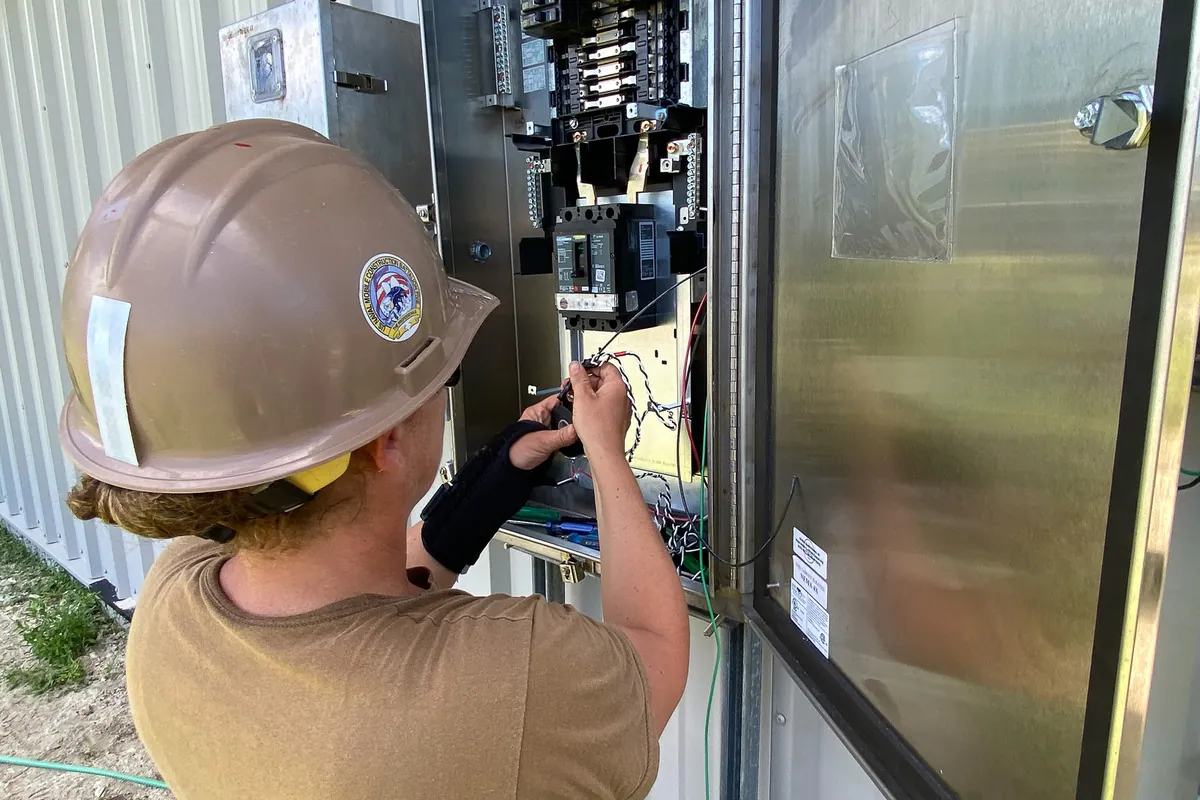
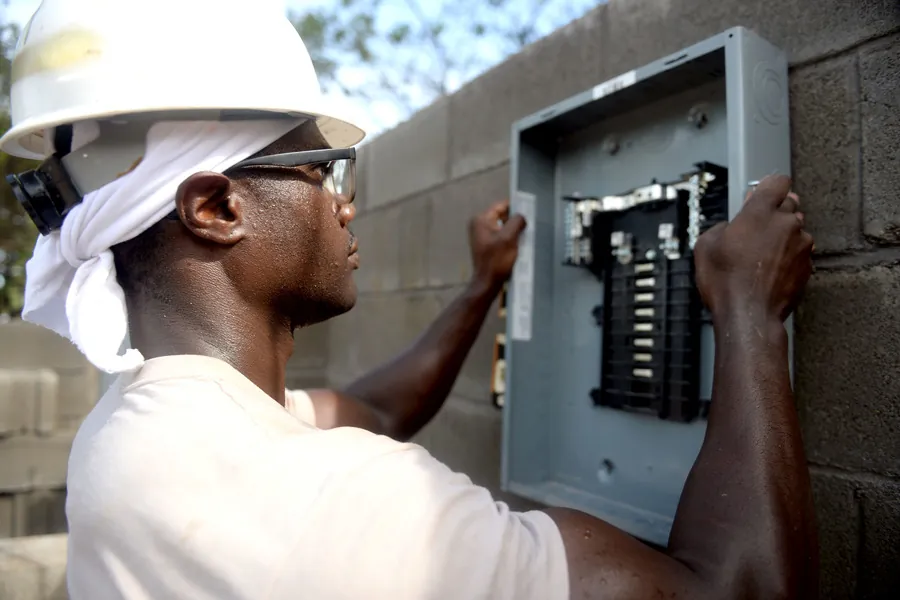
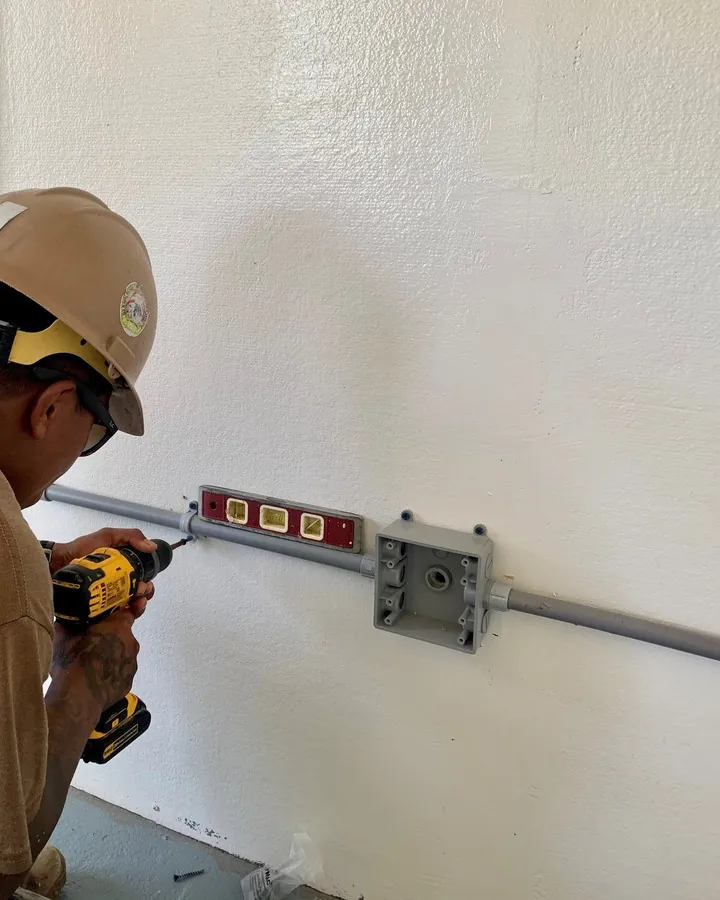
- Photos: Wikimedia Commons, all U.S. government works in the public domain: electrician wiring a panel board (U.S. Navy, Seaman Albert Hernadezfuentes, 2023), breaker panel set in a block wall (U.S. Air Force, Capt. David Murphy, 2015) and conduit strap and box (U.S. Navy, NMCB-5, 2020). Not MDL jobs; appearance of U.S. military personnel does not imply endorsement.


Next steps
Related services
Commercial services hub
Commercial electrical and HVAC requests in one place: heating, cooling, boiler and electrical for the same building.
Learn moreElectrical repair
Breaker trips, dead outlets, flickering lights and partial power traced from the symptom before a part is replaced.
Learn morePanel upgrades
Load, capacity, service rating, permits, PSE&G coordination and inspection in one written scope.
Learn moreEmergency electrician
The urgent path for a hot device, repeated immediate trips or a burning smell without visible fire.
Learn moreRequest service
Send MDL the service, town, and best callback number.
Use the form for planned service or call for urgent electrical, heating, or cooling help.