
Commercial boiler repair · Apartment buildings and businesses
Commercial boiler repair in Essex, Morris and Union County, NJ
Boiler repair for apartment buildings, condominiums, houses of worship, schools, offices, restaurants and stores. MDL Electric Cooling & Heating repairs steam boilers, services commercial boilers and handles the electrical side, from West Orange across Essex, Morris and Union County.
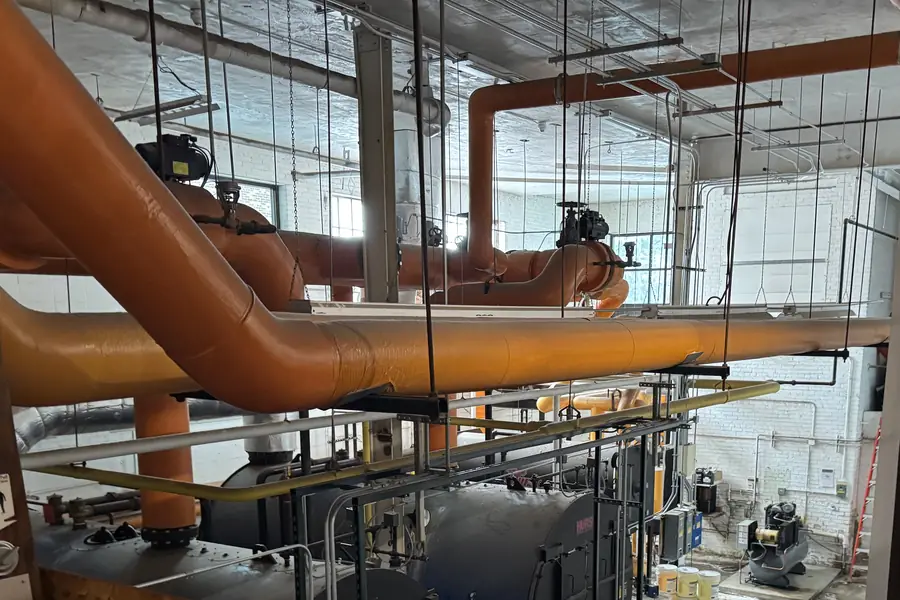
The short answer
A cold building starts at the boiler, its controls or the power that runs them.
What MDL does. MDL repairs steam boilers and services commercial boilers, the same boiler service it publishes on its commercial HVAC page. MDL confirms the service boundary after reviewing the building and equipment.
Who this page is for. Property managers, building owners, landlords of buildings with three or more apartments, condominium associations, houses of worship, schools, offices, restaurants and stores heated by a boiler. A boiler in a one- or two-family home has its own page: boiler repair and service.
Both trades in one request. MDL Electric Cooling & Heating is an electrical contractor as well as a heating and cooling contractor, so the burner circuit, the controls, the pumps and the boiler switch are checked by the same company as the boiler (electrical side).
Apartment buildings carry a heat rule. From October 1 to May 15, New Jersey requires 68°F by day and 65°F at night in every unit of a building with three or more apartments (New Jersey rules). MDL works from 4 Harrison Avenue in West Orange. Call 973.809.2339 or use the request form.
The boiler labelMake, model, input, and whether it is a steam or hot-water boiler.
The controlsAny lockout light or error code, and on steam the gauge glass level and pressure reading.
The buildingBuilding type, number of units or occupants, and who can open the boiler room.
The cold areasWhich floors, apartments or zones are cold, and whether hot water is out too.
Steam, hot water, or domestic hot water
Name the system first: steam and hot-water boilers fail in different places.
New Jersey's boiler rules define a heating boiler as a steam boiler operating at 15 psig or less, or a hot-water boiler operating at 250°F or less (N.J.A.C. 12:90-2.1). Domestic hot water for taps is a separate path, even when the boiler makes it.
Scroll sideways to see the whole table.
| System | How it heats | Where a no-heat call usually leads | Photos that help |
|---|---|---|---|
| Low-pressure steam boiler | Boils water; steam rises through the mains to the radiators and returns to the boiler as condensate | Water level and low-water cutoff, the pressure control, the burner, the condensate or boiler feed pump, the main vents | Gauge glass, pressure gauge, boiler label, feed or condensate pump |
| Hot-water (hydronic) heating boiler | Heats water that circulators pump through baseboard, radiators, fan coils or air handlers and back | Circulators and their relays, zone valves, the temperature limit, system pressure, air in the piping | Boiler label, pressure and temperature gauge, circulators, zone valves |
| Domestic hot water | A separate water heater, an indirect tank, or a coil inside the boiler | Whether the boiler or a separate heater makes the hot water; MDL routes it as its own job | Water heater or tank label and its controls |
The no-heat call
What MDL checks when a commercial boiler stops heating.
In the order a no-heat call usually runs. The list says where MDL looks; the diagnosis decides the repair.
Scroll sideways to see the whole table.
| Where the fault can be | What MDL checks |
|---|---|
| Power and switches | The boiler's breaker, its service switch and any emergency shut-off switch at the boiler-room door, fuses, and the control transformer: whether the burner and controls have power, and why it was lost |
| Call for heat | Thermostats, an outdoor reset or building controller, and timers: whether anything is asking the boiler to run, the setpoints and schedule, and any alarm |
| Low-water cutoff | On a steam boiler it cuts the fuel when the water falls to the lowest visible part of the gauge glass. MDL checks the water level, why water was lost, and whether the cutoff and its wiring work |
| Pressure or temperature limit | The steam pressure control cuts the fuel at its operating limit, below the boiler's maximum. MDL checks the setting, the control and the line it reads pressure through; on hot water, the temperature limit |
| Burner and ignition | A lockout on the flame safeguard, ignition, flame sensing, the gas or oil supply to the burner, and the burner motor |
| Circulators and zone valves | On hot water: pump motors and couplings, the relays that start them, and zone valves and their end switches |
| Condensate and feed pumps | On steam: the pump, its float switch and receiver tank, and whether water is coming back to the boiler |
| Venting and combustion air | The flue connection, draft and combustion air openings around the boiler |
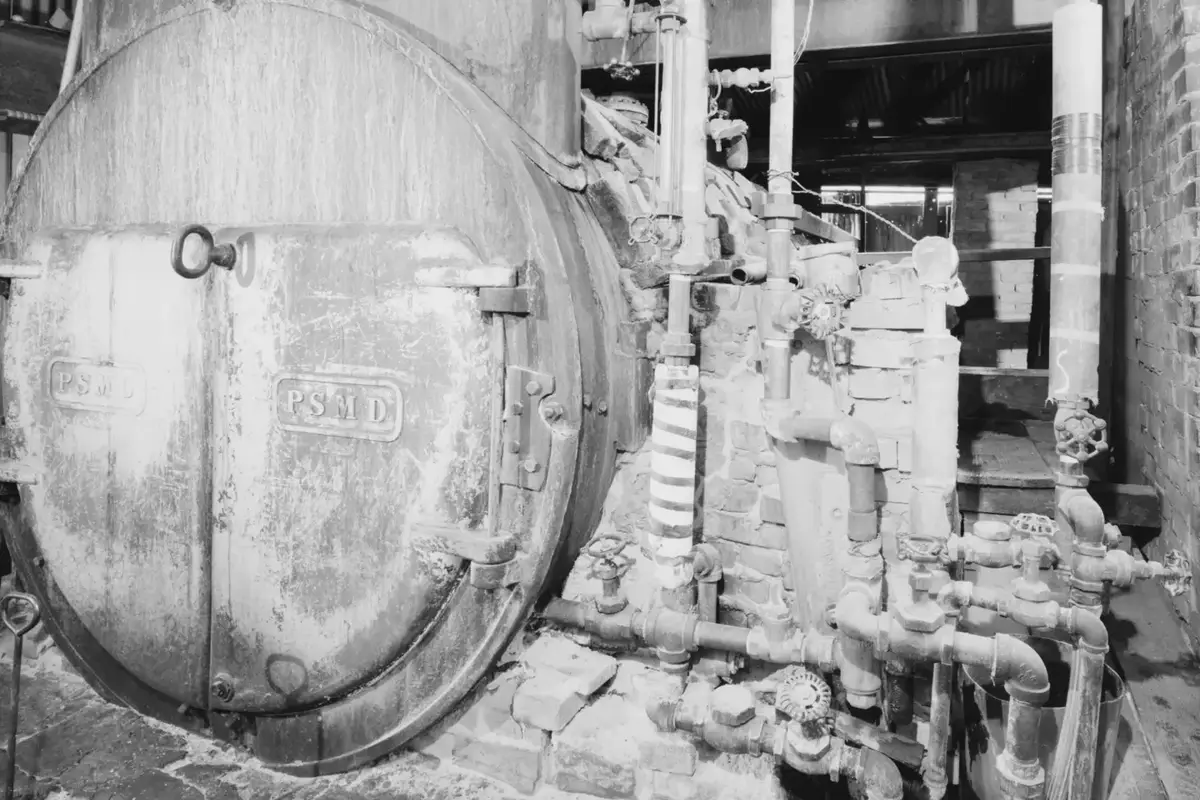
- Read the sight glass. On a steam boiler, note where the water sits in the gauge glass: normal, low, empty or bouncing. The low-water cutoff acts at the lowest visible part of the glass.
- Read the gauges. Note the pressure reading on a steam boiler, or the pressure and temperature on a hot-water boiler, while it runs or tries to.
- Note the lights. A lockout light, an error code on a control or a tripped reset button tells MDL which control stopped the burner.
- Look, do not adjust. Do not add water to a hot boiler, open valves or press a reset more than once; a repeated lockout needs a diagnosis.
Smell gas, or a carbon monoxide alarm is sounding: leave the building first and call 911 or the gas utility from outside. MDL's boiler service page lists the PSE&G steps. Permit rules for boiler repairs and replacements are on the commercial HVAC page.
The electrical side
A boiler that will not fire can have an electrical fault, not a boiler fault.
The burner, the controls and the pumps of a boiler plant run on the building's electrical supply. MDL is an electrical contractor as well as a heating and cooling contractor, so it can trace the fault on both sides of the boiler-room wall.
- The burner needs power. The burner motor, ignition and flame safeguard all run on the boiler's circuit. No power, no fire.
- Controls run on low voltage. Thermostats, zone controls and many limits run through a control transformer and relays. One failed part stops the whole call for heat.
- Pumps are motors. Circulators, condensate pumps and boiler feed pumps each have a motor, a relay or starter, and a circuit. A pump that does not start looks like a cold building.
- Switches get turned off. Check the boiler's service switch and any emergency shut-off switch at the boiler-room door before calling. A switch turned off by mistake stops the boiler as surely as a failed part.
- A breaker that trips again is a fault. Do not keep resetting it. MDL's electrical repair page explains why, and the commercial electrician page covers the rest of the building's wiring.
New Jersey rules
The heat rule for apartment buildings, and the state boiler inspection rules.
Read November 14, 2026 from the official texts: the Regulations for Maintenance of Hotels and Multiple Dwellings, N.J.A.C. 5:10, NJ Department of Community Affairs (subchapter 14 as amended August 7, 2023), and the Boiler, Pressure Vessel and Refrigeration Act and N.J.A.C. 12:90, NJ Department of Labor. Your town's housing office and the state Bureau of Boiler and Pressure Vessel Compliance enforce them and decide edge cases.
Heat in apartment buildings (multiple dwellings)
Scroll sideways to see the whole table.
| Topic | What the rule says | Section |
|---|---|---|
| Which buildings | A multiple dwelling is a building with three or more dwelling units occupied, or intended to be occupied, by three or more persons living independently of each other. It also covers ten or more two-unit buildings on one parcel, or contiguous parcels, under common ownership. | 5:10-2.2 |
| Heating season | October 1 to the next May 15. | 5:10-14.4(a) |
| Day | At least 68°F in every unit of dwelling space and every habitable room, 6:00 A.M. to 11:00 P.M. | 5:10-14.4(a) |
| Night | At least 65°F, 11:00 P.M. to 6:00 A.M. | 5:10-14.4(a) |
| Even heat | The system must hold the minimum in all habitable rooms without heating adjoining rooms more than five degrees above it. | 5:10-14.4(a) |
| The owner's duty | The owner supplies the fuel or energy and keeps the heating system in good operating condition, whatever a lease says, unless a tenant agrees in writing to heat a unit served by its own separately billed heating equipment. | 5:10-14.4(c) |
| Upkeep | Heating equipment is kept in good operating condition, free of defects, corrosion and deterioration. A pressure relief valve discharges through a pipe pointed at the floor and ending within 20 inches of it, or as the plumbing subcode allows. | 5:10-14.3(a) and (e) |
| Annual inspection | The heating system is inspected every year: to confirm it is maintained, to find and remove hazards, and to confirm it can meet the heat requirement. | 5:10-14.7 |
State boiler inspection and certificate
Scroll sideways to see the whole table.
| Topic | What the rule says | Section |
|---|---|---|
| Which boilers are left out | Low-pressure steam boilers (relief valves set at 15 psig or less) and hot-water boilers (160 psig or less, and 250°F or less) when they serve dwellings of fewer than six family units or with accommodations for fewer than 25 persons; and any boiler under 10 square feet of heating surface or under 10 kilowatts or 40,000 BTU per hour of input. | 12:90-4.1(b) |
| What that means for owners | The exclusion is written for small dwellings. A heating boiler in a building of six or more apartments, or in a building that is not a dwelling, is not in it, so the inspection rules below apply unless the boiler is under the size limits. | 12:90-4.1(b) and 4.10(b) |
| How often | At least once a year, at 12-month intervals, as complete an internal and external inspection as construction permits. Hot-water heating boilers: internal every 24 months, external every 12 months. | 12:90-4.10(a) |
| Who inspects | A state inspector, or an insurance company inspector the state has certified. | N.J.S.A. 34:7-14 |
| Certificate | The boiler is registered with the state; its registration number is attached to the front of the boiler, plainly visible; the State boiler inspection certificate is framed and posted in the boiler room, engine room, engineer's office or plant office. | 12:90-4.14 |
| Low-water cutoff, larger hot-water boilers | An automatically fired hot-water boiler above 400,000 BTU per hour of input needs an automatic low-water fuel cutoff designed for hot-water service (not required for hot water supply boilers). | 12:90-4.5(d) |
| Welded repairs | Welded repairs to a boiler are done only by a contractor holding a National Board or New Jersey repair authorization, with the plans approved first by a commissioned inspector. | 12:90-4.8(b) and (d) |
| Penalties | An owner, lessee or operator who uses a boiler in violation is liable to $500 to $10,000 for a first offense and $500 to $25,000 for each later offense. | N.J.S.A. 34:7-26 |
What to send
Six details that let MDL scope a commercial boiler repair.
Safe photos and a plain description are enough to start. Do not open panels, touch hot piping, drain water or change a gas or oil control to collect them.
01
The building
Address and ZIP code, building type, and the number of apartments, tenants or occupants.
02
The boiler label
A photo of the nameplate: make, model, input, and whether it is steam or hot water.
03
Piping and controls
A photo of the piping, pumps and controls around the boiler, and of the inspection certificate if one is posted.
04
What it shows
Any lockout light or error code; on steam, the gauge glass level and the pressure reading.
05
Where it is cold
Which floors, apartments or zones are cold, since when, and whether hot water is out too.
06
Access and approval
Who can open the boiler room, the hours the building can be entered, and who approves the work.
Where MDL works
Commercial boiler repair in Essex, Morris and Union County, from a West Orange base.
MDL works from 4 Harrison Avenue in West Orange. These are the towns in the three counties that have their own MDL service-area page. Whatever the town, include the exact address and ZIP code so coverage can be confirmed for the building.
Morris County
Union County
Commercial boiler repair
Boiler down in an apartment building or a business? Call MDL.
Call or send the form with the address, the building type and number of units, the boiler label, what the controls show, and which areas are cold. The form opens with Commercial Heating / HVAC chosen; pick Rental / Managed Property or Business / Commercial as the property type.
Commercial boiler questions
Straight answers on heat rules, inspections, shutdowns and what to send.
Rules come from the New Jersey Department of Community Affairs and Department of Labor texts named on this page. MDL publishes no commercial prices, and this page lists none.
What does commercial boiler repair cover?
On this page, commercial means a boiler that heats something other than a one- or two-family house: an apartment building of three or more units, a condominium, a house of worship, a school, an office, a restaurant or a store. MDL repairs steam boilers and services commercial boilers. MDL confirms the service boundary after reviewing the building and equipment.
How warm does a New Jersey landlord have to keep an apartment building?
From October 1 to May 15, every unit and every habitable room must be kept at 68°F or more from 6:00 A.M. to 11:00 P.M. and at 65°F or more from 11:00 P.M. to 6:00 A.M. (N.J.A.C. 5:10-14.4). The rule covers multiple dwellings, which the state defines as buildings with three or more dwelling units occupied by people living independently (N.J.A.C. 5:10-2.2). The owner must supply the fuel and keep the heating system in good operating condition whatever the lease says, unless a tenant has agreed in writing to heat a unit that has its own separately billed heating equipment.
Does a commercial boiler need a state inspection certificate in New Jersey?
It depends on the building and the boiler's size. Low-pressure heating boilers (steam boilers with relief valves set at 15 psig or less, hot-water boilers at 160 psig or less and 250°F or less) are left out of the state boiler rules only when they serve dwellings of fewer than six family units or with accommodations for fewer than 25 persons, or when they are very small: under 10 square feet of heating surface, or under 10 kilowatts or 40,000 BTU per hour of input (N.J.A.C. 12:90-4.1). A boiler the rules cover is registered with the state, carries its registration number on the front, and has its State boiler inspection certificate framed and posted in the boiler room or office (N.J.A.C. 12:90-4.14). The Department of Labor's Bureau of Boiler and Pressure Vessel Compliance, (609) 292-2921, confirms whether a particular boiler is covered.
How often is a commercial boiler inspected in New Jersey?
A boiler covered by the state boiler rules is inspected at least once a year, at 12-month intervals, as completely inside and out as its construction allows. Hot-water heating boilers are inspected internally every 24 months and externally every 12 months (N.J.A.C. 12:90-4.10). The inspector works for the state or for an insurance company whose inspectors the state has certified (N.J.S.A. 34:7-14). Separately, the heating system in a multiple dwelling must be inspected every year under the state's housing maintenance rules (N.J.A.C. 5:10-14.7).
Why does the steam boiler in an apartment building keep shutting off?
A steam boiler shuts its burner off on purpose when a control trips. The low-water cutoff stops the fuel when the water falls to the lowest visible part of the gauge glass, and the pressure control stops it at its operating limit, as the New Jersey Department of Labor's low pressure steam boiler checklist sets out. A flame safeguard locks the burner out after a failed ignition. MDL checks why the control tripped, including the water feed, the condensate or boiler feed pump and the pressure control, rather than only resetting it.
What should I send with a commercial boiler repair request?
The address and building type; the number of units or occupants; a photo of the boiler's label (make, model, input and whether it is steam or hot water); a photo of the piping and controls around the boiler; any error code or lockout light; on a steam boiler, the gauge glass level and the pressure reading; which floors, apartments or zones are cold and whether hot water is out too; and who can open the boiler room and approve the work. Take photos only where it is safe, and do not open panels or touch hot piping.
Can MDL check the electrical side of the boiler too?
Yes. MDL Electric Cooling & Heating is an electrical contractor as well as a heating and cooling contractor. A boiler's burner, controls, circulators and pumps run on the building's electrical supply, so a tripped breaker, a switch turned off, a failed control transformer or relay, or a pump motor that will not start can look like a boiler failure. One request covers the boiler and the circuit that feeds it.
How much does commercial boiler repair cost?
MDL does not publish commercial prices, and this page lists none. The cost depends on what failed, the boiler type and size, parts availability, access to the boiler room, and whether the work needs a permit or an inspection afterwards. MDL looks at the building and equipment first.
Does MDL repair boilers in one- and two-family homes?
Yes. Home boilers have their own page: MDL's boiler repair and service page covers hot-water, steam and domestic hot water systems in houses. This page is for apartment buildings and businesses.
Which towns does MDL cover for commercial boiler repair?
MDL works from 4 Harrison Avenue in West Orange across Essex, Morris and Union County, including West Orange, Montclair, South Orange, Maplewood, Livingston, Newark, Morristown, Chatham, Summit and Union Township. Send the exact address and ZIP code so coverage can be confirmed for the building.
Sources
Where the rules on this page come from.
All read November 14, 2026.
- N.J.A.C. 5:10, Regulations for Maintenance of Hotels and Multiple Dwellings, NJ Department of Community Affairs (published through August 7, 2023, the date subchapter 14 was last amended): definition of a multiple dwelling (5:10-2.2), standards of maintenance (14.3), minimum temperature and the owner's duty (14.4), annual inspection (14.7).
- Boiler, Pressure Vessel and Refrigeration Act, N.J.S.A. 34:7-14 et seq., and N.J.A.C. 12:90, NJ Department of Labor and Workforce Development: inspection of boilers and who inspects (34:7-14), penalties (34:7-26), heating boiler definition (12:90-2.1), scope and exclusions (12:90-4.1), low-water cutoff on larger hot-water boilers (4.5(d)), welded repairs (4.8), inspection intervals (4.10), registration and certificate (4.14).
- Pre-Inspection Checklist for Low Pressure Steam Boilers, NJ Department of Labor, Bureau of Boiler and Pressure Vessel Compliance: the low-water fuel cutoff and pressure operating control requirements, citing ASME Section IV.
- Mechanical Inspection Bureau of Boiler and Pressure Vessel Compliance, NJ Department of Labor: contact, (609) 292-2921.
- MDL's own pages: commercial HVAC and commercial services, for the commercial boiler service and the service boundary MDL publishes.
- Photo: Wikimedia Commons, Boiler room in a high school (Braedencapaul, CC0). Not an MDL job.
- Photo: Wikimedia Commons, Boiler, water level sight-glass to right of boiler, Hull-Oakes Lumber Company, HAER ORE,2-MONR,1-44 (Gary Tarleton, 1997, Historic American Engineering Record, Library of Congress, public domain), cropped. Not an MDL job.
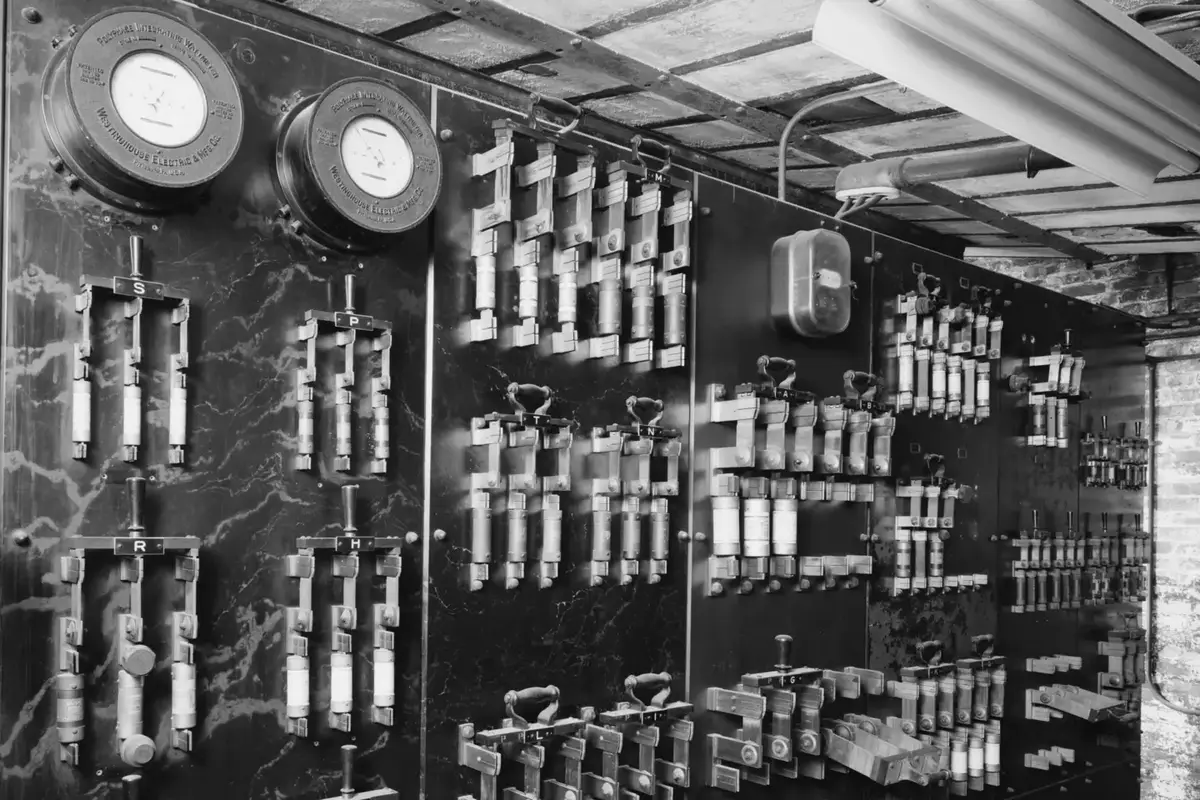
- Photo: Wikimedia Commons, Detail, central electrical control panel, boiler house, American Can Company, HAER MD,4-BALT,125-52 (Historic American Engineering Record, Library of Congress, public domain), cropped. Not an MDL job.

Next steps
Related services
Commercial HVAC service
Heating, cooling and boiler service for a business or managed property, with New Jersey permit and license rules.
Learn moreBoiler repair for homes
Boiler repair and service in one- and two-family houses, with the steam heat guide.
Learn moreCommercial electrician
Troubleshooting, circuits and panels for the rest of a managed building.
Learn moreCommercial services hub
Electrical and HVAC requests for the same building in one place.
Learn moreRequest service
Send MDL the service, town, and best callback number.
Use the form for planned service or call for urgent electrical, heating, or cooling help.