24/7 electrical, heating, and cooling help across North Jersey

Call 973.809.2339

Smoke & CO alarms · West Orange, Montclair and Essex County

Smoke detector installation in West Orange, NJ: hardwired and CO

In New Jersey, hardwired smoke alarms must be replaced with hardwired alarms, not battery ones, and a one- or two-family home needs a smoke and CO alarm certificate from the town before it is sold or rented. Installed detectors cost about $110 to $410 or more each by HomeGuide's published national range. MDL Electric is a licensed electrical contractor in West Orange: call to ask about your alarms.

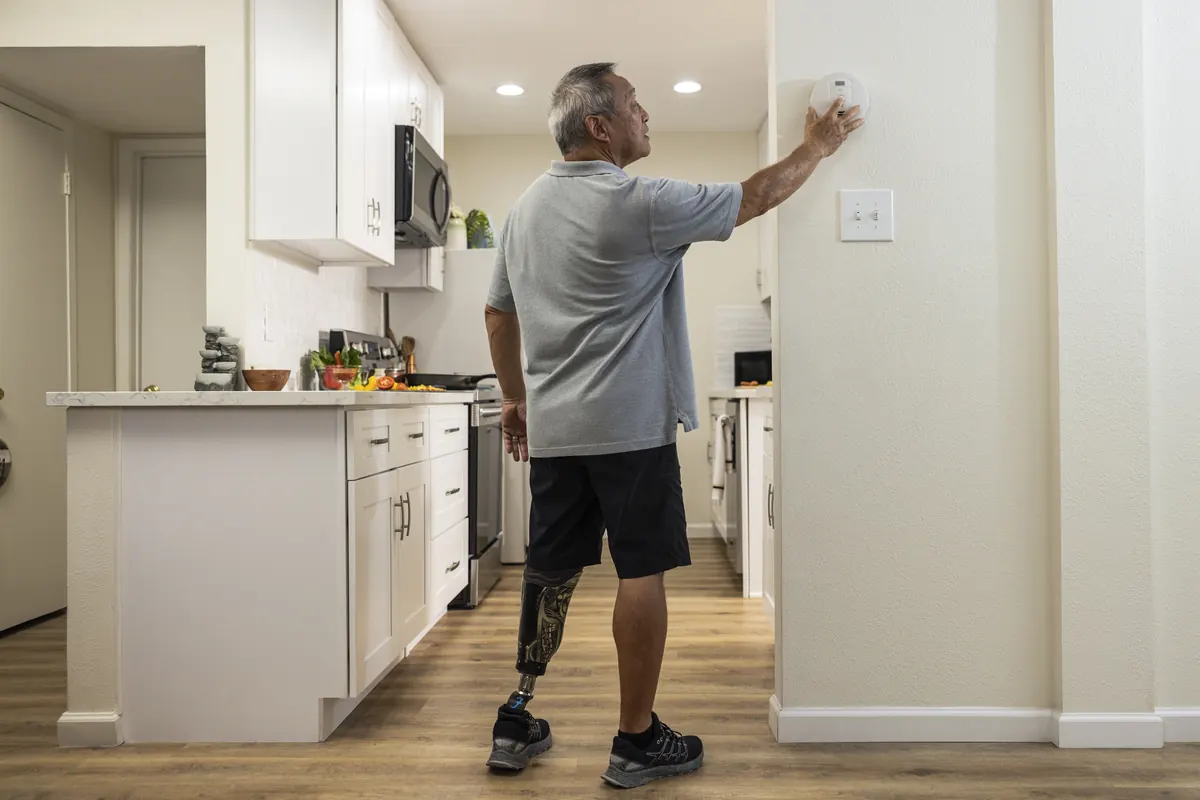
Man pressing the test button on a round smoke alarm mounted on a wall beside a kitchen

The short answer

What New Jersey requires, and when you need an electrician.

When a one- or two-family home in New Jersey is sold or rented, it must have a smoke alarm on each level and outside each sleeping area, and a carbon monoxide alarm near the bedrooms when there is a fuel-burning appliance or an attached garage (N.J.A.C. 5:70-4.19). Battery alarms must be ten-year sealed units. Hardwired alarms that came with the house may not be swapped for battery ones.

Before the home is sold, leased or gets a new occupant, the owner needs a certificate from the town covering the smoke alarms, the carbon monoxide alarms and, where the home has a secondary power source, its warning label (N.J.A.C. 5:70-2.3; P.L. 2025, c.19). That 2025 law took the fire extinguisher out of the state certificate. Replacing old hardwired alarms is electrical work. MDL Electric is a licensed New Jersey electrical contractor (34EI01606200) at 4 Harrison Avenue in West Orange. Call 973.809.2339 to ask about your alarms.

How many alarms, and whereCount them on each floor, the basement and outside the bedrooms.
Hardwired or batterySay which if you know. A hardwired alarm is wired into a household circuit.
The date on the backAlarms more than 10 years past that date need replacing.
Your closing or move-in dateUnder the state fee schedule, the certificate costs more as the date gets closer.

Four kinds of alarm jobs

Which one you have decides who does it and whether it needs a permit.

The permit rules come from the state Uniform Construction Code (N.J.A.C. 5:23-2, NJ Department of Community Affairs), and the town's construction office enforces them.

Replace hardwired

Old hardwired alarms swapped for new ones

Replacing a smoke alarm with a like device is ordinary maintenance, with no permit (5:23-2.7). The new alarm has to fit the old wiring: Kidde says its adapters work only with the exact model pairs it lists, and the power goes off at the breaker first.

Add hardwired

New wired or interconnected alarms

Installing a new fire detection device in a one- or two-family home is minor work (5:23-2.17A). The town is told before work starts, the permit application follows within five business days, and the inspection comes within three business days of the request.

Battery

Ten-year sealed battery alarms

Installing battery-powered smoke alarms is ordinary maintenance, with no permit (5:23-2.7). In New Jersey they must be ten-year sealed units listed to UL 217, and they may not replace hardwired alarms that came with the house.

Carbon monoxide

CO alarms near the bedrooms

Installing battery or plug-in CO alarms is ordinary maintenance, with no permit (5:23-2.7). A combination smoke and CO alarm puts both in one unit, at $140 to $360 or more installed by HomeGuide's range.

New Jersey rules

The state rules for smoke and CO alarms in one- and two-family homes.

From the New Jersey Uniform Fire Code and P.L. 2025, c.19, read October 19, 2026. The state's matching rewrite of the fire code rules is still proposed, per the Division of Fire Safety's January 13, 2026 bulletin. Your town's fire official or construction office enforces them and may ask for more.

Scroll sideways to see the whole table.

State rules for one- and two-family homes. Sources: N.J.A.C. 5:70-4.19, 5:70-2.3, 5:70-2.9, N.J.S.A. 52:27D-198.3, P.L. 2025, c.19 and the DCA bulletin of January 13, 2026.
TopicWhat the rule saysSection
Where smoke alarms goOn each level, and outside each separate sleeping area, located and maintained to NFPA 72. They do not have to be interconnected.5:70-4.19(a), (b)
Battery alarmsTen-year sealed battery single-station alarms listed to UL 217, since January 1, 2019.5:70-4.19(c)
Hardwired alarmsA/C-powered alarms installed with the original construction or a rehabilitation project may not be replaced with battery-powered alarms.5:70-4.19(c)
Carbon monoxideIn the immediate vicinity of the sleeping areas, unless the building has no fuel-burning device and no attached garage. Battery, hardwired or plug-in, listed to UL 2034, installed to NFPA 720.5:70-4.19(d)
Secondary power source labelA home with a secondary power source must have a label within 18 inches of the main electrical panel and the electrical meter, warning of the danger of secondary power sources. The Division of Fire Safety now calls the certificate the certificate of smoke alarms, carbon monoxide alarms and secondary power source identification label compliance.N.J.S.A. 52:27D-198.1, as amended by P.L. 2025, c.19
Fire extinguisherNo longer part of the state certificate. P.L. 2025, c.19, approved February 3, 2025, removed the portable fire extinguisher from N.J.S.A. 52:27D-198.1 and 198.2. Montclair's fire department notes that fire extinguishers are no longer required. West Orange's own CCO inspection list still includes a fire extinguisher in the kitchen area.P.L. 2025, c.19
The certificateNeeded before the home is sold, leased or gets a new occupant. Not transferable. A new application is needed if the change does not happen within six months. No certificate without a UL 2034 CO alarm where one is required.5:70-2.3
State fee$45 more than 10 business days before the change of occupant, $90 at 4 to 10 business days, $161 at fewer than 4. A town with its own fire enforcing agency may set different fees.5:70-2.9(d), (f)
PenaltyAn owner who sells, leases or lets a home be occupied without compliant alarms or the certificate faces a fine of up to $500.N.J.S.A. 52:27D-198.3

Selling or renting

Getting the certificate in four steps.

The same order works for a sale, a new lease or a tenant turnover.

01

Apply early

Under the state schedule the fee is $45 more than 10 business days before closing and $161 inside four days (5:70-2.9(d)). Montclair asks for all documents at least 10 days before closing.

02

Check every alarm

Press each test button. Read the date on the back. Look for a CO alarm near the bedrooms if there is a gas, oil or wood appliance or an attached garage.

03

Fix it before the inspection

Replace alarms past 10 years and any hardwired alarm that fails, with a hardwired one. West Orange notes that when repairs are needed so all alarms sound together, a licensed electrician may be required.

04

Pass, then close within six months

The certificate covers the change of occupancy named on the application. If it slips past six months, apply again (5:70-2.3).

Your town

Who checks the alarms in West Orange, Montclair and the rest of Essex County.

Each town decides which office inspects and what it charges. These are the towns' own documents, read October 19, 2026.

West Orange

Checked in the Certificate of Continued Occupancy

West Orange requires a Certificate of Continued Occupancy before any home is sold or rented: $200 for a single-unit home, $275 for two units, $75 per reinspection. Its own inspection list includes smoke and CO detectors, a fire extinguisher in the kitchen area (a local item; the state certificate dropped it in 2025), exposed wiring and grounded receptacles. The Building Department's smoke and CO sheet places a smoke alarm on the basement ceiling near the stairs, by the first-floor stairway, and in the bedroom hallway no more than 10 feet from any bedroom.

Montclair

Fire Prevention Bureau, from $115 for a sale

Montclair's ordinance O-26-31, adopted August 11, 2026 (notice of adoption), sets the sale certificate fee at $115, $140 or $165 for a one-family home and $135, $170 or $180 for a two-family home, by whether the request comes in more than 10, 4 to 10, or fewer than 4 business days before closing. A rental change of occupancy is $75 per unit. The fire department page still lists $75, so confirm the fee with the bureau, and send documents at least 10 days before closing. Its requirements ask for a certified letter or report from a licensed electrician or licensed alarm technician stating the smoke alarms have been tested and are functioning properly.

Other Essex towns

Ask the town's fire official

In South Orange, Maplewood, Livingston, Verona, Bloomfield, East Orange and Orange, call the town's fire prevention bureau or construction office for its form and fee. The state schedule is $45, $90 or $161, and a town with its own fire enforcing agency may set different fees (5:70-2.9).

Hardwired alarms

Replacing hardwired smoke alarms, the way an electrician checks it.

Hardwired alarms run on a 120-volt household circuit, usually with a battery backup. NFPA's June 2024 report found hardwired alarms operated in 94% of home fires large enough to set them off, against 85% for battery-only alarms (NFPA, Smoke Alarms in US Home Fires).

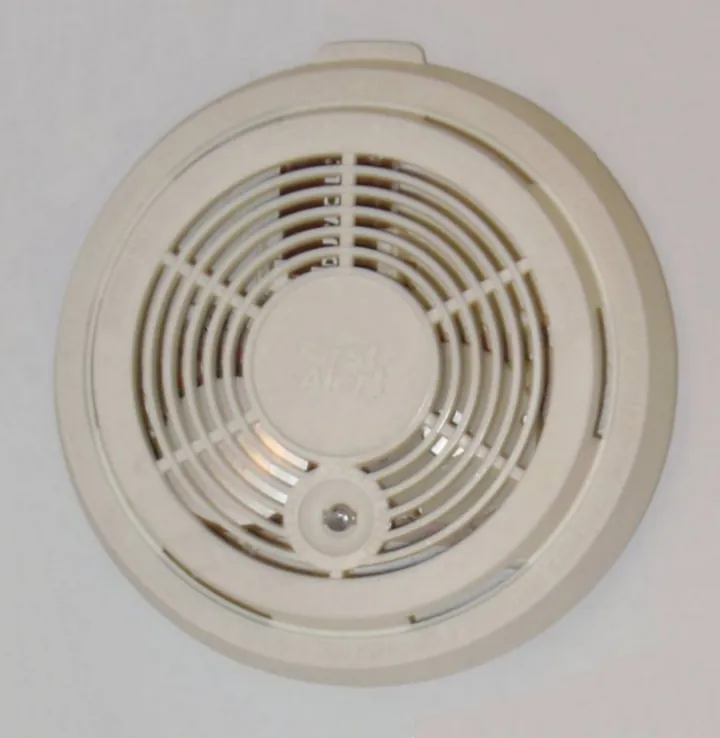
Older round smoke detector on a ceiling, its plastic cover yellowed with age
Stock photo for illustration (Oleg Alexandrov, public domain). An older alarm: check the date on the back.
  • Read the date on the back. NFPA says every smoke alarm must be replaced 10 years after its manufacturing date, and an alarm that keeps chirping after a new battery is at the end of its life.NFPA, smoke alarms
  • Keep it hardwired. An A/C-powered alarm from the original construction may not be replaced with a battery one, and West Orange's Building Department says wireless battery interconnected alarms cannot substitute for hardwired ones.N.J.A.C. 5:70-4.19(c); West Orange Building Department
  • Match the brand on the interconnect. Interconnected alarms should come from the same manufacturer, or they may not sound together. Kidde says that when an older Firex alarm made before 2009 is replaced, every device on its interconnect line has to be replaced too.NFPA; Kidde
  • Check the adapter by model number. Kidde's quick-connect adapters fit only the exact old and new model pairs in its compatibility guide. The connector shape alone does not prove a fit.Kidde 20-9003 adapter
  • Power off, then test them all. Kidde says to turn off the breaker before removing a wired alarm, then restore power and press each test button to confirm every interconnected alarm sounds. Kidde cites an NFPA limit of 12 smoke alarms on one interconnected line.Kidde installation note

Cost

What smoke and CO detector installation costs.

HomeGuide's published national prices per detector, device plus installation. The labor alone runs $100 to $260 or more per unit, and electricians charge $50 to $130 an hour. Market ranges, not MDL prices.

Scroll sideways to see the whole table.

Installed cost per unit, national ranges. Source: HomeGuide (Tara Farmer, June 27, 2024), read October 19, 2026.
DetectorWhat it doesDeviceInstalled, per unit
IonizationQuicker on fast, flaming fires$10 to $40$110 to $290
PhotoelectricQuicker on smoldering fires$20 to $70$120 to $330
Dual sensorBoth sensors in one alarm$40 to $100+$140 to $360+
Combination smoke and COSmoke alarm and CO alarm in one$40 to $100+$140 to $360+
Carbon monoxide onlyCO alarmSlightly less than a combination unit$120 to $360
SmartWi-Fi alerts to a phone$50 to $150$150 to $410+

What changes the price

  • Existing wiring or new wire. Existing wiring can lower the cost of replacing hardwired alarms; running new wire to a spot that never had an alarm takes longer.HomeGuide
  • A new circuit. Some codes call for alarms on their own circuit, and HomeGuide puts a new circuit breaker at about $150 to $300.HomeGuide
  • How many in one visit. Electricians often charge less per unit when several alarms are done at once.HomeGuide
  • The town's certificate. A separate fee to the town, not the installer: $45 to $161 under the state schedule, $115 to $180 for a one- or two-family sale in Montclair, and part of the $200 single-unit CCO in West Orange.N.J.A.C. 5:70-2.9(d); Montclair O-26-31

Carbon monoxide and the heating season

CO alarms belong near the bedrooms of any home that burns fuel.

New Jersey ties the CO rule to fuel-burning appliances and attached garages (N.J.A.C. 5:70-4.19(d)). West Orange's sheet names a furnace and a hot water heater as examples of fuel-burning appliances.

  • Where. Outside the bedroom area, no further than 10 feet from any bedroom, says West Orange's Building Department, plus near any room with a fuel-burning appliance. A finished basement next to the furnace or water heater gets one too.West Orange smoke and CO sheet
  • Which kind. Battery, hardwired or plug-in, listed to UL 2034 and installed to NFPA 720.N.J.A.C. 5:70-4.19(d)
  • How long it lasts. Kidde recommends replacing carbon monoxide and combination alarms every 7 to 10 years, depending on the model.Kidde alarm replacement guide
  • When to check. Daylight saving time ends on Sunday, November 1, 2026. New Jersey's Division of Fire Safety uses that weekend to remind residents to check smoke and CO alarms.NJ DCA, November 1, 2019
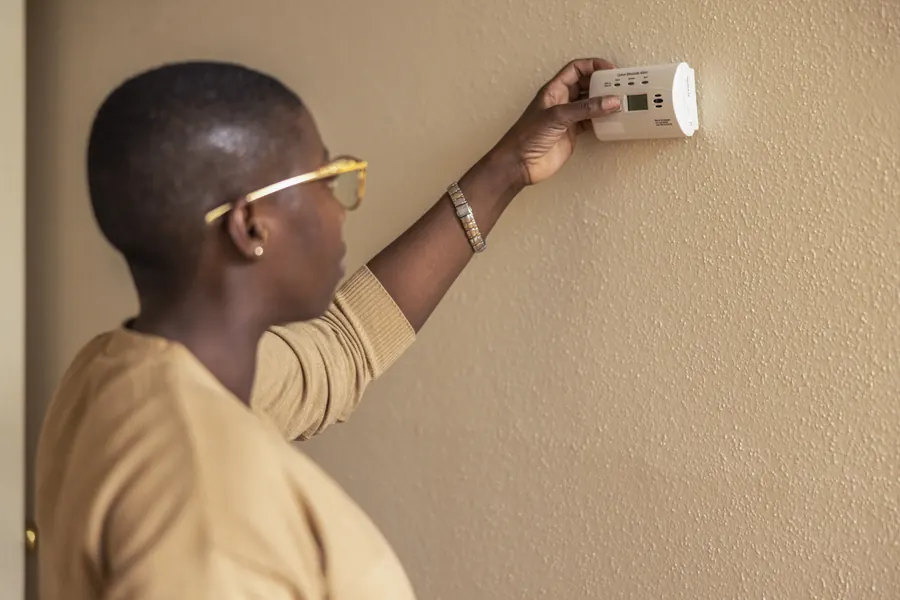
Woman pressing the test button on a carbon monoxide alarm mounted on a beige wall
Stock photo for illustration (U.S. Consumer Product Safety Commission, public domain).

If a CO alarm sounds, leave the house and call 911. MDL services furnaces and boilers; see heating repair once everyone is safe.

Placement

Where smoke alarms go, from NFPA's own guidance.

New Jersey's minimum is one on each level and outside each sleeping area. NFPA recommends more, and its placement rules help an alarm work and stay quiet while you cook.

01

Bedrooms and halls

Inside each bedroom, outside each sleeping area, and on every level, including the basement ceiling at the bottom of the stairs.

02

High on the wall or ceiling

A wall-mounted alarm no more than 12 inches below the ceiling. On a pitched ceiling, within 3 feet of the peak but not in the top 4 inches.

03

Away from the stove and drafts

At least 10 feet from a cooking appliance, and not near windows, doors or ducts where drafts can keep smoke away.

Where MDL works

Based in West Orange, working across Essex County.

MDL works from 4 Harrison Avenue in West Orange and serves West Orange, Montclair, South Orange, Maplewood, East Orange, Livingston, Bloomfield, and the rest of Essex County, including Verona and Orange. Each town has its own fire official and fee, so tell MDL the town when you call.

Smoke and CO alarms

Ask MDL about your alarms.

Call or send the form with your town, how many alarms you have, whether they are hardwired, the date on the back, and your closing or move-in date if you are selling or renting.

Smoke and CO alarm questions

Straight answers on New Jersey rules, the certificate, and cost.

Rules are quoted from the official texts linked above. Prices are published market ranges, not an MDL quote.

Do I need hardwired smoke detectors to sell a house in New Jersey?

Only if the house already has them. N.J.A.C. 5:70-4.19(c) says A/C-powered smoke alarms installed as part of the original construction or a rehabilitation project shall not be replaced with battery-powered alarms. A house that never had hardwired alarms can pass with ten-year sealed battery alarms listed to UL 217. Either way, the town checks them before it issues the certificate the sale needs.

How long is the New Jersey smoke certificate good for?

Six months. Under N.J.A.C. 5:70-2.3, if the sale, lease or move-in named on the application does not happen within six months, a new application is required, and the certificate cannot be transferred to someone else. Montclair's application says its certificate expires six months after the fire department inspection.

How much does the smoke and CO certificate cost in New Jersey?

It depends on the town and on how early you apply. The state fee schedule in N.J.A.C. 5:70-2.9(d) is $45 when the request comes in more than 10 business days before the change of occupant, $90 at 4 to 10 business days, and $161 at fewer than 4. A town with its own fire enforcing agency may set different fees by ordinance. Montclair's ordinance O-26-31, adopted August 11, 2026, charges $115, $140 or $165 for a one-family sale and $135, $170 or $180 for a two-family sale (more than 10, 4 to 10, or fewer than 4 business days before closing) and $75 per unit when a rental changes occupants; its fire department page still lists $75. West Orange checks the alarms as part of its Certificate of Continued Occupancy, which costs $200 for a single-unit home and $275 for a two-unit home.

Can I replace a hardwired smoke detector with a battery one in New Jersey?

No, not where the hardwired alarm came with the original construction or a rehabilitation project. N.J.A.C. 5:70-4.19(c) forbids replacing A/C-powered smoke alarms with battery-powered ones, and West Orange's Building Department puts it plainly: a hardwired system may not be diminished by replacing it with a battery-operated system. A battery system may be upgraded to hardwired.

Do I need a permit to replace smoke detectors in New Jersey?

Not for a like-for-like swap. N.J.A.C. 5:23-2.7 lists replacing a smoke alarm or smoke detector head with a like device, and installing battery-powered smoke alarms or battery or plug-in CO alarms, as ordinary maintenance with no permit. Installing a new fire detection device in a one- or two-family home is minor work under N.J.A.C. 5:23-2.17A: the town is notified before work starts, the permit application follows within five business days, and the town inspects within three business days of the request.

Who can install hardwired smoke detectors in New Jersey?

A licensed electrical contractor or a licensed alarm contractor installing fire alarms, or a single-family homeowner on his or her own home. N.J.A.C. 5:23-2.15 says electrical work shall not be undertaken except by persons licensed to do it, apart from a single-family homeowner on his or her own dwelling. For fire protection equipment it requires a state certification, but not for licensed electrical contractors, licensed alarm contractors installing fire alarms, or homeowners working in their own homes. MDL Electric's New Jersey electrical contractor license is 34EI01606200.

How often should smoke detectors be replaced?

Every 10 years from the date of manufacture, printed on the back. NFPA says all smoke alarms must be replaced 10 years after their manufacturing date, and New Jersey's State Fire Marshal tells residents the same. Kidde recommends replacing its carbon monoxide and combination alarms every 7 to 10 years, depending on the model. An alarm that keeps chirping after a new battery is at the end of its life.

Where do carbon monoxide detectors go in a New Jersey home?

In the immediate vicinity of the sleeping areas, in any one- or two-family home with a fuel-burning appliance or an attached garage (N.J.A.C. 5:70-4.19(d)). They may be battery, hardwired or plug-in, listed to UL 2034. West Orange asks for one outside the bedroom area, no further than 10 feet from any bedroom, plus one near any room with a fuel-burning appliance such as a furnace or water heater.

How many smoke detectors do I need?

New Jersey's certificate rule asks for at least one on each level of the home and one outside each separate sleeping area (N.J.A.C. 5:70-4.19(a)). NFPA recommends more: inside every bedroom too, plus the basement ceiling at the bottom of the stairs. A two-story house with a basement and three bedrooms off one upstairs hall needs at least three alarms under the state minimum, and six under NFPA's advice.

Do smoke detectors have to be interconnected in New Jersey?

Not for the resale certificate: N.J.A.C. 5:70-4.19(b) says the alarms shall not be required to be interconnected. An interconnected system that is already there has to keep working, though, and NFPA recommends interconnection because when one alarm sounds, they all sound. Interconnected alarms should come from the same manufacturer, or they may not sound together.

How much does smoke detector installation cost?

HomeGuide's published national range is $110 to $410 or more per detector, installed, and $100 to $260 or more for the labor alone, with electricians at $50 to $130 an hour. A combination smoke and CO alarm runs $140 to $360 or more installed. These are market ranges, not MDL prices. HomeGuide notes that existing wiring can lower the cost of replacing hardwired alarms.

How do I ask MDL about my smoke and CO alarms?

Call 973.809.2339 or send the form on this page with your town, how many alarms you have, whether they are hardwired, the date printed on the back, and your closing or move-in date if you are selling or renting. MDL Electric is a licensed New Jersey electrical contractor at 4 Harrison Avenue in West Orange and also services furnaces and boilers.

Sources

Where the rules and numbers on this page come from.

All read October 19, 2026.

Next steps

Related services

Electrical

Electrical services

The full list of MDL's electrical work: repairs, circuits, panels, EV chargers, generators, and renovations.

Learn more
Electrical

Electrical repair

Breakers that trip, dead circuits, and wiring problems found at an inspection, diagnosed before anything is replaced.

Learn more
Heating

Heating repair

Furnace and boiler service for the fuel-burning appliances that make a CO alarm necessary.

Learn more
Essex

Essex County service area

The Essex County towns MDL serves from its West Orange base.

Learn more

Request service

Send MDL the service, town, and best callback number.

Use the form for planned service or call for urgent electrical, heating, or cooling help.