
Resistive load bank
- Tests the set to 100 percent of nameplate kW
- Loads the cooling, fuel and exhaust systems fully
- Reaches only 80 percent of nameplate kVA
- Presents a unity (1.0) power factor
Load bank testing · Emergency and standby generators
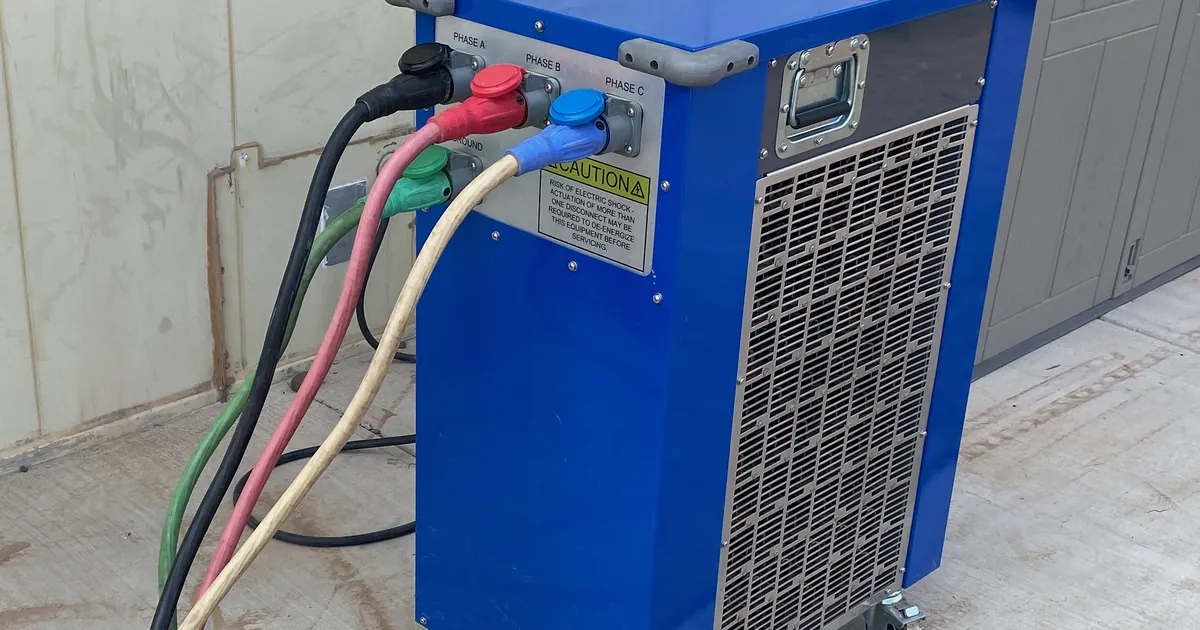
MDL Electric Cooling & Heating does generator load bank testing for buildings in Essex, Morris and Union counties, New Jersey. That means nursing homes, medical buildings, apartment buildings, schools, offices, data rooms and municipal buildings. The test puts a measured load on the generator and records how it holds up.
Why buildings book this test
What MDL does. MDL does generator load bank testing for commercial standby and emergency generators. It also installs and services commercial standby generators. MDL confirms the scope after checking the generator's nameplate, its test records and where a load bank can connect.
Who books it. Nursing homes and assisted living. Outpatient and medical buildings. Apartment buildings with elevators and fire pumps on emergency power. Schools, offices, data and telecom rooms, and municipal buildings across Essex, Morris and Union counties (towns).
Why the building's own load often falls short. A diesel emergency generator must reach 30 percent of its standby nameplate kW on its monthly runs. A set sized for its largest motor or for future growth may never see that load on an ordinary day. The fix the standard allows is a supplemental load bank (the testing calendar).
Start here. MDL works from 4 Harrison Avenue in West Orange. Call 973.809.2339 or use the request form. A new system is on the commercial generator installation page. Repairs and routine service are on generator repair and maintenance.
The testing calendar
NFPA 110 is the standard for emergency and standby power systems. Each row names the edition its numbers come from. The building's code official, insurer or accreditor decides which edition applies to a given building.
Scroll sideways to see the whole table.
| Test | Load and time | Applies to | Source |
|---|---|---|---|
| Monthly exercise, diesel | At least 30 minutes at 30 percent or more of the standby nameplate kW, or at the manufacturer's minimum exhaust gas temperature. Warm-up and cool-down do not count. | Diesel emergency generators | NFPA 110 (2010) 8.4.2 |
| Monthly exercise, gas or propane | The available load for 30 minutes, or until water temperature and oil pressure stabilize | Spark-ignited generators | NFPA 110 (2010) 8.4.2 |
| Annual supplemental load test | 50 percent of nameplate kW for 30 continuous minutes, then 75 percent for 1 continuous hour: 1.5 continuous hours in all | Diesel sets whose monthly runs fall short of the 30 percent rule | NFPA 110 (2019) 8.4.2.3 |
| 36-month test | Continuous for the system's assigned class, up to 4 hours; diesel at 30 percent or more of standby nameplate kW | Level 1 systems, where a failure could cost lives or cause serious injury | NFPA 110 (2010) 8.4.9 |
| Combined test | The first 3 hours at the 36-month minimum, the last hour at 75 percent or more | The 36-month and annual tests run as one | NFPA 110 (2010) 8.4.9 |
| Health care interval | 12 generator tests a year, 20 to 40 days apart | Health care facilities under NFPA 99 | NFPA 99 (2012) 6.4.4.1.1.4(A) |
| New Jersey annual test | At least once a year, to the manufacturer's specifications, under anticipated load; transfer in 10 seconds or less | Required emergency generators | IFC 1203.4.2.1 as added by N.J.A.C. 5:70-3.2 |
Table sources, read November 16, 2026: Minnesota Department of Health (citing NFPA 110, 2010, and NFPA 99, 2012; revised June 2024), the Generac white paper (quoting NFPA 110, 2019, 8.4.2.3) and N.J.A.C. 5:70-3.2.
Wet stacking
NFPA's annex to the monthly test rule names the problem. "Light loading creates a condition termed wet stacking, indicating the presence of unburned fuel or carbon, or both, in the exhaust system" (NFPA 110, annex A.8.4.2). The 30 percent monthly loading exists to reduce it.
Nursing homes and medical buildings
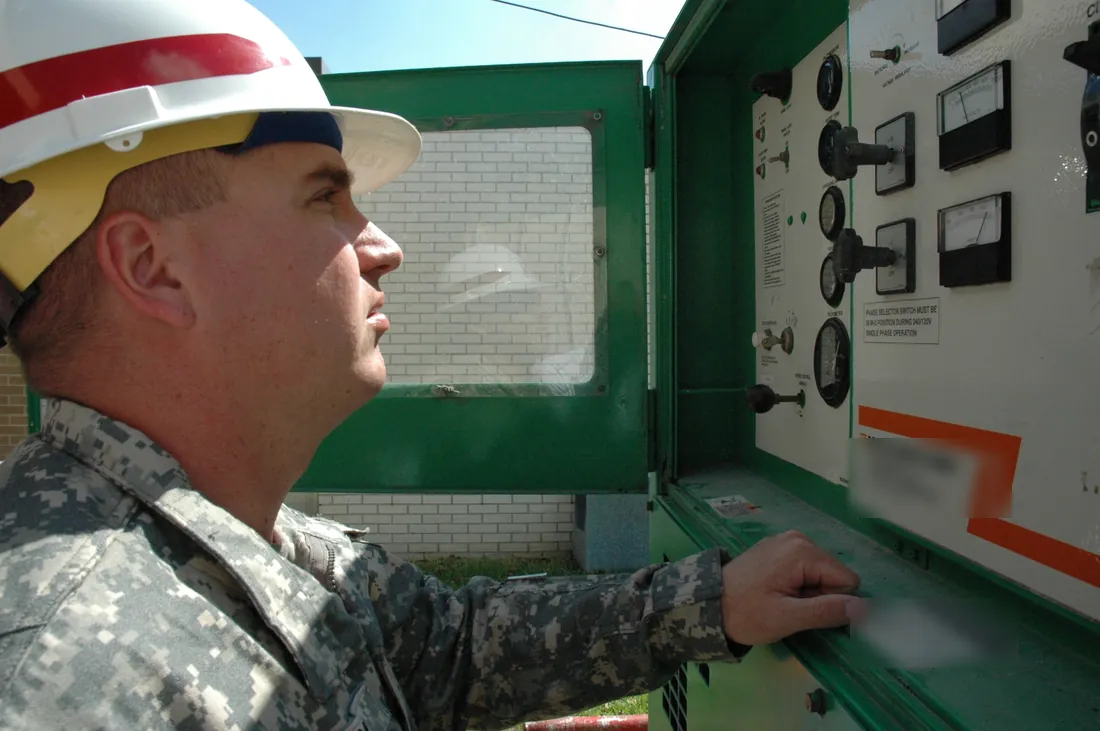
A nursing home or medical building answers to more than NFPA 110. These are the testing lines its surveyors read.
New Jersey's rules for test runs
Read November 16, 2026 from N.J.A.C. 5:70 (the Uniform Fire Code, Legal Information Institute copy), N.J.A.C. 5:23-3.16 (NJ Department of Community Affairs, published through August 17, 2026), the Construction Code Communicator and NJDEP's general permits. Your fire official, construction office and NJDEP decide edge cases.
Scroll sideways to see the whole table.
| Topic | What the rule says | Section |
|---|---|---|
| Which fire code | New Jersey adopts the 2018 International Fire Code as its State Fire Prevention Code, with state changes. | 5:70-3.1(a) |
| Annual generator test | Required emergency generators are tested at least annually, to the manufacturer's specifications, under anticipated load conditions. | IFC 1203.4.2.1, added by 5:70-3.2 |
| Transition test | Once a year, a test confirms the transfer from normal to emergency power takes 10 seconds or less. | IFC 1203.4.2.1 item 1 |
| Fuel on site | An engine-driven emergency generator keeps fuel for at least 2 hours of full-demand operation. | IFC 1203.4.2.1 item 2 |
| Which electrical code | The National Electrical Code 2023, with Tentative Interim Amendments 70-23-1 through 70-23-13, is the state electrical subcode. | 5:23-3.16(a)1 |
| Witnessed test at completion | For emergency and legally required standby systems, the local enforcing agency conducts or witnesses the test of the complete system. Article 702 has no similar requirement. | NEC 700.3(A), 701.3(A), per DCA |
| Test hours | Testing and maintenance hours are capped at the hours registered, never more than 100 a year per generator, on a non-resettable hour meter. | GP-005A and GP-005B |
| Test log | Each test run records the reason, the date with start-up and shutdown times, the total time from the hour meter and the operator's name. Records are kept at least five years. | GP-005A |
| Air quality days | No routine testing when NJDEP forecasts air quality anywhere in New Jersey as unhealthy for sensitive groups or worse. Check after 4:00 p.m. the day before. | GP-005A item 10; NJDEP forecast page |
| Real emergencies | An emergency generator can run whenever it is needed for a true emergency, whatever the air quality. | NJDEP forecast page |
Table sources: N.J.A.C. 5:70-3.1 and 5:70-3.2; N.J.A.C. 5:23-3.16; the Construction Code Communicator, Spring 2021; NJDEP GP-005A, GP-005B and the air quality forecast page.
GP-005A covers emergency generators burning diesel, No. 2 fuel oil or kerosene. GP-005B covers natural gas or propane. A load bank run is a testing run, so it counts toward the registered hours and goes in the log.
On the test day
The order below follows EC&M's procedure for a portable load bank and Generac's white paper. MDL confirms the steps for each building after checking its generator and switchgear.
The standby kW rating, recent monthly logs, the hour meter and the NJDEP registered hours.
NJDEP's air quality forecast, checked after 4:00 p.m. the day before.
A dedicated breaker, bus or connection box, with building loads left connected.
The generator runs until its water temperature stabilizes.
Load is added in increments up to the target, never all at once.
Volts and amps per phase, frequency, kW, oil pressure and temperatures at each step.
Load bank load comes off first, transfer switches go back to normal, and the engine cools down.
Generac recommends a transfer test after the load bank test, to prove the whole system.
Resistive or reactive
The two load bank types load a generator differently. Which one a building needs depends on what its generator runs in an outage.
Before and after
Safe photos and the existing logs are enough to start. Do not open switchgear or the generator's control panel to collect them.
Cost
MDL does not publish prices, and this page lists none. These are the things that move a load bank test quote.
Coverage
MDL works from 4 Harrison Avenue in West Orange. These towns in the three counties have their own MDL service-area page. Whatever the town, include the exact address so coverage can be confirmed for the building.
Generator load bank testing
Call or send the form with the address, the generator's nameplate details and the last monthly logs. The form opens with Generator / Backup Power chosen; pick Business / Commercial or Rental / Managed Property as the property type.
Load bank questions
Each answer comes from the standards, regulations and manufacturer papers listed under Sources. MDL publishes no prices, and this page lists none.
A load bank is a portable or permanent unit that puts an artificial electrical load on a generator and turns the energy into heat. The test steps the generator up to a set share of its nameplate kW and holds it there. Voltage, frequency, amps, kW, temperatures and oil pressure are recorded at each step. It proves the set can carry load the building does not supply on a normal day. MDL Electric Cooling & Heating does generator load bank testing for commercial standby and emergency generators in Essex, Morris and Union counties.
Under NFPA 110, a diesel emergency generator runs monthly for at least 30 minutes at 30 percent or more of its standby nameplate kW, or at the manufacturer's minimum exhaust temperature. A diesel set whose monthly runs fall short gets an annual supplemental load test: 50 percent for 30 minutes, then 75 percent for one hour. Level 1 systems also get a test of up to four hours at least once every 36 months. New Jersey's fire code adds an annual test of required emergency generators under anticipated load.
NFPA 110 (2019 edition, section 8.4.2.3, as quoted by Generac) covers diesel installations that do not meet the monthly loading rule. They are exercised annually with supplemental loads of at least 50 percent of the nameplate kW rating for 30 continuous minutes. Then the load is at least 75 percent for one continuous hour, for at least 1.5 continuous hours in all. The standard also allows a supplemental load bank to meet the 30 percent monthly requirement.
They add layers. CMS requires nursing homes to implement the inspection, testing and maintenance requirements of NFPA 99, NFPA 110 and the Life Safety Code (42 CFR 483.73(e)(2)). NFPA 99 asks for 12 generator tests a year, 20 to 40 days apart. The Joint Commission's EC.02.05.07 lists monthly 30-minute load tests and the annual 50 and 75 percent test when the monthly load falls short. It also lists a four-hour test at 30 percent or more every 36 months.
New Jersey's State Fire Prevention Code adds Section 1203.4.2.1 to the 2018 International Fire Code. Required emergency generators are tested at least annually, to the manufacturer's specifications, under anticipated load conditions. A transition test each year confirms the transfer to emergency power takes 10 seconds or less. Engine-driven emergency generators keep fuel on site for at least two hours of full-demand operation (N.J.A.C. 5:70-3.2).
Not always. NJDEP's general permits bar routine testing and maintenance on days it forecasts air quality anywhere in New Jersey as unhealthy for sensitive groups or worse. NJDEP says to check the forecast after 4:00 p.m. the day before and reschedule if needed. Test runs also count toward the generator's registered testing hours, which can never exceed 100 a year. In a true emergency the generator runs whatever the air quality.
Wet stacking is unburned fuel or carbon, or both, collecting in a diesel's exhaust system after light loading. NFPA's annex says continuous black smoke during a run is the sign, and that the monthly 30 percent loading is meant to reduce it. Generac's white paper says the full-load operation of a load bank test burns off excess soot and moisture. Avtron notes heavy deposits can restrict exhaust flow and reduce output or cause a shutdown.
A resistive load bank can test a generator to 100 percent of its kW rating, but only to 80 percent of its kVA rating, according to load bank maker Avtron. An inductive load bank used with the resistive one brings the power factor to about 0.8 and tests the full kVA rating. Generac names generators that mainly supply motor-driven equipment as the ones a reactive test suits.
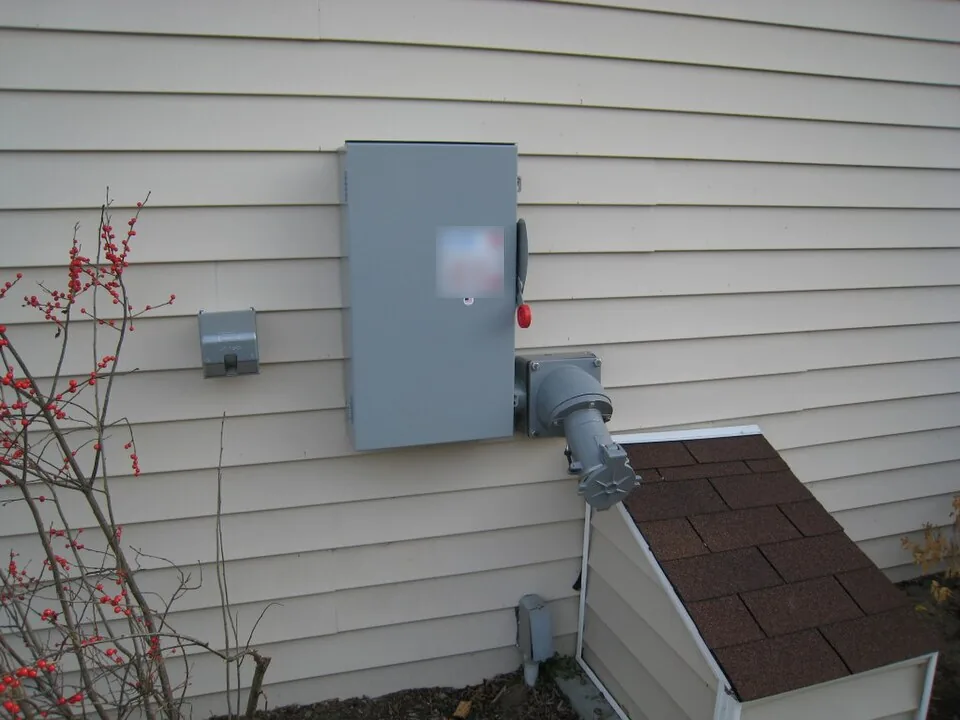
A load bank test is set up so the building does not depend on the test cables. NFPA 110 requires equivalent test loads to be replaced automatically with the emergency loads if normal power fails. EC&M advises connecting the load bank in parallel with the building load, at a dedicated bus or connection box. It also says never to disconnect the generator's output cables during a test. MDL confirms the connection point before the test day.
Send the building address, its use and who approves the work. Add a photo of the generator nameplate showing the standby kW, kVA and voltage. Add recent monthly test logs with the kW reached, the hour meter reading and any NJDEP general permit registration. Say where the load bank breaker, docking station or connection box is, if the building has one. Photos are enough; do not open switchgear to take them.
MDL does not publish prices, and this page lists none. The cost depends on the generator's size, the length of the test, where the load bank can connect, access, and whether a reactive test is needed. The cost section on this page shows one published national range with its source and the date it was read.
MDL works from 4 Harrison Avenue in West Orange. It covers Essex County towns including West Orange, Montclair, Bloomfield, Glen Ridge, Verona, Cedar Grove, Nutley, Belleville, Livingston, Maplewood, South Orange and Short Hills. In Morris County it covers Morristown and Chatham. In Union County it covers Union Township, Summit, Rahway, Kenilworth, Garwood and Fanwood. Send the exact address so coverage can be confirmed.
Sources
All read November 16, 2026. Standards change by edition, so each line names the edition it quotes.
About this page
MDL Electric Cooling & Heating wrote this page. MDL is a licensed electrical contractor and master HVACR contractor at 4 Harrison Ave, West Orange (NJ Electrical Business Permit #34EB01606200; NJ Electrical Contractor #34EI01606200; NJ Master HVACR Contractor #19HC00308200), working across Essex, Morris and Union counties. The page explains generator load bank testing and the rules behind it. It is not legal or engineering advice for a specific building; the fire official, construction office, NJDEP, insurer or accreditor decides what applies. No figure here is an MDL price. The worked kW examples are our arithmetic on the NFPA percentages.
Keep going
A new standby system: the generator, the transfer switch, the fuel, permits and NJDEP air rules.
Learn moreA generator that fails its test, will not start or will not take over, and the upkeep that keeps it ready.
Learn moreFreeze protection circuits for the water and sprinkler piping in the same buildings.
Learn moreTroubleshooting, circuits, panels and switchgear for the rest of the building.
Learn moreRequest service
Use the form for planned service or call for urgent electrical, heating, or cooling help.


