
Commercial generator installation · Businesses and buildings
Commercial generator installation in Essex, Morris and Union County, NJ
Standby power for offices, stores, restaurants, apartment buildings, houses of worship, schools and medical offices. MDL Electric Cooling & Heating installs and services commercial standby generators and, as an electrical contractor, wires the transfer switch and the building side, from West Orange across Essex, Morris and Union County.
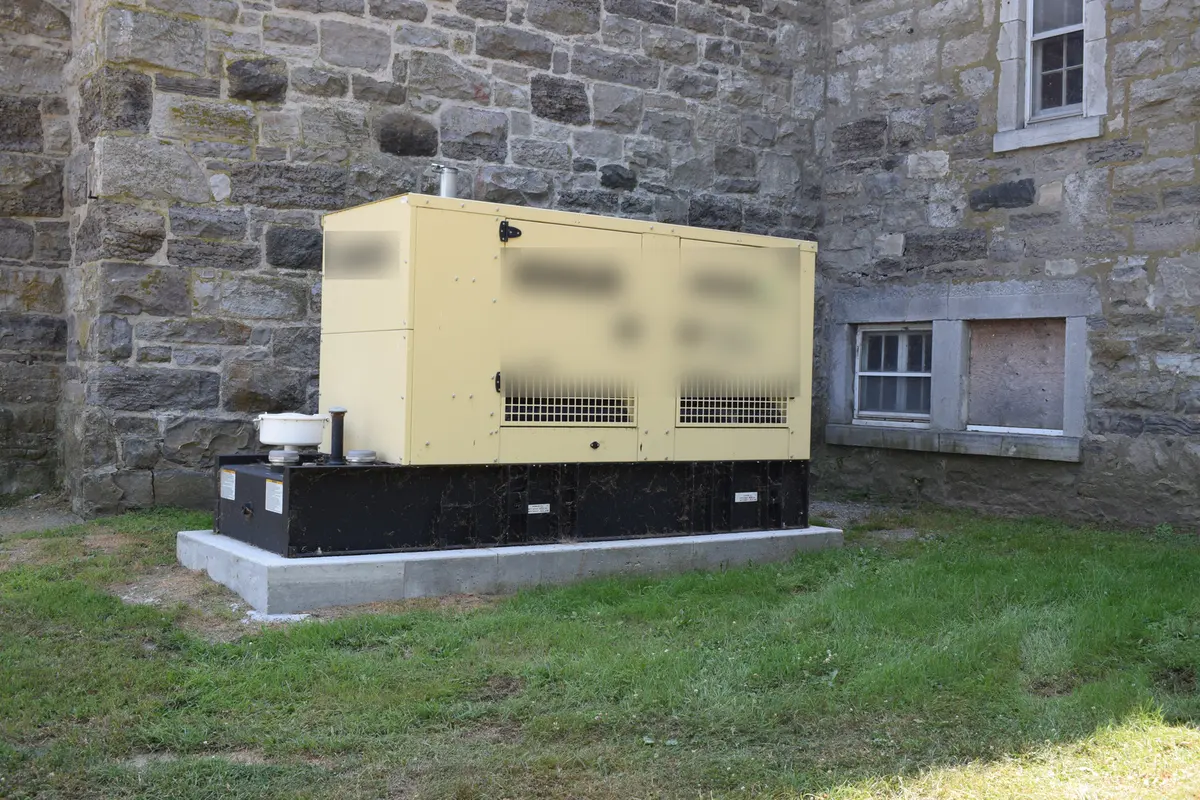
The short answer
A commercial standby system is a generator, a transfer switch, a fuel supply and the wiring that ties them to the building.
What MDL does. MDL Electric Cooling & Heating installs and services commercial standby generators. MDL confirms the scope and the size after reviewing the building and its loads; this page names no size range.
Who this page is for. Business owners, property managers and building owners who need power through an outage: offices, stores, restaurants, apartment buildings, houses of worship, schools and medical offices. A generator for a house has its own page: home generator installation.
Electrical work, done by an electrical contractor. The transfer switch, the feeders and the connection to the building's electrical service are electrical work, which New Jersey's construction code allows only people licensed for it to do in a commercial building (New Jersey rules). MDL is an electrical contractor as well as a heating and cooling contractor, so one company reviews the generator, the transfer switch and the heating and cooling equipment the generator must carry.
Permits come first. A standby generator needs a construction permit before the work starts, and larger engines also need an NJDEP air permit or general permit registration. MDL works from 4 Harrison Avenue in West Orange. Call 973.809.2339 or use the request form.
What must stay onThe equipment and areas that have to run in an outage, and the ones that can go dark.
The electrical serviceA photo of the main panel or switchgear labels and the utility meter, taken without opening anything.
The fuelWhether the building has natural gas service, a propane tank, or a preference for diesel.
The siteWhere a generator could sit outside, and who owns or manages the property.
What the system is
Four parts, and what each one decides about the job.
A standby generator starts when the utility power fails and carries the circuits it was wired to carry. Which circuits, from which fuel, and through which switch, is the design.
Scroll sideways to see the whole table.
| Part | What it does | What MDL reviews |
|---|---|---|
| Generator set | An engine and an alternator in a weather enclosure, set outdoors on a pad or a fuel base | Where it can sit, access for service, and the loads it has to carry |
| Automatic transfer switch | Senses the loss of utility power, starts the generator, moves the selected circuits to it, and moves them back when utility power returns | Which circuits it carries, where it connects to the building's electrical service, and the room it goes in |
| Fuel supply | Natural gas or propane through a gas line, or diesel, No. 2 fuel oil or kerosene stored at the generator | Gas service at the building and the utility application, or where a tank can go |
| Building wiring | Feeders, panels and the circuits that will run on generator power | Panel capacity, which loads go on the generator, and whether any part of the service needs work first |
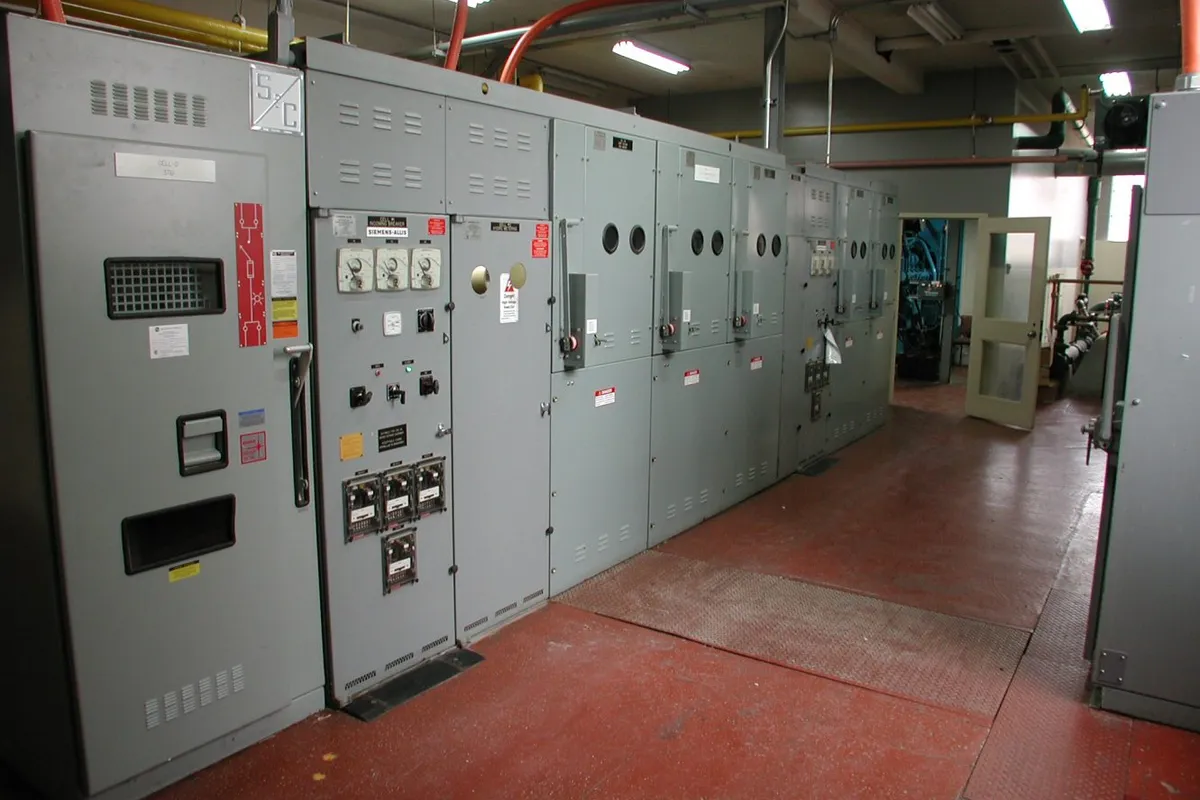
- The switch is where the generator meets the building. The transfer switch connects to the building's electrical service, so its location and the circuits behind it shape the rest of the job.
- No backfeed. PSE&G says that, by law, the customer is responsible for making sure a generator's electricity does not feed back into PSE&G's power lines (PSE&G generator safety). The transfer switch keeps the generator and the utility apart.
- A cut-in card. The New Jersey Department of Community Affairs wrote in 2021 that cut-in cards are required for all generator installations and whenever the meter seal is cut (Construction Code Communicator, Summer 2021).
- Decide the loads first. List what must run in an outage before choosing a generator: the list sets the size, the transfer switch and the wiring.
Emergency, legally required or optional
The electrical code puts standby power in three articles, and tests them differently.
New Jersey enforces the 2023 National Electrical Code as its electrical subcode (N.J.A.C. 5:23-3.16(a)1). Which article applies to a building is set by the codes that require the system and decided by the local construction office; MDL does not classify a building from this page.
Scroll sideways to see the whole table.
| Article | System | Test of the complete system |
|---|---|---|
| 700 | Emergency systems | The local enforcing agency conducts or witnesses it (700.3(A)) |
| 701 | Legally required standby systems | The local enforcing agency conducts or witnesses it (701.3(A)) |
| 702 | Optional standby systems | Article 702 has no similar requirement for the agency to witness the test |
The same Department of Community Affairs article points to NFPA 110, the standard for emergency and standby power systems, where it applies: a remote stop located outside the room or enclosure that holds the generator, and a remote alarm located away from it.
How the job runs
From the list of what must stay on to the first test run.
Eight steps, in the order a commercial generator job usually moves. MDL confirms the scope and the size at step two, after reviewing the building and its loads.
01
What must stay on
The equipment and areas that must run in an outage, and the ones that can go dark until the utility returns.
02
Building review
MDL reviews the electrical service, the panels, the loads, the fuel and where a generator could sit, then confirms the scope and the size.
03
Written scope
The generator, the transfer switch, the wiring, the fuel, the permits, and who handles each one.
04
Permits
A construction permit from the town before work starts, and an NJDEP air permit or general permit registration when the engine needs one.
05
Gas utility or fuel
For natural gas, an application to PSE&G with the equipment's specification sheet; for diesel or fuel oil, storage at the generator.
06
Installation
The generator is set, the transfer switch installed, and the wiring and fuel connection run.
07
Inspection and start-up
The town's inspections and certificate of approval before the equipment is used, then the first start and a transfer test.
08
Service and testing
Scheduled testing and maintenance, within NJDEP's limits on test hours and test days, with a log of every run.
- Sized after review. MDL confirms the generator size after reviewing the building and its loads. This page publishes no size range.
- Size decides the air rules. At 1,000,000 BTU per hour of fuel heat input or more, an emergency generator needs an NJDEP air permit (the rules). The engine's specification sheet shows its rating.
- Gas service takes time. PSE&G says gas generator projects can take up to six weeks, and buildings with four or more residential units apply on the commercial form (PSE&G).
- The town signs off before use. Equipment the construction code controls may not be used until the construction official issues a certificate of approval (N.J.A.C. 5:23-2.8(a)).
New Jersey rules
Permits, approvals, the gas utility and the NJDEP air rules for a standby generator.
Read November 14, 2026 from the official texts: the Uniform Construction Code, N.J.A.C. 5:23-2 and 5:23-3 (both published through August 17, 2026), and the Construction Code Communicator, NJ Department of Community Affairs; NJDEP's engine permit guidance (July 12, 2024), GP-005A and GP-005B (revised September 16, 2019); and PSE&G's own pages. Your town's construction office and NJDEP decide edge cases.
Construction code and the utility
Scroll sideways to see the whole table.
| Topic | What the rule says | Source |
|---|---|---|
| Which electrical code | New Jersey adopts the National Electrical Code 2023, with Tentative Interim Amendments 70-23-1 through 70-23-13, as its electrical subcode. | 5:23-3.16(a)1 |
| Permit before work | It is unlawful to install or alter equipment the code regulates without first applying for and obtaining the required permit. | 5:23-2.14(a) |
| Who may do the work | Electrical, plumbing and heating, ventilating, air conditioning and refrigeration work only by persons licensed to perform it, except a single-family homeowner on his or her own dwelling. The application names the contractor and license number. | 5:23-2.15(b)2 |
| Annual permits | An annual construction permit for an educational, industrial, institutional, mercantile, business or government facility does not cover modification work, other than routine maintenance, that affects life safety systems such as standby generator systems. | 5:23-2.14(c), (e)12 |
| Before it is used | Equipment the code controls may not be used until a certificate of occupancy or certificate of approval is issued by the construction official. | 5:23-2.8(a) |
| Witnessed testing | For emergency and legally required standby systems, the local enforcing agency conducts or witnesses the test of the complete system; Article 702 (optional standby) has no similar requirement. | DCA, Spring 2021 |
| Cut-in card | Cut-in cards are required for all generator installations and whenever the meter seal is cut. | DCA, Summer 2021 |
| Gas service | Residential and commercial customers must apply to PSE&G to add or increase gas service for a gas generator. Buildings with four or more residential units use the commercial form. The application needs the equipment's specification sheet, and a site plan where there is no foundation. Gas generator projects can take up to six weeks. | PSE&G |
| Backfeed | By law, the customer is responsible for making sure a generator's electricity does not feed back into PSE&G's power lines. | PSE&G |
NJDEP air rules for emergency generators
Scroll sideways to see the whole table.
| Topic | What the rule says | Source |
|---|---|---|
| When an air permit is needed | An emergency generator needs an air permit when its maximum rated heat input to the burning chamber is 1,000,000 BTU per hour or greater. | 7:27-8.2(c)1, per NJDEP guidance |
| General permits | GP-005A covers emergency generators burning diesel, No. 2 fuel oil or kerosene; GP-005B covers natural gas or propane. Registering under a general permit satisfies the permit requirement. NJDEP lists a $1,090 fee. | GP-005A, GP-005B; NJDEP general permits page |
| Peak shaving or demand response | A generator under contract to run during demand response periods, for peak shaving or under a similar financial agreement cannot be registered under either general permit. An engine that is not an emergency generator and generates electricity at 37 kW or more needs a case-by-case permit. | GP-005A and GP-005B exclusions; 7:27-8.2(c)21, per NJDEP guidance |
| Testing hours | Testing and maintenance hours per generator are limited to the hours registered, never more than 100 hours a year, counted on a non-resettable hour meter. | GP-005A, GP-005B |
| Records | Each run is logged and the records are kept for at least five years, available to NJDEP on request. | GP-005A, GP-005B |
| Air quality days | No routine testing or maintenance on a day NJDEP forecasts air quality anywhere in New Jersey as unhealthy for sensitive groups, unhealthy or very unhealthy. Check the forecast after 4:00 p.m. the day before. In a true emergency the generator may run regardless of air quality. | 7:27-19.2(d); NJDEP forecast page |
| Construction outages | Running the generator during a power disruption caused by construction, repair or maintenance at the facility is limited to 30 days in a calendar year, not counting normal testing and maintenance. | 7:27-19.1, per NJDEP guidance |
What to send
Six details that let MDL scope a commercial generator.
Safe photos and a plain description are enough to start. Do not open electrical panels or switchgear to collect them.
01
The building
Address and ZIP code, what the building is used for, and the number of tenants, units or occupants.
02
What must stay on
The equipment and areas that must run in an outage: lighting, heating and cooling, refrigeration, pumps, computers, elevators.
03
The electrical service
Photos of the main panel or switchgear labels and the utility meter, with the doors closed.
04
The fuel
Whether the building has natural gas service and where the meter is, or whether a diesel or propane tank is preferred.
05
The site
Photos of where a generator could sit outside, and any existing generator with its label.
06
Approval and timing
Who owns the building, who approves the work, any landlord or association approval, and the target date.
Where MDL works
Commercial generator installation in Essex, Morris and Union County, from a West Orange base.
MDL works from 4 Harrison Avenue in West Orange. These are the towns in the three counties that have their own MDL service-area page. Whatever the town, include the exact address and ZIP code so coverage can be confirmed for the building.
Morris County
Union County
Commercial generator installation
Need standby power for a business or a building? Call MDL.
Call or send the form with the address, what the building is used for, what must stay on, and whether there is gas service. The form opens with Generator / Backup Power chosen; pick Business / Commercial or Rental / Managed Property as the property type.
Commercial generator questions
Straight answers on size, permits, air rules, testing and fuel.
Rules come from the New Jersey Department of Community Affairs, NJDEP and PSE&G texts named on this page. MDL publishes no commercial prices, and this page lists none.
What does commercial generator installation include?
A commercial standby system has four parts: the generator set, an automatic transfer switch, a fuel supply (natural gas, propane, diesel, fuel oil or kerosene) and the wiring that connects it to the building's electrical service. The job runs from a list of what must stay on, through a building review, permits, the gas utility or fuel, installation, inspection and start-up, to scheduled testing. MDL installs and services commercial standby generators and confirms the scope and the size after reviewing the building and its loads.
What size generator does my business need?
That depends on what has to keep running in an outage: lighting, heating and cooling equipment, refrigeration, pumps, computers and anything else the business cannot lose. MDL confirms the size after reviewing the building, its electrical service and those loads, and this page publishes no size range. The size also decides whether the engine needs a New Jersey air permit, so it is settled before anything is ordered.
Do I need a permit to install a commercial generator in New Jersey?
Yes. New Jersey's Uniform Construction Code makes it unlawful to install or alter regulated equipment without first applying for and obtaining a permit (N.J.A.C. 5:23-2.14(a)), and the equipment may not be used until the construction official issues a certificate of approval (N.J.A.C. 5:23-2.8(a)). An annual construction permit does not cover it either: modification work, other than routine maintenance, that affects a standby generator system is not permitted under an annual permit (N.J.A.C. 5:23-2.14(e)12).
Does a commercial generator need an NJDEP air permit?
It depends on the engine. NJDEP's guidance says an emergency generator needs an air permit when its maximum rated heat input to the burning chamber is 1,000,000 BTU per hour or greater (N.J.A.C. 7:27-8.2(c)1). An emergency generator that meets a general permit's conditions can register under it instead of applying case by case: GP-005A for diesel, No. 2 fuel oil or kerosene, and GP-005B for natural gas or propane. NJDEP lists a $1,090 fee for a general permit. A generator run for peak shaving or demand response cannot use those general permits.
When can we run the generator for testing?
Under NJDEP's general permits, testing and maintenance runs are limited to the hours registered for each generator, never more than 100 hours a year, counted on a non-resettable hour meter and logged, with records kept for at least five years. Routine testing is not allowed on a day NJDEP forecasts air quality anywhere in New Jersey as unhealthy for sensitive groups or worse, so the forecast is checked after 4:00 p.m. the day before. In a real emergency the generator runs whenever it is needed, whatever the air quality.
Natural gas or diesel: what changes with the fuel?
A natural gas generator needs gas service sized for it: PSE&G requires residential and commercial customers to apply to add or increase gas service for a generator, asks for the equipment's specification sheet, and says gas generator projects can take up to six weeks. A diesel, fuel oil or kerosene generator stores its fuel on site. Each fuel group has its own NJDEP general permit, GP-005A for distillate fuels and GP-005B for natural gas or propane.
What is the difference between emergency, legally required and optional standby power?
They are three separate articles of the National Electrical Code: Article 700 for emergency systems, Article 701 for legally required standby systems and Article 702 for optional standby systems. The New Jersey Department of Community Affairs notes that for emergency and legally required standby systems, the local enforcing agency must conduct or witness the test of the complete system, while Article 702 has no similar requirement. Which article applies to a building is set by the codes that require the system and decided by the local construction office.
Why use an electrical contractor for a commercial generator?
The transfer switch, the feeders and the connection to the building's electrical service are electrical work, and New Jersey's construction code allows electrical work only by people licensed to perform it, except a homeowner working on his or her own single-family house (N.J.A.C. 5:23-2.15). MDL Electric Cooling & Heating is an electrical contractor as well as a heating and cooling contractor, so the generator, the transfer switch and the heating and cooling equipment the generator must carry are reviewed by one company.
How much does a commercial generator installation cost?
MDL does not publish commercial prices, and this page lists none. The cost depends on the loads the generator must carry, the generator and transfer switch selected, the fuel and the gas service, the distance from the generator to the electrical service, the permits and any work the building's electrical service needs first. MDL reviews the building before it prices the job.
Does MDL install generators for homes?
Yes. Home standby generators have their own page: MDL's generator installation page covers houses, with sizing, permits and costs for a home. This page is for businesses, apartment buildings and other commercial buildings.
Sources
Where the rules on this page come from.
All read November 14, 2026.
- N.J.A.C. 5:23-2, Uniform Construction Code, administration and enforcement, NJ Department of Community Affairs (published through August 17, 2026): use of equipment before approval (2.8(a)), permits and annual permits (2.14), licensed work (2.15(b)2).
- N.J.A.C. 5:23-3, Uniform Construction Code, subcodes, NJ Department of Community Affairs (published through August 17, 2026): the electrical subcode, National Electrical Code 2023 (3.16(a)1).
- Construction Code Communicator, NJ Department of Community Affairs: Spring 2021, "Generators in the NEC and NFPA 110" (Articles 700, 701 and 702 testing, NFPA 110 remote stop and alarm) and Summer 2021, "Approvals for Generator Installations" (cut-in cards).
- NJDEP Bureau of Stationary Sources: Minor facility: when is an engine an emergency generator or a stationary reciprocating engine, and does it need an air permit? (July 12, 2024): N.J.A.C. 7:27-8.2(c)1 and (c)21, the 7:27-19.1 definition.
- NJDEP general permits GP-005A, emergency generators burning distillate fuels and GP-005B, emergency generators burning gaseous fuels (both revised September 16, 2019): fuels, exclusions, 100-hour testing limit, hour meter, records, air quality days; the general permits page ($1,090 fee); air quality forecast for emergency generators (N.J.A.C. 7:27-19.2(d), the 4:00 p.m. check).
- PSE&G: gas generators and hot water heaters (applying to add or increase gas service, up to six weeks) and generator safety (backfeed).
- MDL's own pages: commercial services and commercial electrician, for the commercial request path and the service boundary MDL publishes.
- Photo: Wikimedia Commons, backup power system beside a church in Saint-Anicet, Quebec (Cantons-de-l'Est, 2025, CC0), cropped, brand names blurred. Not an MDL job.
- Photo: Wikimedia Commons, electrical switchgear in a main electrical distribution room (P199, 2006, public domain), cropped. Not an MDL job.
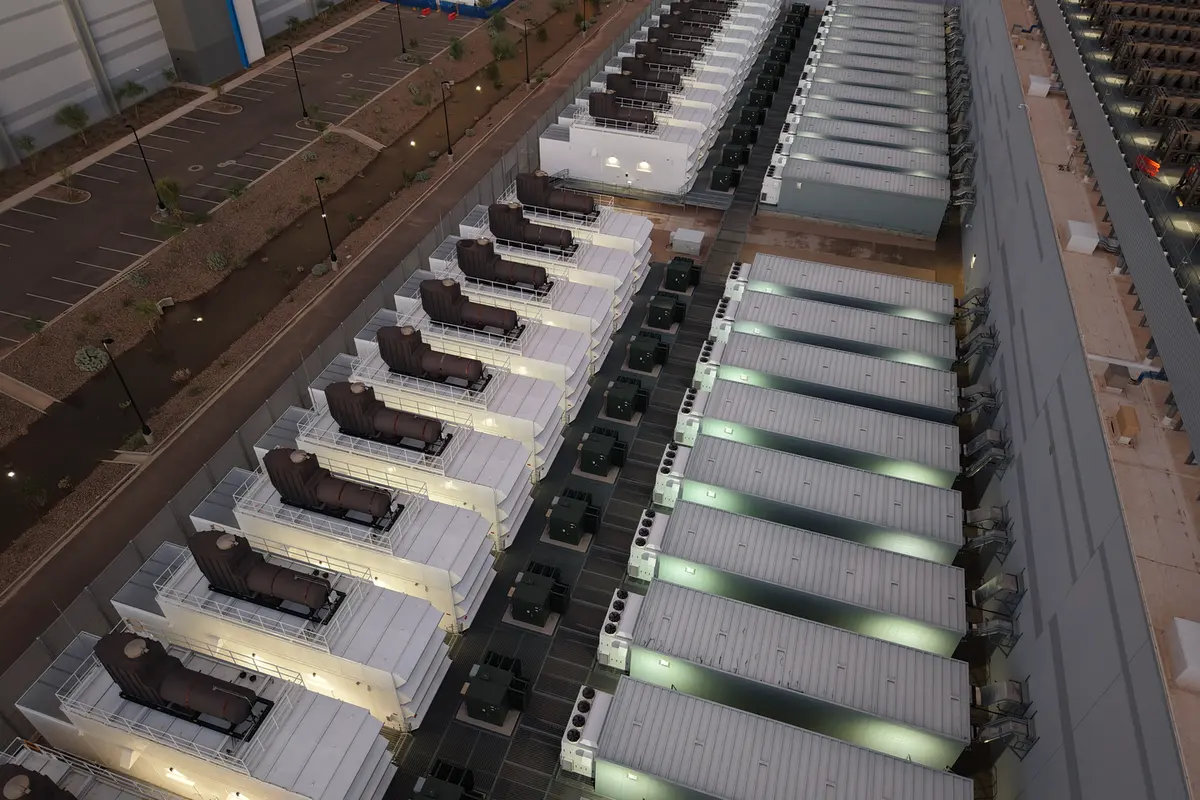
- Photo: Wikimedia Commons, backup generators and electric power hardware at a data center in Mesa, Arizona (Rsparks3, 2025, CC0), cropped. Not an MDL job.


Next steps
Related services
Home generator installation
A standby generator for a house: sizing, permits, gas service and costs for a home.
Learn moreGenerator repair and maintenance
A generator that will not start or will not take over, and the upkeep that keeps it ready.
Learn moreCommercial electrician
Troubleshooting, circuits, panels and the New Jersey permit rules for the rest of the building.
Learn moreCommercial services hub
Electrical and HVAC requests for the same building in one place.
Learn moreRequest service
Send MDL the service, town, and best callback number.
Use the form for planned service or call for urgent electrical, heating, or cooling help.