
Essex County
- Belleville
- Bloomfield
- Caldwell
- Cedar Grove
- Essex Fells
- Fairfield
- Glen Ridge
- Livingston
- Maplewood
- Millburn and Short Hills
- Montclair
- North Caldwell
- Nutley
- Orange
- Roseland
- South Orange
- Verona
- West Caldwell
- West Orange
- Essex County hub
Commercial lighting · Offices, stores, warehouses and buildings
Interior lighting for offices, stores, restaurants, warehouses, garages and apartment-building common areas. MDL Electric Cooling & Heating is a licensed New Jersey electrical contractor in West Orange. It repairs failed fixtures and ballasts, converts fluorescent lighting to LED, and wires new fixtures and controls across Essex and Morris County.
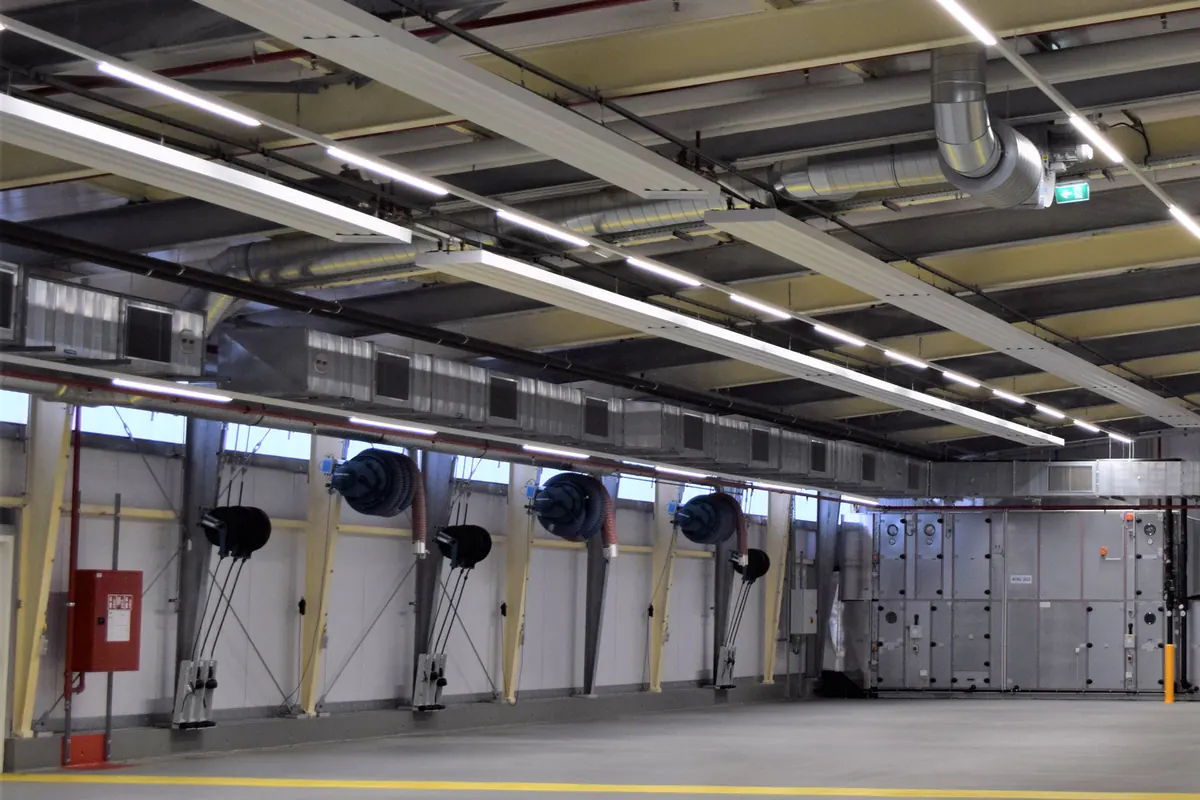
The short answer
What MDL does. MDL Electric Cooling & Heating repairs commercial light fixtures and ballasts and converts fluorescent fixtures to LED. It also installs new fixtures and high-bay lighting, and wires occupancy sensors and daylight controls. MDL confirms the scope after reviewing the space and its fixtures.
Who this page is for. Business owners, property managers and landlords with offices, stores, restaurants, warehouses, garages, schools, houses of worship and apartment-building common areas. Outdoor pole lights have their own page: parking lot lighting repair. Lighting in a house is on recessed lighting installation.
Why it matters. Lighting used 208 of the 1,196 billion kilowatt-hours that U.S. commercial buildings consumed in 2018, about 17% (EIA, CBECS 2018, Table E5). In warehouses and storage buildings the share was 23 of 95 billion, about a quarter.
Licensed electrical work. MDL Electric Cooling & Heating holds New Jersey electrical contractor license 34EI01606200 and master HVACR contractor license 19HC00308200. It works from 4 Harrison Avenue in West Orange. Call 973.809.2339 or use the request form.
Lights out, flickering or humming
A dead fixture is a symptom. The fault can be the tube, the ballast or driver, the socket, the control or the circuit, so MDL traces it before replacing parts.
Scroll sideways to see the whole table.
| Symptom | Likely causes | What MDL checks |
|---|---|---|
| Tubes flicker, glow at the ends or will not start | Tubes at end of life, a failing ballast, or worn sockets | Tube ends and sockets, then the ballast output |
| Fixture hums or smells hot | A magnetic ballast at or past its typical 10 to 15 years | Ballast type, date and label, and whether it is marked "No PCBs" |
| A whole row or room is dark | A tripped breaker, a failed switch or sensor, or a loose connection | The circuit, the control and the first fixture on the run |
| LED fixture dead or blinking | A failed LED driver, or a driver mismatched with a dimmer or sensor | Driver output and the control wiring |
| Lights stay on in an empty room | An occupancy sensor out of adjustment or wired around | Sensor setting, coverage and wiring |
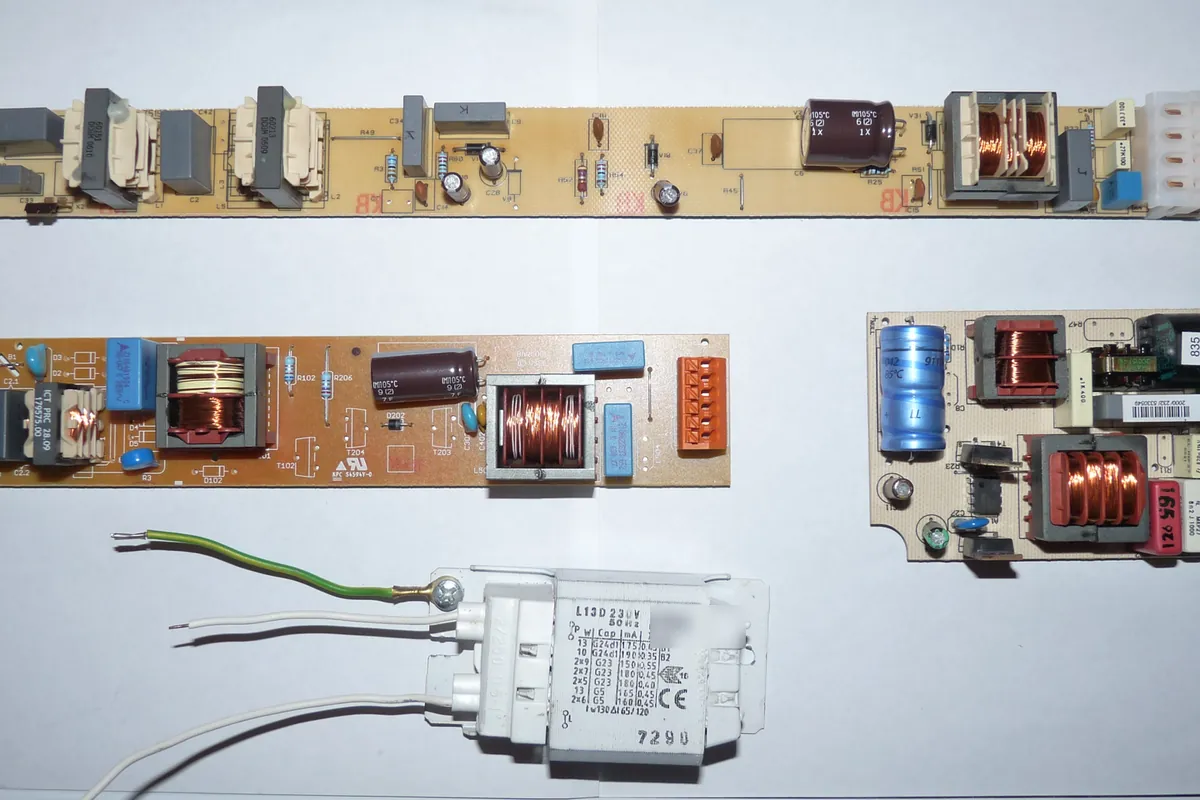
Fluorescent to LED
The choice decides whether the old ballast stays, whether the fixture is rewired, and whether a new fixture goes in. Tube types as described by the lamp maker LEDVANCE, read November 15, 2026.
Scroll sideways to see the whole table.
| Option | How it works | What to weigh |
|---|---|---|
| Type A, plug-and-play tube | Plugs into the existing sockets and runs on the existing ballast | The ballast must be on the tube maker's approved list, keeps using energy, and can still fail |
| Type B, ballast-bypass tube | The ballast is removed and the fixture rewired so the tube runs on line voltage | Electrical work; the fixture needs a clear label so nobody puts fluorescent tubes back in |
| Type C, remote driver | The ballast is replaced by a separate LED driver that feeds the tubes | More parts, but supports dimming controls such as 0-10V or DALI |
| New LED fixture or retrofit kit | The old fixture or its insides are replaced | Most work per fixture; settles the fixture's condition along with the light source |
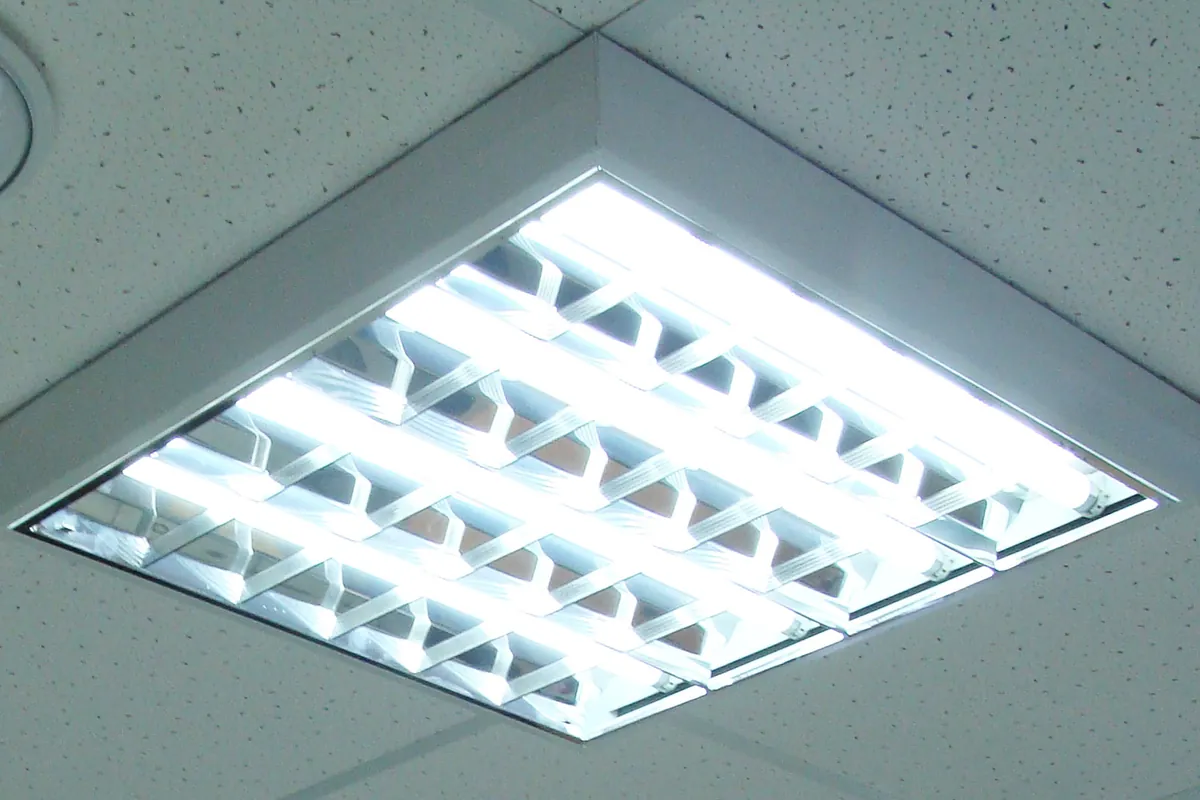
Warehouses, garages and high ceilings
Warehouses and storage buildings spent about a quarter of their electricity on lighting in 2018 (EIA, CBECS 2018). In a warehouse the fixtures and the aisle controls are planned together.
New Jersey rules
Read November 15, 2026 from the official texts: N.J.A.C. 5:23-2, 5:23-3 and 5:23-6 (all published through August 17, 2026), NJ Department of Community Affairs. Your town's construction office decides how a project is classified; MDL does not classify a building from this page.
Scroll sideways to see the whole table.
| Topic | What the rule says | Source |
|---|---|---|
| No permit at all | Replacing a lighting fixture, or part of one, with a like or similar item is ordinary maintenance. The exceptions are hazardous locations and fixtures with an emergency battery pack. | 5:23-2.7(c)3i |
| Permit first | It is unlawful to install or alter equipment the code regulates without first applying for and obtaining the required permit. | 5:23-2.14(a) |
| Who may do the work | Electrical work only by persons licensed to perform it, except a single-family homeowner on his or her own dwelling. | 5:23-2.15(b)2 |
| Which energy code | New Jersey adopts the IECC/2024 as its energy subcode; commercial buildings comply by means of ASHRAE Standard 90.1. | 5:23-3.18(a)1, (b)1ii, (b)2 |
| Replacing a lighting system | The total replacement of a building lighting system, or a newly installed one, must meet Section 9.1.1.3 of the commercial energy code. Replacing the lighting system within a room, space or tenancy brings it in for that room, space or tenancy only. | 5:23-6.5(e)14, 6.6(e)21, 6.7(e)18 |
| The 2022 threshold | In the 2022 edition of ASHRAE 90.1, replacing 2,000 watts of existing interior lighting in a space brings in all of Section 9. A smaller replacement must meet some of the 9.4.1 controls and either use 50% less power than the lighting it replaces or meet the space-by-space power limits. | ASHRAE Journal, Sept. 2023 |
Summary of Section 9.4.1.1 from Leviton's ASHRAE 90.1-2022 design guide, read November 15, 2026. Which controls apply depends on the space type in the standard's tables and on whether the energy code applies to the job.
Utility incentives
Read November 15, 2026 on PSE&G's Prescriptive Program page. PSE&G decides eligibility and amounts. This page promises no rebate, and MDL is not presented here as a program contractor.
Old tubes and ballasts
New Jersey added hazardous waste lamps to its Universal Waste Rule on June 17, 2002 (NJDEP lamp fact sheet, read November 15, 2026).
How the job runs
Six steps, in the order a commercial lighting job usually moves.
Lights out, a conversion, or new lighting, with the rooms and the hours the space is used.
MDL looks at the fixtures, ballasts or drivers, controls, ceiling height and circuits, then confirms the scope.
Repair, convert or replace; the controls; the permit, if any; disposal of old tubes and ballasts; the work hours.
Where the work goes beyond ordinary maintenance, the permit comes before the work.
Fixtures, drivers and controls installed area by area, within the agreed hours.
Every fixture lit, every sensor and schedule checked, and inspections where a permit applies.
What to send
Safe photos and a plain description are enough to start. Do not open fixtures, ballast covers or electrical panels to collect them.
Address and ZIP code, what the space is used for, and the floor or suite.
How many, and a photo of one fixture lit and one that has failed.
Suspended tile, open structure or drywall, and roughly how high.
Switches, sensors, timers or a lighting control panel, and what they do now.
When the space is open, and when work can happen without disrupting it.
Who owns or manages the building, who approves the work, and the target date.
Where MDL works
MDL works from 4 Harrison Avenue in West Orange, across the Essex County towns below and Morris County towns near the Essex line. Include the exact address and ZIP code so coverage can be confirmed for the building.
Commercial lighting
Call or send the form with the address, the space, the number of fixtures and what is wrong. The form opens with Commercial Electrical chosen; pick Business / Commercial or Rental / Managed Property as the property type. Exit signs and emergency lights have their own page: emergency lighting and exit signs.
Commercial lighting questions
Rules come from the New Jersey Department of Community Affairs, NJDEP, EPA and PSE&G texts named on this page. MDL publishes no commercial prices, and this page lists none.
Commercial lighting work covers the fixtures, the wiring and the controls that run them in a business or building. MDL Electric Cooling & Heating repairs failed fixtures and ballasts and converts fluorescent lighting to LED. It also installs new fixtures and high-bay lighting, and wires occupancy sensors and daylight controls. MDL confirms the scope after reviewing the space, the fixtures and the hours the building is in use.
A failed ballast can be replaced like for like, but the tubes it runs are aging too. EPA puts the typical life of a magnetic fluorescent ballast at 10 to 15 years, with failures rising after that. When several ballasts in one space are failing, price a conversion before replacing them one at a time. MDL compares both after looking at the fixtures.
Plug-and-play (Type A) tubes run on the existing fluorescent ballast. The ballast must be on the tube maker's compatible list, and it keeps using energy and can still fail. Ballast-bypass (Type B) tubes run on line voltage after the ballast is removed and the fixture is rewired, which is electrical work. Type C tubes use a separate driver, and a new LED fixture replaces the old one outright.
It can. New Jersey's rehabilitation subcode covers the total replacement of a building lighting system, or a newly installed one. Either must meet Section 9.1.1.3 of the commercial energy code, ASHRAE Standard 90.1. Replacing the lighting system in one room, space or tenancy brings in that rule for that area only. The town's construction office decides how a project is classified.
Not for ordinary maintenance. Replacing a lighting fixture, or part of one, with a like or similar item needs no permit (N.J.A.C. 5:23-2.7(c)3i). It applies outside hazardous locations, and only when the fixture has no emergency battery pack. New fixtures on new wiring, new circuits and other work beyond ordinary maintenance need a permit first (N.J.A.C. 5:23-2.14(a)).
ASHRAE Standard 90.1-2022 lists several interior controls. They include local on and off control, a 50% reduction within 20 minutes after a space empties, and full shutoff within 20 minutes. Scheduled shutoff and daylight-responsive control near windows are on the list too. Which ones apply depends on the space type, and on whether the energy code applies to the project at all.
PSE&G's Prescriptive Program offers its business customers incentives, including point-of-sale rebates, on qualifying energy-efficient equipment such as lighting and controls. It also offers interest-free on-bill repayment for the cost the incentive does not cover. On November 15, 2026 its page said incentives on eligible equipment are 50% or more higher through December 31, 2026. PSE&G decides eligibility, and this page promises no rebate.
Fluorescent tubes contain mercury. New Jersey has managed spent hazardous waste lamps as universal waste since June 17, 2002. Crushing them on site counts as processing that needs NJDEP approval. Ballasts made before July 1, 1979 may contain PCBs. EPA says to assume a ballast without a "No PCBs" label contains them, unless it is known to be newer.
Yes, on their own pages. Outdoor pole lights are covered on MDL's parking lot lighting repair page, and lighting in houses on the recessed lighting installation page. This page covers interior lighting in offices, stores, restaurants, warehouses, garages and apartment-building common areas.
MDL does not publish commercial prices, and this page lists none. The cost depends on the number and type of fixtures, the ceiling height and access, and the controls. Whether ballasts are bypassed or fixtures replaced matters too, as do the permit and the hours the work can happen. MDL reviews the space before it prices the job.
Sources
All read November 15, 2026.
Next steps
Outdoor pole lights at a store, office or managed property: photocells, poles and underground feeds.
Learn moreMonthly and annual tests, failed units and what to do after a fire inspection.
Learn moreTroubleshooting, circuits, panels and the New Jersey permit rules for the rest of the building.
Learn moreElectrical and HVAC requests for the same building in one place.
Learn moreRequest service
Use the form for planned service or call for urgent electrical, heating, or cooling help.


