
01 / The short answer
The guides price the heater. The circuit and the panel decide the real number.
Search for garage heater installation and the top results are how-to videos and a heater maker's page. None of them prints a price. The national cost guides do. Angi (updated October 26, 2026) and HomeAdvisor (June 19, 2026) both put installation at $1,500 to $4,000. Both give a $2,075 average. An electric or infrared heater costs $150 to $1,000, and a gas or propane heater $400 to $2,000.
Angi then prices electric labor at about $100 an hour, or around $200 for a typical electric install. That figure assumes a circuit is already waiting. If the garage has only 120-volt outlets, the heater's 240-volt circuit is new work. HomeAdvisor says electrical upgrades raise labor, and Angi says to budget for a dedicated circuit. Neither says what that circuit is, or what it costs in New Jersey. This guide does, from the heater makers' manuals, the code New Jersey enforces and published prices.
Angi, October 26, 2026, and HomeAdvisor, June 19, 2026; $2,075 average. Electric units $150 to $1,000; gas or propane $400 to $2,000.
Angi, October 30, 2026, national; $700 average. New York $890 to $1,090. An electrical inspection, $100 to $400, comes on top.
King Electric's chart for 8 to 12-foot ceilings and a 60°F rise. A 7,500-watt heater draws 31.3 A on a 40 A breaker.
A 7,500-watt heater at full output, at 24.61 cents a kWh. That is New Jersey's August 2026 residential average (EIA, preliminary).
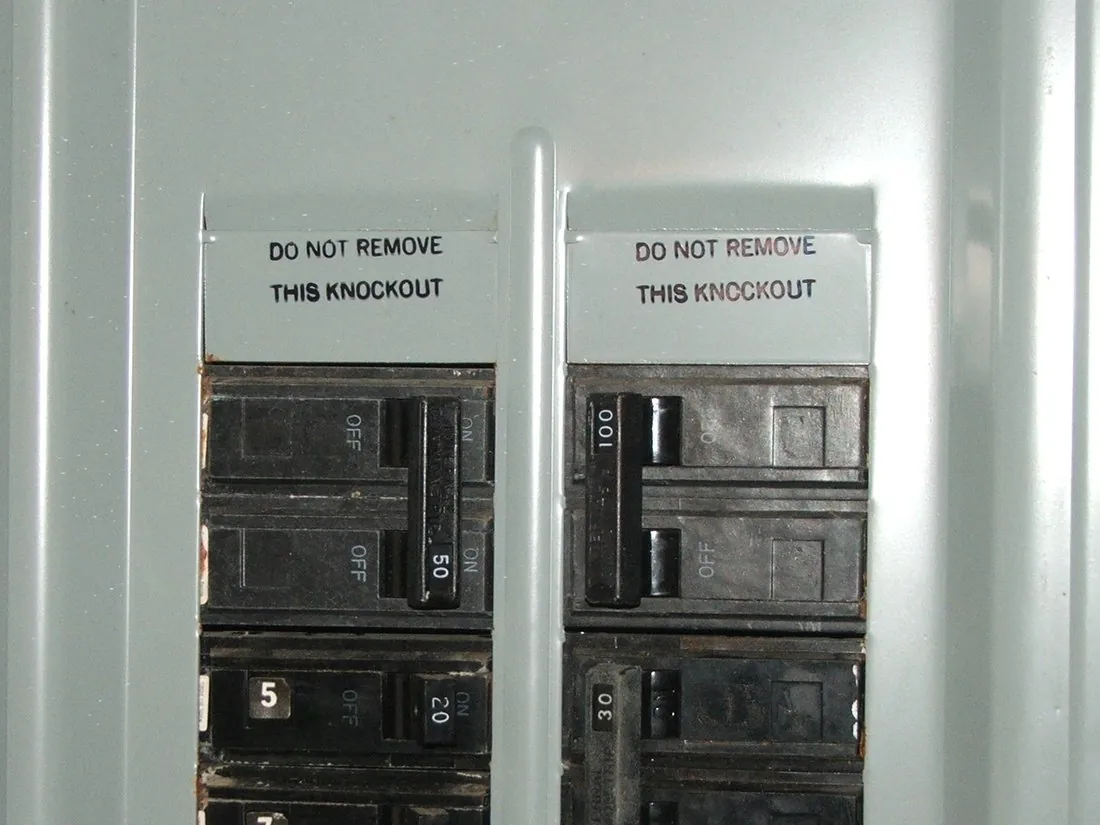
Pick the heater after the panel check, not before. A load calculation says whether a 30 or 40-amp two-pole breaker fits your service as it stands. It also shows whether the garage needs a subpanel, or the house a bigger service. Either of those lines can cost more than the heater.
02 / The cost, line by line
What a garage heater job costs, line by line.
No source we found prices a New Jersey garage heater job as a whole. The lines below are published prices for its parts. They are other companies' figures, quoted as market evidence. None of them is an MDL price.
| Line | Published price | Source | What it covers |
|---|---|---|---|
| Electric or infrared heater | $150 to $1,000 | Angi, October 26, 2026; HomeAdvisor, June 19, 2026 | The unit only. |
| Natural gas or propane heater | $400 to $2,000, plus $500 to $800 | Angi; HomeAdvisor | The unit, then the gas line, venting and connections (HomeAdvisor). |
| Hanging and connecting an electric heater | About $200 | Angi (about $100 an hour, about two hours) | Assumes a suitable circuit is already in place. |
| New dedicated circuit | $570 to $1,000; $700 average | Angi, October 30, 2026 (national) | Labor is most of the bill. New York $890 to $1,090. |
| Opening walls and running wire | $600 to $6,000 | Angi, October 30, 2026 | Finished walls and long routes from the panel. |
| Electrical inspection | $100 to $400 | Angi, October 30, 2026 | Permit or inspection fees $10 to $500, listed separately. |
| Subpanel | $1,500 to $3,500 | Malfettone Electric, 2026 New Jersey guide | New breaker spaces, or a feeder to a detached garage; "depends heavily on distance." |
| 200 A service upgrade | $3,500 to $4,800 | Malfettone Electric, 2026 New Jersey guide | When the service itself is too small; the most common upgrade in 2026. |
Three worked budgets for an electric heater in an attached garage, at these published ranges (our arithmetic):
- The panel has room: heater $150 to $1,000, new circuit $570 to $1,000, hanging and connecting about $200. About $920 to $2,200, plus the permit.
- The panel is full, but the service has room: add a subpanel at $1,500 to $3,500. About $2,420 to $5,700.
- The service is too small: add a 200-amp upgrade at $3,500 to $4,800 instead. About $4,420 to $7,000.
The first budget sits at or below the guides' range. The second can run past its $4,000 top, and the third always does. That is why the panel check comes before the heater.
03 / Breaker and wire
Breaker, wire and the 125 percent rule for a 240-volt garage heater.
A hardwired electric garage heater is fixed space-heating equipment under Article 424 of the National Electrical Code. Section 424.4(B) sizes its circuit at no less than 125 percent of the heater's load, as Mike Holt explains for EC&M. King Electric, which makes garage heaters, puts it another way. The heater load "should generally not exceed 80% of the branch circuit rating."
King's circuit table turns that rule into breaker and wire sizes. Find the heater's wattage, or the next higher row, and read across:
| Heater | Amps at 240 V | Breaker at 240 V | Amps at 208 V | Breaker at 208 V | Copper wire |
|---|---|---|---|---|---|
| 4,000 W | 16.7 A | 25 A, two-pole | 19.2 A | 25 A, two-pole | #12 |
| 5,000 W | 20.8 A | 30 A, two-pole | 24.0 A | 30 A, two-pole | #10 |
| 5,700 W | 23.8 A | 30 A, two-pole | 27.4 A | 35 A, two-pole | #10 |
| 7,500 W | 31.3 A | 40 A, two-pole | 36.1 A | 50 A, two-pole | #8 |
| 10,000 W | 41.7 A | 60 A, two-pole | 48.1 A | 60 A, two-pole | #6 |
Fahrenheat's FUH manual agrees on its two heaters. It calls for at least 10-gauge copper for the 5,000-watt model and 8-gauge for the 7,500-watt model. Its maximum fuse sizes are 30 and 45 amps. It rules out aluminum wire.
Four details change the circuit before anyone buys wire:
- 208 volts gives less heat. Fahrenheat's 5,000-watt heater makes 3,750 watts on a 208-volt supply, 75 percent of its rating. Its 7,500-watt model makes 5,625 watts. Check the building's voltage before you size the heater.
- Voltages are not interchangeable. King says a 240-volt heater on 120 volts makes about 25 percent of its rated heat. A 120-volt heater on 240 volts makes about four times its rating and is a serious fire hazard.
- Two heaters on one circuit add up. King says to add the wattage of every heater that may run at the same time. When the total is too large, the job needs a larger circuit or a second one.
- A plug-in 240-volt heater needs a GFCI. King's portable 3,000 to 4,000-watt garage heaters come with a 20-amp plug. In a garage, every 125-volt through 250-volt receptacle needs ground-fault protection under section 210.8(A)(2).
04 / What size heater
Size the heater by the garage, then let the heater size the circuit.
King Electric's sizing chart gives watts by garage size and ceiling height. It assumes the garage is adequately insulated and the heater makes a 60°F rise. In King's example, 10°F outside could become 70°F inside, but no warmer. King says to size up to the next heater when the chart's number does not match one.
| Ceiling | 1-car, up to 450 sq ft | 2-car, up to 700 sq ft | 3-car, up to 900 sq ft | 4-car, up to 1,100 sq ft |
|---|---|---|---|---|
| 8 ft | 4,400 W | 6,850 W | 9,100 W | 11,750 W |
| 10 ft | 4,850 W | 7,500 W | 10,900 W | 12,950 W |
| 12 ft | 5,300 W | 8,200 W | 12,600 W | 14,100 W |
A 24-by-24-foot garage is 576 square feet, inside the two-car column. With an 8-foot ceiling the chart says 6,850 watts, so the next size up is a 7,500-watt heater. That means 31.3 amps at 240 volts, on a 40-amp breaker and #8 copper.
The national guides give one number instead: 45,000 Btu for a two-car garage and 60,000 for three cars (Angi). King's 6,850 watts is about 23,400 Btu an hour, since one kilowatt-hour is 3,412 Btu (EIA). Gas heaters are rated by the fuel they burn. Modine sells its Hot Dawg in 30,000 to 125,000 Btu sizes at up to 83 percent thermal efficiency. A 45,000 Btu model therefore puts out about 37,000 Btu an hour.
What moves the size up or down:
- Insulation. King's chart assumes an adequately insulated garage. Bare walls or an uninsulated door call for more heat than the chart shows.
- How warm. The chart is built on a 60°F rise. A workshop held at 50°F needs less than one held at 70°F.
- Ceiling height. Each step from 8 to 10 to 12 feet adds 450 to 1,800 watts in King's chart.
- Two heaters. Fahrenheat says to arrange two heaters so each one's airflow supports the other's. Each one counts against the circuit and the panel.
05 / Can your panel carry it
A spare breaker space is not proof the panel can carry a heater.
MDL's panel upgrade page says it plainly: "Breaker space alone does not prove the service can support it." The National Electrical Code has a method for that question in existing homes, section 220.83. Mike Holt's EC&M walk-through says it determines "if the existing service or feeder is sufficient to serve additional loads." It adds up the house's loads with the code's demand factors. Heating and air conditioning go in at the larger of the two (220.83(C)).
That check matters more in Essex County than in most of the country. The Census Bureau's 2020–2024 survey puts the median Essex County home's build year at 1958. New Jersey's median is 1970, and the US median is 1980. More than half of Essex County's homes, 52.6 percent, were built before 1960 (ACS table B25034). A 7,500-watt heater adds 31.3 amps, nearly a third of a 100-amp service rating.
The calculation ends in one of four places:
- It fits as it is. The heater circuit takes a spare two-pole position in the panel.
- It fits with a smaller heater. A 5,000-watt heater draws 20.8 amps on a 30-amp breaker, against 31.3 and 40 for a 7,500-watt one.
- It fits with a subpanel. The service has room, but the panel has no spaces. Malfettone Electric publishes $1,500 to $3,500 for a subpanel in New Jersey.
- It needs a bigger service. Malfettone publishes $3,500 to $4,800 for a 200-amp upgrade in New Jersey, and $2,200 to $3,200 for 150 amps.
That calculation is the work on MDL's panel upgrade page. There, MDL "helps define whether a property needs a panel replacement, added circuits, load management, or a complete service upgrade." It puts "capacity, permits, utility work, inspection, and restoration in one written scope." For North Jersey panel and service prices line by line, see the electrical panel replacement cost guide. An EV charger or a hot tub on the same service belongs in the same calculation.
06 / Size and cost calculator
Put your own garage into the numbers.
Garage heater size, circuit and running-cost calculator
Pick the garage size, the ceiling height and the supply voltage. The calculator reads King Electric's sizing chart and circuit table, then works out the running cost at your price and hours. It is arithmetic on the figures in this guide. It is not a load calculation on your house, and it is not an MDL price.
Heater size from King's table7,500 W
- King's chart for this garage: 6,850 W, about 23,400 Btu an hour
- Current at 240 V: 31.3 A
- Breaker: 40 A two-pole; copper wire: #8 (King's table, 75°C)
- Circuit capacity at 125 percent: 39.1 A
- Share of a 100 / 150 / 200 A service rating: 31% / 21% / 16%
- Per hour at full output, at 24.61¢ a kWh: $1.85
- Per month at 120 hours of full output: $221.49
Defaults: 24.61¢ is New Jersey's August 2026 residential average (EIA, preliminary). 120 hours is four hours a day at full output for 30 days, our assumption. A thermostat cycles the heater, so real full-output hours vary. Whether your service can carry the current is the NEC 220.83 calculation in section 05.
Check if your panel can carry it07 / Gas or electric
At New Jersey prices, an electric heater costs about $1 to $2.50 an hour at full output.
Running cost is kilowatts times hours times the price. EIA puts New Jersey's average residential price at 24.61 cents a kilowatt-hour for August 2026. That figure was released October 23, 2026, and is preliminary. A heater on a thermostat cycles, so its full-output hours are fewer than the hours it is switched on.
| Heater | Per hour | 120 hours, one month | Inside Angi's $0.08 to $0.80 an hour? |
|---|---|---|---|
| 4,000 W | $0.98 | $118.13 | No |
| 5,000 W | $1.23 | $147.66 | No |
| 7,500 W | $1.85 | $221.49 | No |
| 10,000 W | $2.46 | $295.32 | No |
Angi and HomeAdvisor give $0.08 to $0.80 an hour to run a garage heater. At New Jersey's price, $0.80 buys 3.25 kilowatt-hours. That is one hour of a 3,250-watt heater, smaller than every hardwired size in the table. For a 240-volt heater in New Jersey, budget from the wattage, not from the national range.
Gas against electric, per 100,000 Btu of heat delivered into the garage (our arithmetic on EIA and Modine figures):
- Electric at 24.61¢ a kWh: $7.21. 100,000 Btu is 29.3 kWh at 3,412 Btu each (EIA). An electric heater turns all of it into heat: Fahrenheat rates its 5,000-watt heater at 17,065 Btu an hour.
- Natural gas at $14.21 per thousand cubic feet: $1.65. That is New Jersey's residential average for March 2026 (EIA). The arithmetic uses 1,037 Btu per cubic foot (EIA) and Modine's 83 percent efficiency.
- Natural gas at $20.13: $2.34. The same arithmetic at New Jersey's August 2026 residential average.
On these EIA averages, electric heat costs three to four times as much per Btu. Gas costs more to put in, though. HomeAdvisor adds $500 to $800 for the gas line, venting and connections, on a heater that costs $400 to $2,000. Your own PSE&G or JCP&L bill sets your real rates.
A gas heater still needs electrical and licensed work:
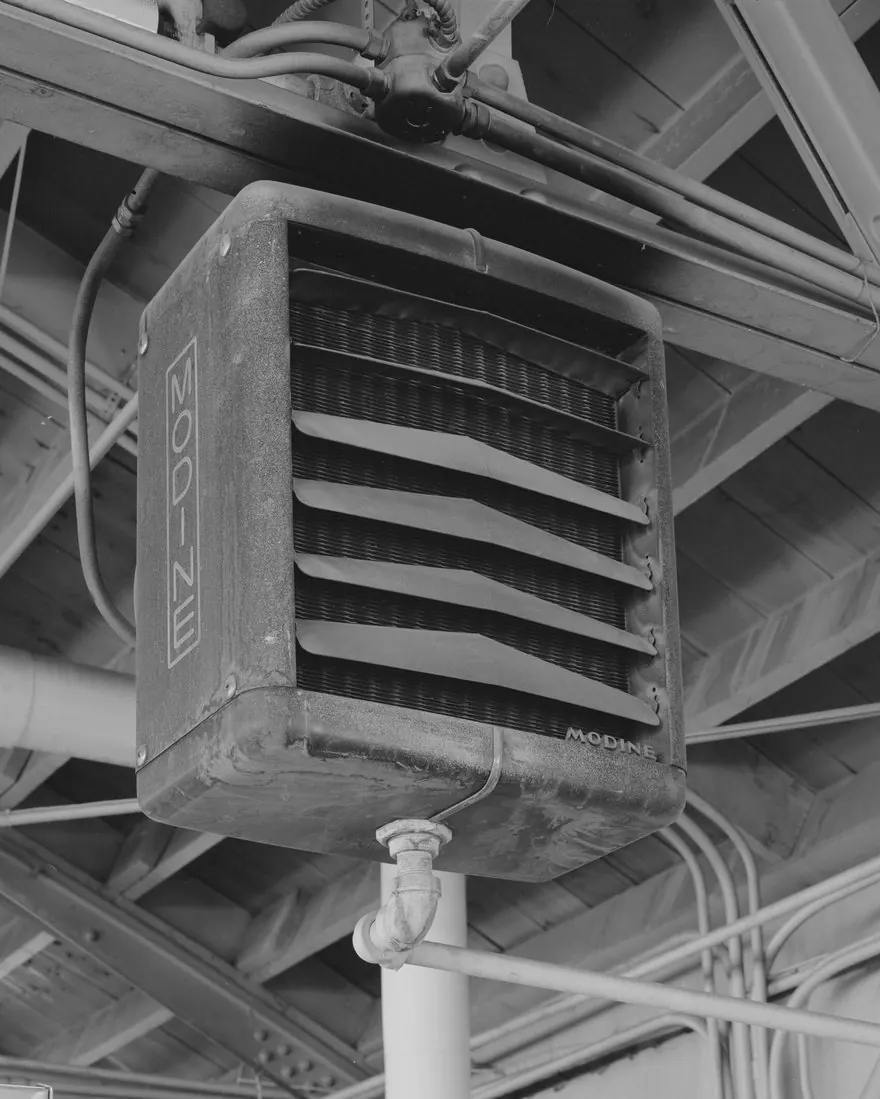
- A 115-volt supply. Modine's Hot Dawg runs its fan and controls on 115 volts, single phase.
- Mounting height. Modine's manual sets at least 5 feet from the floor to the bottom of the heater in a home, and 18 inches behind it.
- Licensed gas and HVAC work. New Jersey allows plumbing and HVAC work only by licensed contractors, except a single-family homeowner on his or her own dwelling (N.J.A.C. 5:23-2.15).
- Not the house's main heat. Modine certifies the Hot Dawg as a utility heater for non-living spaces, such as a garage. It is not meant as a home's primary heat.
For a business garage, shop or warehouse, MDL repairs and installs gas and electric unit heaters. See unit heater repair and installation.
08 / What the code requires
New Jersey enforces the 2023 electrical code. Article 424 covers a hardwired garage heater.
New Jersey's electrical subcode adopts the 2023 National Electrical Code (N.J.A.C. 5:23-3.16). The state's latest model-code amendments took effect August 17, 2026. For a garage heater, the code and the manuals ask for:
- A circuit sized at 125 percent, 424.4(B). A 31.3-amp heater needs at least 39.1 amps of circuit capacity, so a 40-amp breaker.
- A disconnect, 424.19. One means must open all the ungrounded conductors at once. It must be within sight of the heater, or lockable in the open position. "Within sight" means visible and no more than 50 feet away (Mike Holt, EC&M).
- GFCI on garage receptacles, 210.8(A)(2). Every 125-volt through 250-volt receptacle in a garage, including a 240-volt outlet for a plug-in heater (Mike Holt).
- Copper wire rated 75°C, and a grounded heater. Fahrenheat requires both, and no aluminum wire.
- A licensed electrician, or the homeowner. New Jersey allows electrical work only by licensed contractors, except a single-family homeowner on his or her own dwelling (N.J.A.C. 5:23-2.15).
The Fahrenheat FUH manual sets where an electric heater goes:
- At least 6 feet off the floor, out of traffic areas.
- 6 to 11 feet up for downward airflow, and 6 to 8 feet for horizontal airflow.
- 36 inches clear in front of the discharge, and combustibles at least 3 feet away.
- No gasoline or other flammable vapors or liquids stored or used near it.
- Air that wipes exposed walls rather than blowing straight at them, and never behind doors.
09 / A detached garage
A detached garage adds a trench, a disconnect and sometimes a ground rod.
A detached garage gets its power through one circuit or one feeder from the house. St. Paul's 2023 code checklist for garages lists the rules that come with it:
- One circuit or one feeder, 225.30. A multiwire branch circuit counts as one. A 40-amp heater circuit would be the garage's only circuit, so heat plus lights and outlets points to a feeder and a small panel.
- A disconnect at the garage, 225.31 and 225.32. It must be readily accessible, outside or immediately inside the building.
- A grounding electrode, 250.32(A). Required where a feeder supplies the garage. Mike Holt notes the exception for a single branch circuit, while St. Paul's checklist asks for one above 20 amps. The town's inspector decides.
- Burial depth, 300.5. 6 inches for rigid or intermediate metal conduit, 18 inches for PVC conduit and 24 inches for direct-burial cable.
- Distance. Malfettone's $1,500 to $3,500 subpanel range "depends heavily on distance from main panel and wire gauge needed."
Before anyone digs, New Jersey law requires a call to New Jersey One Call:
- Call 811 or 800-272-1000 at least three full business days before digging, weekends and holidays excluded.
- Wait for the site to be marked with paint, flags or stakes.
- Respect the marks, and dig with care.
The rule covers homeowners' contractors as well as excavators.
10 / Permits and fees
A hardwired garage heater needs an electrical permit in New Jersey.
New Jersey makes it unlawful to install regulated equipment "without first filing an application" with the construction or subcode official (N.J.A.C. 5:23-2.14(a)). A new circuit and a hardwired heater are electrical work. Each town sets its own fees. In West Orange, an Essex County township, these lines can apply (Ordinance 2802-23):
- Electric heaters in a dwelling: $25 each.
- Rough and final wiring, the first 25 switches, receptacles, outlets and fixtures: $100.
- Service panel, including feeders and panel boards, 0 to 224 amps: $150.
- Gas piping, under the plumbing subcode, for a gas heater: $100.
- Minimum electrical fee: $100.
Montclair, Livingston, Maplewood and the other Essex County towns publish their own schedules. Angi's national range for a permit or inspection is $10 to $500. Malfettone puts New Jersey panel permits at $150 to $500, depending on the town. Put the permit on the proposal as its own line.
11 / What the proposal should show
Ask for the electrical lines in writing before you buy the heater.
- The load calculation on your existing service, and its result.
- The heater's wattage, voltage and amps, from its nameplate.
- The breaker size, the wire size and type, and the 125 percent check.
- Where the disconnect is, and whether it is in sight of the heater or lockable.
- Panel spaces, a subpanel or a service upgrade, each priced as its own line.
- For a detached garage: the feeder or circuit, the trench depth, the garage disconnect and any ground rod.
- The permit and the inspection, and who files them.
- Who supplies the heater, and who mounts it.
Lines 1, 3, 4 and 5 are the work MDL's panel upgrade page describes. MDL also installs the heater itself, so the heater, its circuit and the permit can sit on one proposal. This guide does not price the heater; the unit prices above are published market figures.
Panel check
Find out what your panel can carry before you buy the heater.
Send MDL your town, the main breaker rating, whether the garage is attached or detached, and the heater's wattage if you have one picked. The request form is on MDL's panel upgrade page, which starts with the load, not an automatic 200-amp answer.
12 / Questions answered
Garage heater questions from New Jersey homeowners.
How much does it cost to put in a garage heater?
The national cost guides put garage heater installation at $1,500 to $4,000, with a $2,075 average (Angi, October 2026; HomeAdvisor, June 2026). Electric heaters cost $150 to $1,000, and gas or propane heaters $400 to $2,000. An electric heater also needs a 240-volt circuit if the garage has none. Angi prices one at $570 to $1,000 nationally and $890 to $1,090 in the New York area. If the panel is full, a New Jersey subpanel is published at $1,500 to $3,500 (Malfettone Electric).
Can I install a wall heater myself?
New Jersey lets a single-family homeowner do electrical work on his or her own dwelling (N.J.A.C. 5:23-2.15). The permit is still required (5:23-2.14), and the work is inspected. A hardwired 240-volt heater needs a circuit sized at 125 percent of its load, a two-pole breaker and a disconnect. Fahrenheat requires all wiring to meet national and local codes. Modine says its gas heater manual is for "a qualified installation and service agency."
Where should I put my garage heater?
Fahrenheat says at least 6 feet off the floor and out of traffic areas, with 36 inches clear in front. Keep combustibles 3 feet away, and keep gasoline and other flammable vapors away from it. Aim the air to wipe exposed walls rather than blow straight at them. A gas heater in a home hangs at least 5 feet up, with 18 inches behind it (Modine). A shorter route from the panel means less wall work, which Angi prices at $600 to $6,000 when walls are opened.
Is it cheaper to heat a garage with gas or electric?
Per Btu, gas is cheaper to run at New Jersey's averages. 100,000 Btu of heat costs $7.21 from electricity at 24.61 cents a kWh. From natural gas at an 83 percent efficient heater, it costs $1.65 at March 2026's $14.21 per thousand cubic feet and $2.34 at August's $20.13 (EIA prices, our arithmetic). Gas costs more to put in: HomeAdvisor adds $500 to $800 for the gas line, venting and connections.
What size heater do I need for a 24x24 garage?
A 24-by-24 garage is 576 square feet, a two-car garage in King Electric's chart. With an 8-foot ceiling and insulation, King says 6,850 watts, so a 7,500-watt heater. With a 10-foot ceiling, 7,500 watts; with a 12-foot ceiling, 8,200, so a 10,000-watt heater. A 7,500-watt heater draws 31.3 amps at 240 volts on a 40-amp two-pole breaker and #8 copper.
Should a garage heater be installed in the front or back of the garage?
The heater manuals we read do not pick front or back. Fahrenheat's rules are about airflow: mount the heater out of traffic, at least 6 feet up, with the air wiping exposed walls rather than blowing straight at them. Do not put it behind doors or where storage can block it. With two heaters, arrange them so each one's airflow supports the other's.
Can I vent my garage heater through the roof?
Only a gas heater has a vent. Modine's Hot Dawg manual covers vertical vents that end above the roof and horizontal vents that end through a side wall, each with its own rules. Venting is gas and HVAC work. An electric heater needs no vent, only its circuit.
13 / About this guide
Who wrote it, and what it is not.
MDL Electric Cooling & Heating wrote this guide. MDL is a licensed electrical contractor and master HVACR contractor at 4 Harrison Ave, West Orange (NJ Electrical Contractor #34EI01606200; NJ Master HVACR Contractor #19HC00308200), working across Essex County. The guide covers the electrical side of a garage heater: the circuit, the panel and service, the permit and the running cost. MDL installs the heater itself along with the load check, the permit, the circuit and the connection, and no figure here is an MDL price. Every figure was read from the sources below on November 16, 2026. The amps, shares, budgets and running costs are our arithmetic on those figures, shown so you can check them.
14 / Source record
Sources, read November 16, 2026
Prices, rates and codes change. Where two sources disagree, both are shown. Nothing here is an MDL price. No company named here was asked or paid to appear, and their prices are quoted as market evidence only.
- Angi — How much does a garage heater cost?Xiao Faria daCunha, updated October 26, 2026: $1,500 to $4,000, $2,075 average; electric $150 to $1,000, gas or propane $400 to $2,000; about $100 an hour, about $200 for an electric install; 45,000 and 60,000 Btu; $0.08 to $0.80 an hour.
- HomeAdvisor — Garage heater installation costUpdated June 19, 2026: $1,500 to $4,000, $2,075 average; prices by heater type; $500 to $800 for the gas line, venting and connections; $0.08 to $0.80 an hour.
- Angi — Cost to install a dedicated circuitBarbara Bellesi Zito, updated October 30, 2026: $570 to $1,000, $700 average; New York $890 to $1,090; inspection $100 to $400; walls and wire $600 to $6,000; permit or inspection $10 to $500.
- King Electric — Sizing the heater circuitSingle-phase table of amps, copper wire and breakers; the 125 and 80 percent rules; voltage warnings; several heaters on one circuit.
- King Electric — Garage heaters brochure (PDF)December 2, 2019: watts by garage size and ceiling height, insulated, 60°F rise; portable 3 to 4 kW heaters with a 20-amp plug.
- Fahrenheat — FUH series unit heater manual (PDF)December 2021: ratings at 240 and 208 volts; 10 and 8-gauge copper; 30 and 45-amp maximum fuses; mounting heights, clearances and location.
- Modine — Hot Dawg HD/HDB unit heater30,000 to 125,000 Btu sizes; thermal efficiency up to 83 percent; 115 volts, single phase; residential garages among its uses.
- Modine — HD/HDB installation and service manual 6-583 (PDF)Utility heater for non-living spaces, not primary residential heat; 5 feet minimum in a home; 18 inches at the rear; vertical and horizontal vents; a qualified installation agency.
- EC&M — NEC requirements for disconnects and conductors serving space-heating equipmentMike Holt, February 7, 2022: 424.4(B) 125 percent; 424.19 disconnect within sight or lockable; within sight is no more than 50 feet.
- Mike Holt — GFCI and AFCI, based on the 2023 NEC210.8(A): garages and accessory buildings among the dwelling locations that need GFCI protection.
- Mike Holt — Grounding of services, based on the 2023 NEC250.32(A): a building supplied by a feeder needs a grounding electrode; exception for a single branch circuit.
- City of St. Paul — Residential electrical checklist, garage, 2023 NEC (PDF)210.8(A)(2) 125 to 250-volt garage receptacles; 225.30 one circuit or feeder; 225.31 and 225.32 disconnect; 250.32(A); 300.5 burial depths.
- EC&M — One-family dwelling unit load calculationsMike Holt: the 220.83 optional method for adding loads to an existing service.
- N.J.A.C. 5:23-3 — Subcodes (PDF)5:23-3.16 adopts the 2023 National Electrical Code as the electrical subcode.
- NJ Department of Community Affairs — model codes adoption (PDF)Adopted July 15, 2026; effective August 17, 2026.
- N.J.A.C. 5:23-2 — Administration (PDF)2.14 permits; 2.15 licensed electrical, plumbing and HVAC work and the single-family homeowner exception.
- Township of West Orange — construction fee scheduleOrdinance 2802-23: electric heaters $25 each, wiring $100 for 1 to 25, service panel $150 for 0 to 224 A, minimum fee $100; gas piping $100.
- US EIA — Electric Power Monthly, Table 5.6.AAugust 2026 residential average: New Jersey 24.61¢ a kWh; released October 23, 2026; preliminary.
- US EIA — Natural gas prices, New JerseyResidential price per thousand cubic feet: $14.21 in March 2026, $20.13 in August 2026; released October 30, 2026.
- US EIA — British thermal units1 kWh = 3,412 Btu; 1 therm = 100,000 Btu.
- US EIA — Converting natural gas prices2025 average heat content of delivered natural gas: about 1,037 Btu per cubic foot.
- Census Reporter — ACS 2020–2024, tables B25034 and B25035Year structure built: Essex County median 1958, 52.6 percent before 1960; New Jersey median 1970; US median 1980.
- Malfettone Electric — Panel upgrade cost in NJ, 2026Updated November 2026: subpanel $1,500 to $3,500; 150 A $2,200 to $3,200; 200 A $3,500 to $4,800; permit $150 to $500 by town.
- New Jersey One CallCall 811 or 800-272-1000 at least three full business days before digging.