
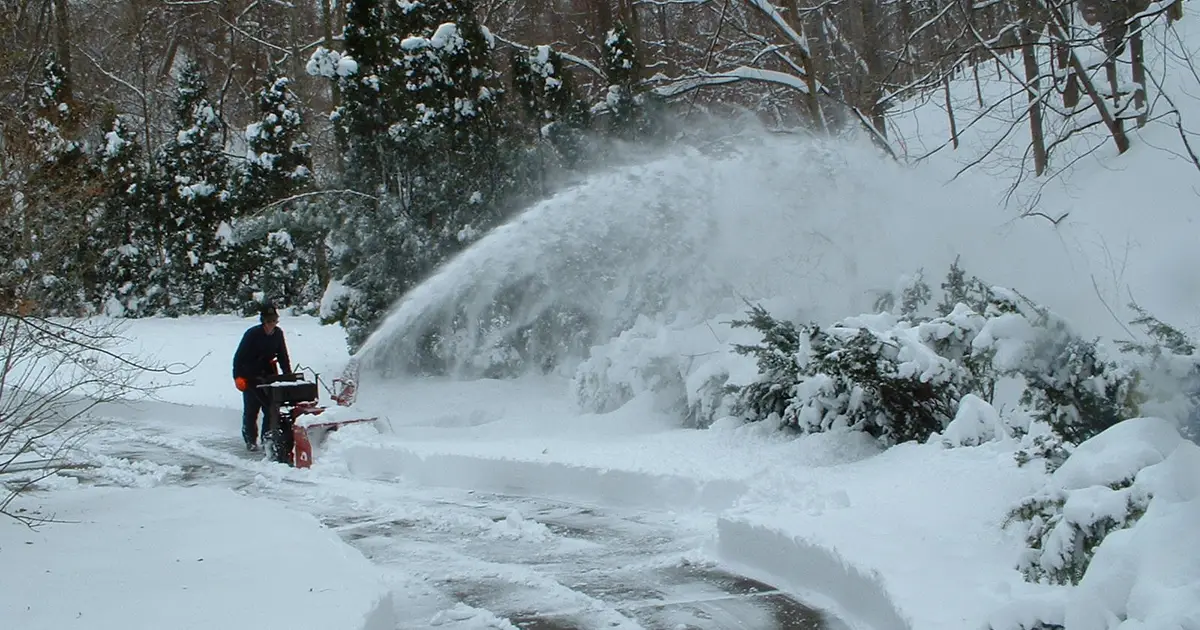
01 / The short answer
Everyone prices the mats. The amps are the line that moves the budget.
Search for heated driveway cost and the top results agree on materials and labor. HomeServe's March 2026 guide says $12 to $28 a square foot installed. HomeAdvisor (June 2026) and Angi (July 2026) say $12 to $25. Most jobs land between $3,000 and $8,700. HomeAdvisor and Angi also print a $13,000 average, which sits above the top of their own typical range. Budget from your square footage, not from that average.
None of them works out the electrical side for a New Jersey house. Angi prices an electric system at $3,200 to $5,800 "before excavation and any electrical panel upgrades," and says labor, excavation and "expanding your home's electrical capacity can double that price." HomeServe says you "may have to upgrade your existing electric panel." Neither says how many amps a driveway draws, whether a 100-amp or 150-amp service can carry it, what the code requires on the circuit, or what a storm costs at a New Jersey power price. This guide does, from the manufacturers' installation manuals, the code New Jersey enforces, the utilities' own rules and Newark's snow record.
HomeServe, March 13, 2026, materials and labor. HomeAdvisor and Angi say $12 to $25. A one-car, 288-square-foot drive is $3,400 to $8,000 in HomeServe's guide.
50 watts a square foot, the 3-inch spacing WarmlyYours recommends and Warmup builds its mats at, divided by 240 volts. Two 2-by-50-foot tire tracks: 41.7 A. A 20-by-40-foot pad: 166.7 A.
Those tracks and that pad at 24.61 cents a kWh, New Jersey's August 2026 residential average (EIA, preliminary). At the US average of 18.16 cents the same hour costs about a quarter less.
A heated two-car pad draws more than the full rating of a 150-amp service before the house uses anything. Two 50-foot tracks draw 42 percent of a 100-amp rating. Only a load calculation says whether either fits.
Price the electrical side before you choose the layout. A load calculation on your existing service says whether tire tracks fit as things stand, whether a full pad needs a bigger service, and how many dedicated circuits the mats need. A 100-to-200-amp upgrade is published at $3,500 to $4,800 in Essex County. Get the calculation first, because it can change the layout.
02 / What it draws
A heated driveway is the largest electrical load most houses will ever add.
Electric snow-melting mats are rated in watts per square foot. WarmlyYours' installation manual gives 45 to 50 watts a square foot for outdoor snow melting at its recommended 3-inch cable spacing, and 36 watts at 4-inch spacing. Warmup's pre-built mats run about 50 watts a square foot at 3-inch spacing. Its instructions say 40 watts "is plenty to melt snow" outside northern Canada and ski resorts, and warn against designing below 35. Homes run these systems at 240 volts, which Warmup calls "the most common choice" for residential work.
Divide 50 watts by 240 volts and every heated square foot draws 0.208 amps. The table applies that to four driveway layouts. The two tire-track rows use real catalog mats: WarmlyYours lists its 2-by-40-foot mat at 4,000 watts and 16.67 amps, and its 2-by-50-foot mat at 5,000 watts and 20.87 amps.
| Layout | Heated area | Load | Amps at 240 V | Circuit capacity at 125% | Share of a 100 / 150 / 200 A rating |
|---|---|---|---|---|---|
| Two tire tracks, 2 × 40 ft each (two WarmlyYours 2 × 40 mats) | 160 sq ft | 8.0 kW | 33.3 A (16.67 A per mat) | 41.7 A | 33% / 22% / 17% |
| Two tire tracks, 2 × 50 ft each (two WarmlyYours 2 × 50 mats) | 200 sq ft | 10.0 kW | 41.7 A (20.87 A per mat) | 52.1 A | 42% / 28% / 21% |
| One-car lane, 10 × 50 ft | 500 sq ft | 25.0 kW | 104.2 A | 130.2 A | 104% / 69% / 52% |
| Two-car pad, 20 × 40 ft | 800 sq ft | 40.0 kW | 166.7 A | 208.3 A | 167% / 111% / 83% |
The share column is not a pass or a fail. A service's rating is not spare capacity: the house already uses part of it, and how much is what the load calculation finds (section 03). The column shows scale. A full two-car pad asks for more current than a 150-amp service is rated for in total. A pair of 50-foot tire tracks asks for 42 amps, between a quarter and two-fifths of a 100-amp or 150-amp rating.
Four choices change the load before anyone touches the panel:
- Watts per square foot. 50 at 3-inch spacing, 36 at 4-inch spacing (WarmlyYours), or 40, which Warmup calls plenty for most places. At 40 watts the two-car pad drops from 166.7 to 133.3 amps.
- Layout. Tire tracks heat a fraction of the surface. HomeServe calls the track path "much cheaper" but says it "may not be the safest option," and WarmlyYours does not recommend tire-track coverage under pavers.
- Control. Warmup's testing found that switching on before snow falls makes a system "at least twice as effective." HomeAdvisor says most automatic systems sense snow and ice and run for about an hour after it stops.
- Extra surfaces. Walkways, steps and a landing add square feet at the same 0.21 amps each.
03 / Can your panel carry it
Whether a 100-amp or 150-amp service can carry it is a calculation, not a guess.
The National Electrical Code has an optional method for existing homes, section 220.83, built for this question. Mike Holt's walk-through in EC&M describes it as the method "to determine if the existing service or feeder is sufficient to serve additional loads." It adds up the house's existing loads, applies the code's demand factors, then adds the new one. A snow-melting system goes in as a continuous load. EC&M's guide to Article 426 explains that section 426.4 treats it that way because it can run three hours or more, so the 125 percent rule applies to its circuit.
The calculation ends in one of four places:
- It fits as it is. The new circuits go into spare panel spaces with ground-fault protection (section 04). The smaller the heated area, the likelier this outcome.
- It fits with a smaller layout. Tire tracks instead of a full pad, or 40 watts a square foot instead of 50.
- It fits with a subpanel or load management. If the service has room but the panel has no spaces, a subpanel adds them; Malfettone Electric publishes $1,500 to $3,500 for one in New Jersey. MDL's panel upgrade page lists compatible load management among the paths a calculation can lead to.
- It needs a bigger service. Malfettone publishes $3,500 to $4,800 for a 200-amp upgrade in Essex County with the permit and inspection included, up to $6,000 for larger older homes in Montclair and Glen Ridge, and $2,200 to $3,200 for a 150-amp upgrade. This is the "can double that price" line in Angi's guide.
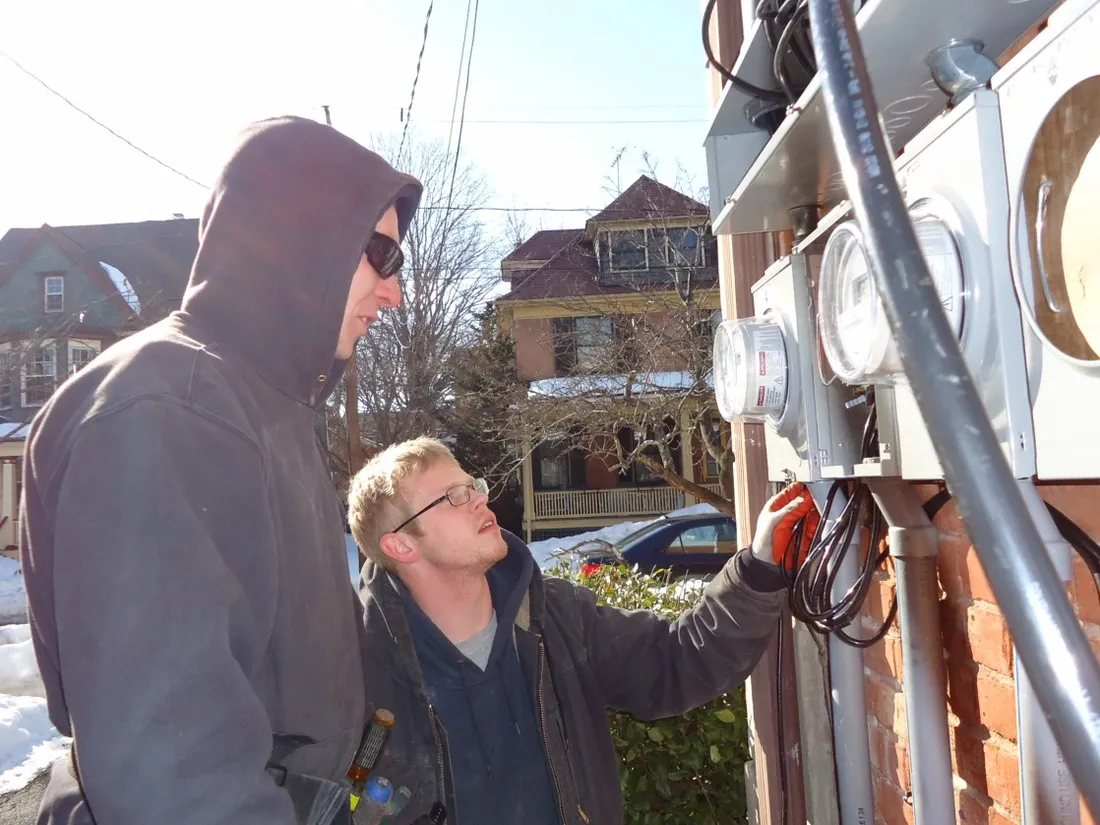
MDL's part of this project is the work on its panel upgrade page. There, MDL "helps define whether a property needs a panel replacement, added circuits, load management, or a complete service upgrade" and puts "capacity, permits, utility work, inspection, and restoration in one written scope." For what each of those jobs costs in North Jersey, line by line, see the electrical panel replacement cost guide. Other large loads compete for the same capacity. An EV charger or a hot tub on the same service belongs in the same calculation.
04 / What the code requires
New Jersey has enforced the 2023 electrical code since August 17, 2026. Article 426 covers a heated driveway.
New Jersey's electrical subcode adopts the 2023 National Electrical Code (N.J.A.C. 5:23-3.16). The Department of Community Affairs adopted the update on July 15, 2026, effective August 17, 2026. The state's amendments to the 2023 code list the sections it changes. Article 426, on fixed outdoor electric de-icing and snow-melting equipment, is not among them, so it applies as published. Here is what it asks of a heated driveway, as EC&M (2015) and IAEI Magazine (2020) summarize it; the section numbers are theirs.
- Continuous load, 426.4. The circuit is sized at 125 percent of the load. A 20.87-amp mat needs at least 26 amps of circuit capacity. WarmlyYours' breaker table puts it on a 30-amp breaker, which it rates for 24 amps of design load. Two mats are two circuits.
- Ground-fault protection, 426.28. Required on fixed outdoor de-icing and snow-melting equipment (IAEI). WarmlyYours specifies a 30 mA ground-fault equipment protection (GFEP) breaker. Warmup notes that some controllers have GFEP built in.
- A lockable disconnect, 426.50(A). The disconnect must be capable of being locked open. The branch-circuit breaker can serve if it is readily accessible.
- Marking, 426.13. Caution signs or markings that make the system's presence clearly visible.
- A licensed electrician. New Jersey allows electrical work only by licensed contractors, except a single-family homeowner working on his or her own dwelling (N.J.A.C. 5:23-2.15). WarmlyYours says "a qualified electrician should connect the Heating System," and Warmup requires a licensed and qualified electrician.
The manuals add steps that belong on the electrician's line of the proposal:
- Test each mat's continuity, resistance and insulation before and after it is buried; WarmlyYours allows -5 to +10 percent of the rated resistance.
- Record the readings (Warmup).
- Label the panel to show where the heating units are (WarmlyYours).
- Run the cold leads to the connection box in separate conduits (WarmlyYours).
- Never power a mat before it is buried in concrete, asphalt or mortar (WarmlyYours).
05 / The electrical cost lines
What the electrical side costs, line by line.
No source we found publishes a New Jersey price for wiring a snow-melting system as a whole. The lines below are published prices for the parts it is made of. They are other companies' figures, quoted as market evidence; none of them is an MDL price.
| Line | Published price | Source | What it covers |
|---|---|---|---|
| Dedicated circuit, 30 to 50 A | $570 to $1,000; $700 average | Angi, updated October 30, 2026 (national) | Labor is most of the bill. New York metro $890 to $1,090. Permit or inspection $10 to $500, listed separately. |
| Two circuits for two tire-track mats | $1,140 to $2,000 | Angi's range × 2 (our arithmetic) | One 30 A circuit per mat under the WarmlyYours breaker table. |
| Subpanel | $1,500 to $3,500 | Malfettone Electric, 2026 NJ guide | Spaces for new circuits when the service has room but the panel does not. |
| 150 A service upgrade | $2,200 to $3,200 | Malfettone Electric, 2026 NJ guide | The middle tier between 100 and 200 amps. |
| 200 A service upgrade, Essex County | $3,500 to $4,800; up to $6,000 in larger older Montclair and Glen Ridge homes | Malfettone Electric, Essex County page | Panel, breakers, permit and inspection included. |
| Electrician's time | $50 to $130 an hour | HomeServe, March 13, 2026 (national) | Malfettone publishes $50 to $150 for a licensed New Jersey electrician. |
| Snow-melt system alone | $3,200 to $5,800 | HomeAdvisor, June 19, 2026; Angi, October 30, 2026 | Mats or cable and controls, before excavation and panel upgrades (Angi). Listed for context; not the electrical side. |
Two worked budgets for the electrical side alone:
- 50-foot tire tracks on a service that passes the calculation: two circuits, $1,140 to $2,000 at Angi's national range.
- The same tracks on a 100-amp service that fails it: add a 200-amp upgrade at Malfettone's Essex County range, $4,640 to $6,800 in all.
Neither budget includes mats, controls, paving or excavation. One national figure is worth checking against New Jersey's: HomeServe prices "a 400-amp panel" at $2,000 to $4,000, while the published Essex County price for a 100-to-200-amp upgrade alone is $3,500 to $4,800.
06 / What a storm costs to run
At New Jersey's power price, running it costs about $2 to $10 an hour.
Running cost is kilowatts times hours times the price. EIA's latest monthly figure puts New Jersey's average residential price at 24.61 cents a kilowatt-hour for August 2026 (released October 23, 2026; 2026 values are preliminary). January to August 2026 averaged 24.09 cents. The US average for August was 18.16 cents. New Jersey is about 36 percent higher, so a running cost worked out at a national price understates a New Jersey bill by about a quarter.
The hours depend on the winter. NOAA's 1991–2020 normals for Newark Liberty International Airport give:
- 31.5 inches of snow a year, 24.6 of it from December to February.
- 14.5 days a year with at least a tenth of an inch.
- 7.1 days with an inch or more.
- 3.6 days with three inches or more, and 2.0 with five or more.
The table assumes 12 hours of running on each of Newark's 7.1 days with an inch or more. That is our assumption, not a measured figure. Automatic systems switch on when a sensor sees snow or ice, and HomeAdvisor says they run about an hour after it stops. Warmup's advice to switch on before snow falls adds warm-up hours. Change the hours in the calculator below.
| Layout | Per hour at 24.61¢ | Per 12-hour storm | 7.1 storms of 12 hours | Same winter at the US 18.16¢ |
|---|---|---|---|---|
| Two 40-ft tire tracks, 8 kW | $1.97 | $23.63 | $167.74 | $123.78 |
| Two 50-ft tire tracks, 10 kW | $2.46 | $29.53 | $209.68 | $154.72 |
| One-car lane, 25 kW | $6.15 | $73.83 | $524.19 | $386.81 |
| Two-car pad, 40 kW | $9.84 | $118.13 | $838.71 | $618.89 |
The national guides give $150 to $600 a year to operate a heated driveway (Angi) and $250 to $600 for an electric system (HomeServe). At New Jersey's price, a two-car pad reaches $600 after about 61 hours of running. Two 50-foot tire tracks would need about 244 hours. Under our 12-hour assumption, tracks stay inside the national range and a full pad runs past its top.
07 / Load and running-cost calculator
Put your own driveway into the numbers.
Heated driveway load and running-cost calculator
Enter the heated area and choose a density. The calculator shows the load, the current at 240 volts, the circuit capacity at 125 percent, and the running cost at the price and hours you set. It is arithmetic on the figures in this guide. It is not a load calculation on your house and not an MDL price.
Current at 240 volts41.7 A
- Load: 10.0 kW (200 sq ft at 50 W)
- Circuit capacity at 125 percent: 52.1 A
- Share of a 100 / 150 / 200 A service rating: 42% / 28% / 21%
- Per hour at 24.61¢ a kWh: $2.46
- Per storm of 12 hours: $29.53
- Per winter of 7.1 storms: $209.68
Defaults: 24.61¢ is New Jersey's August 2026 residential average (EIA, preliminary); 7.1 is Newark's yearly count of days with an inch of snow or more (NOAA 1991–2020); 12 hours per storm is our assumption. Whether your service can carry the current is the NEC 220.83 calculation in section 03.
Check if your panel can carry it08 / Permits and fees
A heated driveway needs an electrical permit in New Jersey, and West Orange has no fee line written for it.
New Jersey makes it unlawful to install or alter regulated equipment "without first filing an application" and "obtaining the required permit" (N.J.A.C. 5:23-2.14(a)). Mats, controls and circuits are electrical work. The fee depends on who inspects. In West Orange the township's own schedule applies (Ordinance 2802-23). Where the state is the enforcing agency, the state's schedule applies (N.J.A.C. 5:23-4.20).
| Fee line | West Orange | State schedule |
|---|---|---|
| Rough and final wiring, first 25 switches, receptacles, outlets and fixtures | $100 | Not a line on its own |
| Electric heater in a dwelling | $25 each | Not a line on its own |
| Electrical device rated 1 to 10 kW, such as one 4 or 5 kW mat | No such line | $15 |
| Electrical device rated over 10 to 50 kW, such as a 25 kW lane or a 40 kW pad | No such line | $65 |
| Service equipment or panel, up to 224 or 225 A | $150 (0 to 224 A) | $65 (225 A or less) |
| Meter | $50 | Not a line on its own |
| Utility load management device | No such line | $65 |
| Minimum electrical fee | $100 | Not listed here |
West Orange's schedule has no line for snow-melting equipment, so how a set of mats is counted is the township code office's call. That is why the permit belongs on a proposal as its own line, not folded into labor. For comparison, Angi's national range for a circuit permit or inspection is $10 to $500.
09 / PSE&G and JCP&L
If the answer is a bigger service, the utility sets part of the calendar.
North Jersey homes are served by PSE&G or JCP&L; your bill says which. Each has its own published steps.
PSE&G
An upgrade application needs "load details for both the existing meters and new meters, including volts, amps, and phases." The town inspects the wiring first and issues a Certificate of Approval, the cut-in card, before PSE&G's service date. PSE&G says residential service requests "may take up to six weeks." For an upgrade to 200 amps or less, the contractor picks up a meter pan with the original town permit and the project reference number.
JCP&L
"When upgrading, adding load, changing attachment point, or performing maintenance on an existing overhead service entrance, the customer shall first contact the Company's Customer Contact Center" (800-662-3115). A residential service drop or lateral takes four weeks. Every upgrade is inspected before reconnection, and temporary uninspected service is only for single-phase overhead services of 200 amps or less.
One JCP&L detail matters even without a new service. Its guide asks for a call before load is added on an existing overhead service. A 10 kW or 40 kW snow-melt load on a JCP&L overhead service is worth that call, even when the panel stays.
10 / Before anyone digs
Call 811 at least three full working days before the driveway is opened.
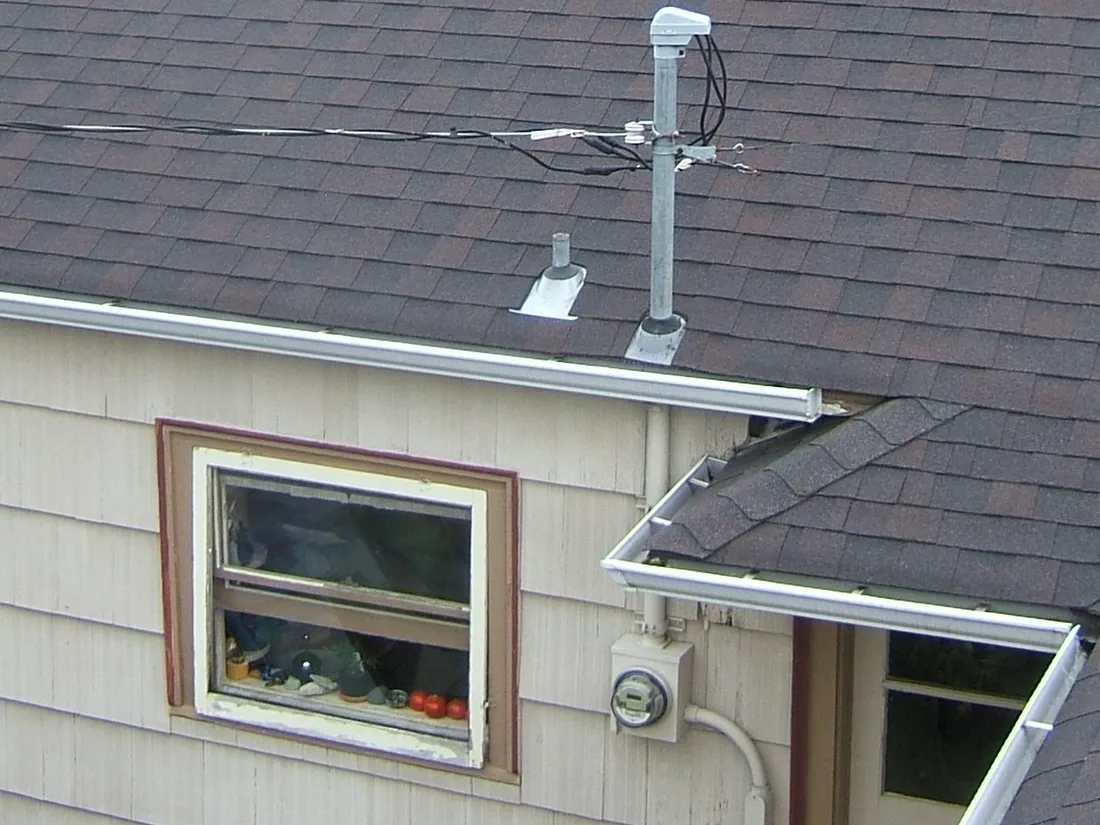
JCP&L's customer guide spells out the New Jersey One-Call rule. Before any excavation, "including driving ground rods," the contractor calls 811 or (800) 272-1000 at least three full working days, and not more than ten, before digging. The steps are:
- Mark the trench lines and dig area with white paint or chalk, white flags or white stakes.
- Call 811 or (800) 272-1000, or file online at nj1-call.org.
- Wait for the utilities to mark their lines before digging.
A heated driveway opens the whole surface, and the mats' cold leads run back to a connection box in conduit. The ticket belongs on both the paving contractor's schedule and the electrician's.
11 / What the proposal should show
Ask for the electrical lines in writing before the paving is booked.
- The load calculation on your existing service, and its result.
- Watts per square foot, the layout, and the total load in kW and amps.
- The number of circuits, each breaker size, and the ground-fault equipment protection.
- Where the disconnect is, and confirmation it can be locked open.
- Panel spaces, a subpanel, load management or a service upgrade, each priced as its own line.
- The permit, the inspection and the utility step, with who files each.
- Resistance and insulation tests before and after burial, with the readings recorded.
- Who calls 811, and when.
Lines 1 and 5 are the work MDL's panel upgrade page describes: the load calculation and whatever it leads to. This guide does not quote mats, controls or paving.
Panel check
Find out what your service can carry before you price the mats.
Send MDL the address, the main breaker rating, whether the service is overhead or underground, and the layout you are considering. The request form is on MDL's panel upgrade page, which starts with the load, not an automatic 200-amp answer.
12 / Questions answered
Heated driveway questions from New Jersey homeowners.
How much does a heated driveway cost in New Jersey?
The national cost guides put it at $12 to $28 a square foot installed (HomeServe, March 2026) or $12 to $25 (HomeAdvisor, June 2026; Angi, July 2026). Most jobs run $3,000 to $8,700, and a one-car, 288-square-foot drive is $3,400 to $8,000 in HomeServe's guide. Those figures stop short of the electrical side. Two dedicated circuits for tire-track mats run $1,140 to $2,000 at Angi's national range. If the service also needs a 200-amp upgrade, Essex County's published range adds $3,500 to $4,800.
How many amps does a heated driveway need?
About 0.21 amps per heated square foot at 50 watts a square foot and 240 volts. Two 2-by-50-foot tire tracks draw 41.7 amps; WarmlyYours rates each of those mats at 20.87 amps. A 20-by-40-foot two-car pad draws 166.7 amps, or 133.3 at 40 watts a square foot. The circuits are sized at 125 percent because the code treats snow melting as a continuous load.
Can a 100-amp panel handle a heated driveway?
Sometimes, for tire tracks, and the NEC 220.83 load calculation is what says so. Two 50-foot tracks draw 42 percent of a 100-amp service's rating, and the house is already using part of it. A full two-car pad draws 167 amps, more than the whole rating of a 100-amp or a 150-amp service. When the calculation fails, the choices are a smaller layout, a lower density, load management, or a service upgrade. Malfettone Electric publishes $3,500 to $4,800 for a 200-amp upgrade in Essex County.
How much does it cost to run a heated driveway per storm in NJ?
At New Jersey's August 2026 residential price of 24.61 cents a kWh (EIA), two 50-foot tire tracks cost $2.46 an hour and a 20-by-40-foot pad $9.84 an hour. Over 12 hours of running, which is our assumption, that is $29.53 and $118.13 a storm. Newark averages 7.1 days a year with an inch of snow or more (NOAA), so a winter is about $210 for the tracks and $839 for the pad.
Do you need a permit for a heated driveway in New Jersey?
Yes, an electrical permit. New Jersey requires a permit before regulated equipment is installed (N.J.A.C. 5:23-2.14), and only a licensed electrical contractor may do the work, except a single-family homeowner on his or her own dwelling (5:23-2.15). West Orange's fee schedule has no snow-melt line. Its wiring line is $100 for the first 25 devices, its service panel line $150, and its minimum electrical fee $100. On the state schedule, a device rated over 10 to 50 kW is $65.
Can you add heat to an existing driveway?
Sometimes. HomeAdvisor describes three retrofit methods, including saw-cut channels that also work for tire tracks, and says retrofitting "can save you up to $4,000." HomeServe says cutting grooves into existing asphalt is possible but less common. The electrical side is the same either way: the same amps, circuits, ground-fault protection and permit.
Are heated tire tracks enough?
They cut the load and the running cost to a fraction of a full pad: 42 amps and $2.46 an hour for two 50-foot tracks, against 167 amps and $9.84 for a 20-by-40-foot pad. HomeServe calls the track path "much cheaper" but says it "may not be the safest option," because the rest of the surface stays snowy. WarmlyYours does not recommend tire-track coverage under pavers.
Electric or hydronic?
HomeAdvisor says hydronic systems cost 30 to 50 percent more to install, and HomeServe puts hydronic operation at $120 to $250 a year against $250 to $600 for electric. Hydronic needs a boiler. Electric needs current, which is why the panel and service questions in this guide decide whether electric works on your house.
13 / About this guide
Who wrote it, and what it is not.
MDL Electric Cooling & Heating wrote this guide. MDL is a licensed electrical contractor at 4 Harrison Ave, West Orange (NJ Electrical Contractor #34EI01606200). The guide covers the electrical side of a heated driveway: the load, the circuits, the panel and service, the permit, the utility and the running cost. It does not quote snow-melting mats, controls, paving or excavation, and no figure here is an MDL price. Every figure was read from the sources below on November 9, 2026. The amps, shares, budgets and running costs are our arithmetic on those figures, shown so you can check them.
14 / Source record
Sources, read November 9, 2026
Prices, rates and codes change. Where two sources disagree, both are shown. Nothing here is an MDL price. No company named here was asked or paid to appear, and their prices are quoted as market evidence only.
- HomeServe — Heated driveway cost guideMelanie Dawn, March 13, 2026: $12 to $28 a sq ft; electric $6 to $10 a sq ft to install; electricians $50 to $130 an hour; $250 to $600 a year to operate electric; tire-track paths.
- HomeAdvisor — How much does a heated driveway cost?Updated June 19, 2026: $3,000 to $8,700, $13,000 average, $12 to $25 a sq ft; electric system $3,200 to $5,800; retrofit methods; automation run time.
- Angi — How much does a heated driveway cost?Rachel Hoffman, updated October 30, 2026: $13,000 average; electric $3,200 to $5,800 before excavation and panel upgrades; capacity "can double that price."
- Angi — Types of driveway heating systemsAllie Ogletree, updated July 9, 2026: $150 to $600 a year to operate.
- Angi — Cost to install a dedicated circuitUpdated October 30, 2026: $570 to $1,000, $700 average, 30 to 50 A circuits, New York $890 to $1,090, permit or inspection $10 to $500.
- WarmlyYours — Snow melt systems installation manual (PDF)45 to 50 W a sq ft at 3-inch spacing, 36 at 4-inch; breaker table; 30 mA GFEP; mat ratings; tests, labeling, conduit and burial rules; tire-track notes.
- WarmlyYours — WHMA-240-0240 snow melt mat240 V, 2 × 40 ft, 80 sq ft, 16.67 A.
- Warmup — Snow melting mats and cable instructions (PDF)240 V as the residential default; about 50 W a sq ft at 3-inch spacing; 40 W "is plenty"; GFEP; licensed electrician; record test readings; pre-activation.
- EC&M — Article 426, fixed outdoor electric de-icing and snow-melting equipmentMark Lamendola, 2015: 426.4 continuous load and the 125 percent rule, 426.13 marking, 426.28 ground-fault protection, 426.50 disconnect.
- IAEI Magazine — Monitoring ground faults of heat trace and snow melt equipmentJanuary–February 2020: ground-fault protection of equipment for snow-melting equipment under 426.28.
- EC&M — One-family dwelling unit load calculationsMike Holt, 2015: the 220.83 optional method for adding loads to an existing service.
- N.J.A.C. 5:23-3 — Subcodes (PDF)5:23-3.16 adopts the 2023 National Electrical Code and lists the state's amendments; Article 426 is not among them.
- NJ Department of Community Affairs — model codes adoption (PDF)Adopted July 15, 2026 as R.2026 d.086; effective August 17, 2026.
- N.J.A.C. 5:23-2 — Administration (PDF)2.14 permits; 2.15 licensed electrical work and the single-family homeowner exception.
- N.J.A.C. 5:23-4 — Fees (PDF)4.20 department fees: devices 1 to 10 kW $15; over 10 to 50 kW, service equipment of 225 A or less and utility load management devices $65.
- Township of West Orange — construction fee scheduleOrdinance 2802-23: wiring $100 for 1 to 25, electric heaters $25 each, service panel $150 for 0 to 224 A, meters $50, minimum fee $100.
- US EIA — Electric Power Monthly, Table 5.6.AAugust 2026 residential average: New Jersey 24.61¢, US 18.16¢ a kWh; released October 23, 2026; 2026 values preliminary.
- US EIA — Electric Power Monthly, Table 5.6.BJanuary to August 2026 residential average: New Jersey 24.09¢ a kWh.
- NOAA NCEI — 1991–2020 annual and seasonal normals, Newark Liberty International AirportStation USW00014734: 31.5 in a year, 24.6 in December to February; 14.5, 7.1, 3.6 and 2.0 days at 0.1, 1, 3 and 5 inches or more.
- NOAA NCEI — annual and seasonal normals documentation (PDF)Field definitions for the snowfall day counts.
- Malfettone Electric — panel upgrade cost in NJ, 2026 guide150 A $2,200 to $3,200; 200 A $3,500 to $4,800; subpanel $1,500 to $3,500; $50 to $150 an hour.
- Malfettone Electric — panel upgrade, Essex County$3,500 to $4,800 with permit and inspection included; up to $6,000 in larger older Montclair and Glen Ridge homes.
- PSE&G — new or upgraded electric serviceLoad details for upgrades; inspection and cut-in card before the service date; up to six weeks for residential requests.
- PSE&G — mandatory local inspectionsLocal inspection before meters are installed; meter pan pickup for upgrades to 200 A or less.
- JCP&L (FirstEnergy) — customer guide for electric service, New Jersey (PDF)June 2024: four-week residential lead time; 3.12 contact before adding load on an overhead service; 3.13 New Jersey One-Call.