
01 / The short answer
A new furnace is a few thousand dollars of equipment and a job whose price is set by the house around it.
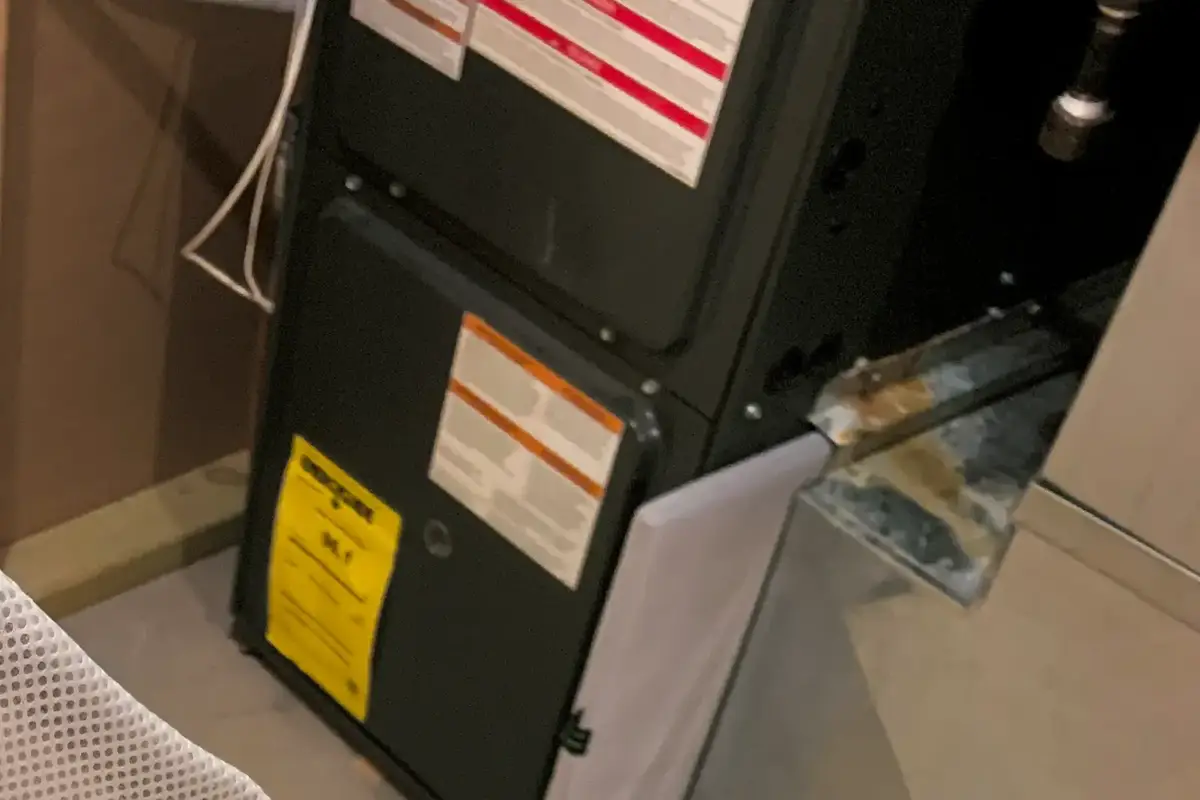
The furnace itself is the smaller part of the bill. HomeGuide prices the unit alone at $700 to $6,200 and the installed job at $3,800 to $12,000. The gap is labor, venting, ductwork, gas and electrical connections, the permit, and hauling the old unit out. That is why a Home Depot shelf price and a contractor's quote for the same furnace look like different products: one is a box, the other is a working heating system that has passed a New Jersey inspection.
The second thing that sets the price is efficiency. An 80 percent furnace sends a fifth of the fuel's heat up a metal flue. A 95 percent or higher condensing furnace keeps most of it, but it vents through plastic pipe, drains condensate, and leaves the old chimney to be dealt with. In a county where the median home was built in 1959 and 30 percent of the housing stock dates from before 1940, that venting question is often the whole difference between a low quote and a high one.
This guide sets out the published ranges as each source states them, what each line item is, when a repair is the better spend, and the New Jersey permit, licence and carbon monoxide rules that apply. It quotes no MDL price. MDL's heating installation page explains how MDL scopes a replacement in West Orange and across Essex, Morris and Union County; the ranges below are what to compare that written scope against.
Angi's 2026 range, with a $4,814 national average from 11,869 verified projects; HomeAdvisor publishes the same figures.
HomeGuide's range for unit and labor; Carrier and Bryant use the same planning range, citing HomeAdvisor.
HomeGuide: 80 to 89 percent AFUE $3,800 to $6,200 installed; 90 to 95 percent $5,200 to $8,800; 96 percent and up $7,500 to $12,000.
Like-capacity furnace replacement needs a notice before work, a permit application within five business days, and an inspection (N.J.A.C. 5:23-2.17A).
Compare quotes by what they include, not by the total. A quote that names the furnace model and AFUE, the venting route, the duct and gas-line work, the electrical connection, the permit, removal, and start-up is a price. A quote that names the furnace is a guess with a number on it.
02 / Cost by efficiency and type
Published installed ranges by efficiency, fuel, and burner type, with the source beside each number.
Three kinds of ranges are public. Cost publishers compile project data (Angi, HomeAdvisor, HomeGuide). Manufacturers publish planning ranges built on that data (Carrier, Bryant). Contractors publish their own experience (Michael & Son, a multi-state company whose service area does not include New Jersey). The table keeps them apart so you can see where they agree.
Swipe across the table to see every column.
| Furnace | Unit only | Installed | Source |
|---|---|---|---|
| Standard efficiency, 80 to 89% AFUE | $700 to $1,800 | $3,800 to $6,200 | HomeGuide |
| Mid efficiency, 90 to 95% AFUE | $1,500 to $3,700 | $5,200 to $8,800 | HomeGuide |
| High efficiency, 96% AFUE and up | $2,800 to $6,200 | $7,500 to $12,000 | HomeGuide |
| Natural gas furnace | Not stated | $3,800 to $10,000, up to $12,000 | HomeAdvisor (June 17, 2026); Carrier uses $3,800 to $12,000 |
| Electric furnace | Not stated | $2,000 to $7,000; Carrier gives $2,000 to $8,100 | HomeAdvisor; Carrier (October 13, 2026) |
| Oil furnace | Not stated | $6,750 to $10,000 or more | HomeAdvisor; Carrier; Angi |
| Propane furnace | Not stated | $3,700 to $14,200 | Angi (September 8, 2026) |
| Single-stage gas furnace | Not stated | $4,000 to $5,500 | Michael & Son (December 15, 2025) |
| Two-stage gas furnace | Not stated | $5,500 to $7,000 | Michael & Son |
| Variable-speed, high-efficiency furnace | Not stated | $7,000 to $9,000 and up | Michael & Son |
How to read the table
- The $2,823 to $6,897 range is the widest net. Angi's and HomeAdvisor's figure covers all fuel types and includes small and simple jobs, which is why its floor sits below the gas-only ranges.
- The contractor tiers are one company's prices. Michael & Son's figures are all-inclusive prices in Virginia, Maryland and the Carolinas; they are useful for the shape of the tiers, not as a New Jersey number.
- Unit-only prices are not quotes. HomeGuide's $700 to $6,200 for the furnace alone is the gap between a retail listing and an installed job.
03 / Cost by home size
How furnace capacity, and therefore price, climbs with the size of the house.
Furnace capacity is rated in BTU per hour. Angi says the average home needs 80,000 to 100,000 BTU, and both Angi and HomeGuide publish tables that pair square footage with a BTU band and a price. The two tables disagree because they measure different things: Angi's price is for the unit's capacity, HomeGuide's includes installation.
Swipe across the table to see every column.
| Home size | Angi and HomeAdvisor: BTU and unit price | HomeGuide: BTU and installed price |
|---|---|---|
| About 1,000 to 1,200 square feet | 30,000 to 60,000 BTU, $1,200 to $2,000 | 40,000 to 50,000 BTU, $3,800 to $6,700 (up to 1,200 sq ft) |
| About 1,500 to 1,600 square feet | 45,000 to 90,000 BTU, $1,800 to $3,000 | 50,000 to 60,000 BTU, $4,200 to $7,200 (1,200 to 1,600 sq ft) |
| About 2,000 square feet | 60,000 to 120,000 BTU, $2,400 to $4,000 | 60,000 to 70,000 BTU, $4,700 to $8,000 (1,600 to 2,000 sq ft) |
| About 2,500 square feet | 75,000 to 150,000 BTU, $3,000 to $5,000 | 70,000 to 90,000 BTU, $5,100 to $9,500 (2,000 to 2,500 sq ft) |
| About 3,000 square feet and up | 90,000 to 180,000 BTU, $3,600 to $6,000 | 90,000 to 120,000 BTU, $5,800 to $12,000 (2,500 to 3,000-plus sq ft) |
Carrier's cost guide adds the caution that matters most: square footage alone should not determine furnace size. Climate, insulation, windows and ductwork change the heating load, a 2,000 and a 2,500-square-foot house may need different capacities, and an oversized furnace short-cycles and heats unevenly. A contractor who quotes without a load calculation is sizing by habit, and in a 1920s Montclair colonial with original windows, habit is often wrong in both directions.
04 / What moves the price
The eight line items that turn a furnace price into a replacement price.
Carrier lists the installation variables as labor, permits and inspections, furnace removal, ductwork, venting, and electrical or gas modifications, and says a project can pass $12,000 when it needs extensive versions of them. The published figures for each are below. Each one is a question to ask before the quote is signed.
- Capacity and the load calculation. The BTU rating follows the house, not the old furnace's label. Angi: $75 to $100 an hour for labor, so an extra day of work is a real line.
- Efficiency and staging. HomeGuide's installed ranges run from $3,800 to $6,200 at 80 to 89 percent to $7,500 to $12,000 at 96 percent and up; Carrier says upfront cost rises from single-stage to two-stage to modulating.
- Venting. Carrier: high-efficiency condensing furnaces may require different venting than an older furnace, adding labor and material. Section 05 explains why.
- Ductwork. New ductwork is $2,000 to $5,000 (Angi) where the existing ducts are incompatible or undersized; minor duct sealing and repairs are $300 to $1,500 (HomeGuide).
- Gas line. A new gas line runs $15 to $50 or more per linear foot (HomeGuide); converting oil to gas is $3,800 to $12,000 or more, and electric to gas $1,800 to $6,500 in HomeGuide's conversion table.
- Electrical. Carrier notes that electric furnace costs rise when electrical upgrades, new circuits or permits are required. A furnace that needs a new circuit, or a panel that has no room for one, brings the panel upgrade question into the heating quote.
- Permit and inspection. Angi's national range is $400 to $1,500. New Jersey's basis is different and lower where the state is the enforcing agency; section 08 has the figures.
- Removal and disposal. $60 to $330 (Angi and HomeAdvisor) or $150 to $400 (HomeGuide), sometimes included, sometimes a separate line.
Two more lines appear on some quotes. A thermostat change: Michael & Son lists smart thermostats, zoning and humidifiers as optional add-ons that raise the total. And the estimate itself: Bryant says many HVAC companies offer free estimates, while some charge $50 to $200 that is often credited to the project.
05 / 80% vs 95%+
What AFUE means, why a condensing furnace costs more to install, and the 2028 federal floor.
AFUE is annual fuel utilization efficiency. ENERGY STAR's plain definition is the percentage of the heat in the incoming fuel that is converted to space heat over a year; the exact method is the federal test procedure in 10 CFR Part 430. An 80 percent furnace turns 80 cents of each fuel dollar into heat for the house and sends the rest out the flue. A 96 percent furnace keeps 96 cents. The tiers the cost publishers use are 80 to 89 percent standard, 90 to 95 percent mid, and 96 percent and up high (Angi and HomeGuide).
Why the high-efficiency job costs more than the high-efficiency furnace
A furnace above roughly 90 percent is a condensing furnace. It pulls so much heat out of the exhaust that water vapor condenses inside a second heat exchanger. Three things follow.
- The exhaust is cool and wet. It cannot go up the old metal flue or masonry chimney; it leaves through plastic pipe, which needs a route to an outside wall or the roof.
- The condensate has to drain. It is acidic water, and on a basement floor it often needs a small pump.
- The old chimney is left behind. A water heater that shared it may now be venting alone into a flue sized for two appliances, which is a question for the installer, not an afterthought.
Carrier's cost guide puts it in one line: condensing furnaces may require different venting than an older furnace, which can add labor and material costs. In an older North Jersey house, that is the chimney liner, the sidewall penetration, the condensate route, and the question of what the water heater that shared the chimney will do now. These are the items that separate HomeGuide's $3,800 to $6,200 standard-efficiency range from its $7,500 to $12,000 high-efficiency range.
What the efficiency buys back
ENERGY STAR says certified gas furnaces in the northern half of the country, where New Jersey sits, are up to 18 percent more energy efficient than baseline models and save about $160 a year in energy costs; certified oil furnaces are up to 4 percent more efficient and save about $90 a year. Carrier's own framing is that a higher-efficiency furnace carries a higher purchase price while local fuel prices, run hours and insulation decide the savings. Neither figure is a New Jersey calculation; a contractor can run one from your gas bills.
The 2028 standard
The Department of Energy's final rule for consumer furnaces, published December 18, 2023 and effective February 16, 2024, sets a minimum of 95.0 percent AFUE for non-weatherized gas furnaces and mobile home gas furnaces manufactured in or imported into the United States on or after December 18, 2028. It does not require anyone to remove a working 80 percent furnace, and furnaces built before that date can still be sold and installed. It does mean the 80 percent furnace is a product with an end date, and that a contractor's parts and experience will keep shifting toward condensing equipment. ENERGY STAR's label is stricter than the standard: 97 percent AFUE or greater for gas furnaces in its U.S. North region, which lists New Jersey, 95 percent in the South, and 87 percent for oil furnaces.
06 / Gas, oil, or electric
Gas heats seven in ten Essex County homes; oil and electric change the price in different directions.
The 2024 American Community Survey counts 320,791 occupied homes in Essex County. Utility gas heats 226,865 of them, or 70.7 percent; electricity heats 71,394 (22.3 percent), fuel oil 10,155 (3.2 percent), and bottled or tank gas 5,565 (1.7 percent). Morris County has more oil heat, 12.0 percent of 193,869 occupied homes, with 72.9 percent on utility gas. Union County is the most gas-heavy of the three at 82.9 percent, with 3.1 percent on oil. Those shares are our arithmetic on the Census estimates.
HomeAdvisor's installed range, up to $12,000; Carrier calls gas the most popular furnace fuel in the United States and Canada.
HomeAdvisor; Carrier gives $2,000 to $8,100 and warns that electrical upgrades, new circuits and permits push it up. Michael & Son calls electric the cheapest to install and the costliest to run.
HomeAdvisor and Carrier; HomeAdvisor notes oil furnaces are widespread in the Northeast and cost more because the fuel does.
HomeGuide's oil-to-gas conversion range; electric to gas $1,800 to $6,500; HomeAdvisor puts an electric-to-gas furnace conversion with new gas lines and venting at $5,000 to $15,000.
An electric furnace has no flue and no gas line, which is why its installed range starts lowest. Its running cost is the catch: Carrier notes that electric resistance converts essentially all of the electricity into heat, but the bill depends on local electricity rates and run time. A house with an electric furnace is also the house most likely to be weighing a heat pump instead, which is a different comparison and a different guide. A house on oil in Morris County is weighing the furnace against the gas-line cost and whether gas is on the street at all.
07 / Repair or replace
Three published rules of thumb, the price of a repair, and the one check that overrides all of it.
Every cost guide offers a rule. They do not agree on the numbers, so here are the three most cited, side by side, and what a repair actually costs.
- Carrier: a well-maintained gas furnace should last 15 or more years; under 15 years, minor repairs are generally worthwhile; replacement is usually the sounder choice if repair costs approach 50 percent of a new system or the unit is older than 15 years.
- Michael & Son: repair may make sense when the furnace is under 10 years old and the repair is under one-third of a replacement; replacement is usually smarter at 12 to 15 years or older, with frequent repairs, uneven heat, rising bills, or a damaged heat exchanger.
- HomeAdvisor: the signs to replace are age over 15 years, rising energy bills, uneven heating, banging or squealing, visible rust or cracks, frequent cycling, and humidity problems.
The repair side of the ledger is smaller than most people expect. HomeGuide puts gas furnace repairs at $100 to $480 on average, labor at $75 to $150 an hour plus parts, a tune-up at $70 to $200, and an annual maintenance package at $150 to $500. HomeAdvisor puts annual maintenance at $100 to $300. The CDC's advice for any fuel-burning heating system is to have it serviced by a qualified technician every year, and that annual visit is where most replace-or-repair decisions are first raised, by the technician who sees the heat exchanger.
The check that overrides the rules
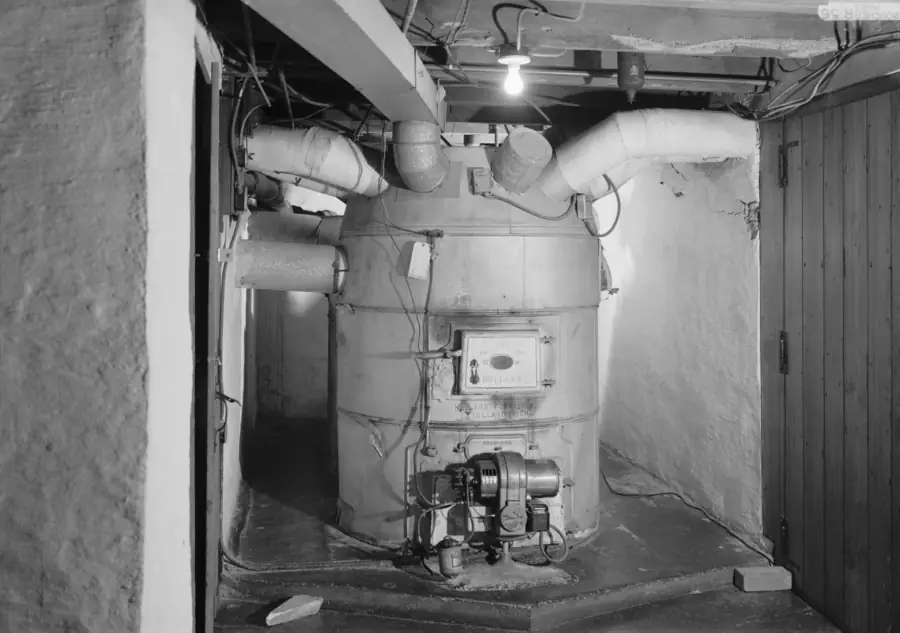
A cracked heat exchanger is the one fault where age and cost stop mattering, because it can let combustion gases into the air the blower pushes through the house. Michael & Son lists heat exchanger damage as a replace signal; HomeAdvisor lists visible rust or cracks as dangerous. If a technician reports a cracked exchanger, the furnace should not run until it is replaced, and the household's carbon monoxide alarms matter that night. If the furnace has stopped, is short-cycling, or is blowing cold air and nobody has looked at it yet, that is a diagnosis before it is a replacement decision: see heating repair, which also covers what counts as an emergency.
08 / New Jersey rules
Permit, inspection, fee basis, and licence: what New Jersey requires for a furnace replacement.
A furnace replacement is minor work, which still needs a permit
The Uniform Construction Code makes it unlawful to install or alter regulated equipment without a permit (N.J.A.C. 5:23-2.14), and it names the furnace case directly. Minor work includes "the replacement of existing low-pressure boilers, warm air furnaces, air conditioning units, and air conditioning condensing units with new appliances of like capacity" (N.J.A.C. 5:23-2.17A(c)3). Minor work has its own sequence:
- Notice first. The owner, or the contractor acting for the owner, gives oral or written notice to the local construction office before work begins.
- Application within five business days. The permit application follows the notice within five business days, and the fee is paid before the permit is issued.
- Inspection. The enforcing agency inspects the work; the permit is not closed until it does.
Repairing a furnace is different. West Orange's building department guide lists "repairing furnaces, air conditioners and ducts" among the ordinary repairs that need no permit; replacing one is not on that list.
A replacement that is not like capacity, that changes fuel, or that adds new ductwork, a gas line, or an electrical circuit is a larger permit, with the plumbing, fuel gas, or electrical technical sections added as the scope requires. The contractor files; the homeowner's job is to see the permit number and the inspection result.
What the permit costs
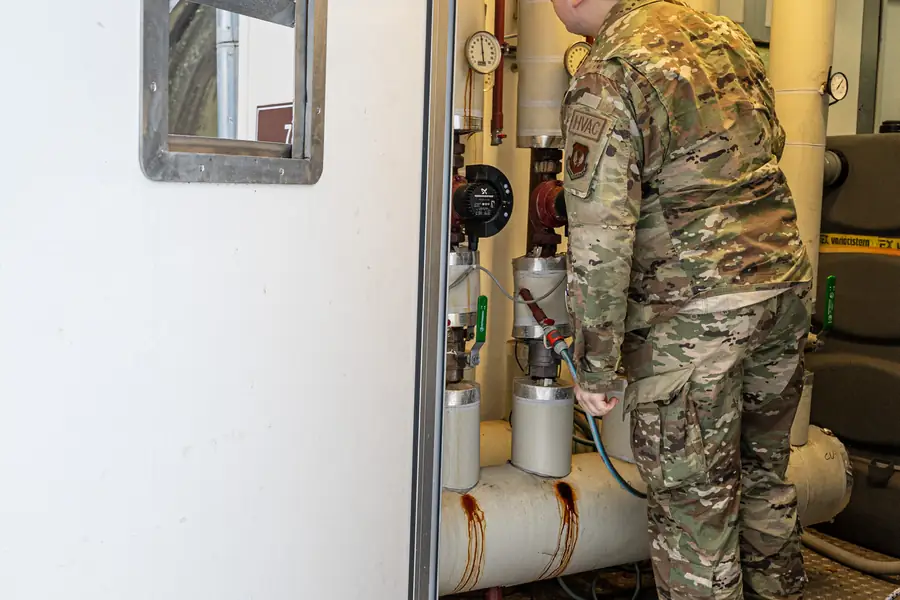
Each municipality sets construction fees by ordinance under N.J.A.C. 5:23-4, so West Orange, Montclair and Morristown each have their own schedule. The state's own table, which applies where the Division of Codes and Standards is the enforcing agency, charges $60 for the first device and $15 for each additional device for a mechanical inspection in a one- or two-family home, with no separate fee for the gas, fuel oil, or water piping connections to that equipment. That is a different order of magnitude from Angi's national $400 to $1,500 permit range, so ask the contractor which town fee is on the quote. West Orange's construction office is at 66 Main Street, Room 217, and its page warns that homeowners and contractors face monetary penalties starting at $2,000 for failing to call for all rough and final inspections.
Who may do the work
New Jersey's HVACR licensing law (P.L.2007, c.211) defines HVACR work to include the installation, servicing, connecting, maintenance or repair of furnaces and space heaters and of warm air heating systems, and says a business shall not engage in HVACR contracting unless licensed as a Master HVACR contractor. The one exemption is a single-family homeowner who personally occupies the dwelling and does the work on it after receiving all required permits, except any work involving CFC or HCFC refrigerants. MDL's Master HVACR licence number is in the About section below, and anyone can check a licence on the state's verification site.
The codes the inspector uses
New Jersey adopted the 2024 editions of the International Residential Code (New Jersey edition), the International Mechanical Code, the International Fuel Gas Code and the International Energy Conservation Code as subcodes effective August 17, 2026, so a furnace inspected now is judged against the 2024 editions: clearances, combustion air, venting, condensate, gas piping and the electrical connection.
09 / Credits and rebates
The federal furnace credit ended with 2025; utility programs change, so verify before subtracting.
ENERGY STAR's own page for the furnace tax credit now reads that the credit was effective for products purchased and installed between January 1, 2023 and December 31, 2025: $600 for ENERGY STAR certified gas furnaces with AFUE of 97 percent or higher, inside a $1,200 annual limit shared with envelope improvements, boilers and central air. Bryant's 2026 pricing guide states the same thing from the manufacturer's side: the Section 25C Energy Efficient Home Improvement Credit is no longer available for qualifying property placed in service after December 31, 2025, after legislation enacted in 2025 moved its expiration up. Some cost guides still describe the credit as running to 2032; as of October 31, 2026, that is out of date.
Utility and state programs are a separate question. Bryant notes that state, local and utility rebates may still be available in 2026 for qualifying equipment and that terms vary by program. The PSE&G and New Jersey Clean Energy program pages could not be read as static pages on October 31, 2026, so this guide prints no utility rebate amount. Before subtracting anything from a quote, get the current program page, the equipment eligibility, the application deadline and any pre-approval step in writing from the contractor, the way the boiler cost guide describes for its program file.
10 / Timing and safety
When to replace, what to do if the furnace quits in January, and the carbon monoxide rule that applies either way.
Carrier's cost guide suggests looking for off-season pricing from local contractors, and pairing a furnace with an aging air conditioner to save on labor, since the two share the blower, coil and ducts. The practical version for North Jersey: a furnace that is past 15 years or has a known fault is cheaper to replace on a planned date in September or October than during the first cold snap, when every contractor's schedule is full and the choice is whatever is on the truck.
If the furnace stops in winter, the order is safety, diagnosis, then the replacement question.
- If anyone smells gas, leave the house and call the gas utility from outside.
- Shut the system off at the thermostat. Do not open the furnace cabinet or touch the gas valve.
- Call for a diagnosis. MDL's heating repair page explains what counts as an emergency and what to have ready.
- Decide with the report in hand. The repair-or-replace rules in section 07 only mean something once a technician has named the fault.
PSE&G: if a monitor goes off or you suspect a leak, immediately evacuate everyone, including pets, outside and call 911, then call PSE&G's emergency line, 1-800-880-7734, to have appliances inspected.
Move outside to fresh air, call 911 or the fire department, do a head count, and do not re-enter until responders say so.
N.J.A.C. 5:70-4.19(d): in one- and two-family homes with a fuel-burning device or an attached garage, UL 2034 carbon monoxide alarms in the immediate vicinity of the sleeping areas; battery, hard-wired or plug-in.
PSE&G: carbon monoxide poisoning is most likely to occur in the winter, when fuel-burning appliances run the most.
A gas or oil furnace is a fuel-burning device, so every house this guide is written for falls under the alarm rule. The CDC adds the maintenance side: install battery-operated or battery-backup detectors near every sleeping area, check them when the clocks change, and replace them on the manufacturer's schedule or every five years. New furnace or old, that is the cheapest line in this guide.
11 / Comparing quotes
Is this quote reasonable? The checklist that answers the question the forums keep asking.
The most-clicked result for this search in West Orange is a Reddit thread titled "First time homeowners replacing a furnace, is this quote reasonable?" The honest answer is that no stranger can tell from the total. A quote can be checked, though, against what it includes. Put two quotes into the same list before comparing a single dollar.
- The equipment, exactly. Brand, model number, BTU input, AFUE, single-stage, two-stage or modulating, and the blower type. Two quotes that both say "high-efficiency furnace" can be $3,000 apart on the furnace alone, per HomeGuide's unit ranges.
- The sizing basis. A load calculation, or a statement that one will be done before ordering. Carrier's guide says square footage alone should not size a furnace.
- Venting and condensate. For a condensing furnace: the vent route, the termination point outside, the condensate drain or pump, and what happens to the old chimney and the water heater on it.
- Ductwork. Included duct sealing or repairs, or a note that the ducts were inspected and left alone. New ductwork is $2,000 to $5,000 on Angi's page; it should never be a surprise on the final invoice.
- Gas and electrical. Any gas-line change, the circuit the furnace will use, and who files the fuel gas and electrical technical sections if they apply.
- Permit and inspection. The town, the fee as a line item, who files the notice and the application, and who meets the inspector.
- Removal and disposal. Included or billed, with the published range as a sanity check: $60 to $330 (Angi, HomeAdvisor) or $150 to $400 (HomeGuide).
- Start-up and paperwork. Combustion check at start-up, thermostat set-up, the manufacturer's warranty registration, and the labor warranty in writing. Angi notes many manufacturers require professional installation to keep the equipment warranty.
- Incentive claims. Any rebate or credit named on the quote, with its program page and deadline. The federal furnace credit ended December 31, 2025.
Three questions settle most of the remaining doubt. Who is the licence holder, and what is the Master HVACR licence number? What is the scheduled window, and will the house be without heat overnight? And if the inspector asks for a change, who pays for it? MDL's heating installation page sets out how MDL writes that scope for a furnace, boiler, heat pump or ductless system; a boiler reader should start with the boiler replacement cost guide instead, because a boiler's cost structure is piping and radiation, not ducts and venting.
12 / About this guide
Who wrote this furnace cost guide, and why it quotes no MDL price.
MDL Electric Cooling & Heating works from 4 Harrison Avenue in West Orange. Its published credentials are a New Jersey electrical contractor license (#34EI01606200), an electrical business permit (#34EB01606200), and a New Jersey master HVACR license (#19HC00308200); anyone can check them on the Division of Consumer Affairs license verification system. Brands appear here only because their published cost guides are sources; they are not dealer or certification statements, and no manufacturer, retailer or publisher paid or asked to appear. The prices are public figures, not MDL quotes. MDL prices a furnace replacement in a written scope after seeing the house, the ducts, the venting and the panel. Contact MDL or use the request form below.
13 / Direct answers
Furnace replacement cost questions New Jersey homeowners ask.
How much does a new furnace cost for a 2,000-square-foot house?
HomeGuide's home-size table puts a furnace for a 1,600 to 2,000-square-foot home at 60,000 to 70,000 BTU and $4,700 to $8,000 installed, and a 2,000 to 2,500-square-foot home at 70,000 to 90,000 BTU and $5,100 to $9,500. HomeAdvisor and Angi list a 60,000 to 120,000 BTU unit for 2,000 square feet at $2,400 to $4,000, before the rest of the job. Carrier warns that square footage alone should not size a furnace; a load calculation that counts insulation, windows and ducts decides the capacity.
What is the average cost to have a new furnace installed?
Angi's 2026 figure is a national average of $4,814, from 11,869 verified projects, with most homeowners paying $2,823 to $6,897; HomeAdvisor publishes the same range. For a gas furnace specifically, HomeGuide and Carrier use $3,800 to $12,000 installed. Michael & Son, a multi-state contractor, says $4,000 to $8,000 all in. None of these is a New Jersey price or an MDL price; they are the published ranges as of October 31, 2026.
How much does a new furnace cost now, in 2026?
As of October 31, 2026, the published installed ranges are $2,823 to $6,897 for a typical replacement (Angi and HomeAdvisor), $3,800 to $12,000 for a gas furnace (HomeGuide, Carrier and Bryant), $2,000 to $7,000 or $8,100 for an electric furnace (HomeAdvisor, Carrier), and $6,750 to $10,000 or more for an oil furnace (HomeAdvisor, Carrier). Efficiency moves the number most: HomeGuide lists 80 to 89 percent AFUE at $3,800 to $6,200 installed and 96 percent or higher at $7,500 to $12,000.
Is it worth replacing a 30-year-old furnace?
By every published rule, a working 30-year-old furnace is past the point where repairs are the better buy. Carrier says a well-maintained gas furnace should last 15-plus years and that replacement is usually the sounder choice beyond 15 years or when a repair approaches half the cost of a new system. HomeAdvisor lists age over 15 years as the first sign to replace. ENERGY STAR says certified gas furnaces in the North are up to 18 percent more efficient than baseline models and save about $160 a year, so a 30-year-old unit is also spending more on fuel. Have the heat exchanger and venting checked now rather than waiting for a failure in January.
Should a 25-year-old furnace be replaced?
Plan for it. At 25 years the furnace is a decade past the 15-year mark that Carrier and HomeAdvisor use, and Michael & Son's rule says replacement is usually smarter from 12 to 15 years. If it still runs safely, the sensible move is a diagnosis this fall: a technician checks the heat exchanger, the burners, the venting and the carbon monoxide reading, and tells you whether the unit can carry one more New Jersey winter while you compare quotes at a calm pace instead of during a no-heat call.
How many years should a furnace last?
Carrier says a well-maintained gas furnace should last 15 or more years, and HomeAdvisor treats a furnace over 15 years old as a candidate for replacement. Michael & Son puts the replace-not-repair line at 12 to 15 years or older. Annual service matters for reaching the upper end: the CDC's advice is to have the heating system serviced by a qualified technician every year, and HomeGuide prices a tune-up at $70 to $200.
Is a furnace expensive to fix?
Usually not compared with replacement. HomeGuide puts gas furnace repairs at $100 to $480 on average, with labor at $75 to $150 an hour plus parts. The expensive repairs are a cracked heat exchanger or a failed blower or control board on an older unit, which is where the published rules of thumb apply: Michael & Son suggests repairing when the bill is under one-third of a replacement and the furnace is under 10 years old, and Carrier suggests replacing when a repair approaches 50 percent of a new system. MDL's heating repair page covers the no-heat diagnosis.
What are the different types of furnaces?
By fuel: natural gas (the most common in the United States, per Carrier, and the fuel for 70.7 percent of Essex County's occupied homes in the 2024 American Community Survey), propane, heating oil, and electric resistance. By efficiency: standard 80 to 89 percent AFUE, mid 90 to 95 percent, and high 96 percent and up, using HomeGuide's and Angi's tiers. By how the burner runs: single-stage, two-stage and modulating, which Carrier describes as rising in both upfront cost and comfort. Boilers are a different appliance that heats water or steam; they have their own New Jersey cost guide on this site.
How long does furnace replacement take?
None of the cost guides fetched for this page states an installation time, so this guide does not print one. What stretches a job beyond a like-for-like swap is the extra work: new venting for a condensing furnace, duct repairs, a gas line change, an electrical circuit, and the New Jersey inspection that follows minor work. Ask the contractor for the scheduled window in writing, and ask whether the house will be without heat overnight.
Do I need a permit to replace a furnace in New Jersey?
Yes. The Uniform Construction Code classes the replacement of an existing warm air furnace with a new appliance of like capacity as minor work (N.J.A.C. 5:23-2.17A(c)3). Minor work may start after notice to the local construction office, but a permit application must be filed within five business days, the fee paid, and the work inspected. West Orange's building department lists repairing a furnace as an ordinary repair with no permit; replacing one is not on that list, and the township warns of penalties starting at $2,000 for failing to call for rough and final inspections.
Is an 80 percent or a 95 percent furnace better for a New Jersey house?
A 95 percent or higher furnace burns less fuel for the same heat and is where the market is going: the Department of Energy's standard requires non-weatherized gas furnaces made on or after December 18, 2028 to reach 95 percent AFUE, and ENERGY STAR's label in New Jersey, a U.S. North state, starts at 97 percent. The catch is installation. A condensing furnace vents through plastic pipe and drains condensate, so the chimney it leaves behind and the route for the new vent become part of the price, which is why HomeGuide's installed range rises from $3,800 to $6,200 for 80 to 89 percent to $7,500 to $12,000 for 96 percent and up.
14 / Source record
Sources, all retrieved October 31, 2026
Prices, programs and codes change. Every figure and quotation on this page was read from the source below on October 31, 2026. The county fuel shares and the pre-1940 share are our arithmetic on the Census estimates. HomeGuide's page carries no visible revision date, so its figures are dated by the day they were read. Reddit's thread, the second result for this search in West Orange, could not be opened by any route that day, so it is described from Google's own listing. Nothing here is an MDL price, and no source was paid or asked to appear.
- HomeAdvisor — furnace replacement cost, updated June 17, 2026$2,823 to $6,897 range and $4,814 average; fuel-type ranges; BTU table; removal $60 to $330; maintenance $100 to $300; signs to replace; electric-to-gas conversion.
- Angi — new furnace cost, updated September 8, 2026$4,814 national average from 11,869 verified projects; 80,000 to 100,000 BTU average home; BTU table; labor $75 to $100 an hour; permits $400 to $1,500; removal $60 to $330; new ductwork $2,000 to $5,000; propane range; AFUE tiers; warranty note.
- HomeGuide — gas furnace cost (read October 31, 2026)Unit and installed ranges by AFUE tier and by home size; removal $150 to $400; duct sealing $300 to $1,500; repair, tune-up and maintenance costs; gas line per foot; fuel conversion table.
- Carrier — cost of a new furnace guide, October 13, 2026$3,800 to $12,000 planning range citing HomeAdvisor; electric and oil ranges; staging; AFUE up to 98.5 percent; sizing caution; installation variables; 15-year and 50 percent repair-or-replace rule; off-season and combined-replacement advice.
- Michael & Son — cost to install a furnace, December 15, 2025$4,000 to $8,000 all-inclusive range; single-stage, two-stage and variable-speed tiers; gas and electric ranges; 10-year and one-third repair rule; add-ons.
- Bryant — HVAC pricing guide, 2026Furnace $3,800 to $12,000; estimates free or $50 to $200; Section 25C credit unavailable for property placed in service after December 31, 2025; utility rebates vary.
- ENERGY STAR — furnace key product criteriaAFUE definition; 97 percent for U.S. North gas furnaces (New Jersey listed), 95 percent South, 87 percent oil.
- ENERGY STAR — furnacesNorthern certified gas furnaces up to 18 percent more efficient, about $160 a year; oil furnaces up to 4 percent, about $90 a year.
- ENERGY STAR — furnace tax credit$600 credit for 97 percent AFUE gas furnaces, products installed January 1, 2023 through December 31, 2025; the $1,200 annual limit.
- U.S. Department of Energy — energy conservation standards for consumer furnaces, Federal Register, December 18, 202395.0 percent AFUE for non-weatherized and mobile home gas furnaces manufactured or imported on or after December 18, 2028; effective February 16, 2024.
- N.J.A.C. 5:23-2 — Uniform Construction Code administrationPermit requirement (2.14), ordinary maintenance (2.7), and minor work including warm air furnace replacement of like capacity, notice, application and inspection (2.17A).
- N.J.A.C. 5:23-4 — enforcing agency feesMunicipal fee ordinances; the state's mechanical inspection fee for one- and two-family homes, $60 first device and $15 each additional, with no separate piping-connection fee.
- NJ DCA — current construction codesIRC 2024 New Jersey edition, IMC 2024, IFGC 2024 and IECC 2024 subcodes effective August 17, 2026.
- P.L.2007, c.211 — New Jersey HVACR licensing lawHVACR definition covering furnaces and warm air heating; Master HVACR contractor requirement; the owner-occupied single-family exemption.
- Township of West Orange — construction code enforcementOffice at 66 Main Street, Room 217; penalties starting at $2,000 for failing to call for rough and final inspections.
- Township of West Orange — building and remodeling guideRepairing furnaces, air conditioners and ducts listed as an ordinary repair that needs no permit.
- N.J.A.C. 5:70-4.19 — smoke and carbon monoxide alarmsCarbon monoxide alarms near sleeping areas in one- and two-family homes with a fuel-burning device or attached garage; UL 2034; battery, hard-wired or plug-in.
- PSE&G — carbon monoxide safetyEvacuate everyone including pets and call 911 when a monitor goes off; emergency line 1-800-880-7734; poisoning most likely in winter.
- CPSC — carbon monoxide questions and answersMove outside to fresh air, call 911, head count, do not re-enter until cleared.
- CDC — carbon monoxide poisoning basicsAnnual service of the heating system by a qualified technician; detectors near every sleeping area; replacement every five years or per the manufacturer.
- U.S. Census Bureau, ACS 2024 1-year, table B25040 via Census ReporterHouse heating fuel for Essex, Morris and Union County occupied housing units.
- U.S. Census Bureau, ACS 2024 1-year, tables B25034 and B25035 via Census ReporterYear structure built and median year built; Essex County 102,954 of 339,451 units built 1939 or earlier, median 1959.
- Wikimedia Commons — HVAC air filter (Wikideas1, CC0)Hero photo, cropped to the furnace cabinet.
- Wikimedia Commons — octopus-style heating furnace (National Park Service, public domain)Repair-or-replace section photo.
- Wikimedia Commons — HVAC: Bringing the Heat (U.S. Air Force, public domain)New Jersey rules section photo, cropped.