24/7 electrical, heating, and cooling help across North Jersey

Call 973.809.2339

Heating installation · North Jersey

Heating installation in North Jersey starts with the building—not the old unit.

Protect comfort and budget by sizing the load, matching the distribution, and writing every HVAC, electrical, permit, and closeout responsibility before equipment is ordered.

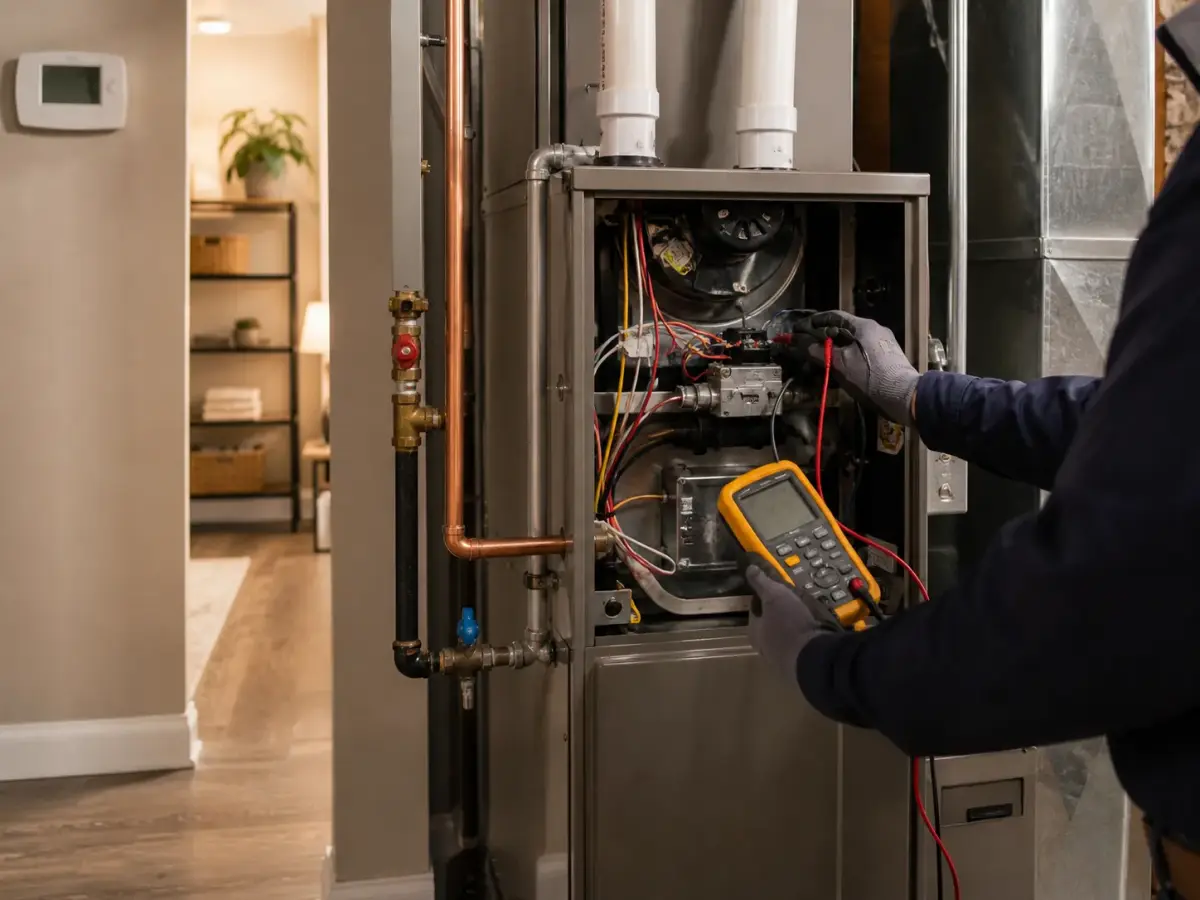
HVAC technician commissioning a residential furnace during a North Jersey heating installation

Protect the current decision

Replacement should solve the diagnosed problem without creating a new one.

Age, a repair estimate, one uncomfortable room, or a high utility bill can justify a closer look, but none proves which heating system belongs in the building. A replacement decision should separate the failed equipment from duct, piping, radiation, venting, controls, electrical capacity, insulation, air leakage, and room-by-room distribution conditions.

ENERGY STAR lists older equipment, frequent repairs, rising bills, and uneven comfort as reasons to consider replacement or overall-system improvement. Those are prompts for diagnosis and comparison—not an instruction to replace automatically.

Ask for a repair option when one is safe and practical, a complete replacement option when it deserves consideration, and a written explanation of what each option restores. The familiar “$5,000 rule” is only a rule of thumb; it is not a New Jersey requirement, engineering method, or substitute for the actual scopes.

Repair pathState the failed component or condition, complete repair scope, exclusions, final test, warranty terms, and expected result.
Replacement pathState the load, selected system, distribution, venting or refrigerant work, electrical work, permits, removal, startup, and closeout.
Building pathKeep insulation, air sealing, windows, ducts, piping, radiation, zoning, and room-level comfort problems visible instead of asking new equipment to hide them.

Choose the system path

Furnace, boiler, heat pump, ductless, and electric heat are not interchangeable labels.

The existing distribution and the goals for heating, cooling, electrification, zoning, and backup determine which options deserve a written comparison. MDL must confirm the exact equipment, fuel or energy source, building type, and installation scope before any option is promised.

Furnace

Warm air through compatible ductwork

Review fuel or energy source, calculated heating load, supply and return capacity, filtration, venting and combustion air when applicable, condensate, controls, and electrical requirements. Existing ducts should be inspected rather than assumed ready.

Boiler

Hot-water or steam distribution

Identify hot water or steam, radiators, baseboard, radiant loops, zones, pumps or steam components, piping condition, venting, water-side scope, controls, and compatible sizing. Use the 2026 New Jersey boiler cost guide to compare complete replacement scopes, then use the boiler-services page for diagnosis, service, and the property-specific request.

Ducted heat pump

Heating and cooling through suitable ducts

Compare capacity at relevant outdoor temperatures, duct condition, airflow, refrigerant line route, outdoor-unit location, condensate, controls, supplemental heat, electrical demand, and whether a dual-fuel or full-displacement strategy is proposed.

Ductless heat pump

Room or zone service without full central ductwork

Plan indoor-unit locations, line-set and drain routes, outdoor equipment, condensate, electrical circuits, controls, appearance, service access, zoning, and how rooms without an indoor unit will be heated.

Electric resistance

Baseboard, radiant, or auxiliary heat with a load consequence

Confirm the intended role, calculated electrical demand, branch circuits, controls, panel and service capacity, operating expectations, and whether it is primary, supplemental, or emergency heat.

Hybrid or multiple systems

More than one heat source needs one control strategy

Write the changeover temperature or logic, equipment sequence, distribution boundaries, thermostat and control responsibility, fuel and electrical scope, and what happens when one system is unavailable.

Sizing before selection

Square footage and the old nameplate are not a heating-load calculation.

ENERGY STAR tells consumers to have the contractor verify proper size using Manual J, a calculation of the heating and cooling required for the home. A useful calculation accounts for design weather, orientation, insulation, air leakage, windows, doors, ceilings, floors, room exposure, internal gains, and the conditioned areas the system will actually serve.

Equipment selection should then match the calculated load, design conditions, distribution, and equipment performance data. For a furnace, that includes delivered output and airflow. For a heat pump, that includes heating capacity at colder outdoor conditions—not only a nominal rating. For a boiler, the heating load and compatible distribution or steam connected-load method matter.

Oversizing can cause short cycling, noise, uneven temperatures, poor humidity control, and operating problems. Undersizing can miss the design load. Ask the proposal to identify the calculation method, assumptions, equipment data, and any supplemental-heat or design-temperature decision.

Manual JCalculate room and building heating and cooling loads from the post-project building conditions.
Equipment selectionMatch capacity and performance to the load and design conditions rather than copying the old nominal size.
Distribution checkConfirm ducts, airflow, piping, radiation, zones, controls, and terminals can deliver the selected equipment's output.

Installation process

A useful proposal follows the project from survey through final inspection.

The exact sequence changes by system and municipality. The owner should still be able to see every decision, dependency, and closeout obligation before work begins.

01

Document the building

Record rooms, comfort complaints, existing equipment, distribution, fuel or energy source, electric service, thermostat and controls, venting, access, prior changes, and planned envelope work.

02

Calculate and compare

Complete the load and compare safe repair, like-for-like replacement, heat-pump, boiler, furnace, ductless, distribution, and building-improvement paths that actually fit the property.

03

Write one complete scope

List equipment, ratings, ducts or piping, venting or refrigerant, drains, controls, electrical, permits, removal, restoration, startup, warranty, exclusions, and owner responsibilities.

04

Confirm permits and programs

Identify the local permit applicant, subcodes, inspections, utility or rebate prerequisites, product eligibility, reservations, and approval gates before ordering or demolition.

05

Install and commission

Follow manufacturer instructions and approved plans, then test safety, airflow or distribution, controls, electrical operation, venting or refrigerant performance, condensate, and every served zone.

06

Close out the project

Complete required inspections, explain operation and maintenance, deliver model and serial data, permits, startup records, warranty documents, manuals, and any unresolved or future item.

Heat pumps in North Jersey

Cold-weather performance belongs in the proposal, not in a slogan.

Heat-pump design should state the equipment's capacity at relevant outdoor temperatures, the building heating load, balance point or changeover approach, controls, supplemental or backup heat, and what the owner should expect during the coldest design conditions. A cold-climate product label does not replace model-specific performance data or a load calculation.

Ducted projects also need airflow and duct review. Ductless projects need a room-by-room coverage plan. Both need outdoor-unit placement, snow and drainage considerations, line-set and penetration routes, condensate handling, service clearances, controls, and electrical coordination.

ENERGY STAR notes that a properly selected heat pump can sometimes replace central air conditioning while providing heat, and it discusses dual-fuel paths when a furnace remains. Whether either approach fits this property must come from the complete calculation and written design.

CapacityShow output at relevant outdoor temperatures and compare it with the calculated heating load.
Backup or dual fuelIdentify equipment, capacity, energy source, electrical load, changeover controls, and owner-facing operating logic.
Whole-home coverageShow how every occupied room is served; one indoor unit or one duct connection does not automatically solve every zone.

Electrical and distribution coordination

The heating equipment is only one part of the installed system.

MDL lists both New Jersey electrical-contractor and master-HVACR credentials. That combined scope is useful when a project changes compressors, air handlers, auxiliary heat, pumps, controls, circuits, disconnects, service load, panel capacity, or distribution equipment. It does not mean every project requires a panel upgrade or that every existing duct or pipe must be replaced.

Electric service

Calculate the added load

Review service and panel ratings, existing calculated load, breaker space, conductor routes, auxiliary or resistance heat, other major loads, and any compatible load-management strategy.

Branch work

Write circuits, protection, disconnects, and controls

Separate indoor equipment, outdoor equipment, pumps, heat strips, thermostats, controls, condensate devices, surge protection when proposed, and any panel or service work.

Ducts

Inspect supply, return, airflow, leakage, and fit

Equipment replacement can expose undersized returns, restrictive filters, damaged or disconnected ducts, poor room balance, or transitions that do not match the selected unit.

Hydronics

Match piping, pumps, zones, emitters, and design temperature

A new boiler or air-to-water concept cannot be selected independently of the distribution that must deliver the heat.

Venting and drainage

Identify the complete route and responsibility

Fuel-fired venting or chimney verification, combustion air, high-efficiency condensate, heat-pump drains, refrigerant penetrations, and termination clearances belong in the scope.

Controls

Explain zones, staging, changeover, and owner operation

Thermostats and integrated controls should match the equipment and sequence. The owner should know which system runs, when, and how to recognize a fault.

New Jersey permits

Confirm the local path before equipment is removed or ordered.

New Jersey's Department of Community Affairs publishes construction-permit forms, technical sections, and a chimney-verification form for replacement fuel-fired equipment. The required building, mechanical, plumbing, electrical, fire, chimney, zoning, or other subcodes depend on the final scope and municipality.

Maplewood identifies new or replaced central air, furnaces, boilers, new ductwork, new wiring, and electric-service upgrades among work requiring a construction permit. Its guidance also says to contact the Construction Division when uncertain. Chatham Borough routes construction and HVAC-related zoning questions through its Planning, Zoning & Construction office.

The proposal should name the permit applicant, included forms and subcodes, fees, inspections, utility coordination, emergency-work procedure if relevant, and who closes every permit. A website statement cannot replace the local construction official's project-specific direction.

Before contractConfirm the municipality, property type, equipment, fuel or energy path, exterior work, zoning questions, and anticipated subcodes.
Before workConfirm issued permits or the documented emergency-work path, approved equipment, required program reservations, and inspection sequence.
Before final paymentConfirm startup records, passed inspections, permit closeout, manuals, registrations, invoices, and written warranty documents.

Cost, incentives, and warranty

Compare complete scopes before subtracting a rebate or accepting a guarantee.

Searchers ask for one heating-installation price, but the installed project is a bundle of equipment, distribution, venting or refrigerant work, electrical work, permits, access, restoration, startup, and closeout. A low headline number can exclude the work that makes the selected system safe, compatible, permitted, and operable.

Equipment

Identify exact models, ratings, accessories, and substitutions

Record capacity and efficiency data, controls, indoor and outdoor equipment, supplemental heat, pumps, thermostats, filters, and allowed substitution process.

Installed scope

Include every trade and connection

List ducts or piping, refrigerant or venting, drainage, gas or fuel work when applicable, electrical, penetrations, permits, removal, disposal, restoration, testing, and owner instruction.

Incentives

Verify before purchase or demolition

NJBPU directs residents to current efficiency programs. Confirm utility territory, income or property rules, eligible equipment, contractor requirements, application timing, reservations, inspections, and funding before counting an incentive.

Operating comparison

Use the building and actual rate structure

Fuel and electric rates, equipment performance, load, controls, distribution losses, thermostat settings, maintenance, and backup heat affect operating cost. Do not promise a universal savings percentage.

Warranty

Separate manufacturer, part, and labor terms

Record registration, duration, heat-exchanger or compressor terms when applicable, parts, labor, maintenance conditions, exclusions, transfer rules, and the responsible administrator.

Change orders

Define how hidden conditions are handled

Write the approval process for concealed ducts, piping, wiring, venting, asbestos or hazardous material, structural access, code corrections, utility work, or other conditions that are not in the base scope.

Chatham, Maplewood, and North Jersey

Keep the installation decision here and use town pages to confirm local context.

Historical Google demand reached this exact page for heating installation across New Jersey, North Jersey, Chatham, and Maplewood heat-pump intent. MDL operates from West Orange and publishes service coverage across Essex, Morris, and Hudson County; this page does not claim a separate Chatham, Maplewood, or statewide office.

Review the Chatham electrical, heating, and cooling page, the Maplewood service page, or the complete North Jersey service-area hub. Send the exact address, building type, existing equipment and distribution, fuel or energy source, electric-panel information, comfort concerns, recent bills if relevant, planned renovations, and safe equipment photos so MDL can confirm coverage and the next survey step.

Existing systemEquipment label, age if known, distribution, thermostat, fuel or energy source, maintenance and repair history, and current failure or comfort concern.
BuildingAddress, property type, occupied areas, renovations, insulation or window work, additions, hot or cold rooms, and any moisture or indoor-air concern.
Project goalRepair comparison, like-for-like replacement, heat pump, electrification, zoning, cooling addition, efficiency, space, noise, schedule, budget, and program questions.

Request a heating-installation survey

Send the property, system, comfort problem, and project goal.

MDL can confirm whether the next step is diagnosis, a site survey, an electrical review, boiler-specific planning, or a complete written comparison. The request does not promise equipment, price, program eligibility, arrival time, or a final scope before review.

Heating installation FAQ

Direct answers for a North Jersey heating-replacement decision.

These answers cover repair versus replacement, heating-load calculations, furnaces, boilers, heat pumps, electrical capacity, permits, incentives, and written project scope without turning a rule of thumb into a promise.

How much does heating installation cost in North Jersey?

There is no responsible flat price before the property and complete scope are known. Equipment type and capacity, existing distribution, duct or piping changes, venting or chimney work, refrigerant work, electrical capacity and circuits, controls, permits, access, removal, restoration, commissioning, and warranty terms can all change the total. Compare written scopes line by line rather than comparing headline numbers.

What is the $5,000 rule for HVAC replacement?

It is a consumer rule of thumb sometimes used to start a repair-versus-replacement conversation; it is not a New Jersey code rule, engineering calculation, price guarantee, or automatic verdict. The actual decision should use the diagnosed failure, safe operating condition, complete repair and replacement costs, equipment age and history, parts path, comfort, distribution condition, calculated load, and expected result of each option.

What is the best heating system for a North Jersey home?

There is no single best system for every property. The right comparison depends on the calculated heating load, winter design conditions, existing ducts, radiators, baseboard or radiant distribution, fuel and electric service, venting, insulation and air leakage, zoning, comfort goals, cooling needs, space, budget, and the owner's operating preferences. The proposal should explain why the selected system fits those conditions.

Should I choose a furnace, boiler, heat pump, or ductless system?

Start with the distribution already in the building and what the project must accomplish. A furnace normally serves ductwork; a boiler serves compatible hot-water or steam distribution; a ducted heat pump can use suitable ducts; and ductless heat pumps can serve selected zones without full central ductwork. Hybrid or multiple-system approaches may also be considered. MDL must confirm the exact equipment and scope rather than assuming every option fits.

Can a heat pump heat a North Jersey home in winter?

Modern cold-climate equipment may be designed for low outdoor temperatures, but performance is model- and design-specific. Require the proposal to show the heating load, equipment capacity at relevant outdoor temperatures, balance or changeover strategy, supplemental or backup heat if proposed, electrical demand, controls, defrost and condensate planning, and what happens during the coldest design conditions.

Do I need an electrical-panel upgrade for a heat pump or electric heating system?

Not automatically. An electrical review should identify service and panel ratings, existing calculated load, breaker space, conductor and circuit requirements, disconnects, auxiliary or resistance heat, other major loads, and any load-management option. The decision belongs in a documented electrical scope, not in a generic assumption based only on panel age.

How should new heating equipment be sized?

ENERGY STAR advises having the contractor verify the proper size using Manual J, which calculates the home's heating and cooling requirements. Equipment selection should then match the calculated load and the actual distribution and design conditions. Square footage alone, the old nameplate, or choosing a larger unit for safety is not a complete sizing method.

Does heating-system replacement require a permit in New Jersey?

Permit and inspection requirements depend on the municipality and final scope. New Jersey publishes construction-permit forms and a chimney-verification form for replacement fuel-fired equipment. Maplewood specifically lists a new or replaced furnace, boiler, central air system, new ductwork, new wiring, and service upgrades among work requiring construction permits. The proposal should identify the applicant, subcodes, inspections, fees, and closeout.

Are rebates or tax credits available for a new heating system?

Programs, funding, equipment lists, income rules, utility territories, contractor requirements, reservation steps, and deadlines can change. Check the current utility and New Jersey Board of Public Utilities program before selecting equipment or starting work, and ask for written confirmation of eligibility. A proposal should not reduce the contract price by an incentive that has not been approved.

What should a heating-installation proposal and warranty include?

Require the selected equipment and ratings, sizing basis, distribution work, venting or refrigerant scope, electrical work, controls, permits, removal, restoration, startup, testing, owner instruction, exclusions, payment schedule, and change-order process. Warranty terms should identify equipment, heat exchanger or compressor when applicable, parts, labor, registration, maintenance conditions, exclusions, who administers each term, and which closeout documents the owner receives.

Next steps

Continue to the right heating or local path

Heating

Heating repair

Use the heating-service path when diagnosis and repair should come before replacement.

Learn more
Boiler

Boiler services

Use the boiler page for hot-water, steam, radiator, baseboard, and boiler-specific replacement decisions.

Learn more
Panel

Panel upgrades

Review the electrical-capacity path when a documented heating design requires panel or service work.

Learn more

Request service

Send MDL the service, town, and best callback number.

Use the form for planned service or call for urgent electrical, heating, or cooling help.